How to Make Turkish Coffee at Home
Six things to get right, and only one of them is difficult. The sugar goes in before the heat, and the coffee never boils.
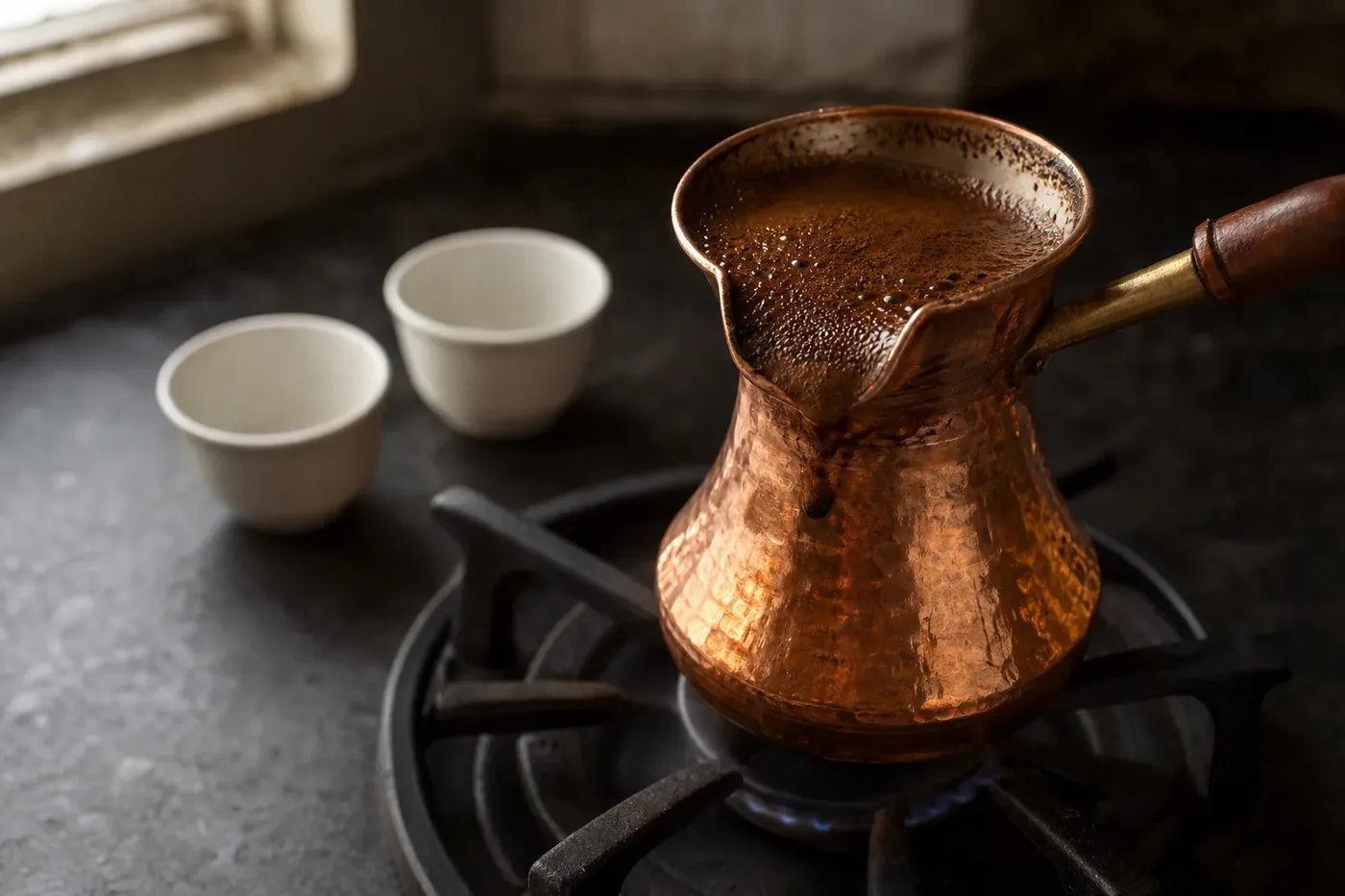
Turkish coffee is the least forgiving common brewing method and the one with the fewest variables. There is no filter, no pressure and no timer. What there is, is a moment when the foam rises, and the entire technique is about being ready for it.
What you need
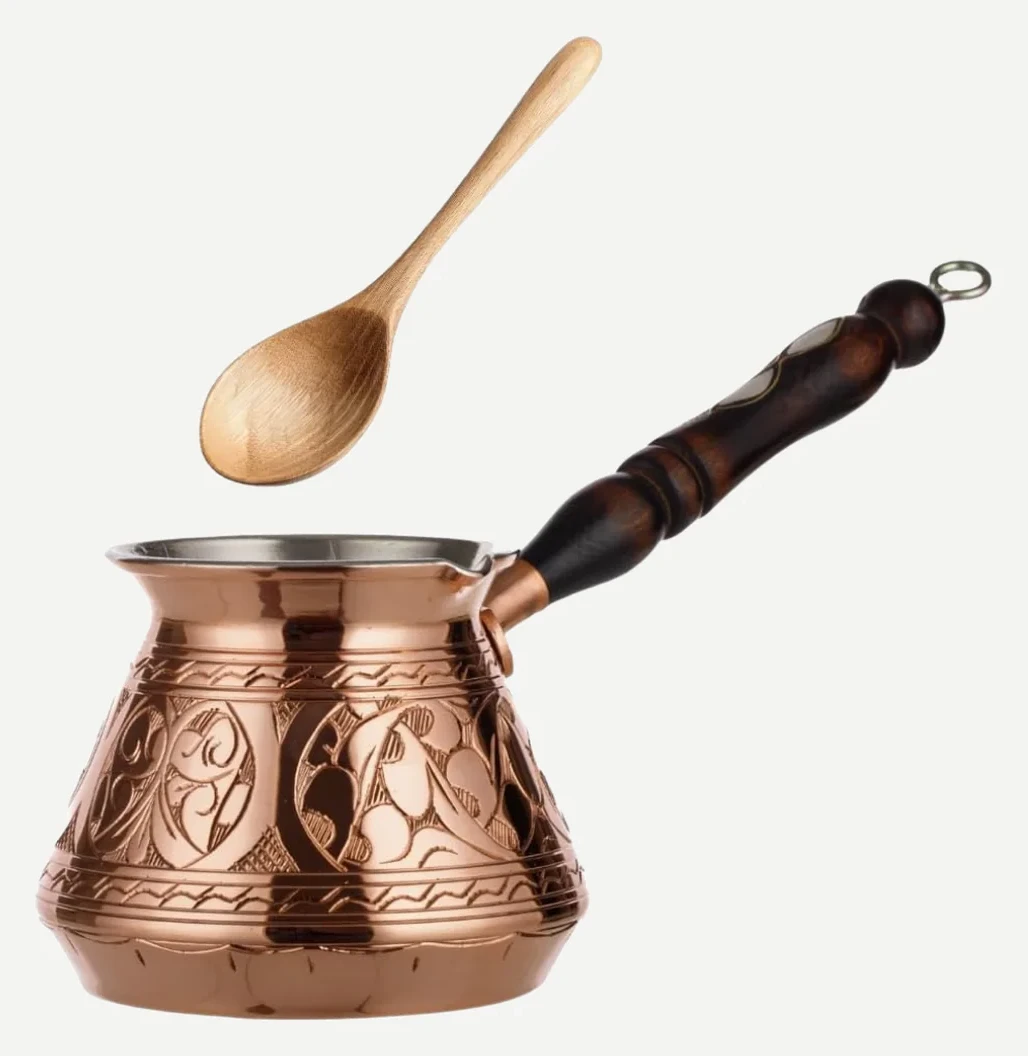
- A cezve, also called an ibrik.
- Coffee ground to a powder, finer than espresso.
- Cold water, and sugar if you want it.
- The lowest heat your hob can hold.
The method
- Measure with the cup you will drink from. One demitasse of cold water per person, poured into the cezve. This is the traditional measure and it is more reliable than any millilitre figure, because the cups vary and the ratio is what matters.
- Add the coffee and the sugar together. Roughly one heaped teaspoon of coffee per cup. Sugar now, not later.
- Stir once, off the heat, until there are no dry lumps. This is the only stir of the whole process.
- Put it on the lowest heat and leave it alone. Two to four minutes.
- Watch for the foam. A dark ring forms at the edge, then rises toward the neck. As it climbs, take the pot off the heat.
- Optionally return it once or twice. Let the foam settle, put it back, let it rise again. More rises means more foam and a fuller body.
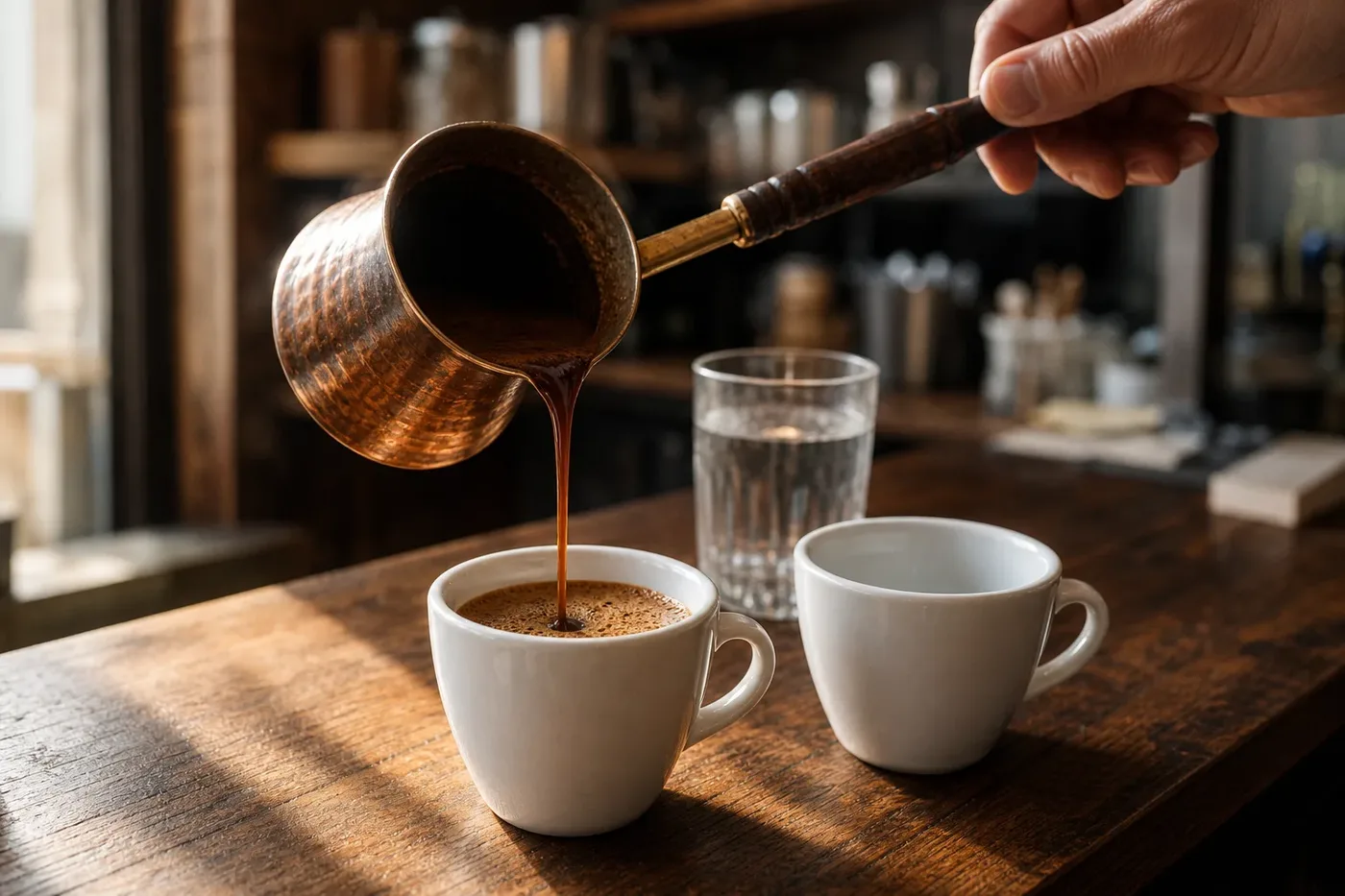
- Pour slowly, foam first, sharing it between the cups. Let it stand a minute before drinking so the grounds settle.
The mistake that ruins it
Letting it boil. The foam is built by gas coming out of solution as the temperature rises, and it collapses the instant the coffee reaches a rolling boil. A boiled Turkish coffee is flat, bitter and, in most households where it is drunk, an obvious failure.
Low heat is the defence. It gives you a wider window in which to notice the rise, and the whole difficulty of this method is noticing in time.
Grind, which is the other hard part
Turkish grind is the finest in coffee. Anything less and the grounds fail to settle cleanly, leaving grit in the mouth rather than sludge at the bottom of the cup.
Most domestic grinders will not go this fine, and those that will take a long time and heat the coffee doing it. This is one of the few cases where pre-ground is the sensible choice.
Serving
In small handleless cups, with a glass of water alongside, and often something sweet. The water is not decoration: it clears the palate first, which is the point of drinking it before the coffee rather than after.
Do not drink to the bottom. The grounds are down there, and stopping when you reach them is the whole reason the cup is left to stand. If you want to see how this is done professionally, and why sand rather than a burner, sand coffee is the same method with better heat control.
Common questions
Can I make Turkish coffee without a cezve?
You can use a small saucepan and it will be worse. The cezve's narrow neck concentrates the foam and its shape controls where the coffee rises, which is most of the method. A small pan gives you a wide surface and the foam disperses.
How fine should the coffee be ground?
Finer than espresso, close to flour. Most home grinders cannot reach it, so Turkish grind is usually bought pre-ground or done on a mill made for it.
When do I add the sugar?
At the start, with the cold water, before any heat. Nothing is stirred once the foam begins to form, so sugar added later either sits at the bottom or costs you the foam.
Why does my Turkish coffee have no foam?
Almost always because it boiled. The foam builds as the coffee approaches a boil and collapses the moment it reaches one. Lower heat and take the pot off as it rises.