Best K-Cup Coffee Makers
Machines that take K-Cup pods, ranked from our reviews. Keurig's patent expired in 2012, which is why K-Cups are made by everyone, cost a fraction of what a closed system charges, and why reusable filter baskets are standard rather than a novelty. The machines differ on brew sizes, tank capacity and whether they will also take loose ground coffee - and that last one is worth checking, because it is the difference between a machine that only ever eats pods and one that does not.
How this list is ordered
Ranked by arithmetic, not opinion. Every score is worked out from the specifications each maker publishes, so you can open the working on any product page. Anything commercial is labelled and sits outside that order, and how we score explains what each criterion measures.
K-Cup Coffee Makers, ranked by score
scored on what the maker publishesOpen a row for the score working1
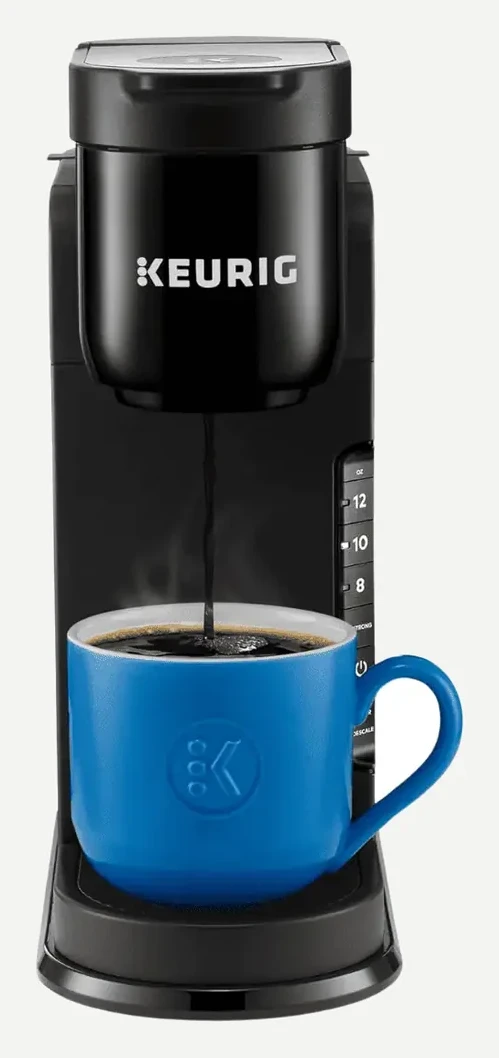 KeurigK-Express Single-ServeFrom $69.996.2
How it scored
Drink Quality4.7pump pressure not publishedCapsule System & Choice10.0Running Cost Per Cup5.5Ease of Use & Speed6.2Build Quality & Reliability4.5Maintenance & Cleaning5.0Machine Value for Money10.0Waste & Disposalweakest link3.0carries 10 of the 95.5 points scoredPrice from$69.99Score6.2Capsule SystemK-CupThird-party CapsulesYesAuto shut-offYes (5 Minutes)Read the Keurig K-Express Single-Serve review →2
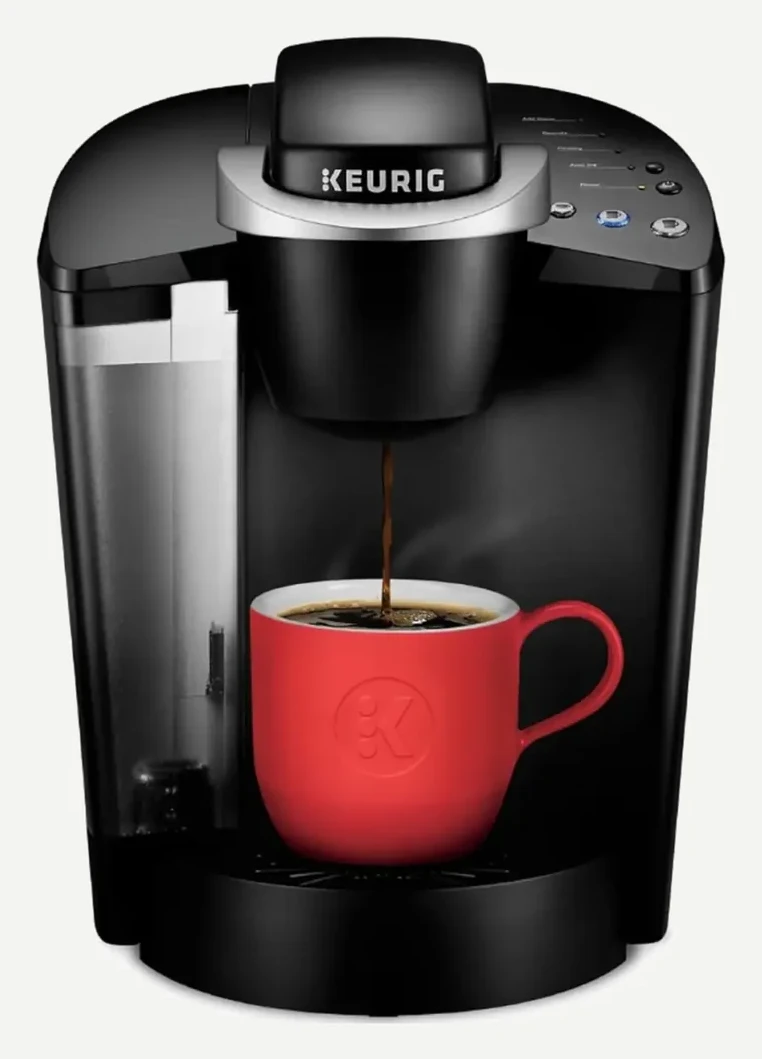 KeurigK-ClassicFrom $99.995.9
How it scored
Drink Quality4.0pump pressure not publishedCapsule System & Choice10.0Running Cost Per Cup5.5Ease of Use & Speed5.5Build Quality & Reliability4.5Maintenance & Cleaning5.0Machine Value for Money8.9Waste & Disposalweakest link3.0carries 10 of the 95.5 points scoredPrice from$99.99Score5.9Capsule SystemK-CupThird-party CapsulesYesAuto shut-offYes (2-Hour Auto Shutoff)Read the Keurig K-Classic review →3
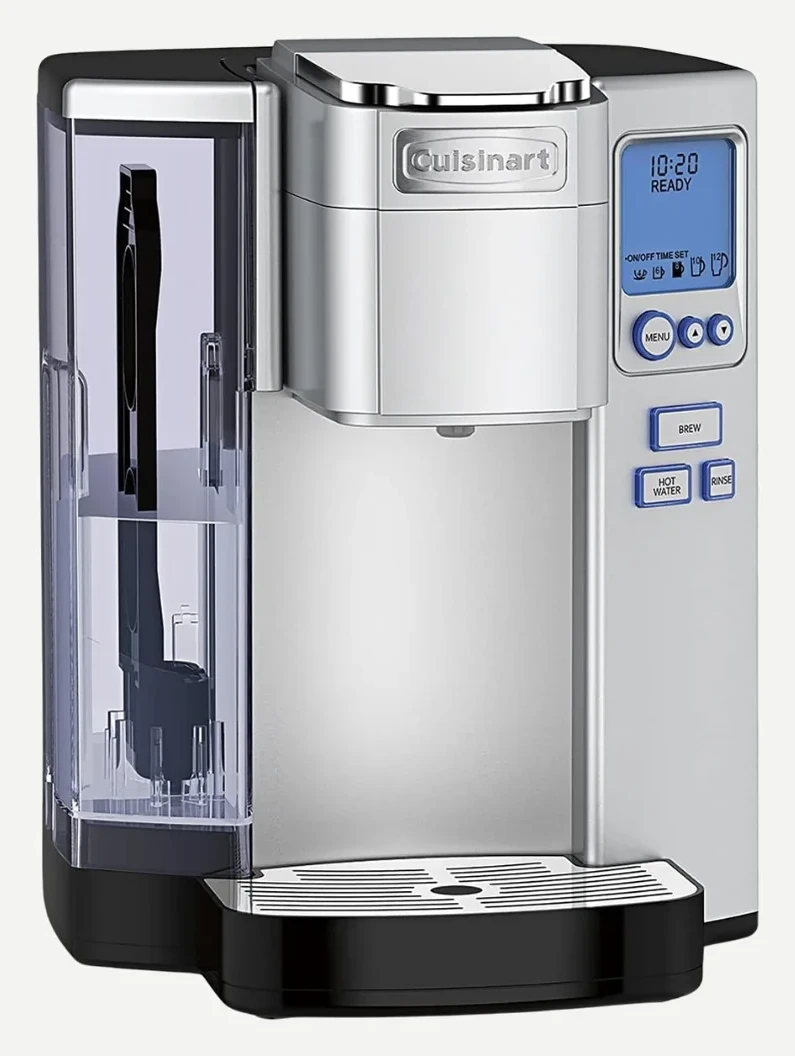 CuisinartSS-10P1 Single Serve Coffee Maker5.8
How it scored
Drink Quality5.3pump pressure not publishedCapsule System & Choice8.5Running Cost Per Cup5.5Ease of Use & Speed6.0Build Quality & Reliability5.0Maintenance & Cleaning6.9Machine Value for Money5.0no price publishedWaste & Disposalweakest link3.0carries 10 of the 95.5 points scoredPricePricing N/AScore5.8Capsule SystemK-CupThird-party CapsulesYesRead the Cuisinart SS-10P1 Single Serve Coffee Maker review →4
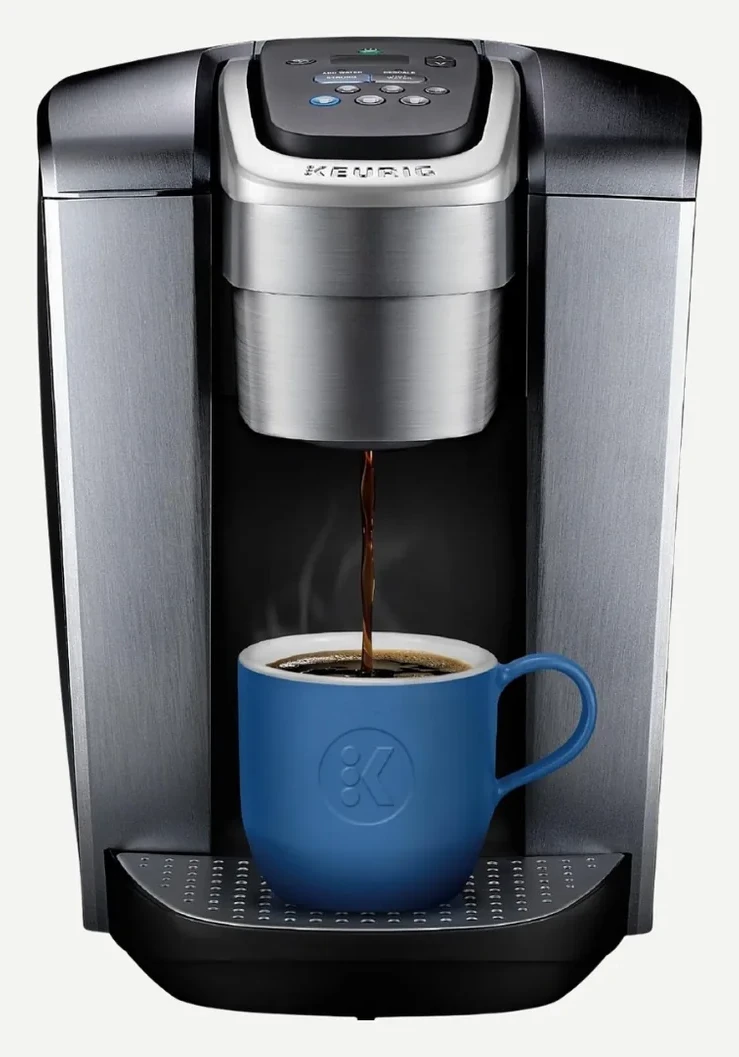 KeurigK-Elite Single Serve Coffee Maker5.8
How it scored
Drink Quality5.3pump pressure not publishedCapsule System & Choice8.5Running Cost Per Cup5.5Ease of Use & Speed6.0Build Quality & Reliability5.0Maintenance & Cleaning6.9Machine Value for Money5.0no price publishedWaste & Disposalweakest link3.0carries 10 of the 95.5 points scoredPricePricing N/AScore5.8Capsule SystemK-CupThird-party CapsulesYesRead the Keurig K-Elite Single Serve Coffee Maker review →
What to know about K-Cup Coffee Makers
A K-Cup machine is a hot water pump with a capsule holder. The engineering differences between them are small and the consequences of picking one are mostly financial, because the machine commits you to a format you will keep buying for years.
K-Cup machine cost: the capsules cost more than the machine
This is the arithmetic to do before anything else. At around $0.64 a capsule in a large box, two cups a day is roughly $470 a year. At $1.20 a capsule in a ten-count box it is $876. The machine itself is a one-off in the low hundreds at most, so the difference between buying capsules well and buying them badly exceeds the price of the brewer inside a year.
The good news is that K-Cup is an open system, so you are choosing between many suppliers rather than one. That is the strongest argument for the format over Vertuo or Dolce Gusto.
K-Cup coffee maker tank size: convenience, not quality
A reservoir does not change the coffee. It changes how often you refill, which matters in an office and barely matters for one person. Single-serve models that take a cup of water at a time are smaller and cheaper and are a genuine annoyance at any volume.
K-Cup coffee maker warm-up time and standby cost
Most K-Cup machines are ready in well under a minute, and the ones that keep a tank hot get there faster at the cost of standby power. If a machine advertises instant readiness, it is keeping water hot around the clock. That is a fair trade for a busy kitchen and a waste in a household that brews twice a day.
What to ignore when buying a K-Cup coffee maker
Strength and temperature buttons. On a sealed capsule with a fixed dose, a strength setting mostly changes how much water passes through the same coffee, which makes a weaker or stronger dilution rather than a better extraction. The dose is set by whoever filled the pod.
K-Cup Coffee Makers FAQ
How much does it cost to run a K-Cup machine?
At two cups a day, roughly $470 a year buying capsules at $0.64 in large boxes, or about $876 a year at $1.20 in ten-count boxes. The difference between buying capsules well and badly exceeds the price of most machines within a year.
Do all K-Cup machines take third-party pods?
In practice yes. The Keurig 2.0 lockout that once blocked third-party capsules was resolved years ago, and K-Cup is the most open of the pod systems, which is its main advantage over Vertuo or Dolce Gusto.
Does a bigger water tank make better coffee?
No. The tank changes how often you refill and nothing else. It matters in an office and barely matters for one person, so treat it as a convenience decision rather than a quality one.
What does the strength button do on a pod machine?
Mostly it changes how much water passes through the capsule, producing a more or less dilute cup rather than a better extraction. The dose is fixed by whoever filled the pod, so there is a limit to what the machine can change.
Are K-Cup machines quick to warm up?
Most are ready in under a minute, and the ones advertising instant readiness do it by keeping water hot continuously. That is worth the standby power in a busy kitchen and wasteful in a household that brews twice a day.