De'Longhi's bean-to-cup machines all share the same core: whole beans go in the hopper, a built-in
conical burr grinder with 13 settings grinds them, and the machine doses, tamps and brews at the touch of
a button. The grinder is the same across the range, so it is not what you are paying extra for. What
separates the five models is the milk and the drink list: a manual frother you hold a jug under at the
bottom, an automatic LatteCrema carafe in the middle, and at the top a second milk system for cold foam.
That makes the first decision a simple one. Do you drink milk drinks often enough to want the machine
to make them? The second is how many drinks, and how many people, you want it to serve. If you are new to
the idea, our guide to bean-to-cup machines collects every
automatic we review, and the rest of this page is organised around those two questions.
How the De'Longhi range is organised
Manual frother: Magnifica Start
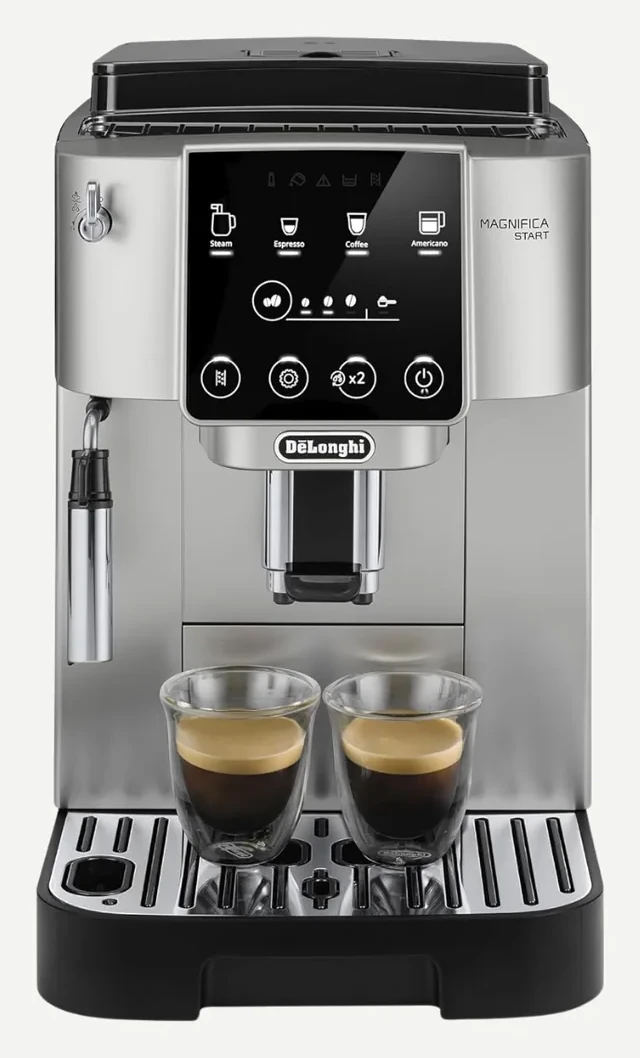
The De'Longhi Magnifica Start is the cheapest way into bean-to-cup from this maker, and it keeps the
milk in your hands. It makes three drinks at one touch, espresso, coffee and americano, with adjustable
intensity, and it has a traditional manual frother for milk and milk alternatives. Underneath that is a
15 bar pump, a 250 g hopper, a 1.77 litre tank and a cup clearance of 139 mm, enough for a travel mug.
For somebody who mostly drinks black coffee, that is all the machine needs to do, and the removable
parts are dishwasher safe. One caution on the name: De'Longhi sells four machines called Magnifica Start,
and two of them have automatic milk and five recipes. The one on this page is the ECAM22022B with the
manual frother, so check the model number before you buy.
Automatic milk on the entry machines: Magnifica Evo
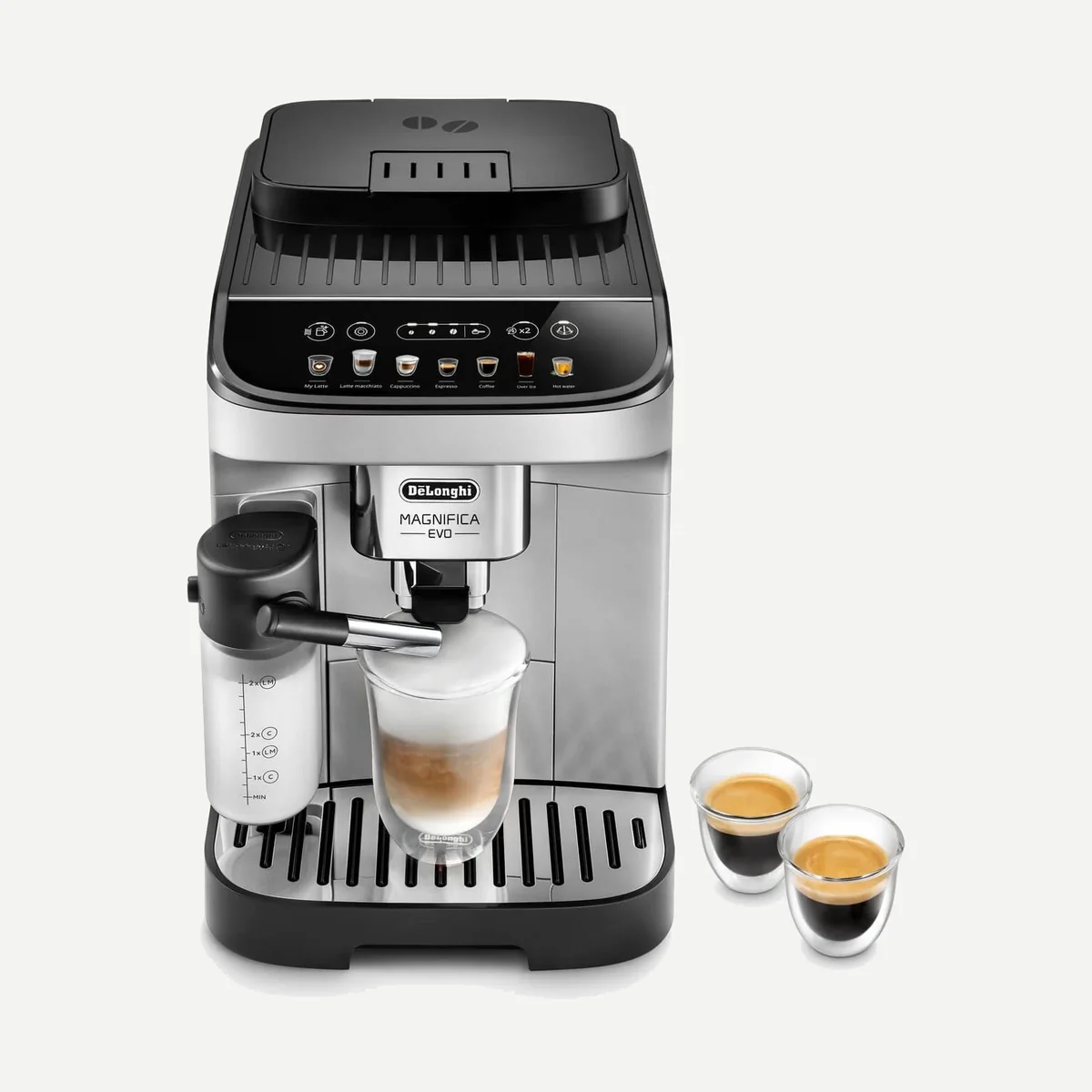
The De'Longhi Magnifica Evo is where the entry range starts making milk drinks by itself. It shares the
Start's pump, grinder and hopper, which is the useful thing to know: the coffee side is the same, and the
extra money buys milk. It makes seven drinks at one touch, including cappuccino, latte macchiato and an
Over Ice iced coffee, and it takes a cup up to 139 mm tall. Its tank holds 1.8 litres.
The Over Ice setting brews hot coffee to survive dilution by ice, which is not cold brew and De'Longhi
does not claim it is; cold brew against iced coffee
explains the difference. Be careful with the name here too. De'Longhi US sells two machines called
Magnifica Evo, and this is the ECAM29084SB with seven drinks, not the cheaper one with a manual frother
and six. The two Magnifica machines are a clean choice between steaming milk yourself and not:
Magnifica
Evo vs Magnifica Start sets out what the extra money adds.
The big drink list: Dinamica LatteCrema
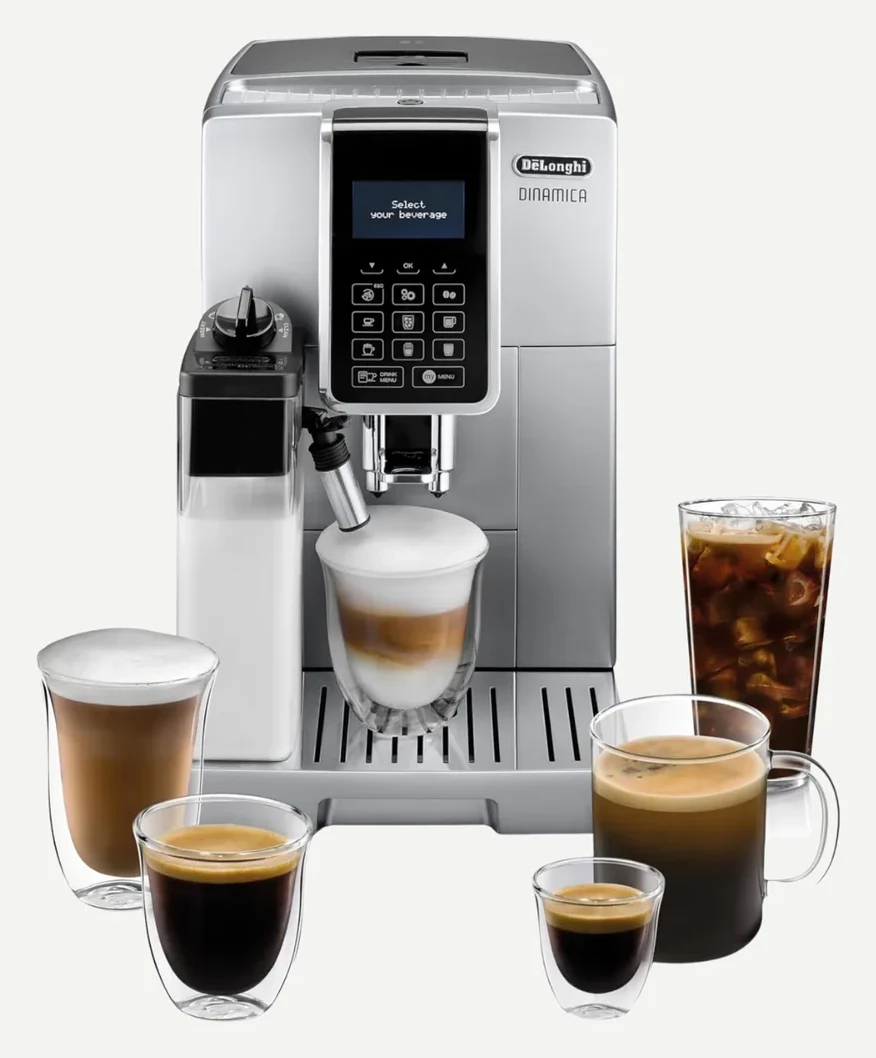
The De'Longhi Dinamica LatteCrema is built for a household that wants a long list of drinks and never
wants to touch a steam wand. De'Longhi says it makes 18 espresso and specialty recipes at one touch,
though it names only seven of them: espresso, ristretto, cappuccino, latte, macchiato, flat white and
iced coffee. The milk is frothed automatically by the LatteCrema system, adjustable for each drink, and
De'Longhi names oat, soy and rice milk as suitable while saying that frothing quality varies by milk.
The brew group lifts out for rinsing, there is an automatic rinse cycle and a descaling indicator, and
it takes pre-ground coffee through a bypass doser. Its 1.1 litre tank is the smallest of the five, which
means more refilling in a busy house. Against the Rivelia below, Dinamica
LatteCrema vs Rivelia is the comparison to read.
Two hoppers and profiles: Rivelia
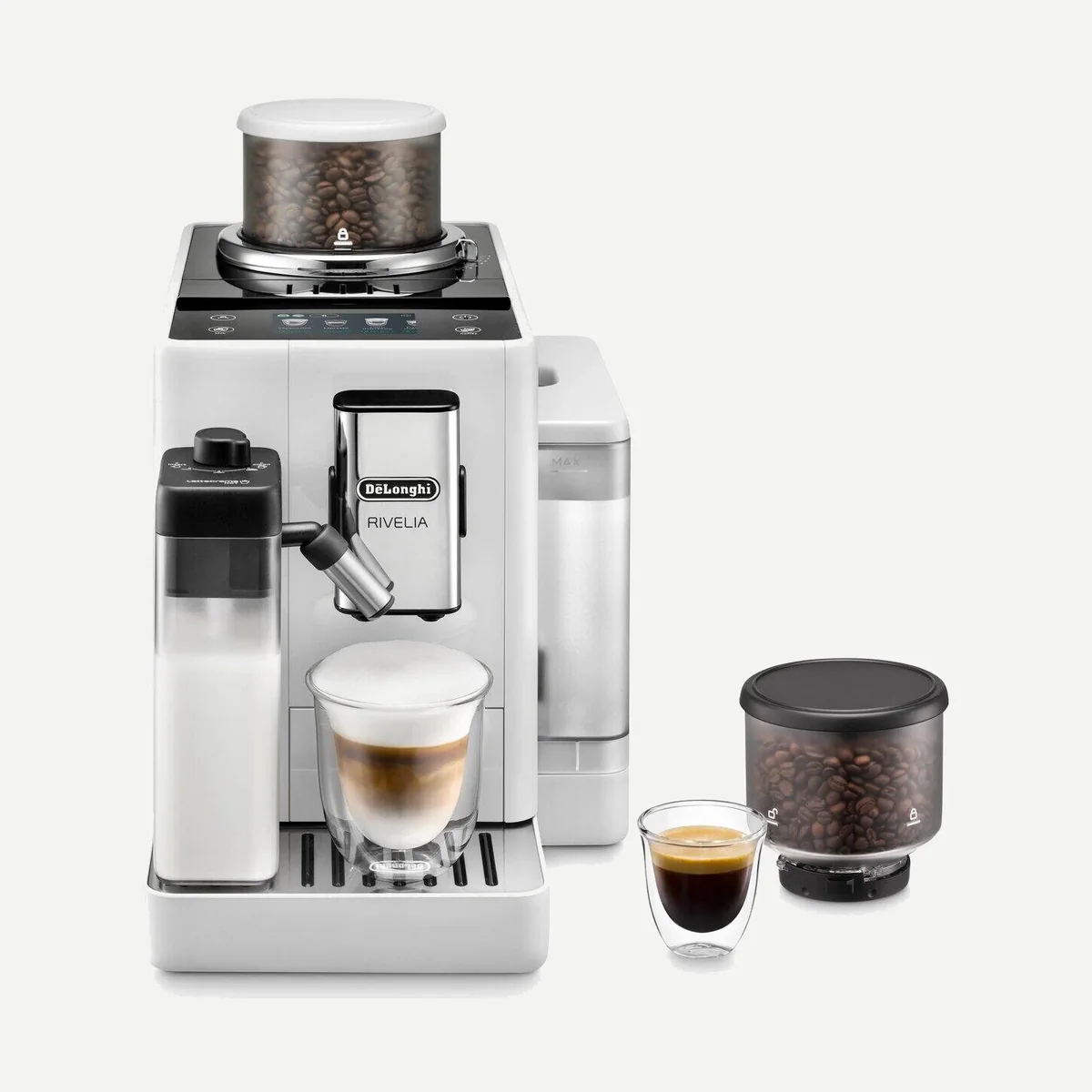
The De'Longhi Rivelia answers the decaf problem. A bean-to-cup machine normally holds one coffee at a
time, so a household with one decaf drinker either empties the hopper or uses the pre-ground chute a
spoonful at a time. The Rivelia comes with two removable hoppers of 250 g each, so regular and decaf, or
a light and a dark roast, sit side by side and you swap the hopper rather than emptying it. Our guide to
coffee beans for bean-to-cup machines
explains which roasts suit the grinder.
It uses LatteCrema Hot, an automatic carafe with automatic cleaning, and it adds a 3.5 inch colour touch
display with guided steps and four user profiles, so each person saves their own drinks. Cold foam is not
built in: it needs the LatteCrema Cool accessory, sold separately, which De'Longhi says adds six cold
recipes. At 248 mm wide it is slim for the category. Its tank is 1.4 litres, smaller than the Evo's.
Hot and cold milk: Eletta Explore
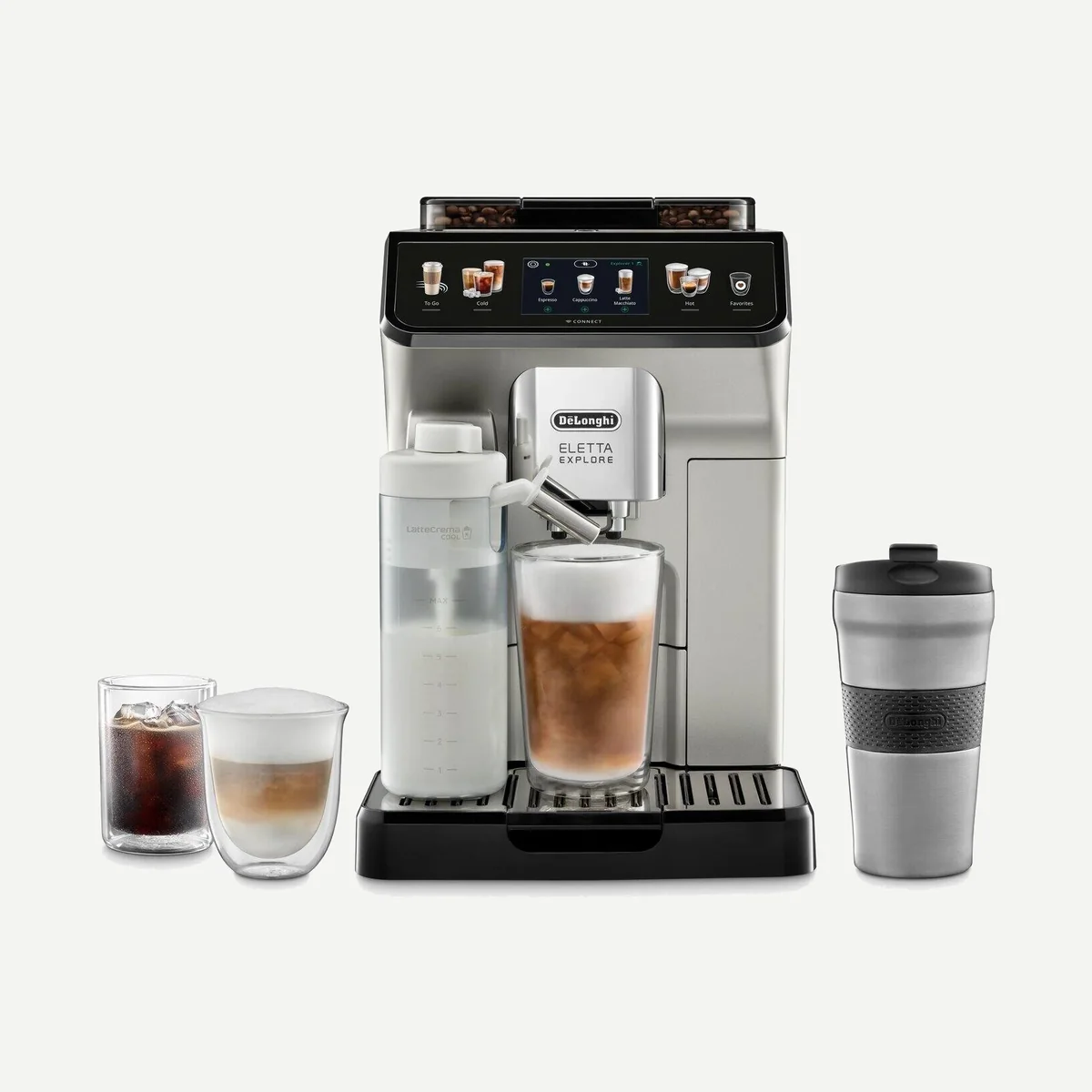
The De'Longhi Eletta Explore is the flagship, and the reason it exists is milk. It has two LatteCrema
systems built in: LatteCrema Hot for latte and cappuccino, and LatteCrema Cool for cold foam on iced
drinks. Hot foam poured over ice collapses, which is why an iced latte from most machines is cold milk
with coffee in it. A separate cold system is the engineering answer, and no other machine on this page
has one.
It also brews cold coffee in a few minutes, which is a different drink from the hours-long steep of true cold brew. The rest of the kit
matches the price: a 300 g hopper, 1.8 litre tank, 158 mm of cup clearance, four user profiles, custom
recipes through the Coffee Link app and a travel mug in the box. Against the machine below it,
Eletta Explore vs
Rivelia shows what the second milk system is worth.
How the models compare
A dash means the maker does not publish that figure, or we have not confirmed it.
What to look for in a De'Longhi bean-to-cup machine
Manual frother or automatic carafe
This is the biggest decision and the cleanest dividing line in the range. A manual frother costs less
and gives you control, but you stand at the machine for every cappuccino. An automatic carafe makes the
drink while you do something else, and that is what turns a bean-to-cup into a one-button machine. If
nobody in the house drinks milk drinks, the Magnifica Start makes the same coffee for less. If somebody
makes two cappuccinos every morning, pay for the carafe. Our page on
bean-to-cup milk systems compares how the carafe designs
differ.
How many drinks you will actually use
The drink count runs from 3 on the Magnifica Start to 7 on the Magnifica Evo, then 18 on the Dinamica
LatteCrema and the Rivelia, and a marketed 50 or more on the Eletta Explore. Most households make four or
five drinks, so a long list is useful only if the milk system can serve it. Count the drinks you make in a
week before you let the number decide for you.
Iced and cold drinks
Only some of the range makes drinks for ice. The Magnifica Evo and Dinamica have iced coffee as a
built-in recipe, the Rivelia reaches cold foam only with a separate accessory, and the Eletta Explore has
cold foam and its cold coffee process built in. If iced lattes are the reason you are buying, the Eletta
Explore is the only one of the five that treats them as a design goal rather than an afterthought.
Beans, decaf and pre-ground coffee
If one person drinks decaf, the Rivelia's second hopper is the tidiest answer. The other models handle
it through a bypass for pre-ground coffee, which the Magnifica Start, Magnifica Evo, Dinamica LatteCrema
and Rivelia all list, and De'Longhi lists the possibility of pre-ground on the Eletta Explore too. That
works for one cup at a time, not for a household that switches all day.
Tank, size and cup height
Tanks run from 1.1 litres on the Dinamica to 1.8 litres on the Evo and Eletta Explore, and the
difference shows in how often you refill. Cup clearance is 139 mm on the Start, Evo and Rivelia and 158 mm
on the Eletta Explore, which is the only one that takes the tallest travel mugs. The Eletta Explore also
weighs 12.2 kg against 9.0 to 9.7 kg for the other models with published weights, so check the counter.
Warranty, profiles and the app
Every model carries the same cover: two years, or three with product registration. The Rivelia and
Eletta Explore add four user profiles, and the Eletta Explore adds custom recipes through the Coffee Link
app. If more than one person uses the machine, profiles are worth more than extra drinks.
Where De'Longhi falls short
The names do not identify the machine
De'Longhi sells several models under one name. There are four Magnifica Starts, two of them with
automatic milk, and two Magnifica Evos, one with a manual frother. The model number, not the name, tells
you which one you are buying, and a seller who lists only the name may be showing you a different machine
from the one reviewed here.
Pump bar ratings do not mean more pressure
The Rivelia and Eletta Explore are rated at 19 bar and the Start and Evo at 15. Espresso is extracted at
roughly nine bar, and those figures describe the pump at its maximum. They are not a reason to choose one
model over another, so judge the machines on milk, drinks and size instead.
De'Longhi bean-to-cup machines by budget
At the prices on our records when this page was checked. The ranked list at the top of the page shows
each one's current price.
| Budget | Models | What you get |
|---|
| About $700 to $900 | Magnifica Start, Magnifica Evo | The same grinder and pump in both: manual milk and three drinks on the Start, automatic milk and seven drinks on the Evo. |
| About $1,300 to $1,400 | Rivelia, Dinamica LatteCrema | Automatic LatteCrema milk and 18 drinks. The Rivelia adds two hoppers, a touch display and four profiles; the Dinamica has a removable brew group. |
| About $2,000 and up | Eletta Explore | Hot and cold milk systems, cold coffee in minutes, the taller cup clearance and app recipes. |
What else you need
Beans and water come first. A bean-to-cup grinds whatever you put in the hopper, so fresh beans of a
roast that suits the machine make the biggest difference to the cup. Oily, very dark beans can clog a
grinder, and De'Longhi supplies a water filter or descaler with some models, which is a reminder that the
machine needs water treated.
Plan for cleaning, because a bean-to-cup has more moving parts than any other coffee maker in the house:
a burr grinder, a brew group that physically moves, a pump and a heater. The Dinamica LatteCrema has an
automatic rinse cycle, a descaling indicator and a removable brew group, the Rivelia cleans its milk
carafe automatically, and the Magnifica Evo comes with a filter, scoop, hardness test, brush and descaler. Our walkthrough on cleaning a bean-to-cup machine
covers the weekly routine.
Register the machine when it arrives. The three-year warranty De'Longhi advertises is two years plus
one more only if you register, and nobody who skips it gets the third year. If you use plant milk, look at
the Dinamica LatteCrema, where De'Longhi names oat, soy and rice, and see
milk alternatives in coffee for how each
behaves.
Which De'Longhi bean-to-cup should you buy?
If you drink black coffee, or you are happy to steam a jug, buy the Magnifica Start and spend the saving
on beans. If you drink cappuccinos or lattes every day and want one touch, the Magnifica Evo is the lowest
rung that does it, and the Dinamica LatteCrema is the step up for more drinks, a removable brew group and
named plant milk support; De'Longhi has stopped listing a price for it, so check it is still in stock. If two people want different coffees, or
one of them drinks decaf, the Rivelia is the answer.
The Eletta Explore is for iced milk drinks, and only for them: nothing else here makes cold foam, and
if you will not make iced lattes there is no case for paying for the second milk system. If you cannot
decide between two, our top picks at the top of the page set out the reasoning for each, and the model
reviews in the table above hold the full detail.
De'Longhi against the alternatives
De'Longhi's automatics are one family with one grinder and a clear ladder of milk systems. The obvious
rival is Jura, a bean-to-cup specialist, and our guide to Jura coffee
machines shows the alternative range side by side. The Eletta Explore in particular is priced against
the more expensive Jura models, so compare it with them before you commit.
If you are not yet sure that a bean-to-cup is what you want, De'Longhi also makes semi-automatics where
you tamp and steam yourself. Our guide to De'Longhi espresso
machines covers those, and the head-to-head pages for each automatic show how it compares with the
Jura, Gaggia and Philips models we review.