Best of · 5 products

Best De'Longhi Espresso Machines

The best De'Longhi espresso machine depends on the grinder. Without one, the Classic Signature is our pick, with a pressure gauge that shows what each shot is doing. With a grinder built in, the La Specialista Arte Evo suits steaming milk by hand and the La Specialista Maestro froths it for you. Below, every De'Longhi espresso machine we review, from the Stilosa and Dedica up, is ranked by score on the same criteria.

By PawelFacts checked October 12, 2026

How this list is ordered

Ranked by arithmetic, not opinion. Every score is worked out from the specifications each maker publishes, so you can open the working on any product page. Anything commercial is labelled and sits outside that order, and how we score explains what each criterion measures.

Our top picks

Our top 3 picks for De'Longhi Espresso Machines

Each one is the answer to a different buyer's question. The full ranking by score is below.

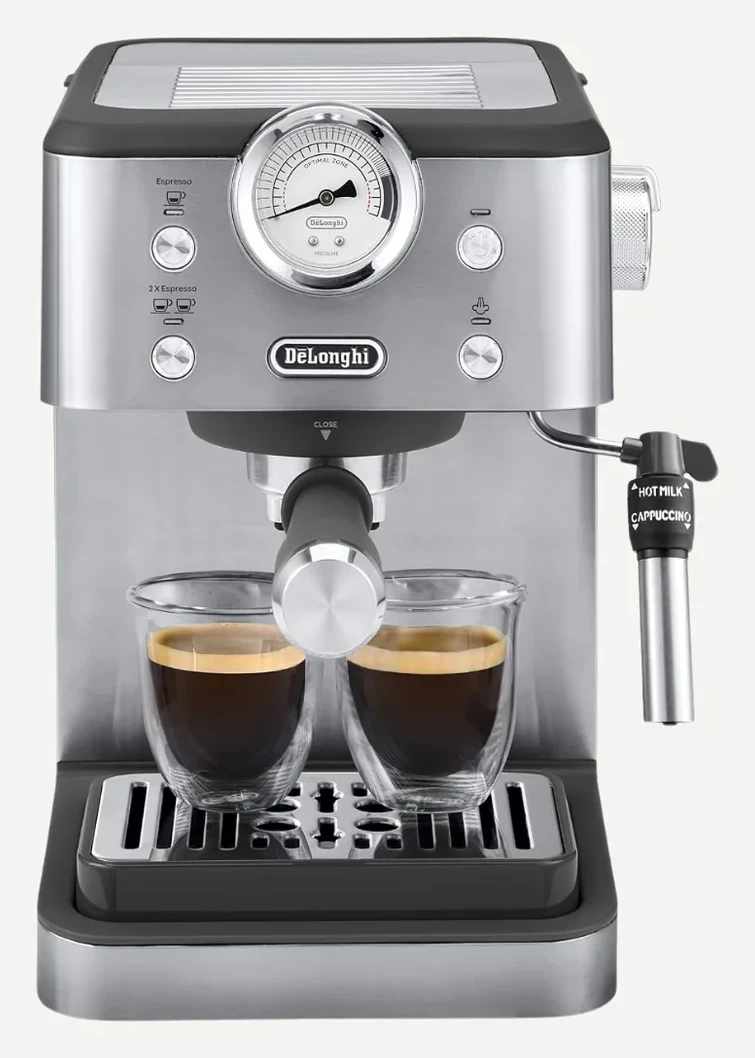
  1. 1Best for learning to dial in a shotDe'Longhi Classic Signature Espresso Machine6.2/10From $224.99
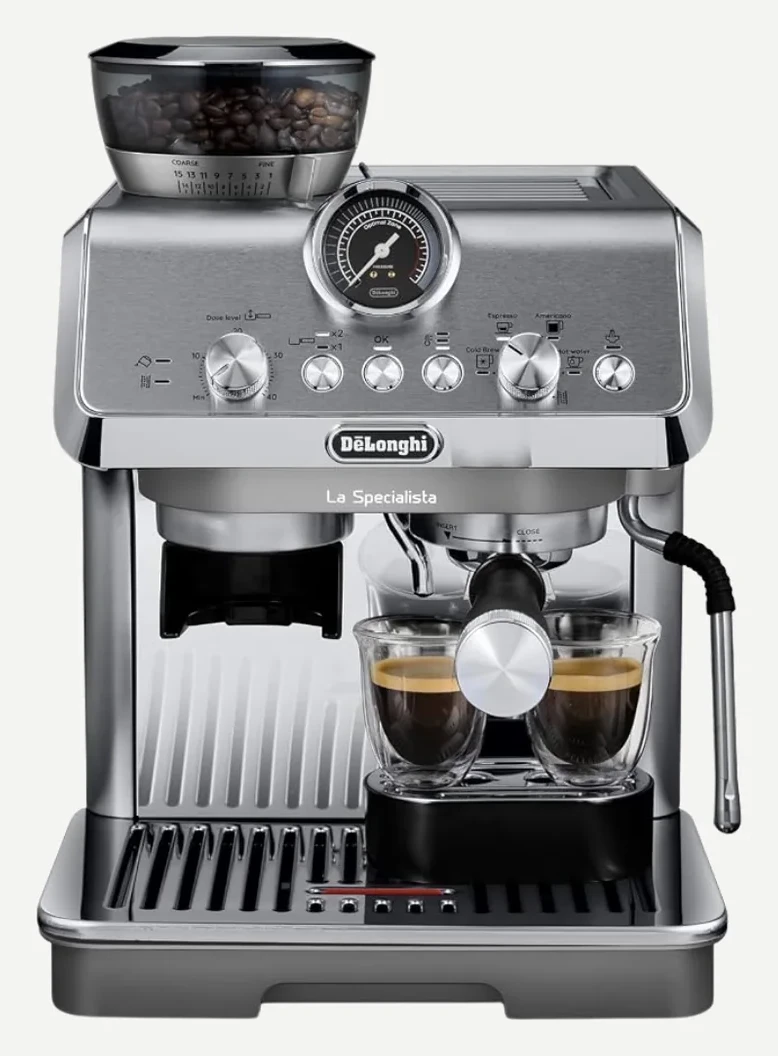
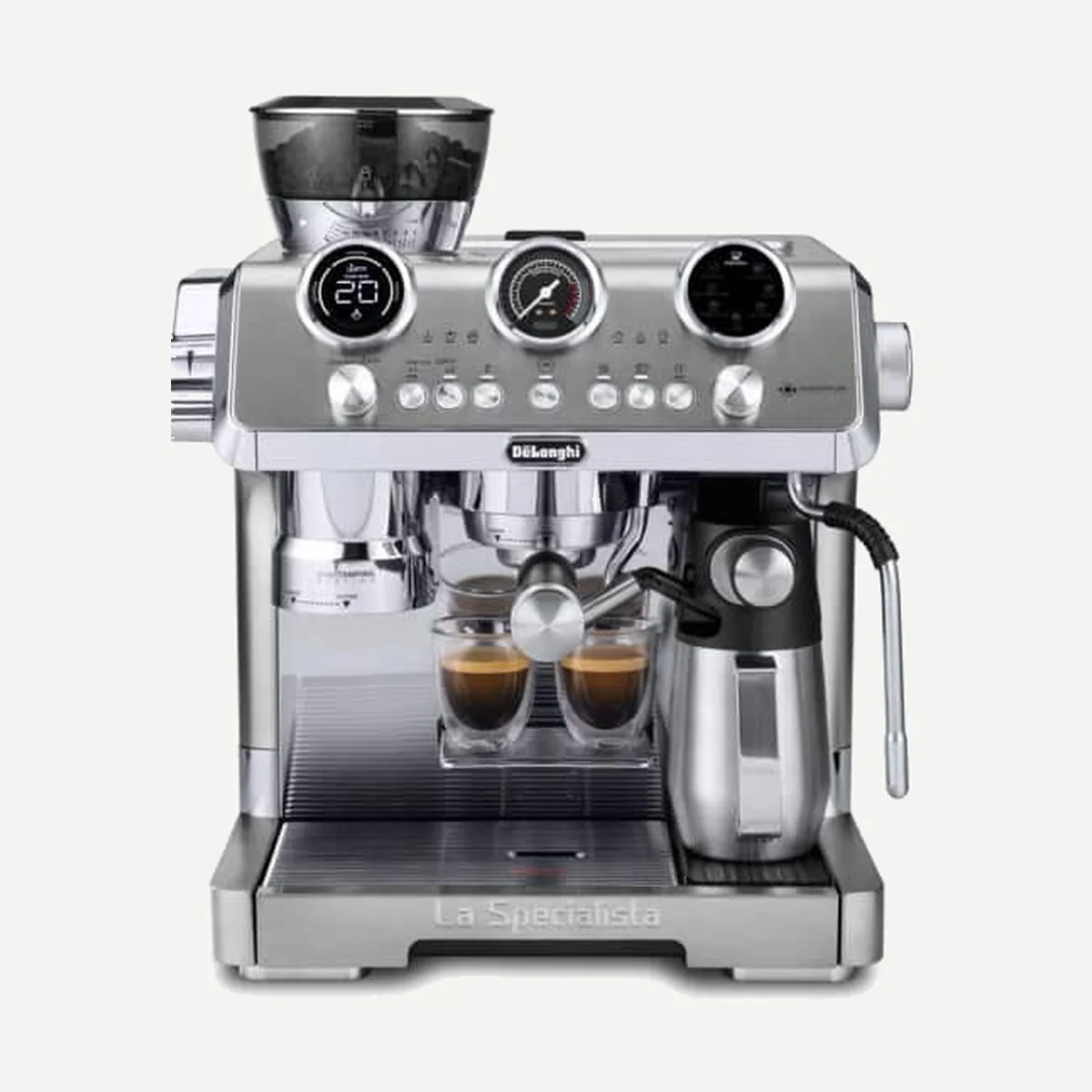
  2. 2Best for a grinder and a real steam wandDe'Longhi La Specialista Arte Evo6.4/10From $699.95
  3. 3Best for milk drinks without the skillDe'Longhi La Specialista Maestro EC9885M7.0/10From $999.95
1Best for learning to dial in a shot
De'Longhi Classic Signature Espresso Machine
Pressure gauge
Yes
Pump
15 bar
Boiler
Thermoblock
Steam wand
Two settings

The Classic Signature is a small pump machine with a visual pressure gauge on the front, which most machines at its level lack. When you change the grind and watch the needle respond, dialing in stops being guesswork. The thermoblock heats water on demand, so there is almost no wait.

The adjustable steam wand has two settings, one for steamed milk and one for microfoam, which is a step up from the single-setting frothers on cheaper machines. Pair it with a burr grinder and a scale and you have a setup that teaches you what changes the shot, which is the point of a first machine.

Watch for: There is no grinder, so budget for a burr grinder alongside it.

2Best for a grinder and a real steam wand
De'Longhi La Specialista Arte Evo
Grinder
Conical burr
Steam wand
Manual
Temperatures
3
Cold brew
Under 5 minutes

The Arte Evo puts a conical burr grinder and a commercial-style manual steam wand in one stainless steel body 14.4 inches wide. The wand is the only way to make true microfoam for latte art, and three infusion temperatures let you tune a light roast against a dark one.

It also makes cold brew in under five minutes with De'Longhi's Cold Extraction Technology, a quick cold coffee rather than a copy of overnight steeping. It expects you to do the work: there is a portafilter, a tamper and a wand, and the machine's job is to grind and hold its temperature.

Watch for: There is no automatic milk, and De'Longhi does not publish the portafilter size, which matters for upgrades.

3Best for milk drinks without the skill
De'Longhi La Specialista Maestro EC9885M
Grinder
15 settings
Tamping
Smart Tamping lever
Milk
LatteCrema Hot + wand
Temperatures
5

The Maestro grinds with Sensor Grinding Technology, tamps when you pull a lever, and froths milk at one touch in three textures with LatteCrema Hot. It still pulls espresso through a portafilter, so you keep the real shot while the machine takes over the steps beginners get wrong.

A manual MyLatte Art steam wand sits beside the automatic system for when you want control, and five brew temperatures and dynamic pre-infusion cover the shot itself. It also makes iced espresso and cold brew from its eight one-touch recipes, so one household can share it.

Watch for: It weighs 35.28 lb and measures 14 x 16.5 x 18.5 inches, and De'Longhi does not publish the portafilter size.

De'Longhi Espresso Machines, ranked by score

scored on what the maker publishesOpen a row for the score working
  1. 1De'LonghiLa Specialista Maestro EC9885MFrom $999.957.0

    How it scored

    Shot Quality & Extraction6.1
    Steam Power & Milk Texturing7.0
    Build Quality & Durability8.2
    Ease of Use & Learning Curve7.1
    Maintenance & Cleaning10.0
    plumbable and bottomless not published
    Workflow & Ergonomics6.9
    Value for Moneyweakest link5.1
    carries 10 of the 87.2 points scored
    Price from$999.95
    Score7.0
    Machine TypeSemi-automatic
    Built-in GrinderYes
    Automatic MilkYes
    Body MaterialMetal
    Read the De'Longhi La Specialista Maestro EC9885M review →
  2. 2De'LonghiLa Specialista Arte EvoFrom $699.956.4

    How it scored

    Shot Quality & Extraction5.0
    Steam Power & Milk Texturing6.5
    Build Quality & Durability8.8
    Ease of Use & Learning Curveweakest link4.7
    carries 12 of the 87.2 points scored
    Maintenance & Cleaning8.3
    plumbable and bottomless not published
    Workflow & Ergonomics6.2
    Value for Money6.4
    Price from$699.95
    Score6.4
    Machine TypeSemi-automatic
    Built-in GrinderYes
    Automatic MilkNo
    Body MaterialStainless steel
    Read the De'Longhi La Specialista Arte Evo review →
  3. 3De'LonghiClassic Signature Espresso MachineFrom $224.996.2

    How it scored

    Shot Quality & Extraction5.0
    Steam Power & Milk Texturing5.0
    Build Quality & Durability7.2
    Ease of Use & Learning Curveweakest link3.5
    carries 12 of the 87.2 points scored
    Maintenance & Cleaning7.5
    plumbable and bottomless not published
    Workflow & Ergonomics6.9
    Value for Money10.0
    Price from$224.99
    Score6.2
    Machine TypeSemi-automatic
    Built-in GrinderNo
    Automatic MilkNo
    Body MaterialStainless steel
    Read the De'Longhi Classic Signature Espresso Machine review →
  4. 4De'LonghiDedica EC680MFrom $149.955.9

    How it scored

    Shot Quality & Extraction5.0
    Steam Power & Milk Texturing6.0
    Build Quality & Durability6.7
    Ease of Use & Learning Curveweakest link2.9
    carries 12 of the 87.2 points scored
    Maintenance & Cleaning6.7
    plumbable and bottomless not published
    Workflow & Ergonomics5.0
    Value for Money10.0
    Price from$149.95
    Score5.9
    Machine TypeSemi-automatic
    Built-in GrinderNo
    Automatic MilkNo
    Body MaterialStainless steel
    Read the De'Longhi Dedica EC680M review →
  5. 5De'LonghiStilosa EC260BKFrom $104.995.6

    How it scored

    Shot Quality & Extraction5.0
    Steam Power & Milk Texturing5.0
    Build Quality & Durability6.4
    Ease of Use & Learning Curveweakest link2.9
    carries 12 of the 87.2 points scored
    Maintenance & Cleaning5.8
    plumbable and bottomless not published
    Workflow & Ergonomics5.0
    Value for Money10.0
    Price from$104.99
    Score5.6
    Machine TypeSemi-automatic
    Built-in GrinderNo
    Automatic MilkNo
    Body MaterialStainless steel, Plastic
    Read the De'Longhi Stilosa EC260BK review →

What to know about De'Longhi Espresso Machines

De'Longhi is an Italian appliance maker, and its manual espresso machines run from a few small pump machines at the bottom to grinder-equipped machines at the top. Every one of them uses a portafilter, so you still make the shot yourself. What changes as you climb is how much help you get before and after it.

The cleanest way to sort the range is by two questions: does the machine have a grinder, and how does it handle milk? The three cheapest machines have no grinder and a manual way to steam. The two La Specialista machines grind for you, and one of them also froths milk on its own.

How the De'Longhi range is organised

No grinder: Stilosa, Dedica and Classic Signature

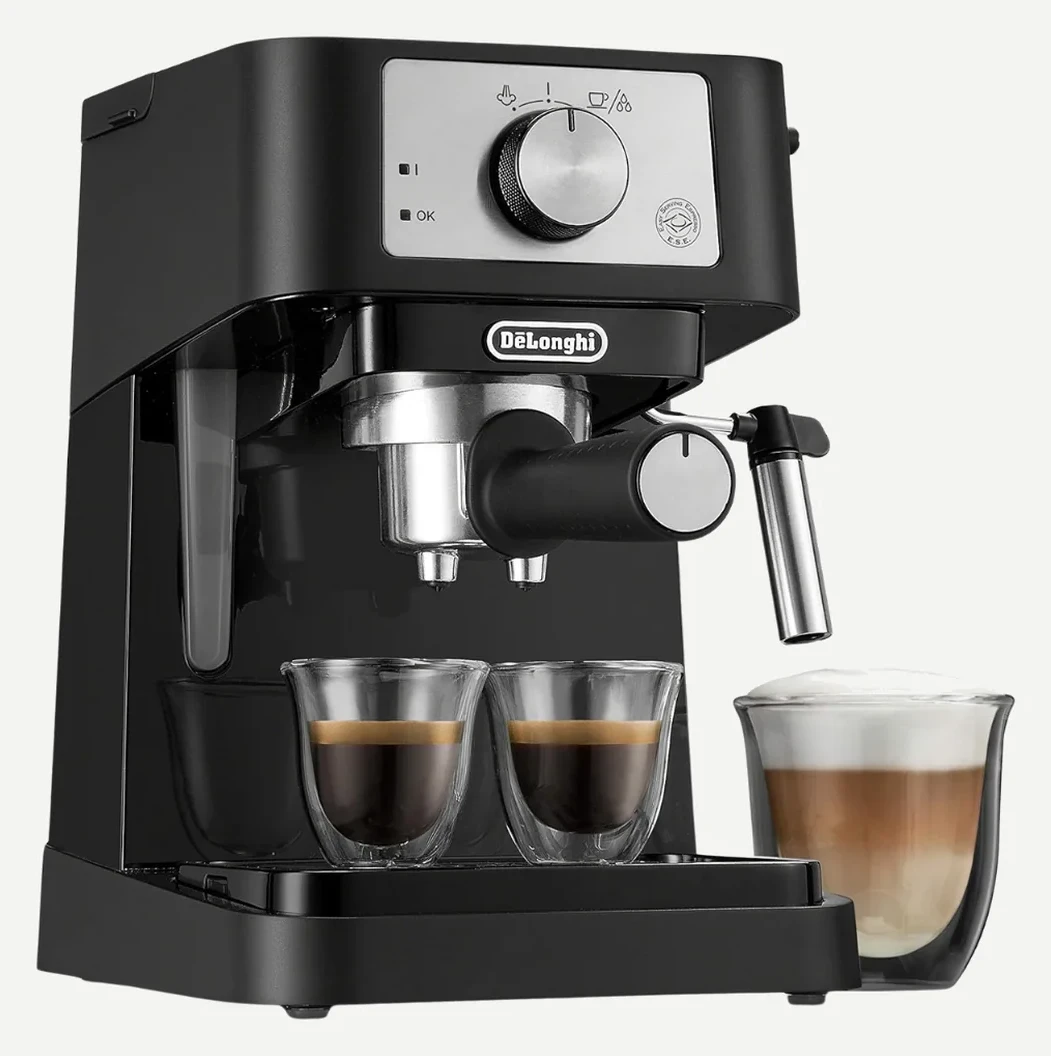
The De'Longhi Stilosa EC260BK is the entry point, and its one unusual specification is a stainless steel boiler where machines at this level normally use something cheaper. It quotes a 15 bar pump, 1100 watts, a 1 litre tank and a manual frother, and it ships with two baskets for single and double shots. It has no temperature control and no pre-infusion, so the shot depends on your grind, dose and tamp. That makes it a machine for finding out whether you will do the work.

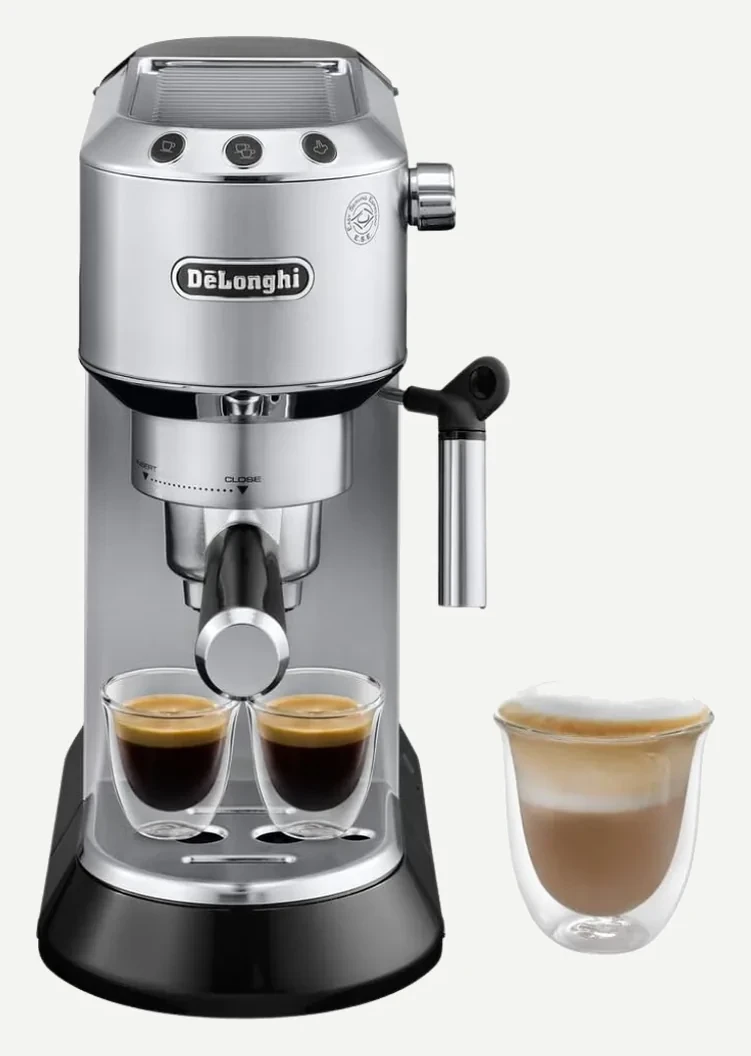
The De'Longhi Dedica EC680M is built around its width. De'Longhi publishes six inches, which is about half the footprint of a conventional machine, in a stainless steel body with a thermoblock heater, 1450 watts and a 1 litre tank. At 4.2 kg it is light, so a firm tamp can move it if you do not brace it. It is the machine for a worktop that is already carrying a kettle and a toaster. Milk comes from a manual frother rather than a proper wand, and the thermoblock is quick to heat but less steady across back-to-back shots than a boiler.

The De'Longhi Classic Signature Espresso Machine is the one to learn on. It has a visual pressure gauge on the front, which most machines at this level do not, and an adjustable steam wand with two settings for steamed milk or microfoam. Seeing the needle move when you change the grind turns dialing in from guesswork into feedback. That is worth more than a bigger number on the box.

Grinder built in: La Specialista Arte Evo and Maestro

The De'Longhi La Specialista Arte Evo puts a conical burr grinder on the machine and pairs it with a thermoblock, three infusion temperatures that De'Longhi calls Active Temperature Control, and a manual steam wand it describes as commercial-style. The wand is the right choice here: a manual wand is the only way to make true microfoam for latte art, and it is far simpler to clean than an automatic milk system. It also makes cold brew in under five minutes with De'Longhi's Cold Extraction Technology. That is a different process from steeping overnight, so treat it as quick cold coffee, not a copy of slow cold brew. Our cold brew vs iced coffee guide explains the difference.

Beyond the grinder and the wand, the Arte Evo has a 1.66 litre tank, a 1600 watt heater, and a stainless steel body 14.4 inches wide. It has no display and is controlled by button and dial.

The De'Longhi La Specialista Maestro EC9885M sits at the top of the range and helps with every step. Its Italian-made burr grinder has 15 settings and what De'Longhi calls Sensor Grinding Technology, which keeps the dose consistent when you change the grind size. You then pull the Smart Tamping lever to tamp the coffee evenly. Uneven tamping is one of the most common reasons home espresso runs fast on one side and tastes sour, and a lever takes that variable away. It adds five brew temperatures, dynamic pre-infusion, a 2.5 litre tank, and eight one-touch recipes that include Iced Espresso and Cold Brew.

Milk is the Maestro's other advantage. It has the automatic LatteCrema Hot system, which froths at one touch in three textures, and a manual MyLatte Art steam wand alongside it. Few machines offer both, so it suits a household where one person wants a quick latte and another enjoys steaming.

How the models compare

ModelGrinderMilkPressure gaugeWater tank
Stilosa EC260BKNoManual frother-1 L
Dedica EC680MNoManual frother-1 L
De'Longhi Classic SignatureNoManual wand, two settingsYes-
La Specialista Arte EvoYes, conical burr (8 or 15 settings: De'Longhi gives both)Manual wand-1.66 L
La Specialista Maestro EC9885MYes, 15 settings, Smart TampingLatteCrema Hot automatic, plus a manual wand-2.5 L

A dash means the maker does not publish that figure, or we have not confirmed it.

What to look for in a De'Longhi espresso machine

Grinder built in, or a separate one

This is the biggest step in the range. A built-in grinder saves counter space and the cost of a second appliance, and it grinds straight into the portafilter. A separate grinder costs more up front but can be better than any built-in one and outlasts the machine. The three cheaper De'Longhi machines assume you will buy one, and one of the grinders for espresso we rank is the upgrade that improves the cup most.

How you want to make milk

A manual wand gives control and takes practice. The Stilosa and Dedica have only a manual frother, which is the weakest tool for the job. The Classic Signature and the Arte Evo have proper wands, and the Maestro adds the automatic option. If other people in the house will use the machine, the automatic system matters more than any other feature on the list.

Temperature control and pre-infusion

The two La Specialista machines let you choose the brew temperature, three settings on the Arte Evo and five on the Maestro, so you can brew a light roast hotter and a dark roast cooler. The Maestro also publishes dynamic pre-infusion, which wets the puck before full pressure and helps an uneven tamp extract evenly. The cheaper machines publish neither, which is why the grind and tamp matter so much on them.

Size and weight

The Dedica is the only machine here that is narrow by design. The Maestro weighs 35.28 lb and measures 14 x 16.5 x 18.5 inches, so plan a permanent spot with room above for the bean hopper. Measure the gap under your cupboards before you choose.

Pressure gauge

Only the Classic Signature publishes one. If you are learning to dial in a shot, it is the cheapest way to see what the puck is doing, and it is the reason to pick that machine over the others at a similar price.

Where De'Longhi falls short

Upgrades are harder to plan

De'Longhi publishes no portafilter diameter on the Arte Evo or the Maestro, so you cannot check whether an aftermarket basket or tamper will fit before buying. On a machine you expect to grow into, that is a real gap, and it is worth confirming the size with the seller first.

Pump numbers flatter the machines

Fifteen bar is what most home pumps can produce with the outlet blocked. It is not the pressure at the puck, where espresso is pulled at about 9 bar. A machine with a pressure gauge or a stated 9 bar extraction tells you more than a bigger figure on the box.

More automation means less control

Our review of the Maestro makes the point. Lever tamping, sensor grinding and automatic milk are help, and they leave less room for fine manual control than a separate grinder and a plainer machine. La Specialista Arte Evo vs Gaggia Classic Evo Pro shows that trade from the other side. The cheap machines have the reverse problem: nothing helps, so every mistake shows in the cup. The Maestro is also heavy and large, which is a cost people forget until the box arrives.

De'Longhi espresso machines by budget

At the prices on our records when this page was checked. The ranked list at the top of the page shows each machine's current price.

BudgetModelsWhat you get
Under $160Stilosa, DedicaThe machine only: a 15 bar pump, a 1 litre tank, a manual frother. Budget for a grinder.
About $200 to $250Classic SignatureA pressure gauge and a two-setting steam wand, still with no grinder.
About $700 and upLa Specialista Arte Evo, La Specialista MaestroA grinder built in, brew temperature control, cold brew, and on the Maestro lever tamping and automatic milk.

What else you need

On the three machines without a grinder, buy the burr grinder first. Pre-ground coffee in a machine with no pre-infusion is the fastest route to a sour cup, and a scale that reads to a tenth of a gram is the next purchase, because weighing the dose is how you repeat a good result.

Fresh beans matter as much as the hardware. Our list of coffee beans for espresso covers roasts that suit a home machine. The Arte Evo comes with a barista toolkit, but a better tamper or basket in your machine's size is the next upgrade, once you know the portafilter size. Plan for descaling too: any machine that heats water builds up scale.

Which De'Longhi should you buy?

Start with two questions: do you want a grinder in the machine, and do you want it to steam the milk? If you only want to find out whether espresso is for you, the Stilosa is the cheapest honest experiment, and the Dedica if worktop width is the constraint. If you intend to learn and will grind separately, the Classic Signature is the better machine, because the gauge shows you what each change does.

If you want one box that grinds, the Arte Evo is the choice for somebody who wants to steam milk by hand and enjoys the process. If milk drinks are the point and not everyone in the house wants to learn the wand, choose the Maestro. And if you are happy to spend more time than money, a plainer machine and a separate grinder will usually pull the better shot.

De'Longhi against the alternatives

De'Longhi's most direct rival is Breville, which builds the same ladder from machine-only to fully assisted. If you would rather press one button than make a shot, look at De'Longhi's bean-to-cup machines.

Our guide to bean-to-cup or espresso machine sets out that trade.

Among the Italian machines, the Arte Evo against La Specialista Arte Evo vs Rancilio Silvia Pro X shows what a dedicated boiler machine adds. De'Longhi is one maker among many we score on the same criteria, and every machine we review is ranked in the espresso machine category.
Common questions

Which De'Longhi espresso machine is best for beginners?

The Classic Signature if you will grind separately or buy pre-ground, because its pressure gauge shows you what each shot is doing. The La Specialista Maestro if you want the grinder, tamping and milk handled in one machine and are willing to take on its size and weight.

What is the difference between the De'Longhi Stilosa and the Dedica?

Both are entry machines with a 15 bar pump, a 1 litre tank and a manual frother, and neither has a grinder. The Dedica has a more powerful heater, 1450 W against 1100 W, a thermoblock, and a six inch width. The Stilosa has a stainless steel boiler and states a one year warranty.

Does the De'Longhi La Specialista have a grinder?

Yes, both the Arte Evo and the Maestro have one built in. The Arte Evo has a conical burr grinder. The Maestro has an Italian-made burr grinder with 15 settings and Sensor Grinding Technology.

De'Longhi La Specialista Arte Evo vs Maestro: what is the difference?

The Maestro adds lever-operated Smart Tamping, five brew temperatures against three, dynamic pre-infusion, an automatic LatteCrema Hot milk system alongside a manual wand, and a 2.5 litre tank against 1.66 litres. The Arte Evo has a manual wand only and is lighter and narrower.

Can the De'Longhi Arte Evo really make cold brew in five minutes?

De'Longhi says its Cold Extraction Technology makes a single cold brew in under five minutes using controlled water flow, pressure and temperature. That is a different process from steeping for twelve hours or more, so expect a quick cold coffee that may not taste like overnight cold brew.

Is 15 bar better than 9 bar on a De'Longhi?

No. Espresso is brewed at about 9 bar, and 15 bar is the pump's maximum with the outlet blocked. Above 9 bar water tends to channel through the puck and the shot turns harsh and thin. Fifteen bar tells you the pump has headroom and nothing about shot quality.

Is the De'Longhi Classic Signature worth it?

It is worth it for the pressure gauge, which is rare at its level and makes dialing in visible. You need your own grinder, and a scale makes the most of it.

Do I need a separate grinder for a De'Longhi espresso machine?

For the Stilosa, Dedica and Classic Signature, yes, as none has a grinder. The Arte Evo and Maestro grind on the machine. A separate burr grinder can still be better than a built-in one, and it outlasts the machine if you upgrade later.

Keep exploring