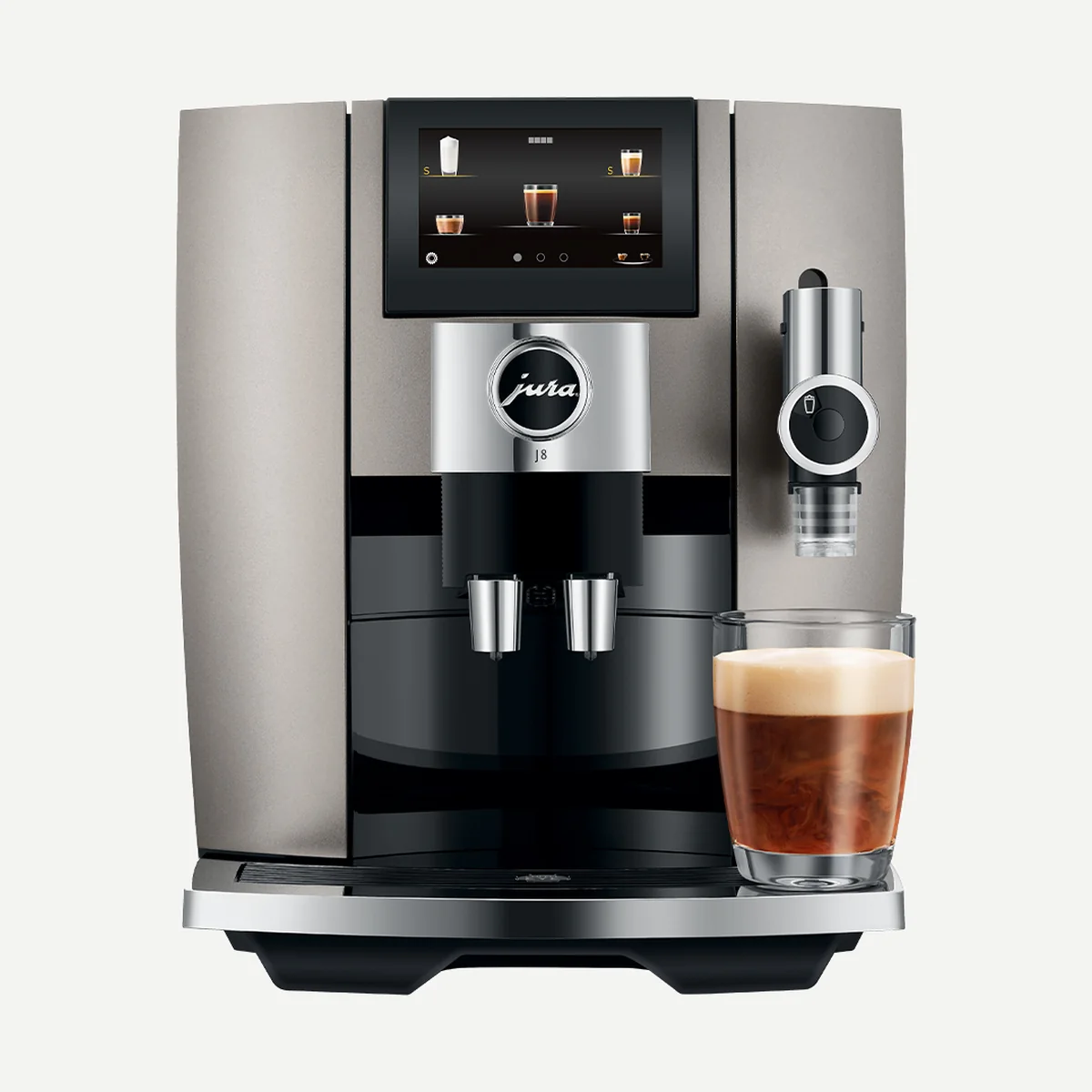
Jura makes only fully automatic machines. You fill a hopper with beans and a tank with water,
press a button, and the machine grinds, brews and, on every model here but one, froths the milk. There
is no portafilter to dose and no pod to load, so the range is organised by a different question from
most coffee gear: how many drinks it makes, how it handles milk, and how big a footprint you can spare.
Those three things change as you climb from the entry E line to the Z10 flagship, and so does the
price. The sections below take the lines in turn, then cover what to look for, where Jura falls short
and which model suits which kitchen. Every machine here is also ranked in the
bean-to-cup machine category.
How the Jura range is organised
The E line: E4, E6 and E8
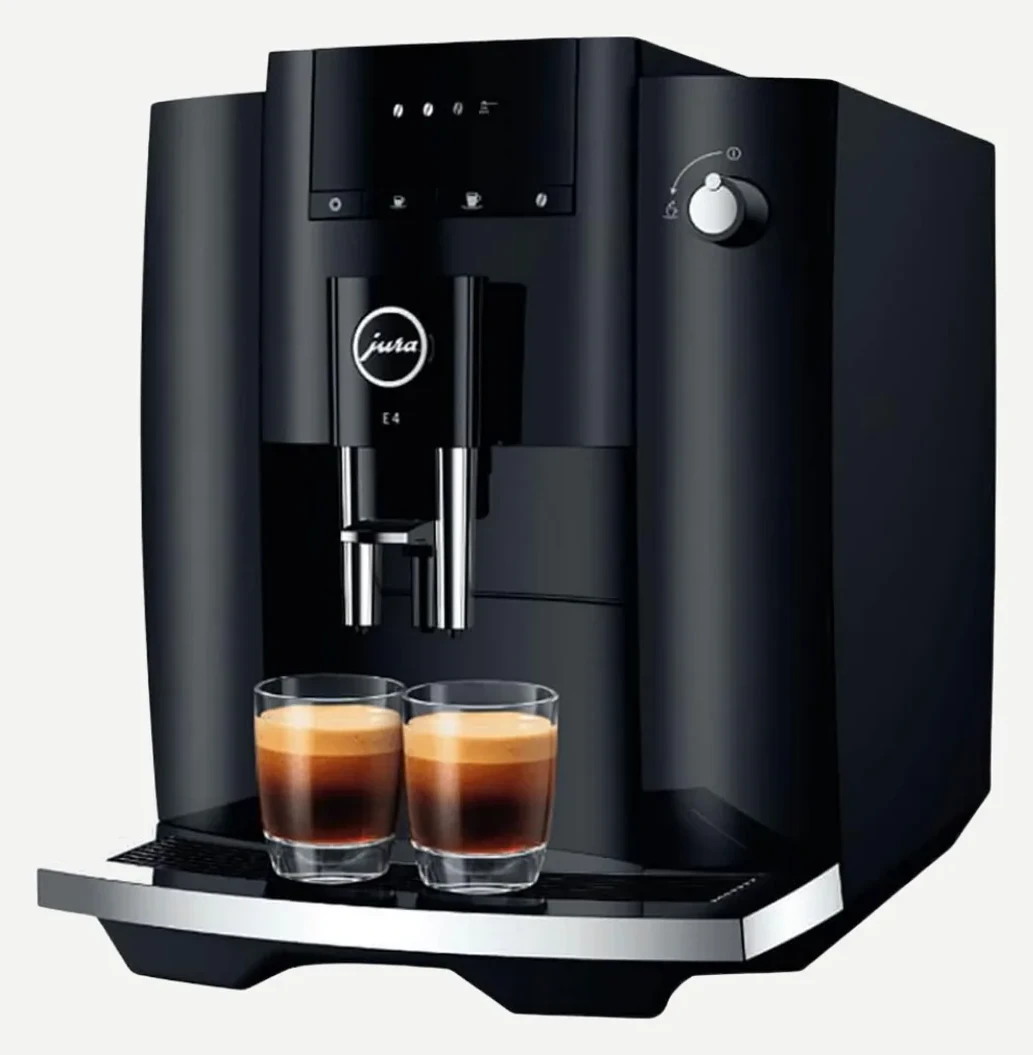
The Jura E4 is the plainest machine in the range, and that is deliberate. It makes five drinks:
espresso, two espressos, coffee, two coffees and hot water. There is no milk system at all, no
wand to add later, and a symbol display with three coffee strength settings. What it has instead is
Jura's variable brewing unit, which takes 5 to 16 g of coffee, and the Pulse Extraction Process, which
pushes water through the grounds in short intervals rather than one steady flow. For a household that
drinks black coffee it is a machine with less to clean and less to go wrong.
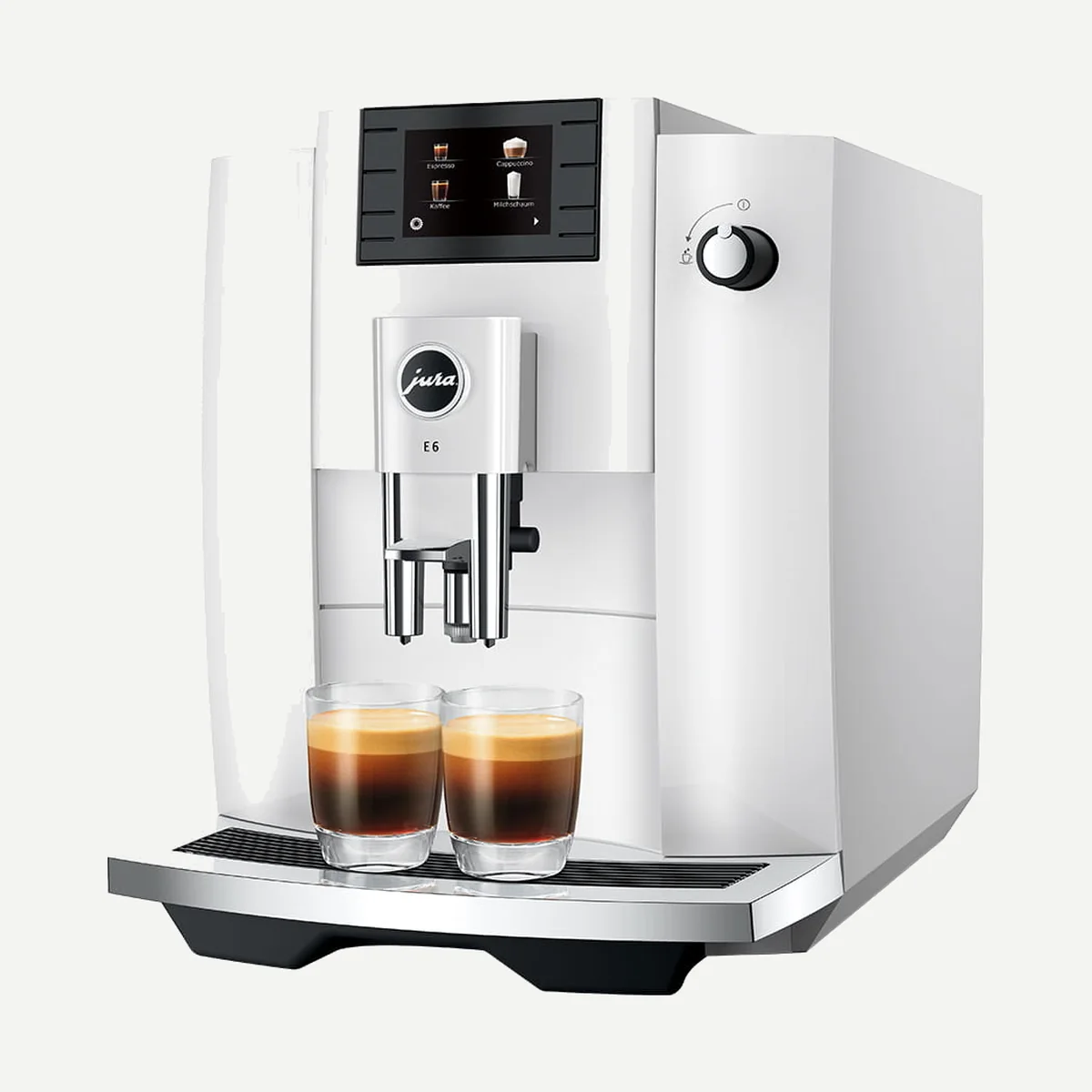
The Jura E6 is where milk arrives. It makes eleven drinks, four of them with milk: espresso
macchiato, cappuccino, cappuccino with an extra shot, and a portion of milk foam. The milk comes
through an interchangeable spout Jura lists as HP1 / CX3, under what it calls the Easy Cappuccino
function. You get ten coffee strength levels where the E4 gives three, and a 2.8 inch colour display
with buttons. The app works with it, but the Wi-Fi connector is not in the box and is sold
separately.
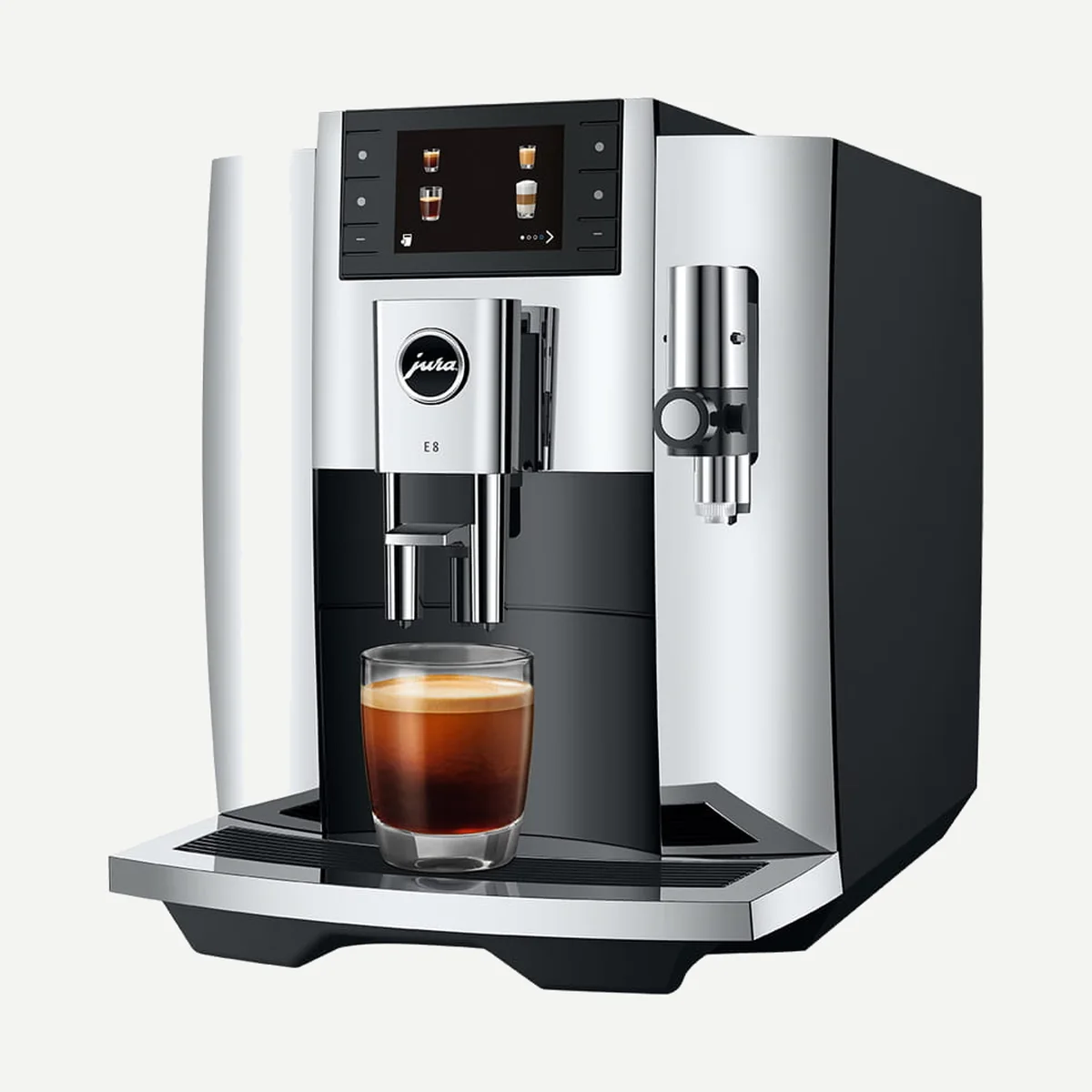
The Jura E8 widens the menu to seventeen drinks, adding cortado, flat white and latte macchiato, and
moves to the HP3 / CX3 spout with automatic one-touch cleaning of the milk system. It shares the
E-line size: a 280 g hopper, a 1.9 litre tank and a P.A.G.2 grinder with 7 settings. A powder chute
takes ground coffee, so a decaf does not mean emptying the beans. If the extra drinks and the
self-cleaning milk system are what you are paying for,
Jura E6 vs Jura E8 shows what the
step buys.
The compact machine: ENA 8
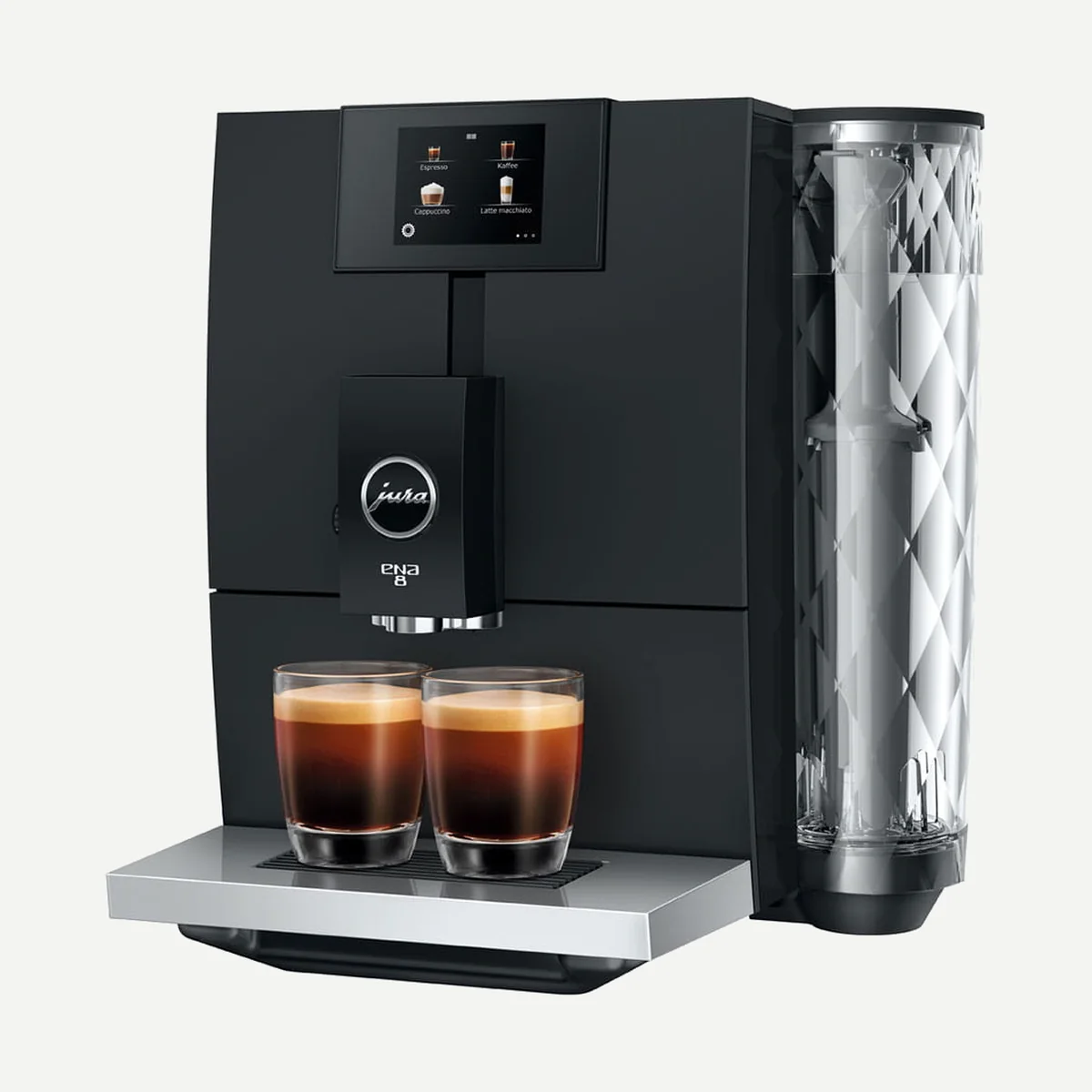
The Jura ENA 8 is Jura's smallest machine, 271 mm wide, and it keeps most of the technology of the
larger ones: the Professional Aroma Grinder, the Pulse Extraction Process, a 15 bar pump and a
2.8 inch touchscreen, with the Wi-Fi transmitter supplied for the app. Its milk spout, an HP1 / CX1
with fine foam technology, aims at the dense, smooth foam a flat white wants. It makes fifteen drinks,
including cortado, cappuccino, flat white and latte macchiato, and a two-cup function brews two black
coffees at once.
The price of the small body is small reservoirs. The tank holds 1.1 litres and the hopper 125 g,
against 1.9 litres and 280 g on the E line, and the grounds container takes about ten servings where
the larger machines take sixteen. For one or two people that is an occasional refill. For a family
making a lot of milk drinks it is a daily one.
The mid-range: S8 and J8
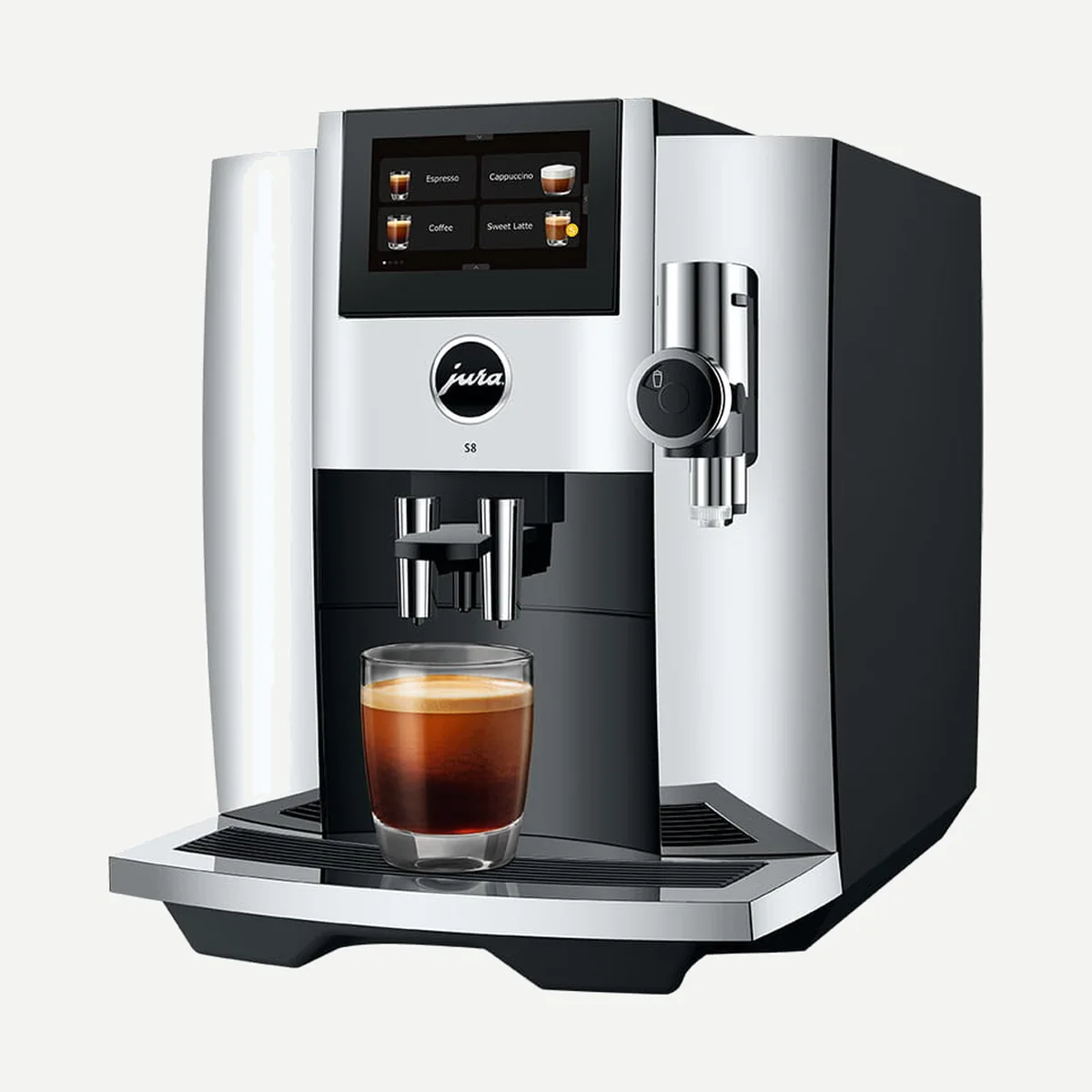
The Jura S8 sits above the E line and adds a 4.3 inch colour touchscreen, Sweet Foam, which runs
syrup into the milk foam as it is made, and a Wi-Fi transmitter in the box. Jura counts 27 drinks,
and twelve of them are Sweet Foam or Extra Shot versions of the milk drinks. The grinder, hopper, tank
and milk spout are the same as the E8's, so the money is going on the screen, the app and the
sweetened and double-shot drinks. Like the rest of the range, it cleans itself through programmes and tablets rather than a brew unit
you lift out and rinse.
The Jura J8 makes 31 drinks and shares the S8's tank, hopper, touchscreen and Wi-Fi. It adds a
second spout range for milk drinks, 107 to 153 mm against 65 to 111 mm for coffee, so a tall latte
glass fits, and Coffee Eye, which detects the cup you put down and adapts the drinks shown. Its
grinder is the P.A.G.2+, with 7 grind levels, 10 strength levels and three brew temperatures. When we
checked, Jura's own US store listed the J8 at a lower price than the S8, which makes
Jura E8 vs Jura J8 the more useful comparison for most
people deciding in this part of the range.
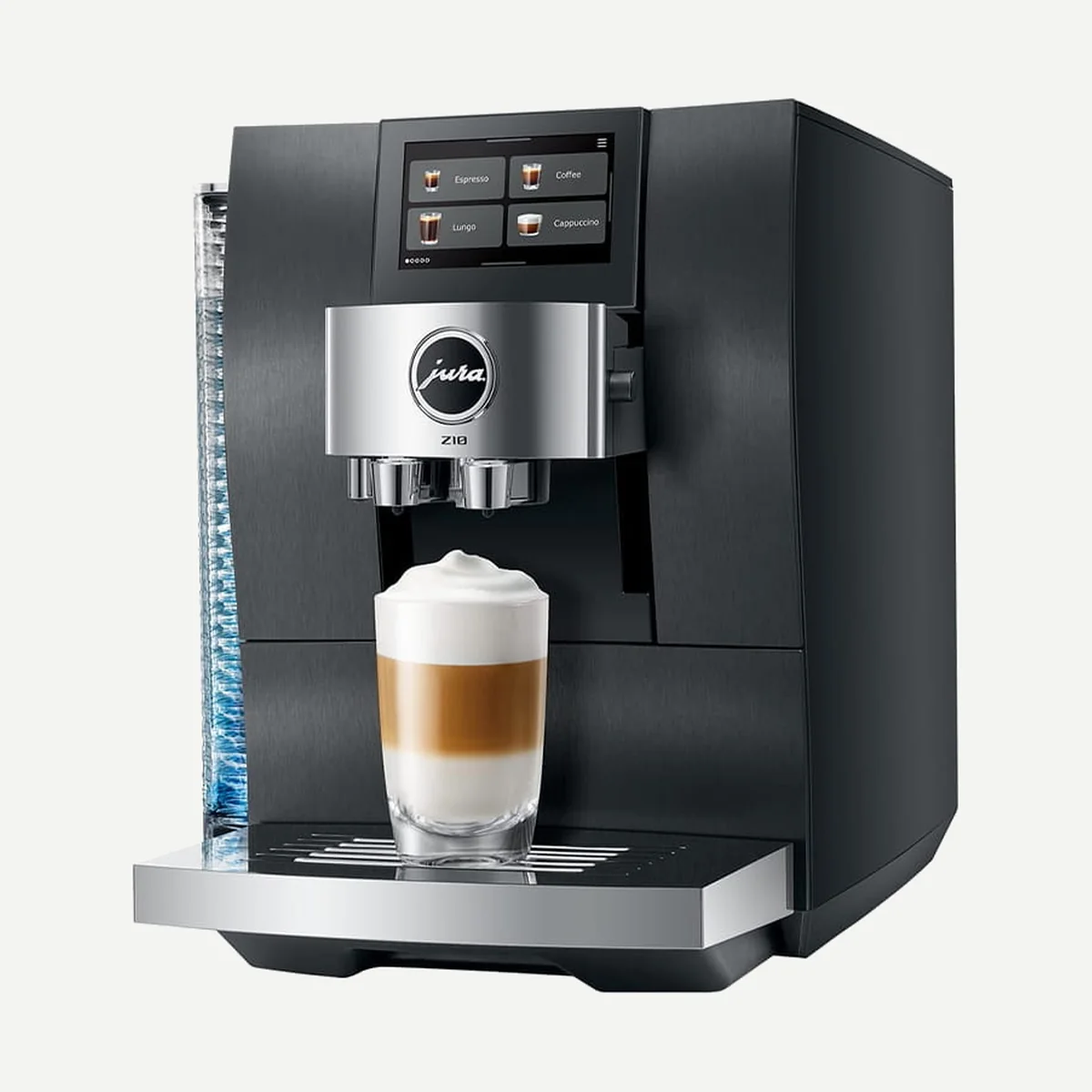
The flagship: Z10
The Jura Z10 adds range rather than size. Its second generation, the NAB version this page covers,
lists 51 drinks across hot, Cold Brew, Light Brew and Sweet Foam versions. Cold Brew is Jura's Cold
Extraction Process, and the Product Recognizing Grinder sets the grind and the dose for the drink you
choose, fine for espresso and coarse for the cold drinks. A traditional cold brew steeps for hours, so
this is a different drink under the same name, but it is real cold coffee at one touch.
The Z10 also has the largest tank in the range at 2.4 litres, a Caffeine Regulator with three
levels, a dual spout that adjusts from 79 to 151 mm, and aluminium front panels. The hopper is still
280 g. If cold coffee is the reason to spend more, Jura J8 vs
Jura Z10 sets the two flagships side by side.
How the models compare
| Model | Drinks | Milk | Bean hopper | Water tank | Touchscreen |
|---|
| E4 | 5 | No milk system | 280 g | 1.9 L | No |
| E6 | 11 | HP1 / CX3 milk spout | 280 g | 1.9 L | No, 2.8 in display with buttons |
| ENA 8 | 15 | HP1 milk spout | 125 g | 1.1 L | Yes, 2.8 in touchscreen |
| E8 | 17 | HP3 milk spout, auto cleaning | 280 g | 1.9 L | - |
| S8 | 27, with Sweet Foam | HP3 milk spout, auto cleaning | 280 g | 1.9 L | Yes, 4.3 in touchscreen |
| J8 | 31 | HP3 milk spout, Sweet Foam | 280 g | 1.9 L | Yes, 4.3 in touchscreen |
| Z10 | 51, hot and Cold Brew | HP3, switches milk and foam | 280 g | 2.4 L | Yes, 4.3 in touchscreen |
A dash means the maker does not publish that figure, or we have not confirmed it.
What to look for in a Jura
Milk or no milk
This is the first and cheapest decision. The E4 has no milk system, so paying for the E6 or above
only makes sense if somebody drinks cappuccinos or lattes. If everyone takes black coffee, the E4 saves
the money and the daily milk cleaning. If one person wants milk, buy a machine with the system, because
nothing can be added to the E4 later.
The milk spout and its cleaning
Jura's spouts come in a few versions: HP1 on the ENA 8 and E6, HP3 on the E8, S8, J8 and Z10. The
HP3 models clean the milk system at one touch, and the ENA 8 also has a button for it. Milk left in
the tubes is the usual reason a bean-to-cup machine ends up tasting stale, so a machine that makes
cleaning a single press is one that gets cleaned. Our guide to
the milk systems on bean-to-cup machines explains
how Jura's compares with a jug or a wand.
Drink count and model code
The number of drinks climbs from five on the E4 to 51 on the Z10, but read it with care. Jura has
updated machines several times and different listings show different counts: the Z10 NAB has 51
drinks while the first generation, which Jura still lists, has 40, and the E8 and S8 reviews cover the
US versions with 17 and 27. A larger count mostly means more versions of the same milk drinks, plus
Sweet Foam, Extra Shot or Cold Brew. Check the code on the listing before you buy.
Cup clearance
The coffee spout on the E6, E8 and S8 reaches 111 mm, so a tall latte glass may not fit under it. The ENA 8 reaches 138 mm, the J8 gives 153 mm for milk drinks and the Z10 151 mm. Measure your
tallest glass before you choose, because the spout cannot be changed.
Capacity and counter space
Every machine except the ENA 8 and Z10 has the same 280 g hopper and 1.9 litre tank. The ENA 8 is
smaller in both and the Z10 adds a larger tank, but not a larger hopper. Weights run from 9.1 kg on
the E6 to 12 kg on the Z10, and the Z10 is 470 mm deep, so measure the shelf under your cabinets.
App and screen
The ENA 8, S8, J8 and Z10 supply the Wi-Fi transmitter for Jura's J.O.E. app. The E6 does not and
sells it separately. The 4.3 inch touchscreen is on the S8, J8 and Z10, while the E6 uses a 2.8 inch
display with buttons and the E4 a symbol display.
Where Jura falls short
The price is high and not always clear
Jura sits at the top of the price range for bean-to-cup machines, and several of its product pages
show no price at all. Sale prices also move: when we checked, Jura's own US
store had the S8 above the J8, although the J8 makes more drinks, so compare current prices before you
choose. The E8 review also notes a plastic housing, ordinary for the category but
worth knowing at this money. Check the ranked list for the current price.
Small hoppers and tanks
A 280 g bean container and a 1.9 litre tank are fine for one or two people and a chore for a busy
household. Even the flagship Z10 keeps the 280 g hopper. A household making a lot of coffee will be
refilling beans often, and the ENA 8 will need it daily.
Consumables and a usage-based warranty
Jura builds its machines around its own CLEARYL Smart+ filters and its own cleaning and descaling
tablets, which are an ongoing cost beside beans and milk. Skipping them to save money is the usual way
a bean-to-cup machine ends up making worse coffee. The warranty is two years or 6,000 brewings,
whichever comes first, so a heavy-use household reaches the cap first. Cleaning a bean-to-cup machine covers what each
routine involves.
Jura machines by budget
At the prices on our records when this page was checked. The ranked list at the top of the page
shows each one's current price.
| Budget | Models | What you get |
|---|
| Under $2,000 | E4, E6, ENA 8 | Black coffee only (E4), milk drinks on a 2.8 inch display (E6), or the compact machine with the touchscreen and fine foam (ENA 8). |
| About $2,600 to $3,300 | E8, J8, S8 | Self-cleaning HP3 milk system and 17 drinks (E8), or a 4.3 inch touchscreen, Sweet Foam and Wi-Fi in the box (J8, S8). |
| About $4,500 and up | Z10 | 51 drinks including Cold Brew and Light Brew, the largest tank, a grinder that adapts to the drink. |
What else you need
Beans matter on a machine like this. Oily, dark beans can clog an automatic grinder, so read
choosing beans for a bean-to-cup
machine before the first bag. With seven grind settings at most and ten strength levels, you adjust per bag with the strength
setting rather than by dialling in the grinder.
For milk, the machine draws it through a pipe from a container beside it. A milk pipe comes in the
box on the J8 and the ENA 8, while Jura sells a glass milk container and a Cool Control milk cooler
separately. The J8 and Z10 ship a syrup attachment for Sweet Foam, and the Z10 a chocolate
attachment too. Budget for the filters and cleaning tablets as well.
Which Jura should you buy?
Start with milk. If nobody drinks it, the E4 is the plain, cheaper route. If somebody does, the E8 is
the sensible centre of the range: seventeen drinks, the self-cleaning milk system and the full everyday
menu without the S, J and Z prices. The ENA 8 is the answer when counter space decides, accepting
the small tank and hopper.
Move up only for a specific reason. The J8 if you want the touchscreen, Sweet Foam syrup drinks and
a spout that takes tall glasses; the S8 only if its price comes down to meet the J8. The Z10 is for the
household that wants cold coffee from beans at one touch. Our top picks at the top of the page set
out the reasoning for each.
Jura against the alternatives
If you are still deciding between a bean-to-cup machine and a portafilter one, our guide to
bean-to-cup or espresso machine sets out the
trade. Jura does one job, and a portafilter machine leaves more of the shot in your hands.
Within automatics, Jura is the expensive end. De'Longhi
also makes bean-to-cup machines, and the E8 costs far more than the Philips 4300 LatteGo,
a gap Jura E8 vs Philips 4300 LatteGo
sets against the E8's extra drinks and finer strength control.
One difference is worth knowing. The Miele CM 6360 has a brew unit that lifts out to be rinsed, which
no Jura here has, and Jura E8 vs Miele
CM 6360 covers the rest.