Bialetti has made the Moka Express in Italy since 1933, and nearly every stovetop coffee maker sold
today is a variation on it. Water in the base boils, steam pressure pushes it up through a basket of
ground coffee, and the coffee collects in the top chamber. A moka pot works at roughly one to two bar,
against about nine for an espresso machine, so what comes out is a strong, heavy-bodied coffee rather
than true espresso. It is also the cheapest way to get something close on a stove.
The range is small, and two questions sort it. What is the pot made of, and what is your stove? Aluminium
pots heat fast and are the classic choice, but aluminium is not ferrous, so an induction cooktop cannot heat
it. Stainless steel works on every stove. Size and extras such as the Brikka's valve come after that.
How the Bialetti range is organised
Aluminium pots: Moka Express, Mini Express and Brikka
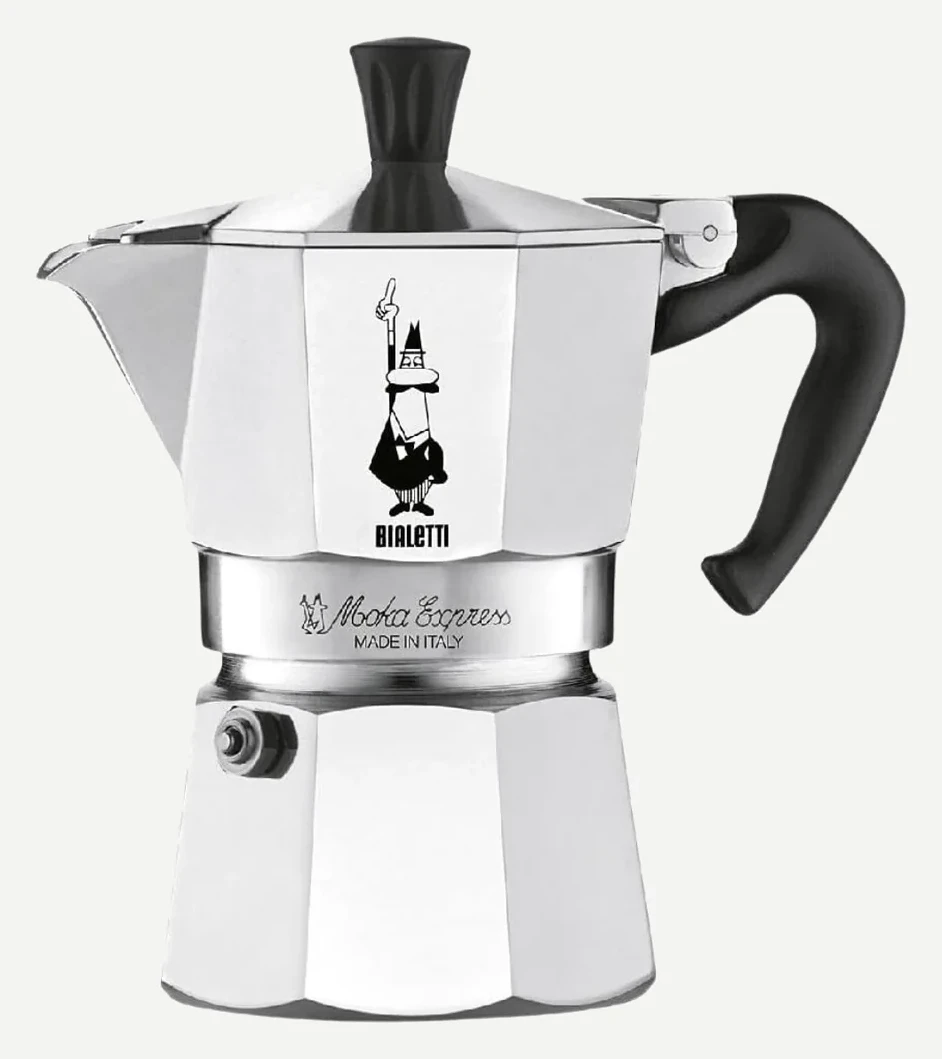
The Bialetti Moka Express is the original octagonal pot, in aluminium with a thermoplastic handle. It
is sold in eight sizes, from 59 ml to 887 ml, the widest range of any pot on this page, and it is made in
Italy with a two-year warranty. Aluminium heats quickly, which brings the water up to brewing temperature
without hot spots that scorch the grounds, and it gives the dense, full-bodied cup moka drinkers expect. It is also a softer, more reactive metal than steel, and Bialetti rates it for hand rinsing only.
One thing to settle before you order: the classic aluminium Moka Express does not work on an induction
stove by itself. Aluminium is non-ferrous, so the stove cannot induce a current in it and nothing happens. It
needs an adaptor plate, bought separately. On gas or an electric stove it is the reference pot and
there is little reason to spend more. If you cook on induction, read the next section first.
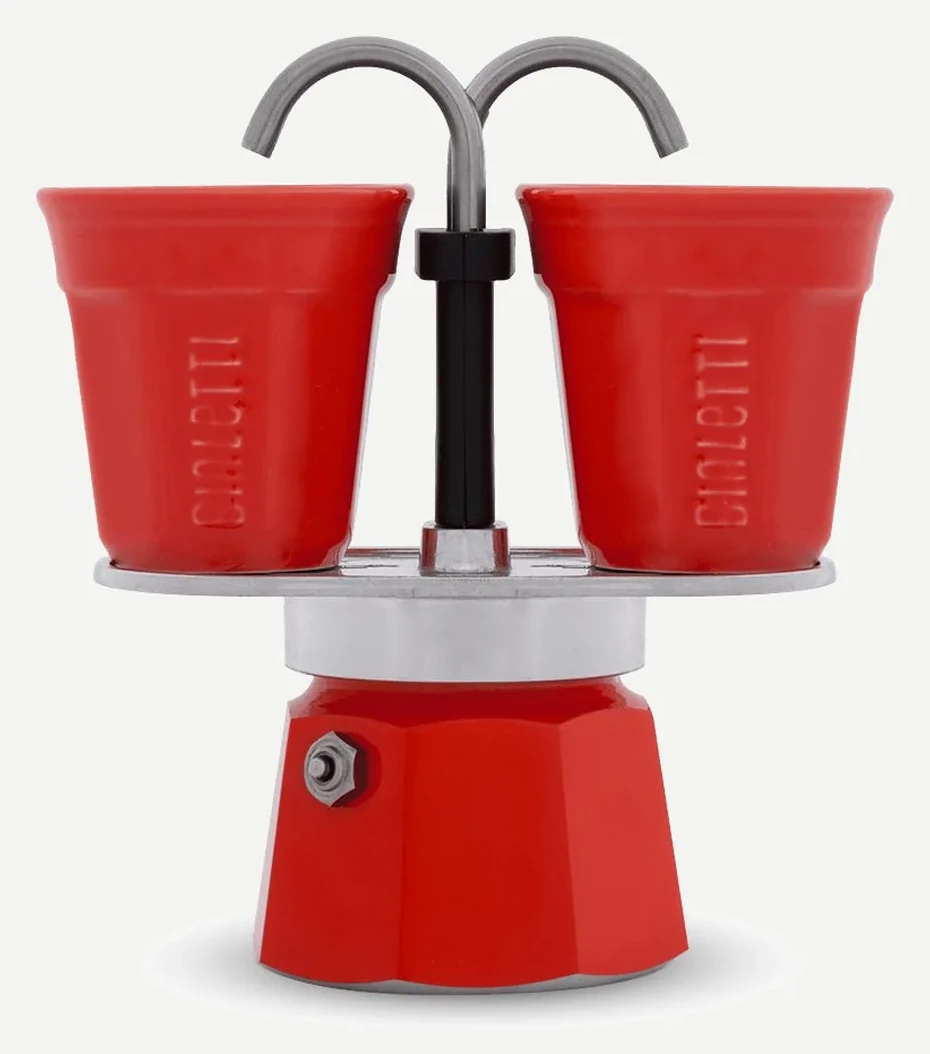
The Bialetti Mini Express is a two-cup aluminium pot with a two-year warranty, sized for one person
and a short coffee. Bialetti says less about it than about the rest of the range, so check the listing
for stove compatibility before you buy, especially if your stove is induction.
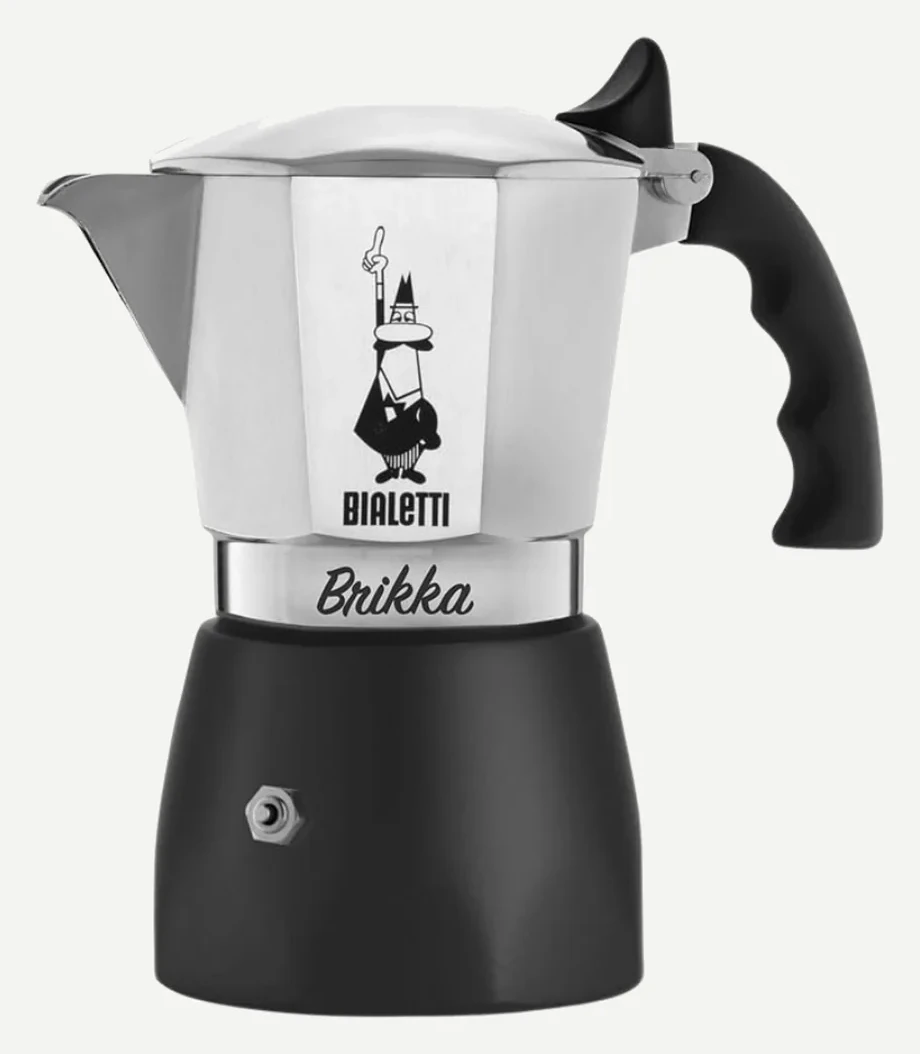
The Bialetti Brikka is the odd one out. A weighted valve sits on the outlet. Pressure builds under it
until it lifts, so the coffee is held back and then released in a burst, and that burst is what puts a
foam head on the cup. Bialetti publishes it as the only stovetop maker producing a crema-rich coffee. It
is not espresso crema, and Bialetti's own word is crema-rich, but it is a visible difference from a plain
moka pot. The cost is size: 100 ml, two espresso shots, the smallest capacity here. It suits gas,
electric and propane camping stoves, and it needs an adaptor plate on induction. The valve is the part to
keep clean, because a blocked one turns the Brikka into an ordinary moka pot without telling you.
Stainless steel and induction: Venus and Moka Induction
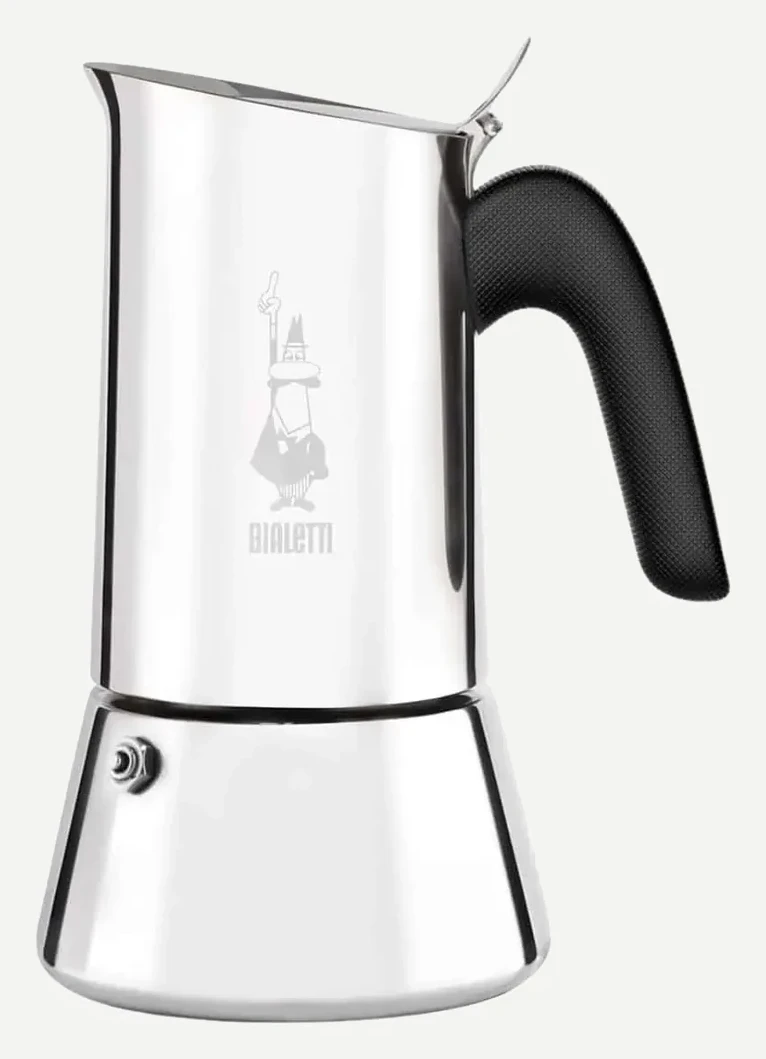
The Bialetti Venus is Bialetti's stainless steel line: 18/8 stainless steel, also called 304 grade,
which is corrosion resistant and does not react with hot water and coffee acids. It is made in Italy,
carries a two-year warranty and is rated for induction, gas and electric stoves with no adaptor. It comes
in four sizes of 2, 4, 6 and 10 cups, with listed outputs of roughly 3 to 3.5 oz for the smallest up to
18 to 19 oz for the largest. The handle is thermoplastic, a step down from the steel body, and it is
not dishwasher safe. For anyone who would rather not brew in aluminium, or who cooks on induction, it is
the plain answer.
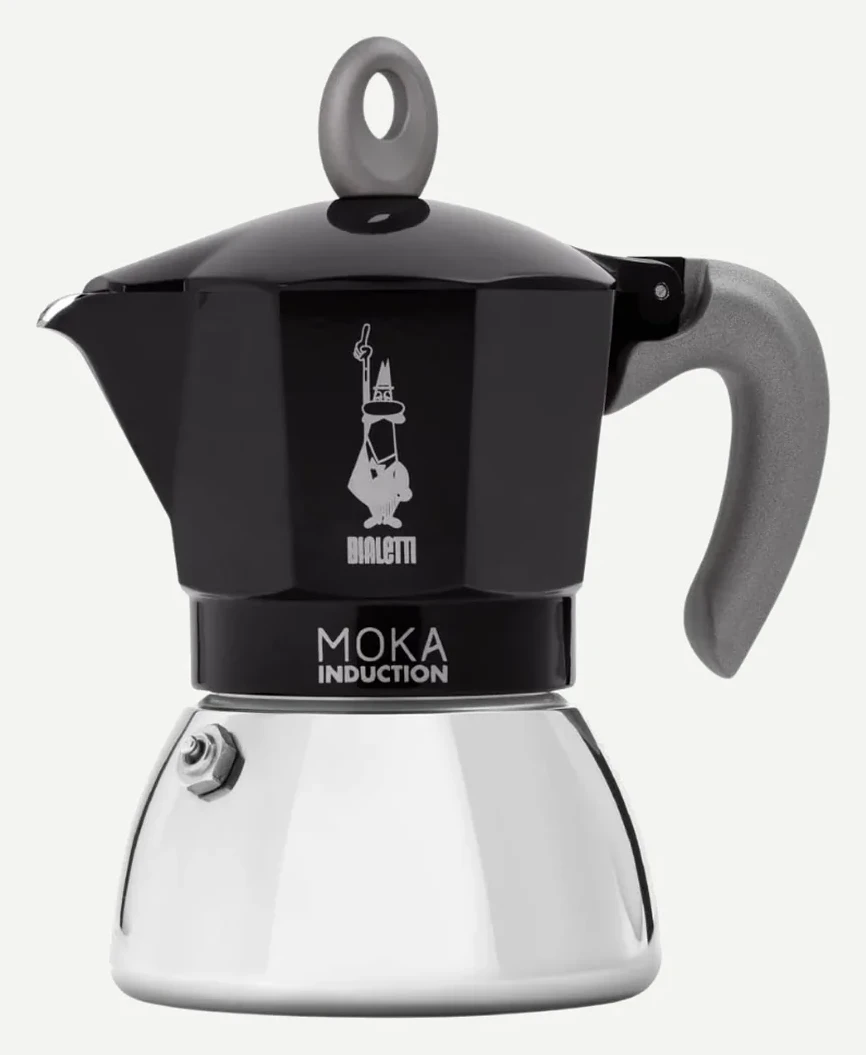
The Bialetti Moka Induction takes a different route to the same stove. It keeps an aluminium upper
chamber, the half that holds the coffee, and puts a stainless steel boiler underneath, so the part
touching the stove is ferrous. Bialetti describes it as the first Bialetti Moka made for induction. It
holds 280 ml, rated at six espresso cups, works on gas and electric as well, and carries a safety valve
that Bialetti's instruction says to fill the boiler up to. It is made in Europe by Bialetti. If you want
the classic aluminium upper chamber and an induction cooktop, this is the pot that does both without an
adaptor plate.
Both are stainless underneath and both suit induction, so the question is what you want on top. Moka Induction vs Venus
sets out that choice: steel throughout and four sizes, or an aluminium top with one size.
How the models compare
| Model | Sizes | Material | Induction |
|---|
| Moka Express | 1 to 18 cups | Aluminium | Not the classic aluminium pot without an adaptor plate |
| Moka Induction | 6 cups | Aluminium with a steel base | Yes |
| Venus | 2, 4, 6 and 10 cups | Stainless steel | Yes |
| Brikka | 2 shots | Aluminium, pressure valve | No, adaptor plate sold separately |
| Mini Express | 2 cups | Aluminium | - |
A dash means the maker does not publish that figure, or we have not confirmed it.
What to look for in a Bialetti moka pot
Your stove decides first
Match the pot to the stove before anything else. Gas and electric suit every pot here. Induction needs
steel under the pot: the Venus and the Moka Induction have it, while the Moka Express, Brikka and
Mini Express are aluminium and need an adaptor plate sold separately. An adaptor works, but it puts a
slab of steel between the heat and the pot and slows the response, which matters on a pot where you want
to pull it off the heat the moment it starts to gurgle. A magnet is the quick test: if it sticks to the
base, an induction cooktop will heat it.
Aluminium or stainless steel
Aluminium is how the classic pot has always been made, and some drinkers like the way it seasons and
how it tastes. Stainless steel does not transfer an aluminium taste and does not corrode with regular use. Neither is dishwasher safe by Bialetti's rating. The Moka Express is cheaper than the Venus on our
records, so the choice is partly money, but on an induction cooktop the Venus removes the adaptor from the
sum as well.
Choose a size you will fill
A moka pot brews properly only when it is full, so a six-cup pot cannot make two cups. Bialetti's
cups are espresso cups: 280 ml across six cups is about 47 ml each, so a six-cup pot gives roughly one
large mug, not six. If you drink one coffee at a time, buy the small size. The Moka Express runs from 1
to 18 cups, the Venus from 2 to 10, and the Brikka and Mini Express are both two-cup pots.
Do you want crema?
Only the Brikka offers it. A standard moka pot runs at roughly one and a half bar, enough to push water
through a bed of coffee but not to produce the foam that comes from espresso's nine. If you moved from
espresso to moka and miss the head on the cup, the valve is the whole argument. If you like the cleaner
cup of a plain pot, the valve gives you the opposite.
Grind and technique matter more than the model
Any of these pots makes bitter coffee if it is heated too long. Use a grind a little coarser than
espresso (our grind size guide shows the steps), do not tamp it,
and take the pot off the heat when it starts to gurgle. Our guide to
how to use a moka pot goes through it step by step.
Where Bialetti falls short
It is not espresso
A moka pot makes a concentrated, full-bodied coffee, richer than filter coffee, but it does not reach
the pressure of a pump machine and produces little crema. Drunk straight or lengthened with hot water it
is excellent value. If you want to steam milk and pull shots,
what espresso is and what it takes to make it will point you to a
machine instead.
Induction needs the right pot
Most of the range is aluminium, so most of it does not work on induction without an adaptor. Only
the Venus and the Moka Induction are built for it. Bialetti also makes several versions of its classics,
so read the listing for the exact pot you are buying and do not assume from the name.
Hand washing and plastic handles
Bialetti specifies no dishwasher and recommends rinsing with water after each use. Soap can strip the
seasoning and affect flavor over time. The handles on the Moka Express and Venus are thermoplastic, which
stays cooler than metal on the stove but is a different durability class to the metal body.
Bialetti moka pots by budget
At the prices on our records when this page was checked. The ranked list at the top of the page shows
each one's current price.
| Budget | Models | What you get |
|---|
| Under $35 | Moka Express | The original aluminium pot in eight sizes, for gas and electric. An adaptor plate is needed on induction. |
| About $35 to $50 | Venus | 18/8 stainless steel in four sizes, rated for induction, gas and electric. |
| Check the listing | Moka Induction, Brikka, Mini Express | An induction version of the classic, a crema-rich two-shot pot, and a two-cup aluminium pot. Check the listing. |
What else you need
Coffee is the first thing, and it needs to be ground. A moka pot wants a grind a little coarser than
espresso, so pre-ground labeled for moka pots works, and a burr grinder lets you adjust it. A kettle is
useful too: filling the base with hot water up to the valve means the pot spends less time on the stove,
which keeps the coffee from tasting scorched.
Gaskets and filter plates wear out and are the parts to replace, not the pot. If the lid stops sealing
or steam leaks around the join, a new gasket usually fixes it. If you cook on induction and own an
aluminium pot, an adaptor plate is the other accessory to budget for.
If you are choosing between a moka pot and an immersion brewer, moka pot
vs French press sets out the difference in cup and effort.
Which Bialetti should you buy?
Start with the stove. On gas or electric, buy the Moka Express in the size you will fill every time: it is
the original, it comes in the most sizes and it costs less than the Venus on our records. If you want
crema and mostly drink one or two strong coffees a day, the Brikka is the one pot that offers it, and
the propane stove rating makes it a camping option too.
On induction, choose between the Venus and the Moka Induction. The Venus is stainless throughout, in
four sizes. The Moka Induction keeps the classic aluminium top on a steel boiler, in one six-cup size. Neither needs an adaptor. The Mini Express is for one person on a stove you have checked, after you have
confirmed stove compatibility on the listing. Our top picks at the top of the page set out the
reasoning for each.
Bialetti against the alternatives
Bialetti is not the only maker of moka pots, but it is the reference. Other makers sell steel moka pots, and the head-to-heads show where they land, for example
Bialetti Venus vs Easyworkz Diego,
a steel pot with a steel handle.
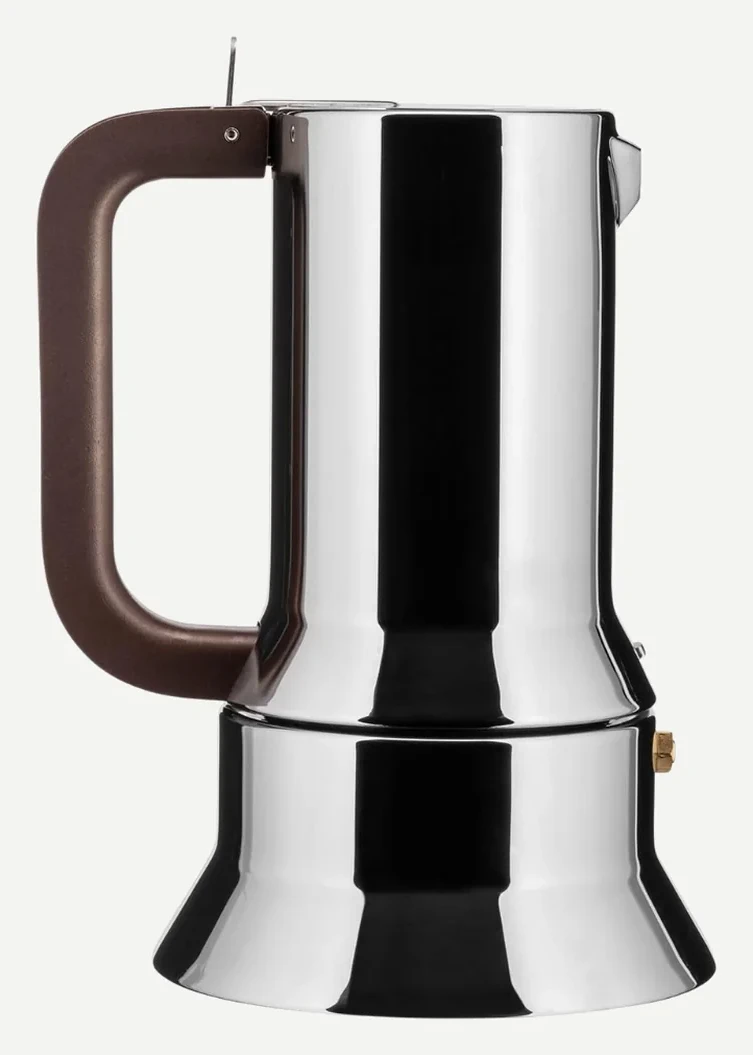
Alessi makes a stovetop espresso maker too, and
Alessi 9090 vs Bialetti Venus
compares them. Every moka pot we review, Bialetti and otherwise, is ranked in the
moka and stovetop category.