United States coffee roaster
Equator Coffees
Equator Coffees is a specialty coffee roaster in San Rafael, California, founded in 1995 by Helen Russell and Brooke McDonnell, B Corp certified, selling blends, single origins, decaf and instant coffee online.
8.4/10Average of the 13 coffees we scored See each one ↓Equator Coffees at a glance
- Based
- San Rafael, California, United States
- Subscription
- Yes
- Price per kilo
- from $42.33
Shipping from Equator Coffees
- Ships to
- US
Coffees from Equator Coffees
scored on what the maker publishesOpen a row for the score working1
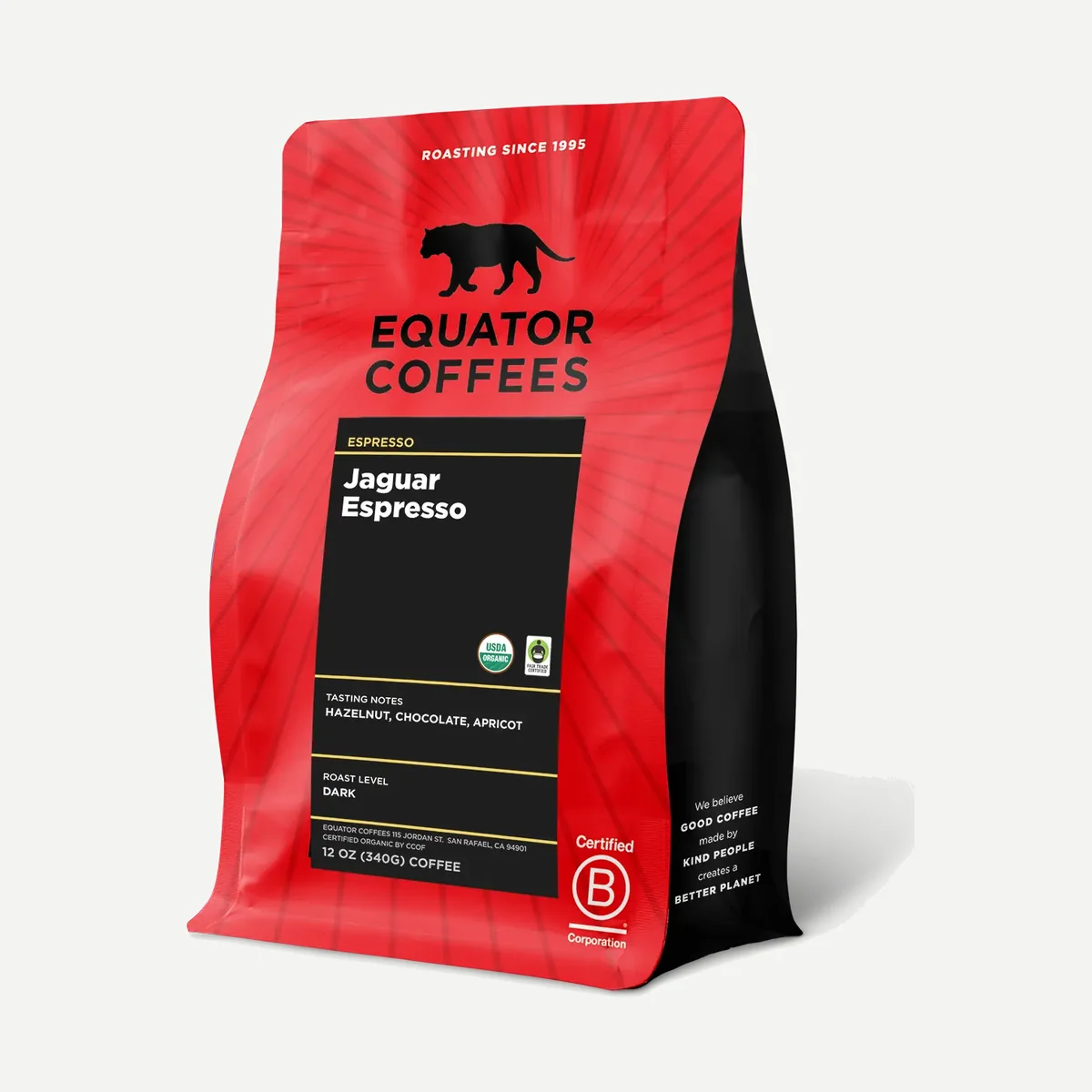 EquatorJaguar Espresso$45.86/kg8.7
How it scored
Freshness & Roast Date Transparency10.0Sourcing Transparency & Ethicsweakest link7.1altitude and varietals not scoredcarries 16 of the 45.8 points scoredValue Per Kilo8.7Packaging & Freshness Retention8.0packaging not publishedPrice per kg$45.86Score8.7Box priceFrom $19.50Tasting NotesChocolate to NuttyRoast LevelDarkSingle Origin or BlendBlendOriginHonduras, IndonesiaRead the Equator Jaguar Espresso review →2
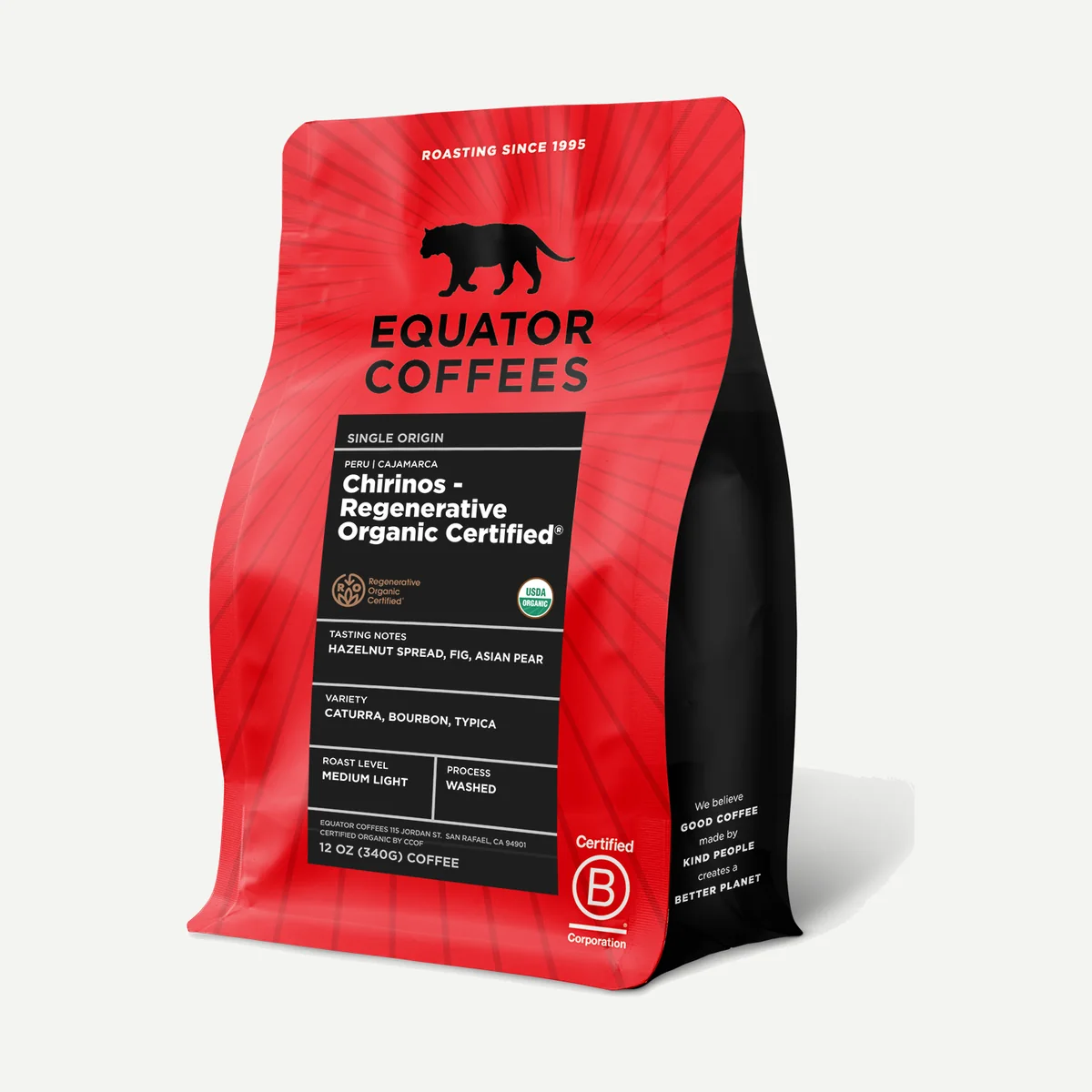 EquatorPeru Chirinos$49.38/kg8.7
How it scored
Freshness & Roast Date Transparency10.0Sourcing Transparency & Ethicsweakest link7.9altitude and varietals not scoredcarries 16 of the 45.8 points scoredValue Per Kilo8.3Packaging & Freshness Retention8.0packaging not publishedPrice per kg$49.38Score8.7Box priceFrom $21Tasting NotesNutty to Stone fruitRoast LevelMedium-lightSingle Origin or BlendSingle originOriginPeruRead the Equator Peru Chirinos review →3
 Equator50/50 Blend$47.07/kg8.6
How it scored
Freshness & Roast Date Transparency10.0Sourcing Transparency & Ethicsweakest link7.1altitude and varietals not scoredcarries 16 of the 45.8 points scoredValue Per Kilo8.4Packaging & Freshness Retention8.0packaging not publishedPrice per kg$47.07Score8.6Box priceFrom $20Tasting NotesBerry to ChocolateRoast LevelMedium-darkSingle Origin or BlendBlendOriginMexico to IndonesiaRead the Equator 50/50 Blend review →4
 EquatorFrench Roast Blend$46.52/kg8.6
How it scored
Freshness & Roast Date Transparency10.0Sourcing Transparency & Ethicsweakest link7.1altitude and varietals not scoredcarries 16 of the 45.8 points scoredValue Per Kilo8.5Packaging & Freshness Retention8.0packaging not publishedPrice per kg$46.52Score8.6Box priceFrom $19.75Tasting NotesChocolate to NuttyRoast LevelDarkSingle Origin or BlendBlendOriginNicaraguaRead the Equator French Roast Blend review →5
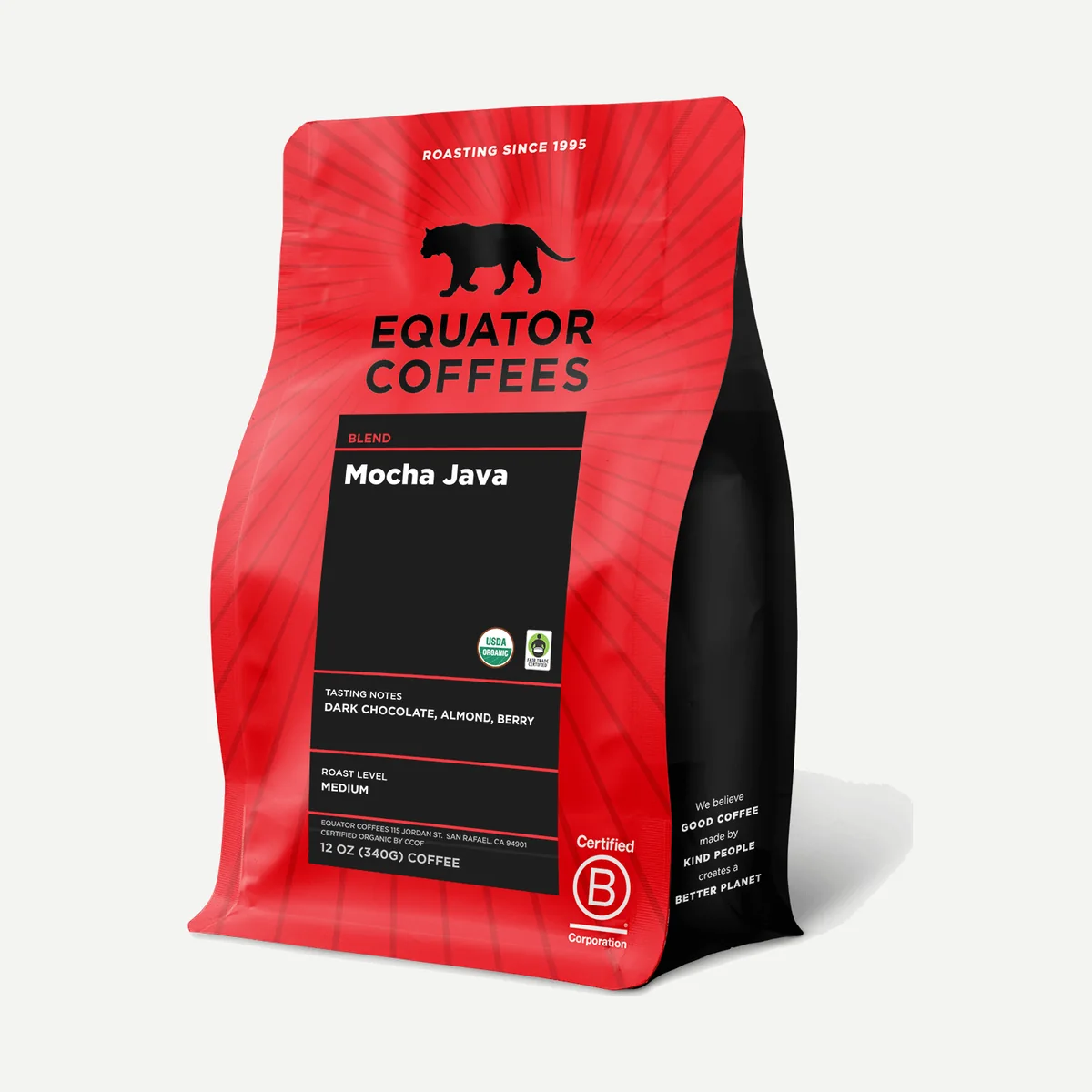 EquatorMocha Java Blend$47.07/kg8.6
How it scored
Freshness & Roast Date Transparency10.0Sourcing Transparency & Ethicsweakest link7.1altitude and varietals not scoredcarries 16 of the 45.8 points scoredValue Per Kilo8.4Packaging & Freshness Retention8.0packaging not publishedPrice per kg$47.07Score8.6Box priceFrom $20Tasting NotesChocolate to BerryRoast LevelMediumSingle Origin or BlendBlendOriginEthiopia to IndonesiaRead the Equator Mocha Java Blend review →6
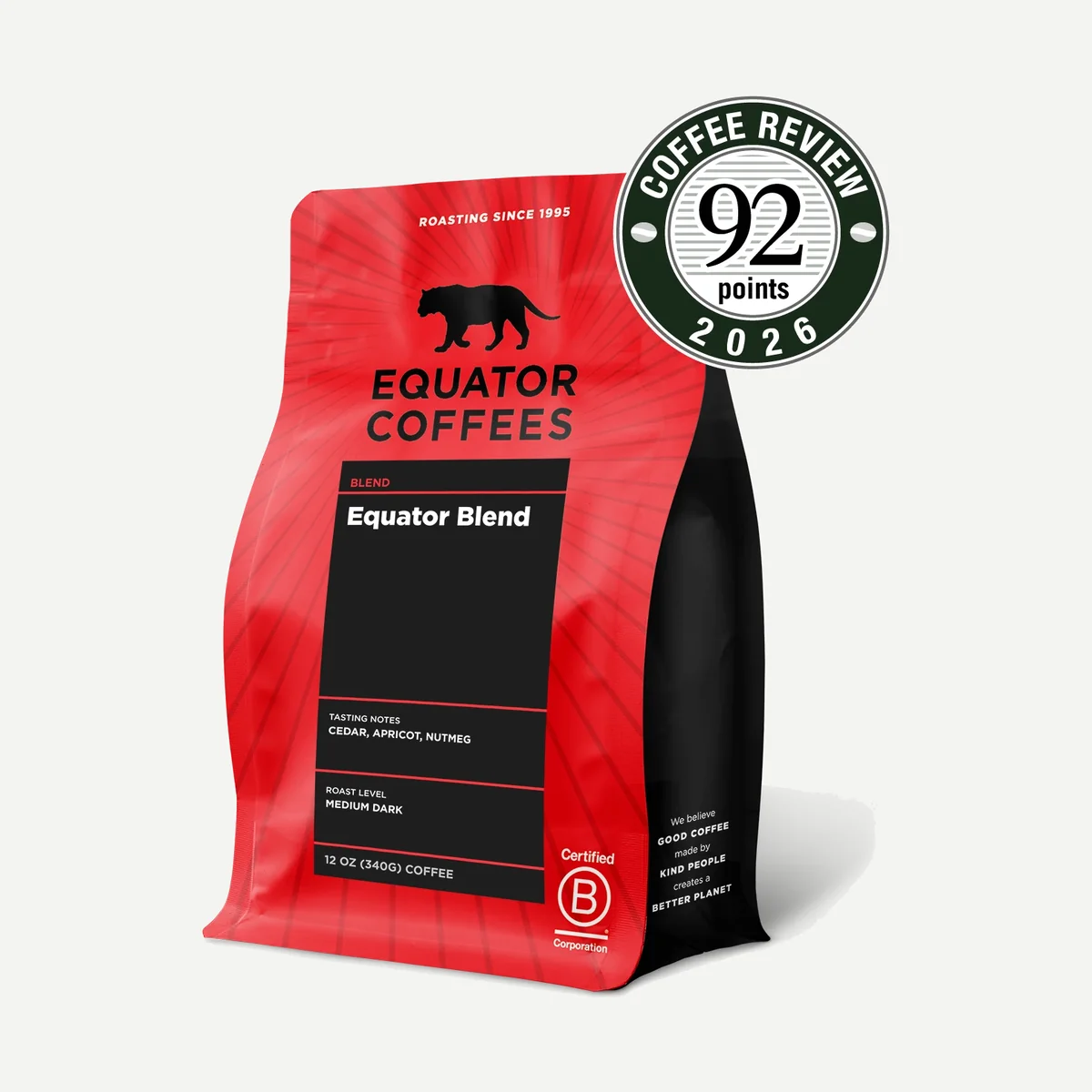 EquatorBlend$43.54/kg8.5
How it scored
Freshness & Roast Date Transparency10.0Sourcing Transparency & Ethicsweakest link6.1altitude and varietals not scoredcarries 16 of the 45.8 points scoredValue Per Kilo8.8Packaging & Freshness Retention8.0packaging not publishedPrice per kg$43.54Score8.5Box priceFrom $18.50Tasting NotesEarthy & woody to SpiceRoast LevelMedium-darkSingle Origin or BlendBlendOriginIndonesia to GuatemalaRead the Equator Blend review →7
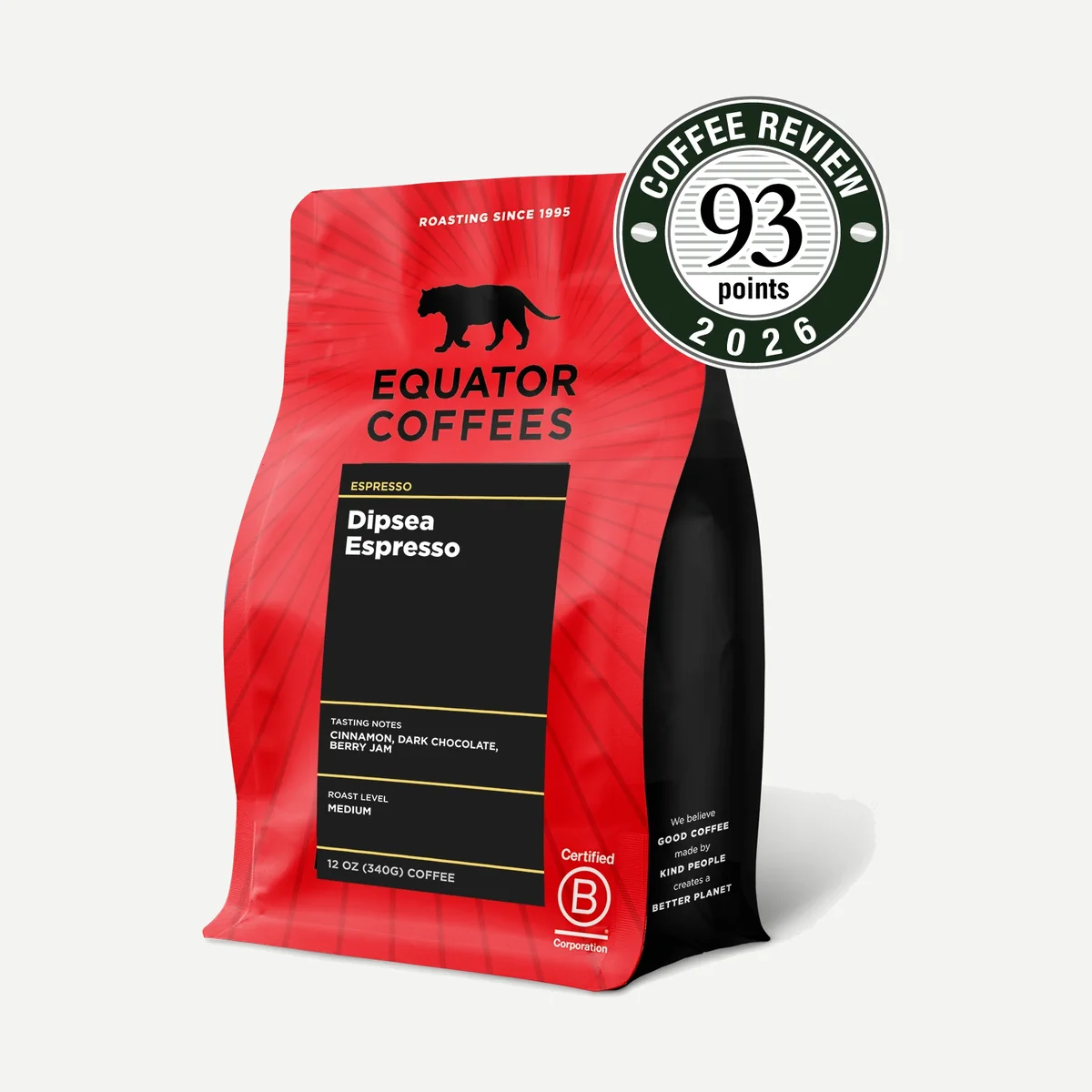 EquatorDipsea Espresso$42.33/kg8.5
How it scored
Freshness & Roast Date Transparency10.0Sourcing Transparency & Ethicsweakest link6.1altitude and varietals not scoredcarries 16 of the 45.8 points scoredValue Per Kilo9.0Packaging & Freshness Retention8.0packaging not publishedPrice per kg$42.33Score8.5Box priceFrom $18Tasting NotesChocolate to BerryRoast LevelMediumSingle Origin or BlendBlendOriginBrazil to ColombiaRead the Equator Dipsea Espresso review →8
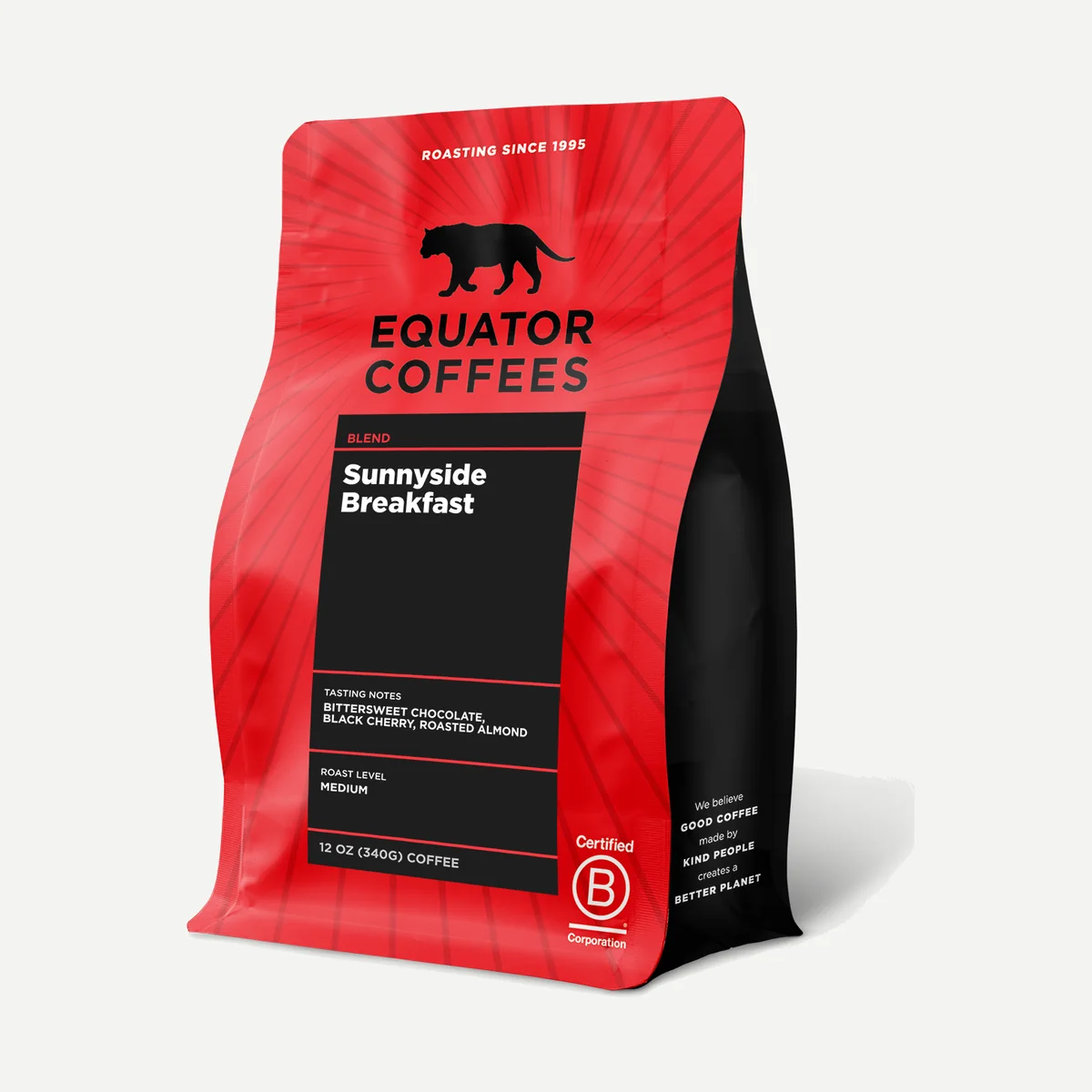 EquatorSunnyside Breakfast Blend$42.33/kg8.5
How it scored
Freshness & Roast Date Transparency10.0Sourcing Transparency & Ethicsweakest link6.1altitude and varietals not scoredcarries 16 of the 45.8 points scoredValue Per Kilo9.0Packaging & Freshness Retention8.0packaging not publishedPrice per kg$42.33Score8.5Box priceFrom $18Tasting NotesChocolate to NuttyRoast LevelMediumSingle Origin or BlendBlendOriginGuatemala to BrazilRead the Equator Sunnyside Breakfast Blend review →9
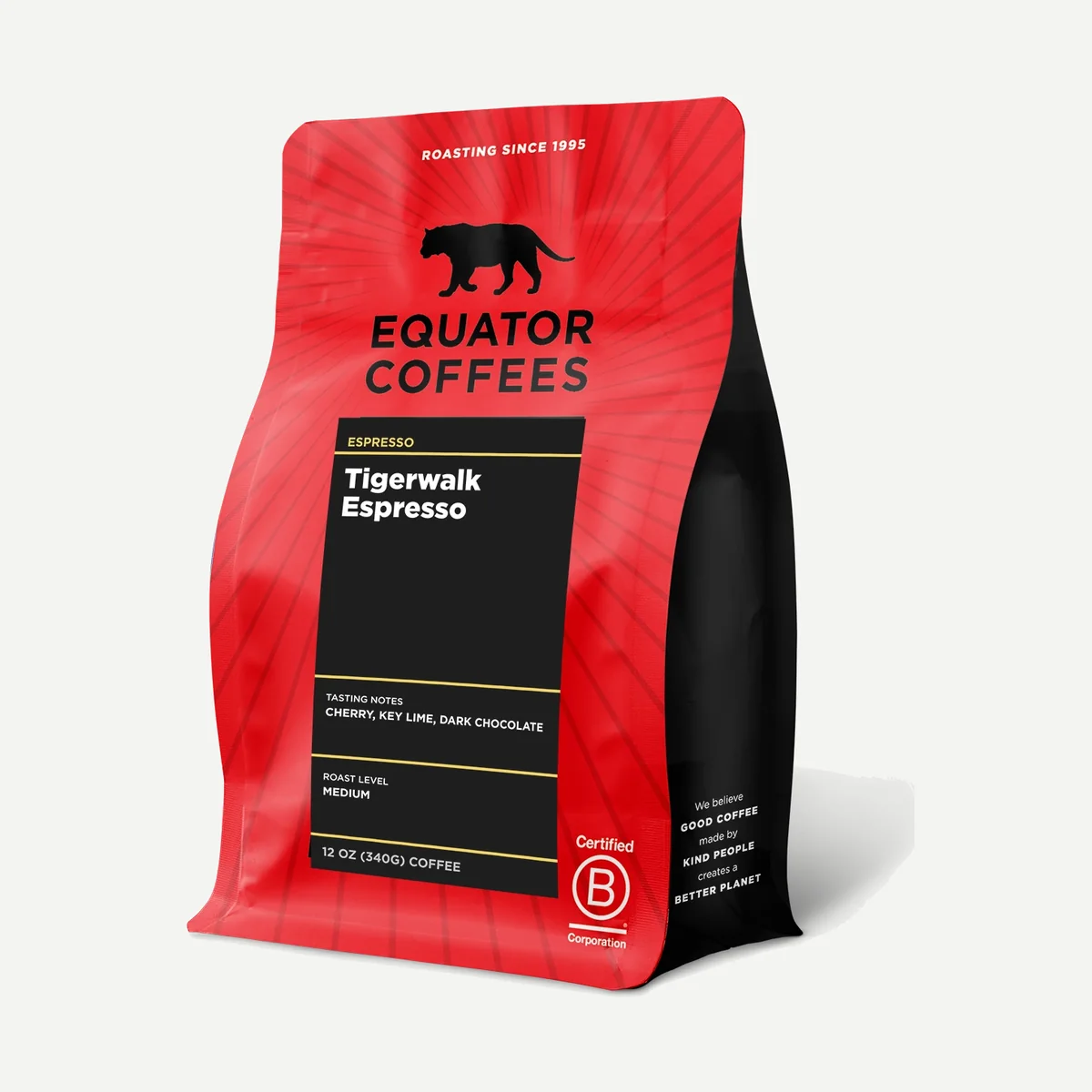 EquatorTigerwalk Espresso$43.54/kg8.5
How it scored
Freshness & Roast Date Transparency10.0Sourcing Transparency & Ethicsweakest link6.1altitude and varietals not scoredcarries 16 of the 45.8 points scoredValue Per Kilo8.8Packaging & Freshness Retention8.0packaging not publishedPrice per kg$43.54Score8.5Box priceFrom $18.50Tasting NotesBerry to ChocolateRoast LevelMediumSingle Origin or BlendBlendOriginColombia to EthiopiaRead the Equator Tigerwalk Espresso review →10
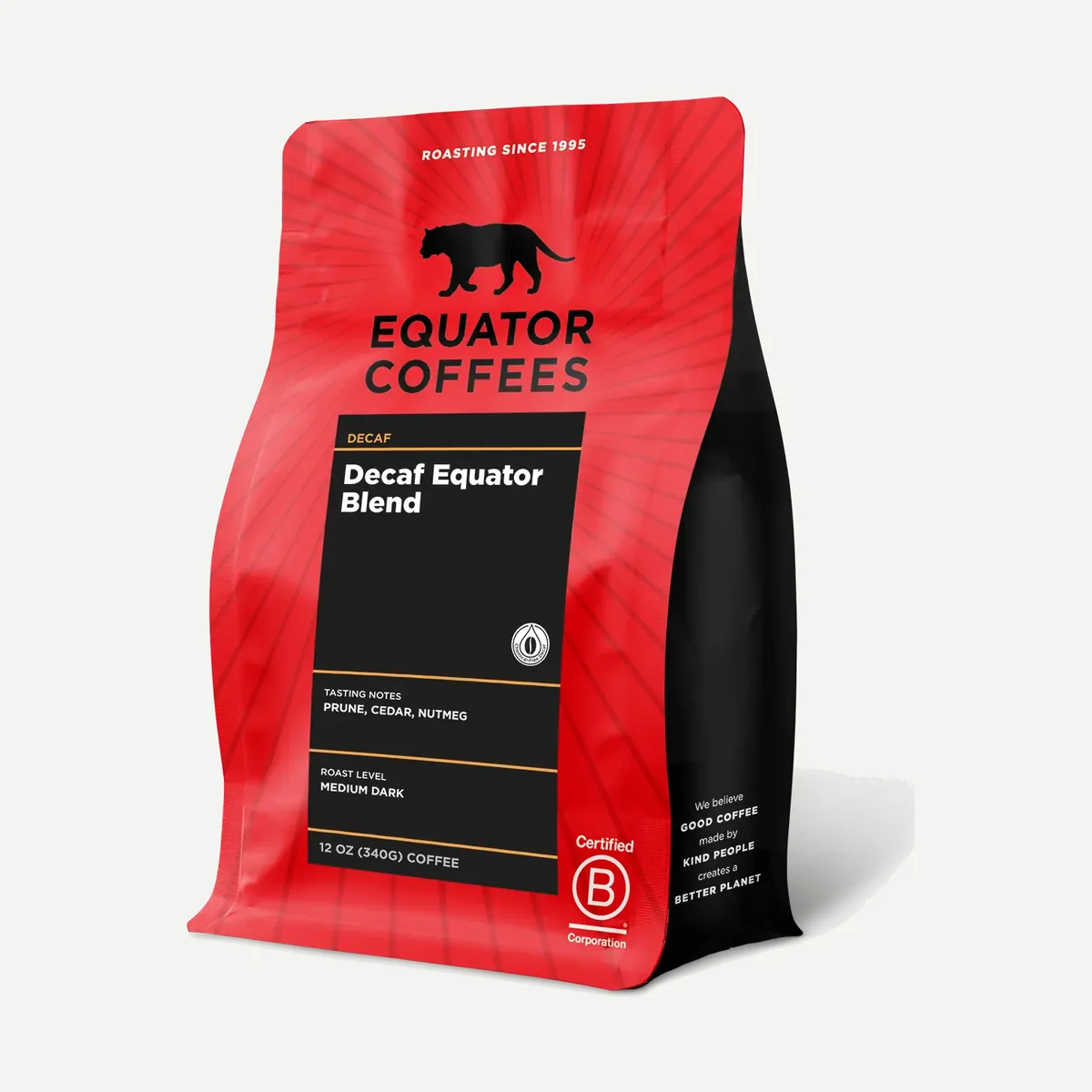 EquatorDecaf Equator Blend$45.86/kg8.3
How it scored
Freshness & Roast Date Transparency10.0Sourcing Transparency & Ethicsweakest link6.1altitude and varietals not scoredcarries 16 of the 45.8 points scoredValue Per Kilo8.3Packaging & Freshness Retention8.0packaging not publishedPrice per kg$45.86Score8.3Box priceFrom $19.50Tasting NotesBerry to SpiceRoast LevelMedium-darkSingle Origin or BlendBlendOriginColombia, BrazilRead the Equator Decaf Equator Blend review →11
 EquatorDecaf Espresso$45.86/kg8.3
How it scored
Freshness & Roast Date Transparency10.0Sourcing Transparency & Ethicsweakest link6.1altitude and varietals not scoredcarries 16 of the 45.8 points scoredValue Per Kilo8.3Packaging & Freshness Retention8.0packaging not publishedPrice per kg$45.86Score8.3Box priceFrom $19.50Tasting NotesChocolate to NuttyRoast LevelMedium-darkSingle Origin or BlendBlendOriginBrazil, ColombiaRead the Equator Decaf Espresso review →12
 EquatorEye of the Tiger Espresso$45.86/kg8.3
How it scored
Freshness & Roast Date Transparency10.0Sourcing Transparency & Ethicsweakest link6.1altitude and varietals not scoredcarries 16 of the 45.8 points scoredValue Per Kilo8.3Packaging & Freshness Retention8.0packaging not publishedPrice per kg$45.86Score8.3Box priceFrom $19.50Tasting NotesBerry to ChocolateRoast LevelMedium-lightSingle Origin or BlendBlendOriginCosta Rica, RwandaRead the Equator Eye of the Tiger Espresso review →13
 EquatorFrench Laundry Blend$51.15/kg7.5
How it scored
Freshness & Roast Date Transparency10.0Sourcing Transparency & Ethicsweakest link4.6altitude and varietals not publishedcarries 16 of the 45.8 points scoredValue Per Kilo7.0Packaging & Freshness Retention8.0packaging not publishedPrice per kg$51.15Score7.5Box priceFrom $21.75Tasting NotesChocolate, BerryRoast LevelMediumSingle Origin or BlendBlendOriginEthiopia to ColombiaRead the Equator French Laundry Blend review →
What is Equator Coffees?
A Bay Area specialty roaster whose selling point is showing you exactly what is in the bag.
Equator was founded in 1995 by Helen Russell and Brooke McDonnell and has roasted at 115 Jordan Street, San Rafael, since 2003. It describes itself as a Bay Area founded, B Corp certified specialty roaster with twelve neighbourhood cafes, and it says it was the first coffee roaster in California to be certified as a B Corp. It has used energy efficient Loring roasters since 2007 and roasts to order in small batches.
The range covers house and chef collaboration blends, espresso blends, single origins, water processed decafs, cold brew and instant coffee, most sold whole bean or ground in 12 oz, 2 lb and 5 lb bags.
What sets it apart: it names everybody
Most roasters say where a blend is from. Equator says who grew each part of it.
Every product page carries an Origin Story that lists each component of the blend with its region, producer, varieties, altitude and milling. Jaguar Espresso names COMUCAP, a women-led co-op in Honduras; Equator Blend names the Las Rosas Women's Group in Colombia; Tigerwalk names the Ayla Bensa washing station in Ethiopia. That is traceability most roasters reserve for single origins, applied to blends.
Its decafs are all water processed; the house decaf uses the Mountain Water process, and Equator prints a Chemical-Free Decaf seal on every decaf label.
Roasted to order in San Rafael
Equator's freshness claim is roasting to order. It does not publish a roast date on the bag.
Equator says it roasts to order in small batches at its roastery at 115 Jordan Street, San Rafael, California, where it has roasted since 2003, and it has used energy efficient Loring roasters since 2007. Its own advice is to buy whole bean every week or two and brew within a week or two of opening the bag. What it does not publish is a roast date on the bag, at least not on the front of the bag it shows, so unlike a roaster that prints the date you cannot check how old a bag is when it arrives.
The coffees we review
- Jaguar Espresso: dark, USDA Organic and Fair Trade, its bestseller, $19.50.
- Equator Blend: the house blend, four origins, medium-dark, $18.50.
- Tigerwalk Espresso: the flagship espresso, medium, fruit-forward, $18.50.
- Decaf Equator Blend: Mountain Water decaf, medium-dark, $19.50.
How to choose an Equator coffee
Start with how you brew, then how dark you like it.
For an espresso machine, Equator's two espresso blends split cleanly: Jaguar is dark, chocolatey and certified, built for milk drinks; Tigerwalk is a medium roast built for fruit and for drinking straight. For drip, pour over or French press, Equator Blend is the house all-rounder, medium-dark with four origins, and its decaf twin covers the evenings. Beyond these, Equator sells single origins from Colombia, Kenya, Ethiopia, Peru, Honduras and more, lighter roasts that show off one place rather than a blend's balance.
If certification matters, look for Fair Trade Organic and Regenerative Organic Certified in the product names; the rest of the range makes no certification claim, even though the roaster itself is a B Corp. And if you are unsure which you like, Equator's subscriptions rotate through curated blends, espressos or single origins so you can try several without buying a full bag of each.
What it costs
Specialty prices in the small bag, some saving in bulk.
The coffees we review cost $18.50 to $19.50 for 12 oz, around $54 to $57 a kilo. The 2 lb bag saves 15 percent per ounce and the 5 lb bag 20 percent, which brings them to $43.54 to $45.86 a kilo. Shipping is free on orders of $50 or more. Equator also sells subscriptions, curated or of one coffee, with a discounted shipping rate. For a household drinking a bag a week, a 2 lb bag every two weeks is the cheapest way to buy it.
Equator vs Intelligentsia and Stumptown
Three of the best known specialty roasters in the US, with different strengths.
Intelligentsia Coffee sells mostly in 12 oz bags at slightly lower prices and is known for its Black Cat espressos. Stumptown Coffee Roasters is also a B Corp, with the famous Hair Bender blend. Equator's edge over both is disclosure and the bulk sizes; its gap, shared with both, is that it does not publish a roast date on the bag.
Is Equator Coffees worth it?
Yes, if you want to know who grew your coffee.
Equator costs what specialty coffee costs, and for that it gives more information about each bag than almost anyone. If price per cup matters most, a bulk roaster is cheaper; if traceability and a B Corp matter, Equator is one of the best choices in the US.
Who should buy it (and who should not)
Buy it if
- You want full traceability, even in a blend.
- You want a solvent-free decaf with the process named.
- You buy in bulk and want 2 lb or 5 lb bags of specialty coffee.
Skip it if
- You want a printed roast date on every bag.
- You want the lowest price per cup; see Fresh Roasted Coffee.
Frequently Asked Questions
Where is Equator Coffees based?
San Rafael, California. It roasts at 115 Jordan Street and runs twelve cafes in the Bay Area and Southern California.
Is Equator a B Corp?
Yes. Equator says it was the first coffee roaster in California to be certified as a B Corp.
Does Equator roast to order?
Yes, in small batches, according to its FAQ.
Does Equator have free shipping?
Yes, on orders of $50 or more, for one-off orders and subscriptions.
What is Equator's best seller?
Equator calls Jaguar Espresso its all-time bestseller.
Is Equator's decaf made with chemicals?
No. Equator says it only sells water processed decaf, with no chemical solvents, and its house decaf uses the Mountain Water process.