United States coffee roaster
Peet's Coffee
Peet's Coffee is an American roaster founded by Alfred Peet, known for dark roasting and for Major Dickason's Blend, one of the most-owned coffees in the United States.
5.9/10Average of the 2 coffees we scored See each one ↓Peet's Coffee at a glance
- Based
- Emeryville, California, United States
- Subscription
- Yes, Peet's Coffee Subscription
Shipping from Peet's Coffee
- Ships to
- US, worldwide
- Ships internationally by USPS only; international subscriptions do not get free shipping.
Peet's Coffee by subscription
Peet's Coffee Subscription →7.8/10What it costs, how fresh it arrives, and whether you can cancel it.Coffees from Peet's Coffee
scored on what the maker publishesOpen a row for the score working1
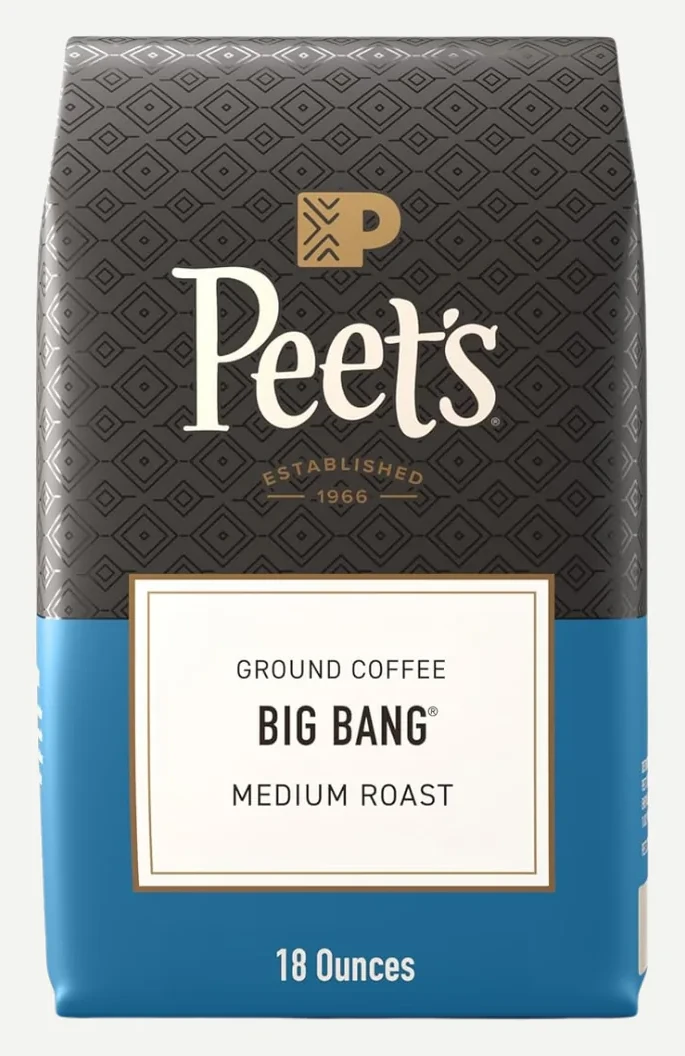 Peet'sBig Bang Medium Roast5.9
How it scored
Freshness & Roast Date Transparencyweakest link5.0carries 20 of the 45.8 points scoredSourcing Transparency & Ethics6.4altitude and varietals not publishedValue Per Kilo5.0no price publishedPackaging & Freshness Retention10.0packaging not publishedPricePricing N/AScore5.9Tasting NotesChocolate, Malt & breadRoast LevelMediumSingle Origin or BlendBlendOriginAfrica/Arabia, AmericasRead the Peet's Big Bang Medium Roast review →2
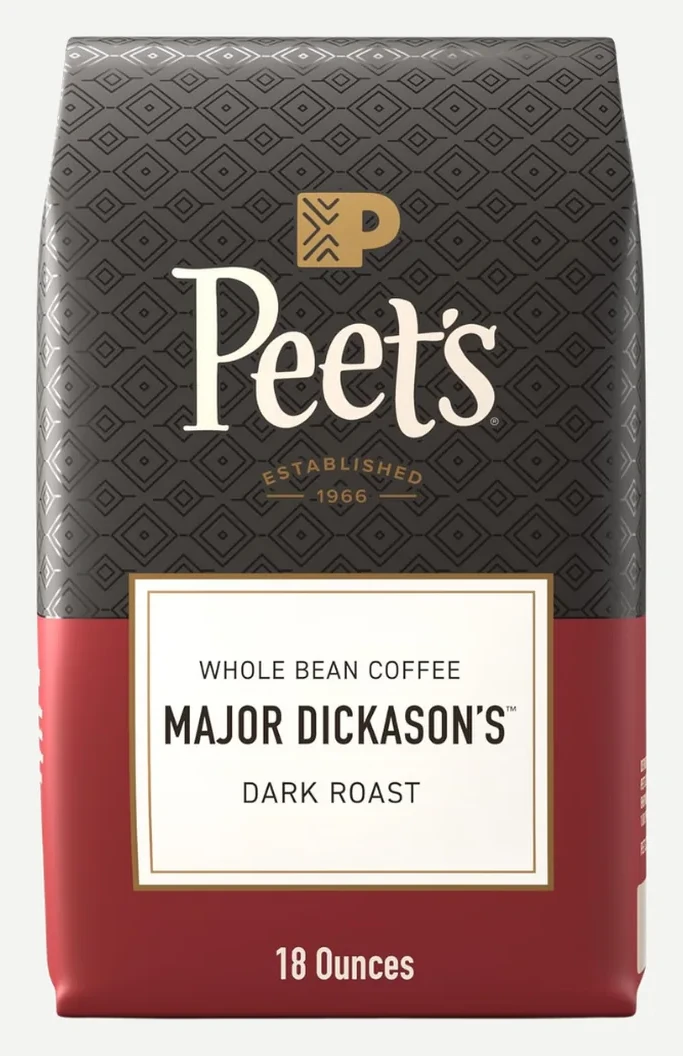 Peet'sMajor Dickason's Blend5.9
How it scored
Freshness & Roast Date Transparencyweakest link5.0carries 20 of the 45.8 points scoredSourcing Transparency & Ethics6.4altitude and varietals not publishedValue Per Kilo5.0no price publishedPackaging & Freshness Retention10.0packaging not publishedPricePricing N/AScore5.9Tasting NotesEarthy & woody, SpiceRoast LevelDarkSingle Origin or BlendBlendOriginAmericas, Indo-PacificRead the Peet's Major Dickason's Blend review →
Who is Peet's?
The roaster American speciality coffee started from, and it still roasts the way it always did.
Peet's publishes 100% arabica coffee, grind guidance for each brewing method, and a sourcing statement saying it is actively engaged in driving positive impact in the communities where its coffees are grown. Its best known blend, Major Dickason's, is described as flavourful, robust and full-bodied, and the maker says it was developed by Mr Peet with his most discerning customer.
Why the dark roast is the point rather than a shortcut
Alfred Peet roasted darker than anyone in America was doing, deliberately.
American coffee in the 1960s was light, cheap and thin. Peet roasted Dutch and Northern European style: darker, oilier, and far more intense than the market expected. That style is what the founders of Starbucks learned from him, and it is why American coffee tasted the way it did for the next thirty years.
Speciality coffee has since swung the other way, towards light roasts that show origin character, which is what Stumptown and Intelligentsia sell. Peet's did not follow, and judging it against that standard misses what it is.
Buy Peet's if you want the dark, heavy, roast-forward cup it has always made. Do not buy it expecting fruit or acidity, which the roast level removes by design.
What Peet's publishes, and what it does not
Grind guidance, yes. Sourcing detail, almost none.
Peet's is unusually helpful on brewing: it publishes grind sizes by method, with useful physical comparisons, coarse as sea salt for a press and medium as sand for drip. Very few roasters bother, and it is genuinely good advice for someone new to a home coffee grinder.
On sourcing there is nothing to check. No origin country, no farm, no altitude, no varietal, no processing method, no roast date and no certification appears on these bags. "Sourcing with impact" names no certifying body, no programme and no commitment.
Compare Kicking Horse, which carries audited Fairtrade and Organic on every bag, or Stumptown Coffee Roasters, which publishes a Direct Trade programme with three stated principles and a roast date. Peet's statement is weaker than both and this site scores what is published.
Even the tasting notes are not tasting notes
Peet's describes body and roast, not flavour, and that is a real difference.
"Flavourful, robust, full-bodied" and "smooth with a balanced richness" tell you how the coffee feels rather than what it tastes of. A speciality roaster publishes cherry, or maple syrup, or stone fruit, and can be held to it.
This site therefore records no tasting notes for the Peet's coffees, and the hub shows none. That is not an oversight: inventing flavours from a body descriptor would be deciding on the roaster's behalf what its coffee tastes of, which is exactly the sort of thing a review site should never do.
Which Peet's to buy
Three here, and really two coffees.
Major Dickason's Blend whole bean is the one to buy if you own a grinder, and it is the blend the brand rests on. The same blend ground is for a drip machine and no grinder. Big Bang is the medium roast, and the lighter option if Major Dickason's is too much.
The range on Amazon is otherwise bundles, pods and capsules, which is why this hub is small. It is not that Peet's makes three coffees.
Frequently Asked Questions
Is Peet's related to Starbucks?
Starbucks' founders learned roasting from Alfred Peet and initially bought his beans. They are separate companies.
Why is Peet's so dark?
It is deliberate. Alfred Peet roasted in a Northern European style far darker than the American market of the time, and that style is the brand.
Does Peet's print a roast date?
Not on the bags listed here, and no origin, farm, altitude or certification either.
Is "sourcing with impact" a certification?
No. It names no certifying body, programme or commitment. Kicking Horse's Fairtrade is audited; Stumptown's Direct Trade at least publishes its principles.
Which Peet's blend should I start with?
Major Dickason's. It is the blend the roaster is known for.