Breville, sold as Sage in the UK and Europe, builds its espresso machines as one family that climbs
in steps. Every model pulls a shot through a portafilter, so all of them make real espresso; what
changes as the price rises is how much of the work the machine does for you. At the bottom you grind,
dose, tamp and steam yourself. At the top the machine grinds, doses, tamps and textures the milk while
you press a button. Knowing which of those jobs you actually want to keep is the whole decision, and
the rest of this guide is organised around it.
How the Breville range is organised
Machine only: Bambino, Bambino Plus and Infuser
These three have no grinder, and that is a feature as much as a saving. Espresso is more sensitive to
the grinder than to the machine: a shot runs for around half a minute through a puck of coffee ground
almost to powder, and small differences in the grind decide whether it tastes sour, bitter or sweet. Buying the machine and the grinder separately means you can spend more on the part that matters most,
and upgrade it later without replacing the machine.
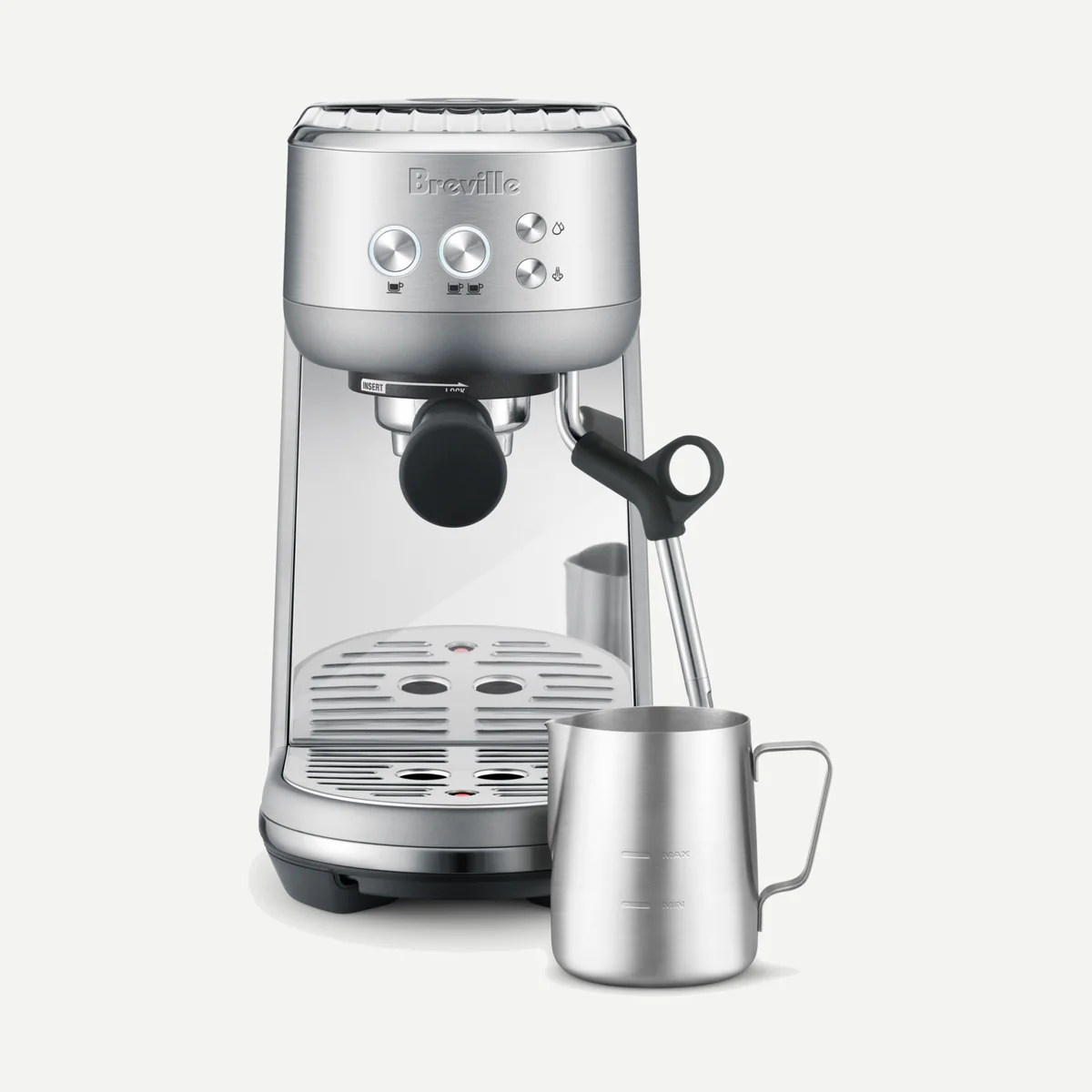
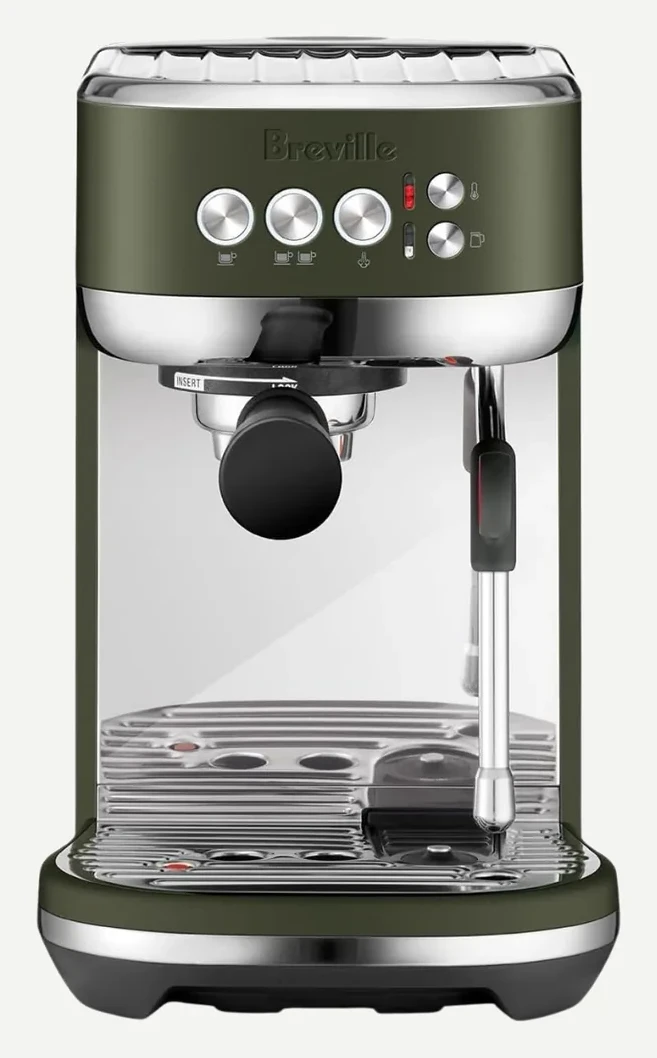
The Breville Bambino is the smallest step in. Its ThermoJet
heating reaches brewing temperature in three seconds by Breville's figure, a PID holds that temperature
steady, and low pressure pre-infusion soaks the coffee before the full 9 bar shot, which helps an uneven
tamp extract evenly. It weighs 4.7 kg, holds 1.4 litres of water, and leaves the milk to you and a
manual steam wand.
The Bambino Plus is the same idea with an automatic
steam wand that stops at the temperature and texture you choose, on a body 193 mm wide. That one change
makes it the machine to buy if you drink milk drinks and do not want to learn to steam, and it is small
enough for a counter that has no room for anything bigger.
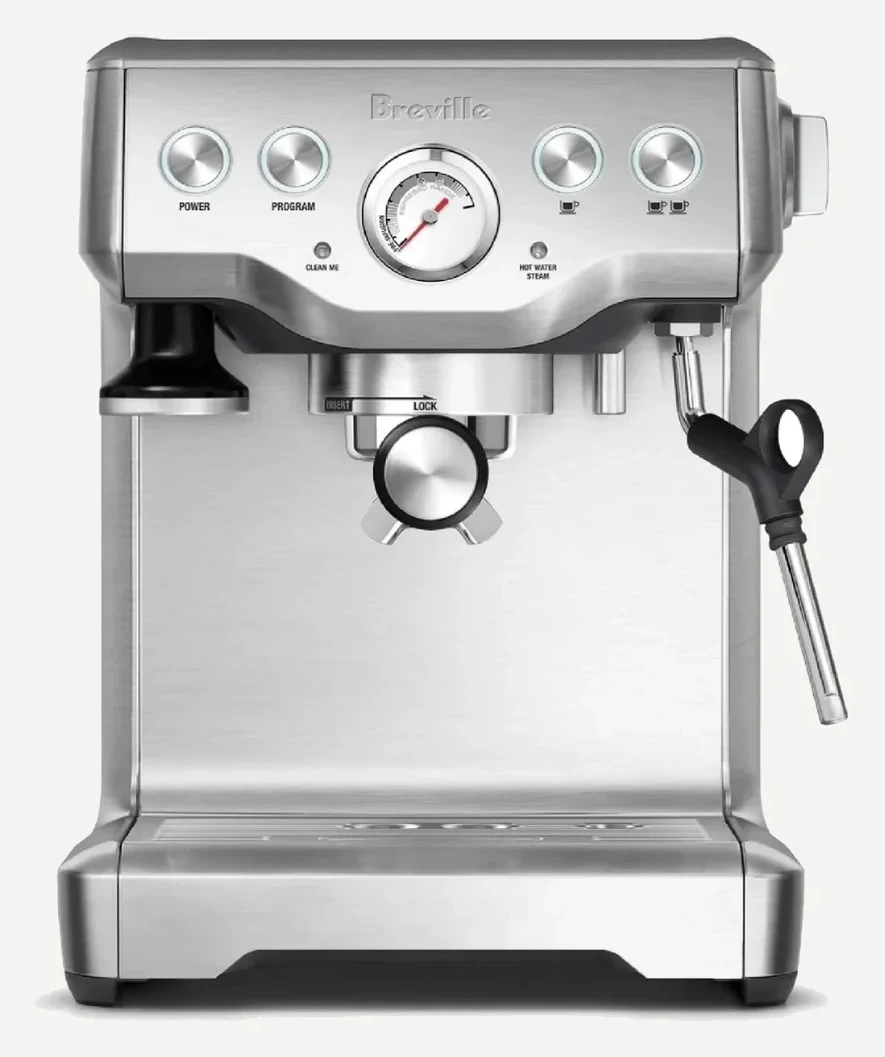
The Breville Infuser is the older design: a 1.7 litre
tank, PID temperature control you can adjust in two degree steps, and a manual wand. Set beside the
machine that added a grinder to it, Barista
Express vs Infuser shows exactly what the built-in grinder buys you.
Grinder built in: Barista Express, Barista Express Impress and Barista Pro
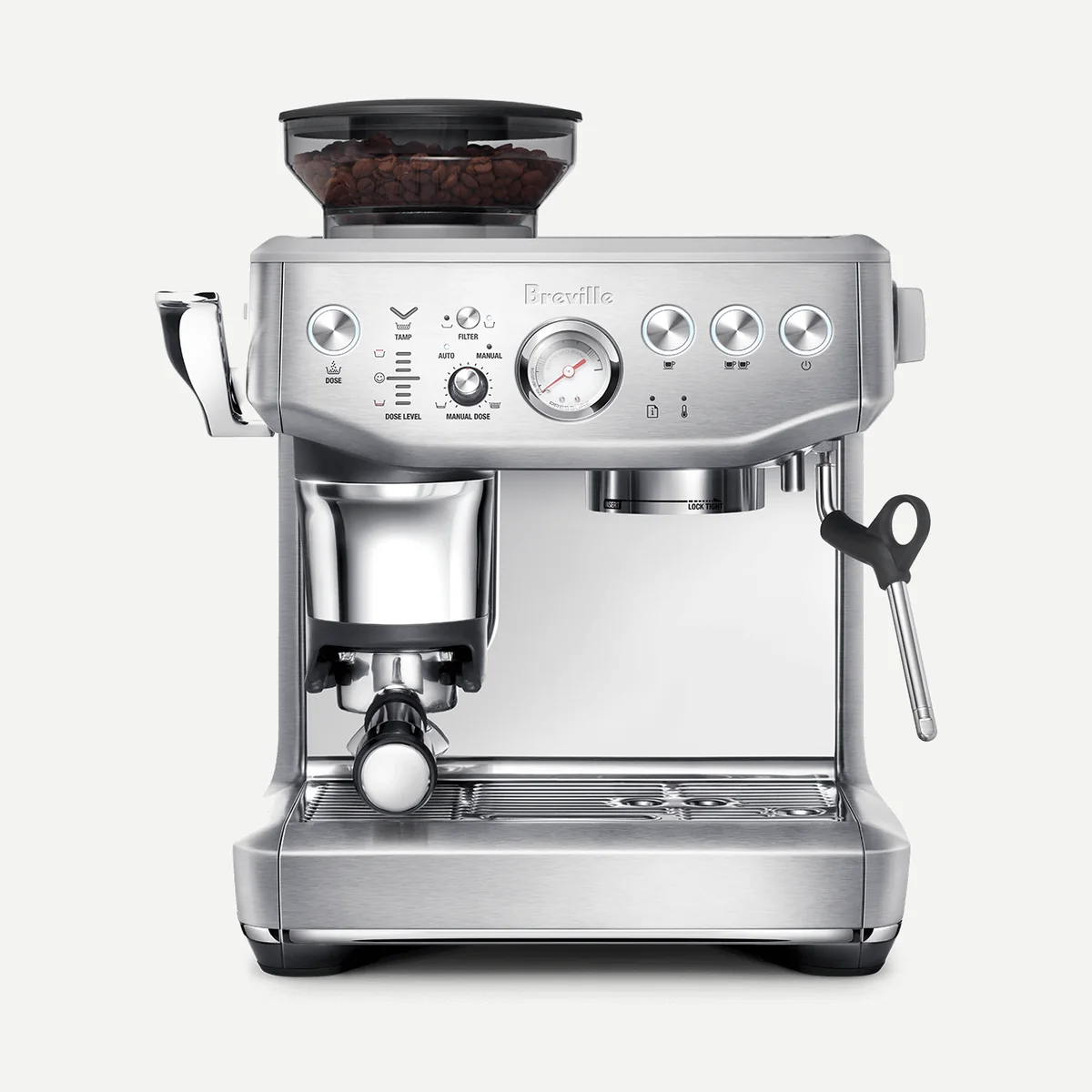
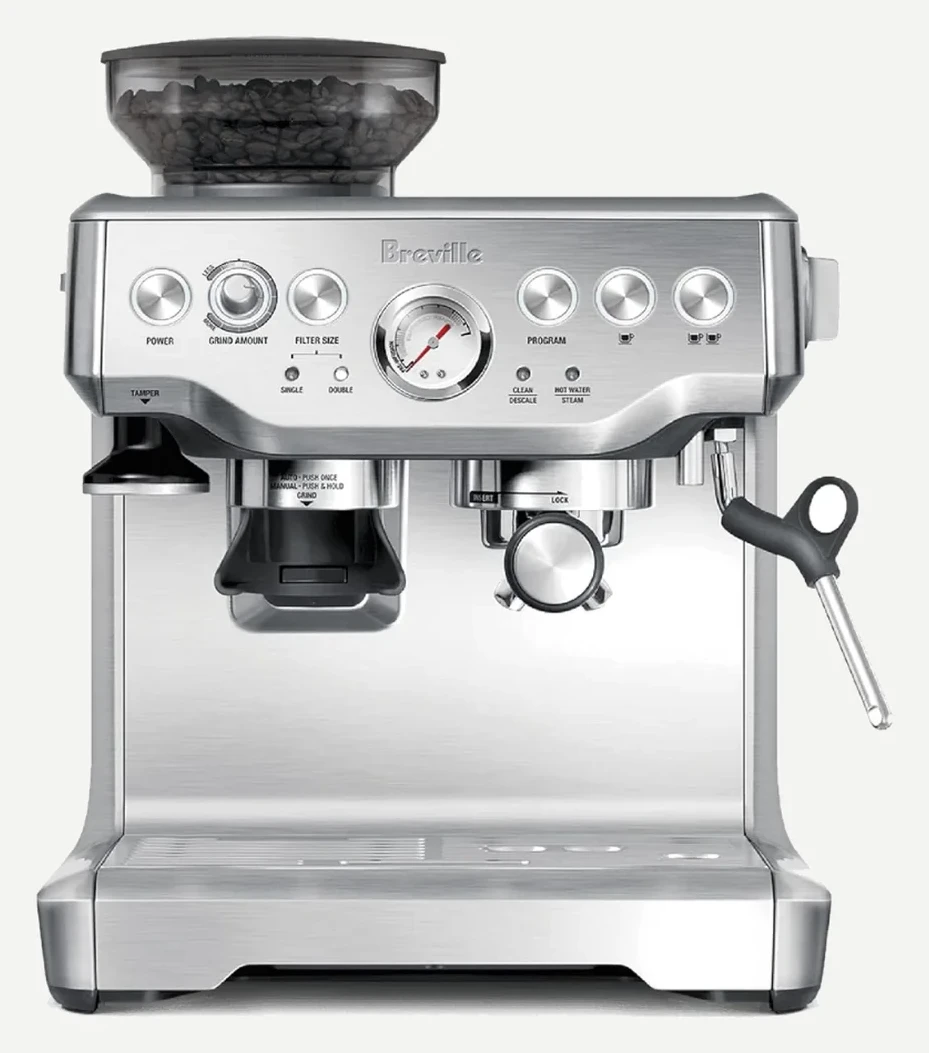
The Breville Barista Express is the machine most
people picture when they hear the name: a conical burr grinder on top that grinds straight into the
portafilter, PID temperature control and pre-infusion, in a 10 kg stainless steel body. It is a complete
espresso setup in one box, and the place most buyers start.
The Barista Express Impress keeps that layout
and takes over the step beginners get wrong most often. Its Impress system tamps with 22 lb of pressure
when you pull a lever, then adjusts the next dose from how full the last one was, so shots start from the
same puck every morning. It has 25 grind settings, a pressure gauge on the front, a 2 litre tank and a
250 g bean hopper. Its thermocoil takes longer to heat than ThermoJet: Breville's manual allows up to
55 seconds.
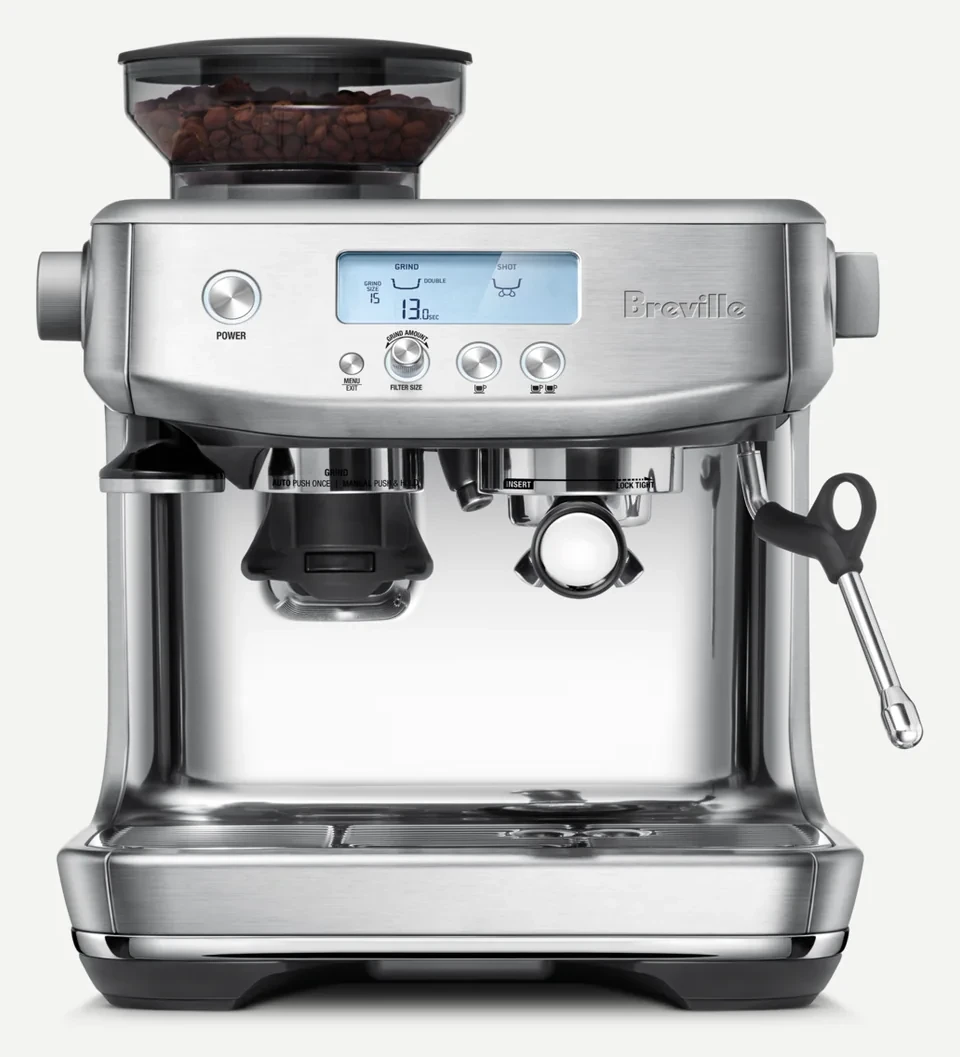
The Breville Barista Pro goes the other way. It keeps the tamping
manual but switches to ThermoJet heating, ready in three seconds, adds an LCD shot clock and 30 grind
settings, and carries a two-year warranty where the Barista Express has one. If you are choosing between
assisted tamping and a faster, better-equipped machine, Barista
Express Impress vs Barista Pro sets the two side by side.
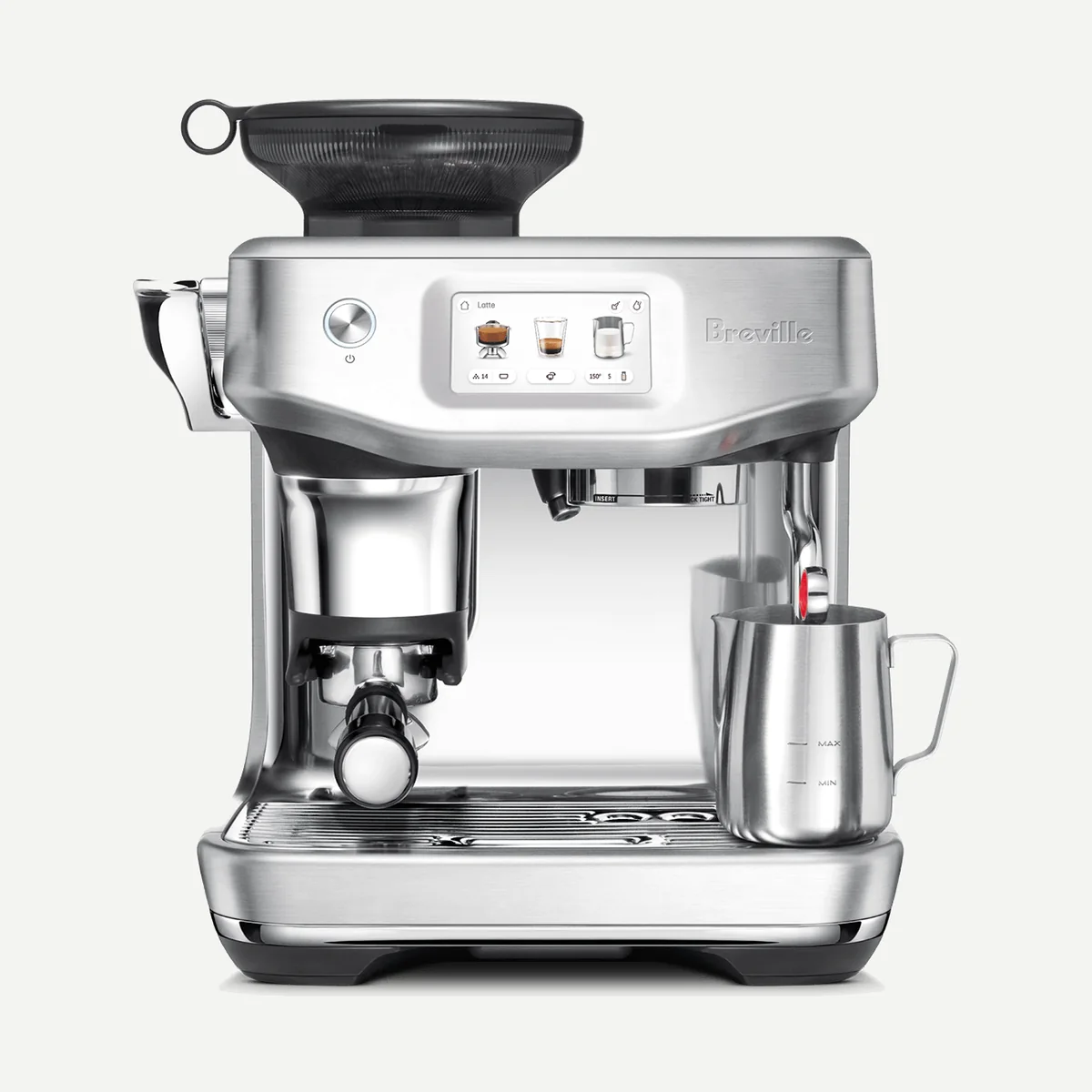
Touchscreen and automatic milk: Barista Touch and Barista Touch Impress
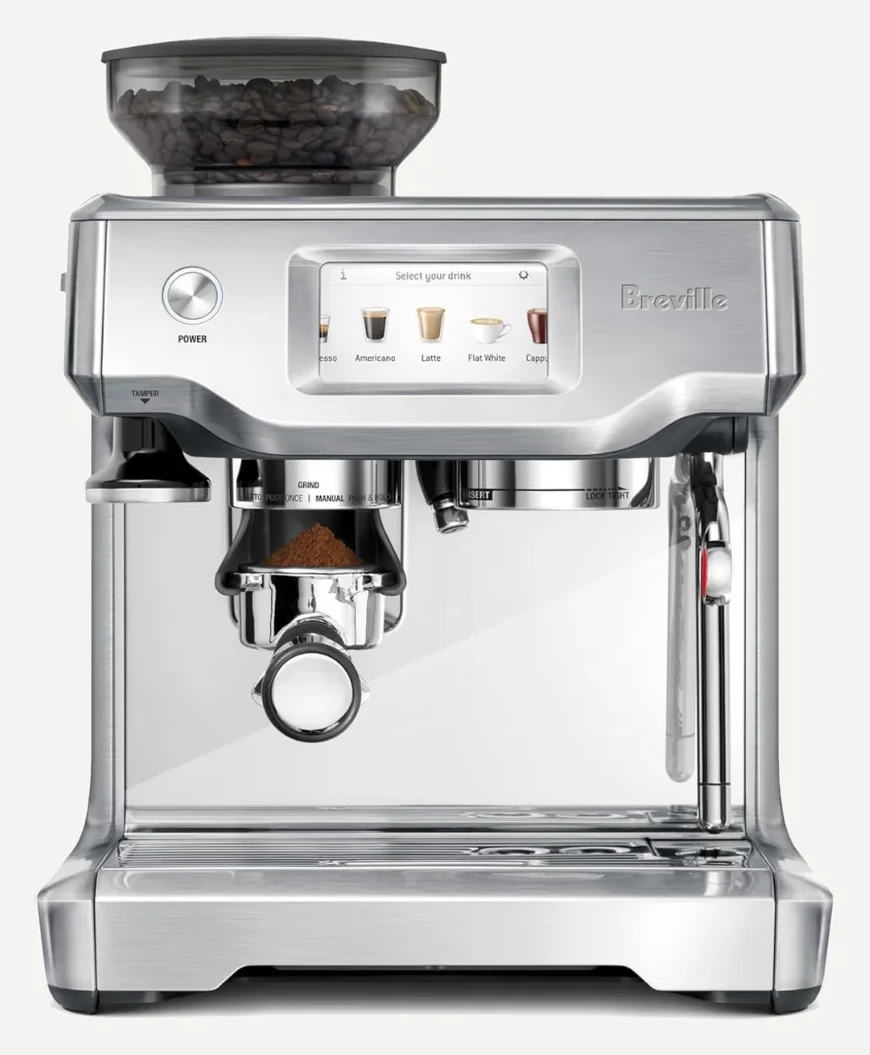
The Touch models put the controls on a screen and hand the milk to the machine. The
Breville Barista Touch grinds across 30 settings, heats
with ThermoJet, and its automatic wand textures milk to a temperature you set between 104 and 167 F, so a
flat white comes out the same whoever makes it.
The Barista Touch Impress adds the Impress
tamping system, Baratza European Precision Burrs and separate milk settings for dairy, almond, oat and
soy, which matters because plant milks foam differently and a wand set for dairy handles them badly. Whether those additions are worth the step up is the question
Barista Touch
vs Barista Touch Impress answers.
Fully assisted: Oracle Jet
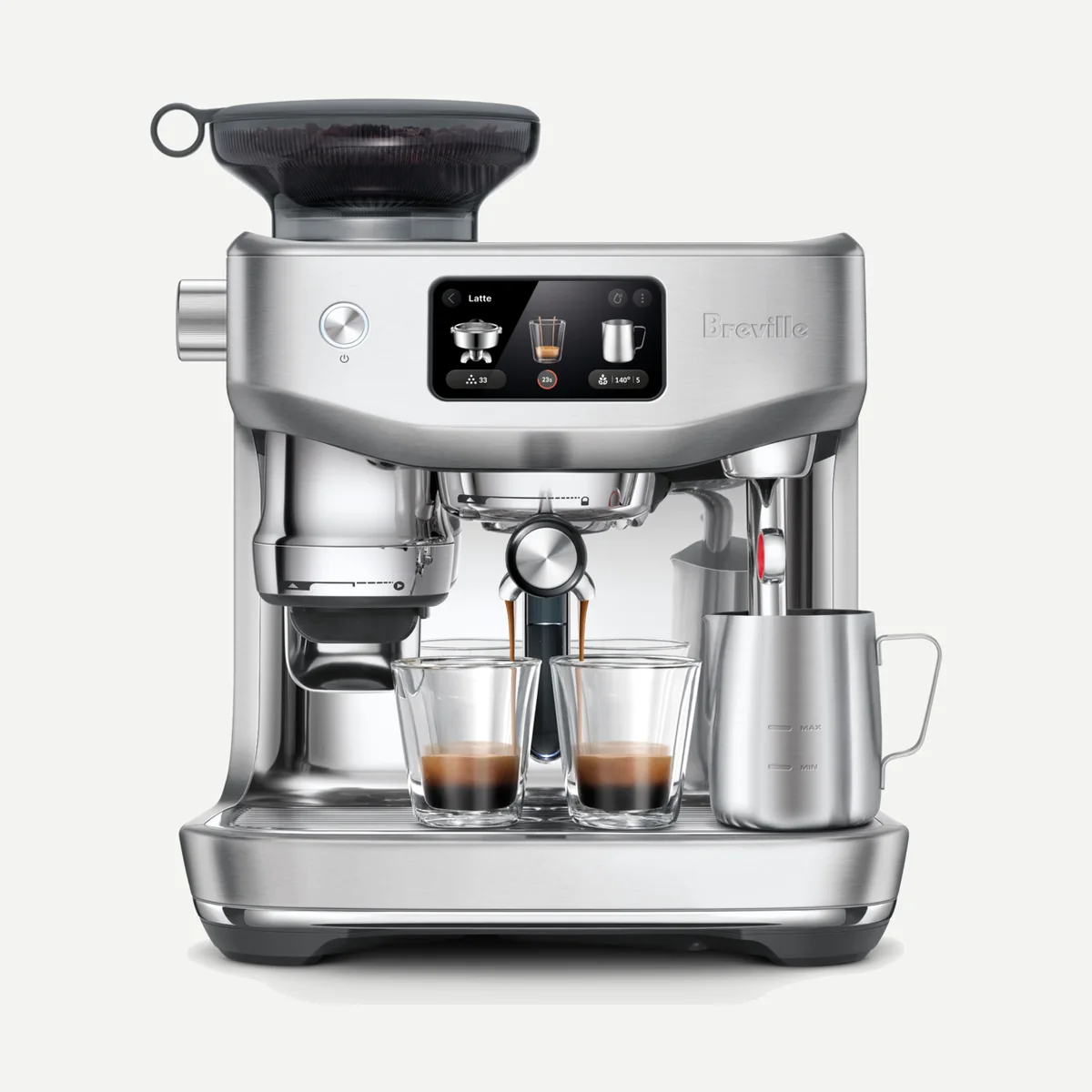
The Breville Oracle Jet does every step but the drinking. It grinds on Baratza burrs across 45 settings, doses 22 g into a 58 mm portafilter and tamps it, then
textures milk hands-free at any of eight textures. It makes cold brew and cold espresso as well as hot
drinks, weighs 12.1 kg, and holds 2.4 litres of water and 340 g of beans.
Its Barista Guidance detects a shot that ran over or
under extracted and helps you correct the grind, which is
the skill that takes longest to learn on every other machine here. It still pulls a true espresso shot,
and that is the reason to choose it over a bean-to-cup machine that brews at the press of a button.
For enthusiasts: Dual Boiler
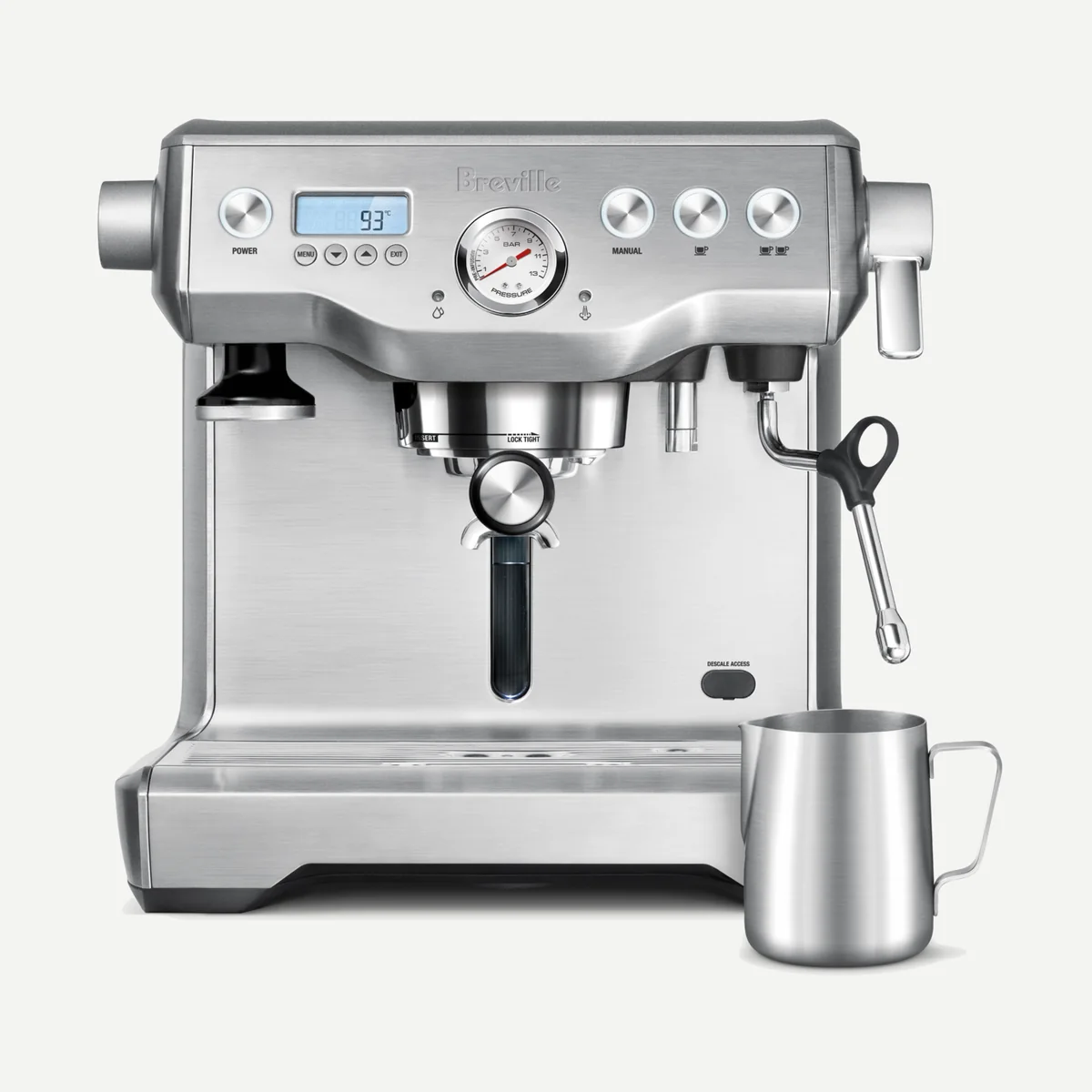
The Breville Dual Boiler sits outside the ladder. It
has no grinder and no automatic milk; instead it has two stainless steel boilers, a PID-controlled one for
brewing and a separate one for steam, so you can pull a shot and steam milk at the same time without
waiting for the temperature to change. That saves the most time when you make two milk drinks in a row. It takes the 58 mm commercial portafilter, has a pressure gauge and a shot clock, and fills its 2.5 litre
tank from the top. It is the Breville for somebody who already owns a good grinder and wants control
rather than help.
How the models compare
A dash means the maker does not publish that figure, or we have not confirmed it.
What to look for in a Breville espresso machine
Grinder built in, or not
This is the biggest price step in the range and the most important decision. A built-in grinder
saves counter space and the cost of a second appliance, and the Breville grinders are matched to their
machines. A separate grinder costs more up front but can be better than any built-in one and outlasts
the machine.
If you are not sure you will keep making espresso, a grinder-equipped model is the cheaper experiment. If you already know you will, a machine-only model and one of the
grinders for espresso we rank is the stronger setup. Built-in
grinders run from 25 settings on the Barista Express Impress to 30 on the Barista Pro and Touch models
and 45 on the Oracle Jet.
Milk by hand or automatic
A manual steam wand gives you the most control and takes the longest to learn: positioning the tip,
stretching the milk and stopping at the right temperature are all done by feel. An automatic wand, on
the Bambino Plus, both Touch models and the Oracle Jet, does the stretching and stops at a set
temperature, which is the difference between a good flat white on
the first day and one a month in.
If other people in the house will use the machine, automatic milk matters more than any other feature. And if they drink oat or almond, look for separate plant milk settings, because they
foam differently from dairy.
Heating and temperature control
ThermoJet heating, on the Bambino, Barista Pro, Barista Touch and Barista Touch Impress, reaches
brewing temperature in three seconds by Breville's figure, so the machine is ready by the time you have
ground your coffee. The Barista Express Impress uses a thermocoil, which takes up to 55 seconds, and the
older Barista Express heats the same way; Barista
Express vs Barista Pro is the clearest comparison of the two heating systems.
Most of the range also has PID control, which matters more than heat-up time. It holds the
brew water temperature steady from shot to shot, so a
coffee that tasted right yesterday tastes right today. The Dual Boiler keeps two boilers hot, which takes
longer to warm but lets you brew and steam at once.
Portafilter size
The 54 mm machines take 54 mm baskets and tampers. The Dual Boiler and Oracle Jet take 58 mm, the size
used in cafes, which has the widest choice of precision baskets, tampers and other upgrades. It matters
only if you plan to buy accessories, but then it matters a lot, because nothing crosses between the
two sizes.
Tank, size and warranty
Tanks run from 1.4 litres on the Bambino to 2.5 litres on the Dual Boiler, which decides how often you
refill: a small tank is fine for one person and a chore for a household. The warranty on our records is
one year on the Bambino, Infuser and Barista Express and two years on the Barista Pro, Barista Touch and
Oracle Jet, worth weighing on a machine you expect to use every day.
Where Breville falls short
The built-in grinders have a ceiling
A grinder that shares a body, a motor and a price with an espresso machine is a compromise, and
Breville's own manuals show where. The grind dial works in fixed steps, and the Barista Pro's instruction
book describes an adjustable upper burr to extend the range when the dial alone cannot go fine or coarse
enough for a coffee. Most owners never need it. Owners of very light roasts, or anyone chasing a
particular shot, are the ones who find the end of the dial, and for them a separate grinder is the
upgrade that changes the cup most.
One heater means a pause between shot and milk
On a single-heater machine, brewing and steaming happen one after the other. On the thermocoil
models, the Barista Express and Barista Express Impress, you pull the shot, switch to steam and wait for
the coil to heat, and the Barista Express purges itself before the next shot; ThermoJet shortens the wait
but does not remove the queue. For one latte that is a few seconds you will not notice. For four drinks
in a row it adds up, and the Dual Boiler, which Breville states can brew and steam at the same time, is
the machine in the range built for that.
Pressurised baskets flatter the coffee
The Bambino and Barista Express come with both dual wall (pressurised) and single wall baskets. The
dual wall baskets build crema from pre-ground or stale coffee, which makes a beginner's first shots look
right, but they cap how good the shot can taste. Treat them as a starting point: once you have fresh
beans and a grind you can adjust, the single wall baskets are where the flavour is.
Short warranties at the bottom of the range
The machines most people start with carry the shortest cover: one year on the Bambino, Infuser and
Barista Express on our records, against two years on the Barista Pro, Barista Touch, Oracle Jet and
Dual Boiler. On a machine you will run every morning, that second year is worth counting as part of the
price difference.
Breville espresso machines by budget
At the prices on our records when this page was checked. The ranked list at the top of the page shows
each machine's current price.
| Budget | Models | What you get |
|---|
| Under $400 | Bambino, Infuser | The machine only: PID, pre-infusion, manual milk. Budget for a grinder. |
| About $700 to $1,000 | Barista Express, Barista Express Impress, Barista Pro, Barista Touch | A grinder built in; automatic milk on the Barista Touch. |
| About $1,500 and up | Barista Touch Impress, Dual Boiler, Oracle Jet | Assisted tamping and plant milk settings, two boilers, or the machine doing every step. |
What else you need
If you buy a machine-only model, the grinder is the first and most important purchase. After that, a
scale makes the biggest difference, because weighing the dose and the shot is how you repeat a good
result instead of guessing at it. For espresso, choose one that reads to a tenth of a gram.
Fresh beans matter as much as the hardware. A machine with single wall baskets shows every fault of
stale coffee, and our list of coffee beans for espresso
covers roasts that suit a home machine.
Most Brevilles come with what you need to start: the Bambino, Barista Express Impress, Barista Touch
Impress and Dual Boiler include a milk jug, and the Barista Express Impress, Barista Touch Impress and
Dual Boiler include a water filter holder. A better tamper or basket in your machine's size, 54 mm or
58 mm, is the next upgrade. Plan for descaling too: any machine that heats water builds up scale, faster in hard water areas, and a
water filter slows it down.
Which Breville should you buy?
Start with two questions: do you want a grinder in the machine, and do you want the machine to steam
the milk? If the answer to both is no, the Bambino and a good grinder is the best-value route to good
espresso in the range. If you want the grinder but are happy to steam by hand, the Barista Express Impress
is the most forgiving way to learn and the Barista Pro the quicker machine to live with.
If milk drinks are the point and nobody wants to learn the wand, choose between the Barista Touch
Impress and the Oracle Jet, the second if you want the grinding and tamping automated too;
Barista Touch Impress
vs Oracle Jet covers that decision. And if you already own a good grinder and want the most control,
the Dual Boiler. Our top picks at the top of the page set out the reasoning for each.
Breville against the alternatives
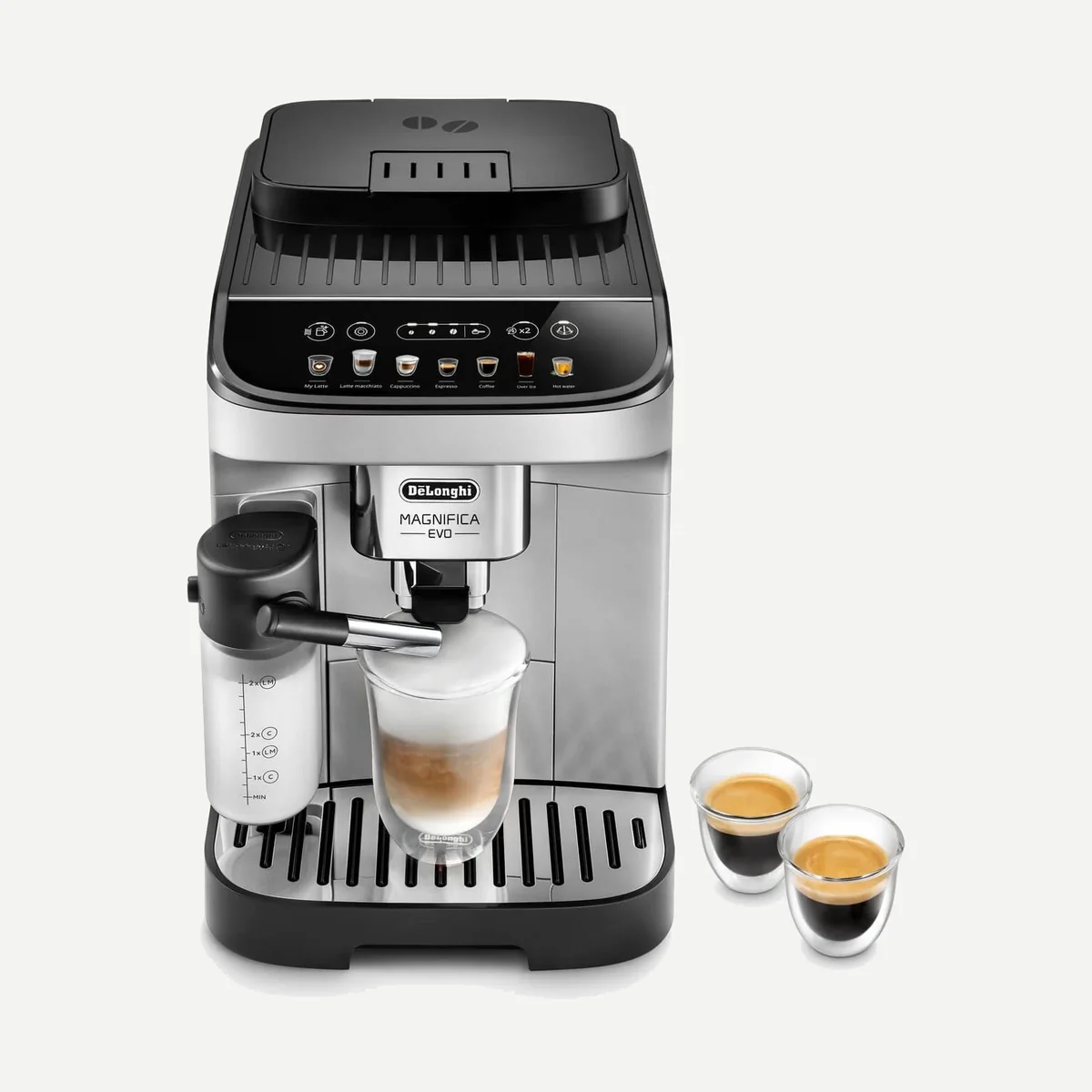
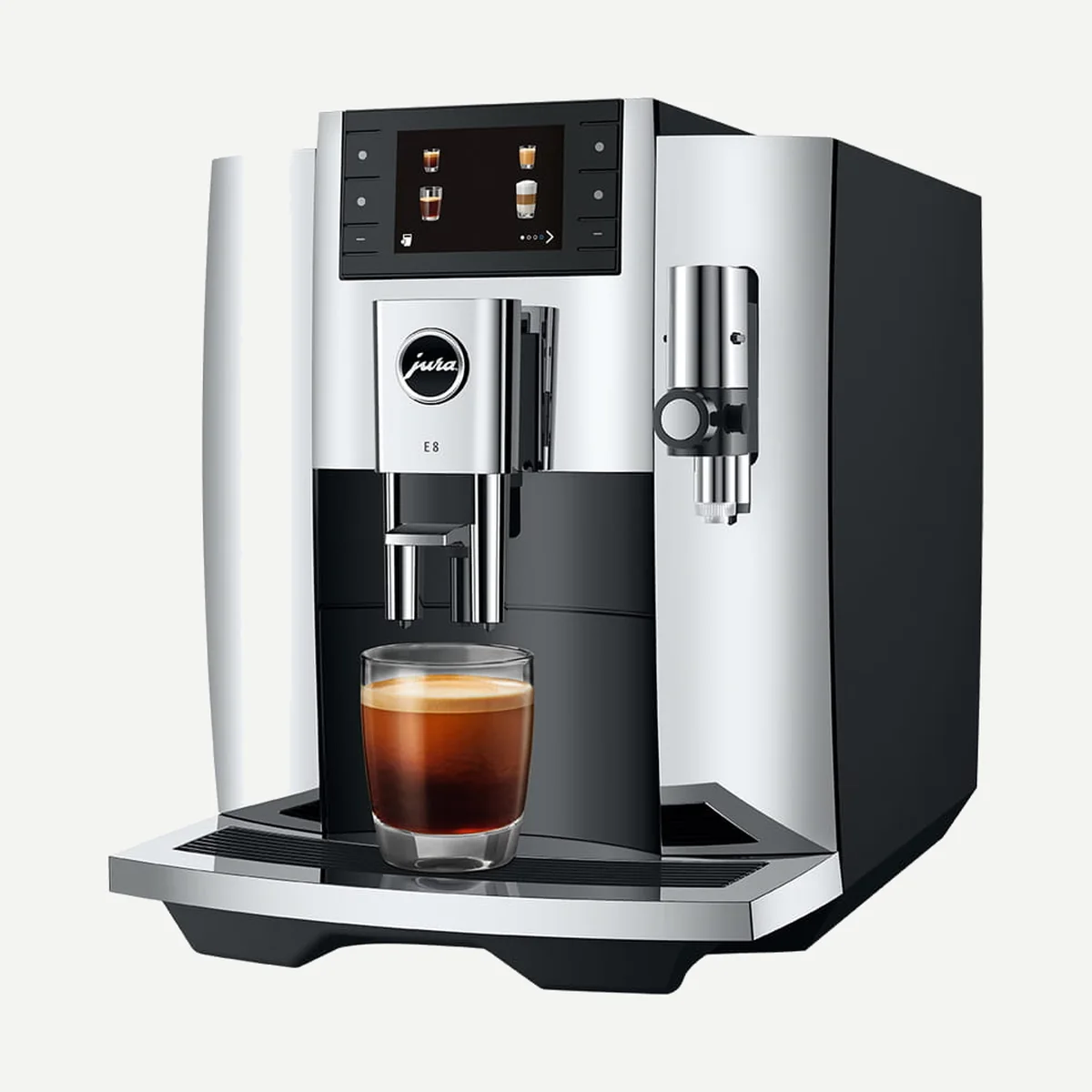
If the reason you are looking at a Breville is convenience, compare it with a
bean-to-cup machine before you decide: one button, no
portafilter, and no learning curve. Our guide to
bean-to-cup or espresso machine sets out the
trade.
If you want to learn espresso properly, the Breville range sits between the cheap pressurised machines
and Italian machines such as the Gaggia Classic and the Rancilio Silvia. Its closest like-for-like rival
is De'Longhi, whose La Specialista machines also put a
grinder and a tamping aid in one body.
The head-to-heads show where the Italian machines win and lose:
Barista Pro vs Gaggia Classic
Evo Pro for a first serious machine, and
Dual Boiler vs Rancilio Silvia
Pro X at the top.
Breville is one maker among many we score on the same criteria. Every machine we review, from
entry machines to dual boilers, is ranked in the
espresso machine category.