How to Make Bulletproof Coffee, and What It Actually Does
Coffee, butter and MCT oil, blended. Simple to make, heavily marketed, and worth understanding before you replace breakfast with it.
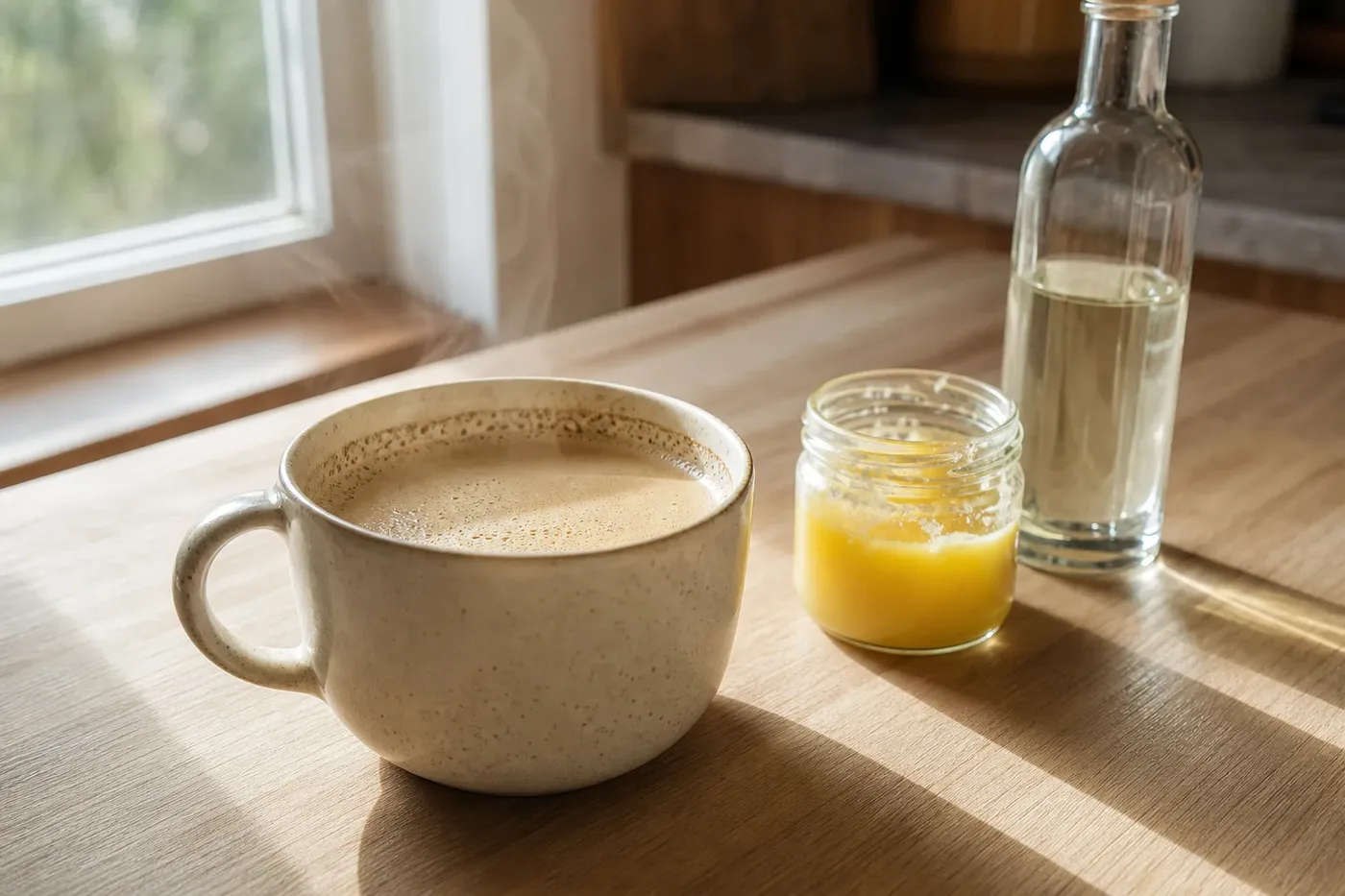
Bulletproof coffee is black coffee blended with butter and MCT oil, a refined oil usually made from coconut or palm oil, until it turns smooth and creamy and looks like a latte. It was popularised by Dave Asprey in the late 2000s and became the default breakfast of a particular low-carbohydrate crowd. The recipe is simple and the claims around it are not.
How to make bulletproof coffee
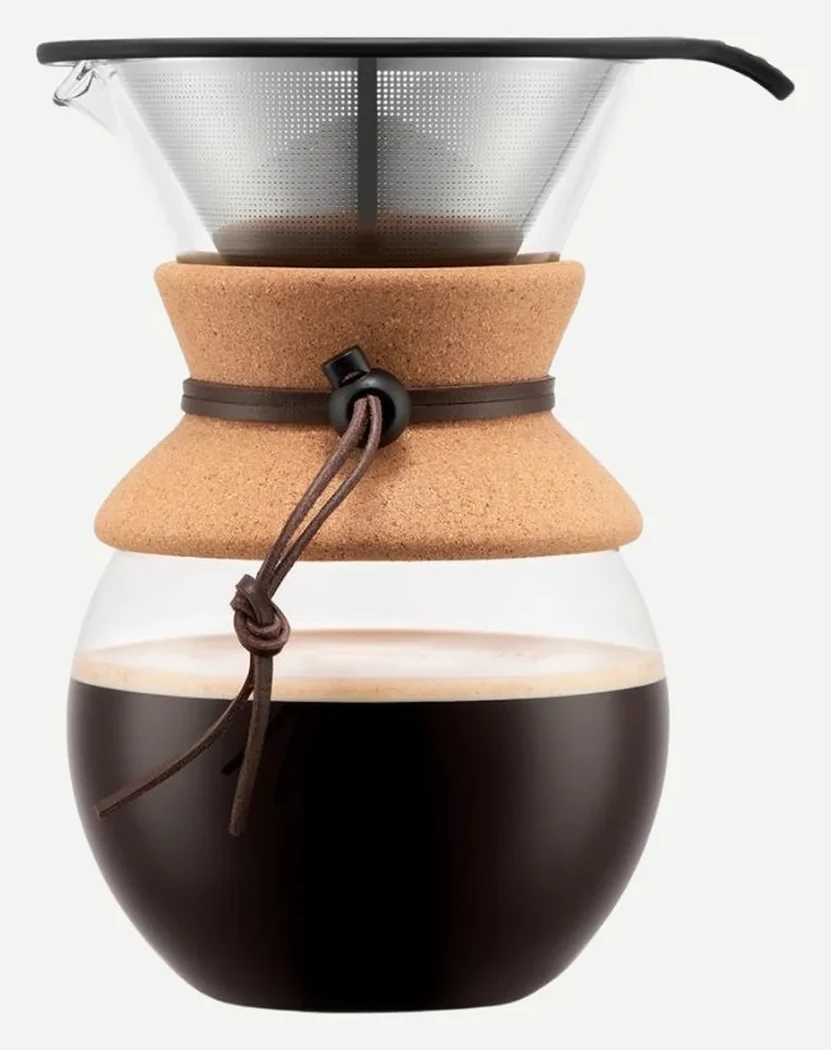
- Brew a strong cup, around 250 ml. Any method. A dark or medium roast suits it better than a delicate light roast, whose acidity is lost under the fat anyway.
- Add one to two teaspoons of unsalted butter, or ghee. Start at one. Two is a lot of fat and most recipes online overshoot.
- Add one teaspoon of MCT oil, building up if you are new to it. More on that below.
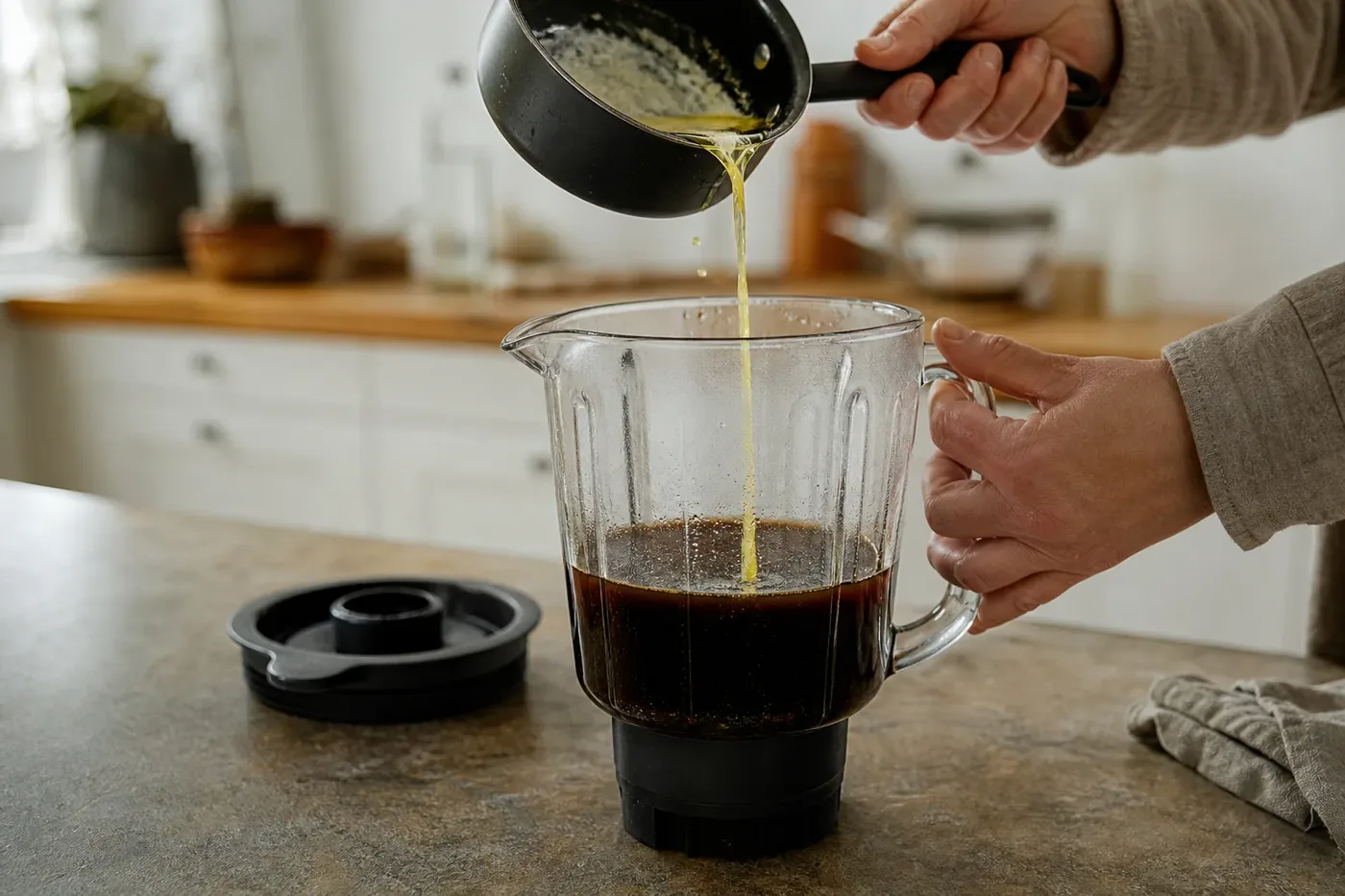
- Blend for twenty to thirty seconds. A blender, or a handheld frother in a tall jug.
Why bulletproof coffee has to be blended
Stirred, it is coffee with a slick of melted fat on top: greasy, unpleasant, and separating as you drink. Blended, the fat emulsifies into droplets suspended through the liquid, which is why it comes out pale, thick and foamy.
That texture is the entire sensory appeal of the drink, and it is a physical change rather than a flavour one.
MCT oil in bulletproof coffee: start small
Start with a teaspoon. MCT oil in quantity causes urgent digestive distress in a significant number of people the first few times, and the internet is full of recipes calling for a tablespoon from day one.
Coconut oil is often substituted and is not the same thing: it contains some medium-chain triglycerides among a lot of other fat, so it behaves more gently and does less of what MCT oil is added for.
What bulletproof coffee does and does not do
It is filling. That part is not controversial. A few hundred calories of fat with no carbohydrate produces steady satiety, and people who replace a carbohydrate breakfast with it often do feel better through the morning. That is a real effect with a mundane explanation.
It is a meal, calorically. Two teaspoons of butter and one of MCT oil is roughly two hundred calories with no protein, no fibre and no micronutrients. Treating it as a coffee you happen to drink is how people end up adding it to a normal diet rather than replacing something.
The cognitive claims are the weakest part. The ketone story is plausible in outline and thin in evidence at this dose, and the more specific the claim, the less there is behind it.
Who bulletproof coffee suits
Someone eating a low-carbohydrate or ketogenic diet who wants a filling breakfast without protein, and who likes the taste. That is a real use case and it is narrower than the marketing.
If you simply want coffee that is rich and filling, a well-made flat white with whole milk gets you most of the texture, some protein, and none of the argument.
Bulletproof coffee variations that work
The base recipe is plain by design, and a few additions improve it without turning it into something else.
- Ghee instead of butter. Nuttier, and it emulsifies slightly more readily. It is also the version that suits anyone avoiding milk solids.
- A pinch of salt. The single most effective addition. It cuts the flatness that unsalted fat leaves behind.
- A teaspoon of cacao powder. Adds bitterness and body and makes the drink taste deliberate rather than improvised.
- Cinnamon. Reads as sweetness without sugar, which matters in a drink that has none.
Coconut oil in place of MCT is the common dairy-free route, at the cost of the thing MCT was there to supply. Plant butters mostly do not emulsify well and the texture suffers.
Blender safety and cleanup
Never seal a hot liquid in a blender. Steam expands, the lid lifts, and hot fat goes across the kitchen. Fill no more than half, hold the lid with a folded cloth, and start slow.
Wash it immediately. Fat sets on the blades as it cools and is much harder to shift ten minutes later than ten seconds later.
If neither appeals, a handheld frother in a tall jug does the job with one item to rinse, and it is what most daily drinkers end up using.
Bulletproof coffee FAQ
What is in bulletproof coffee?
Black coffee, unsalted grass-fed butter or ghee, and MCT oil, blended until smooth and creamy. That is the whole recipe; everything else is branding.
Why does it have to be blended?
Stirring gives you oil floating on coffee, which is unpleasant to drink and separates immediately. Blending emulsifies the fat into the liquid and produces the creamy texture the drink is meant to have.
Does bulletproof coffee break a fast?
It contains substantial calories, so by any strict definition yes. Whether it breaks the particular effect someone is fasting for is a different and more contested question, since it contains almost no protein or carbohydrate.
Is bulletproof coffee healthy?
It is a large dose of saturated fat with no fibre, no protein and no micronutrients, replacing a meal that would have had all three. It is not poison and it is not breakfast.