Lavazza Tablì: What Coffee Tabs Are and How They Work
A coffee tab is a pressed disc of coffee with no capsule around it. Here is how the format works, what it costs, and where it sits against a capsule.
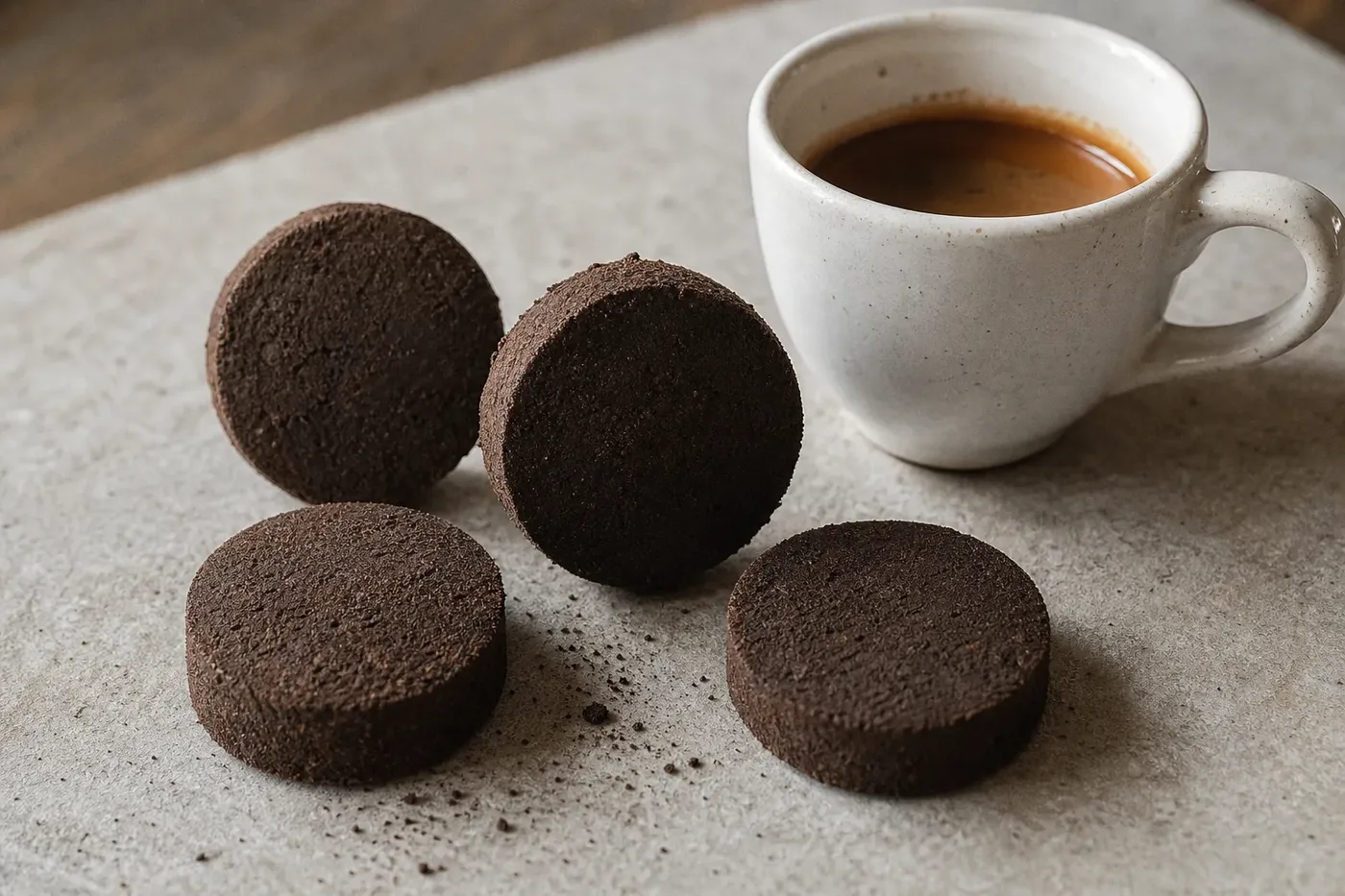
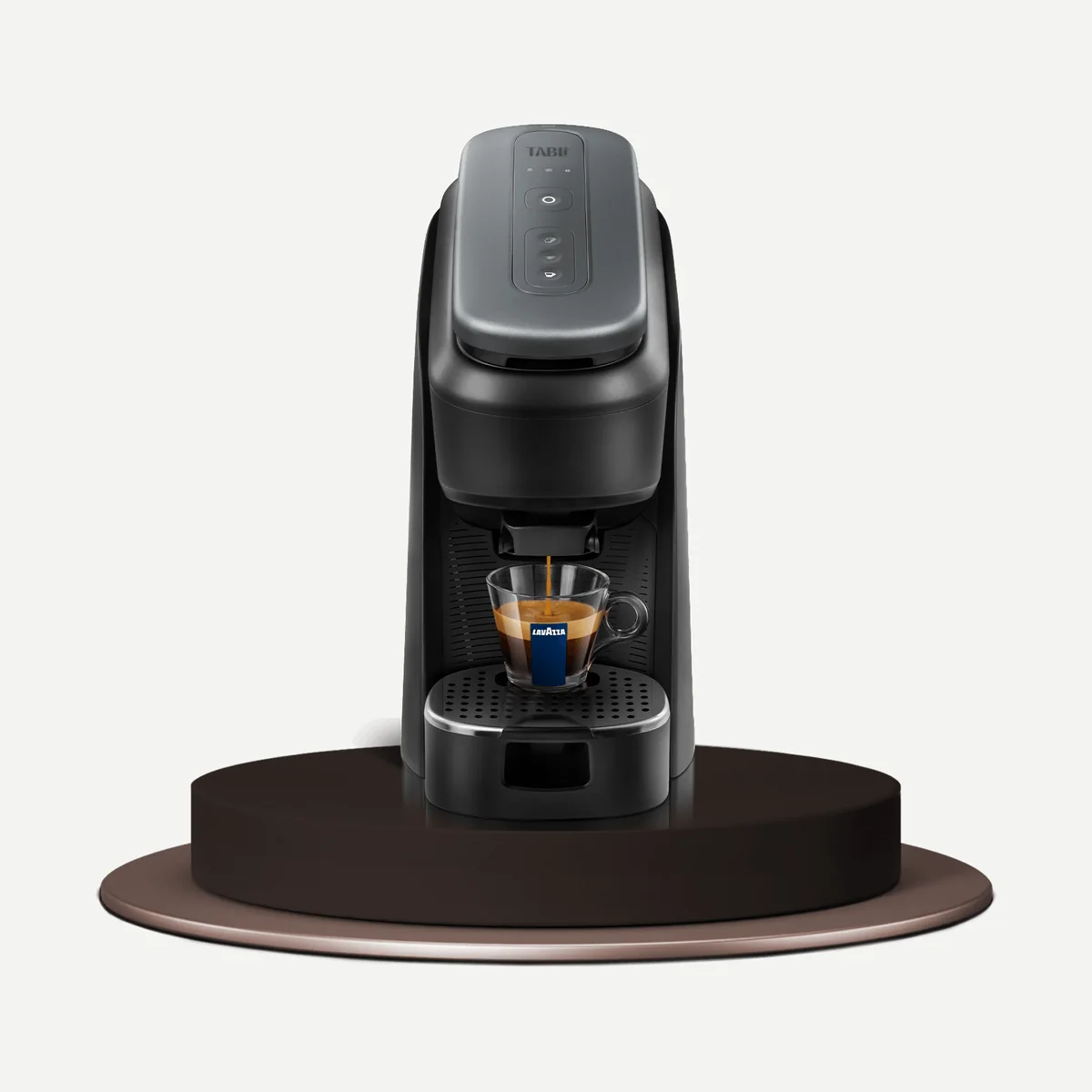
A coffee tab is a dose of coffee pressed into a solid disc with no capsule around it. Lavazza sells the first machine built for them, and it is the only coffee system we cover where each dose has no packaging of its own.
What a tab is
Every single-serve system until now has wrapped its dose in something. Nespresso uses aluminium, K-Cup uses a plastic cup with a foil lid, Dolce Gusto and Tassimo use their own plastic pods. The container holds the coffee, keeps air out and gives the machine something to pierce.
A tab does away with it. The coffee is compressed into a disc that holds its own shape, and it goes into the machine bare. Lavazza describes the result as 100% coffee with no casing, made through a patented process that turns ground coffee into a solid, ready-to-use format, and calls the whole thing an entirely new product category.
What comes out afterwards
This is the part that changes for the person using it. A used capsule is an object: aluminium or plastic, wet, holding grounds, and dealt with either by a mail-back scheme or by peeling the lid, emptying the grounds and putting the cup in a kerbside bin if the local service takes it.
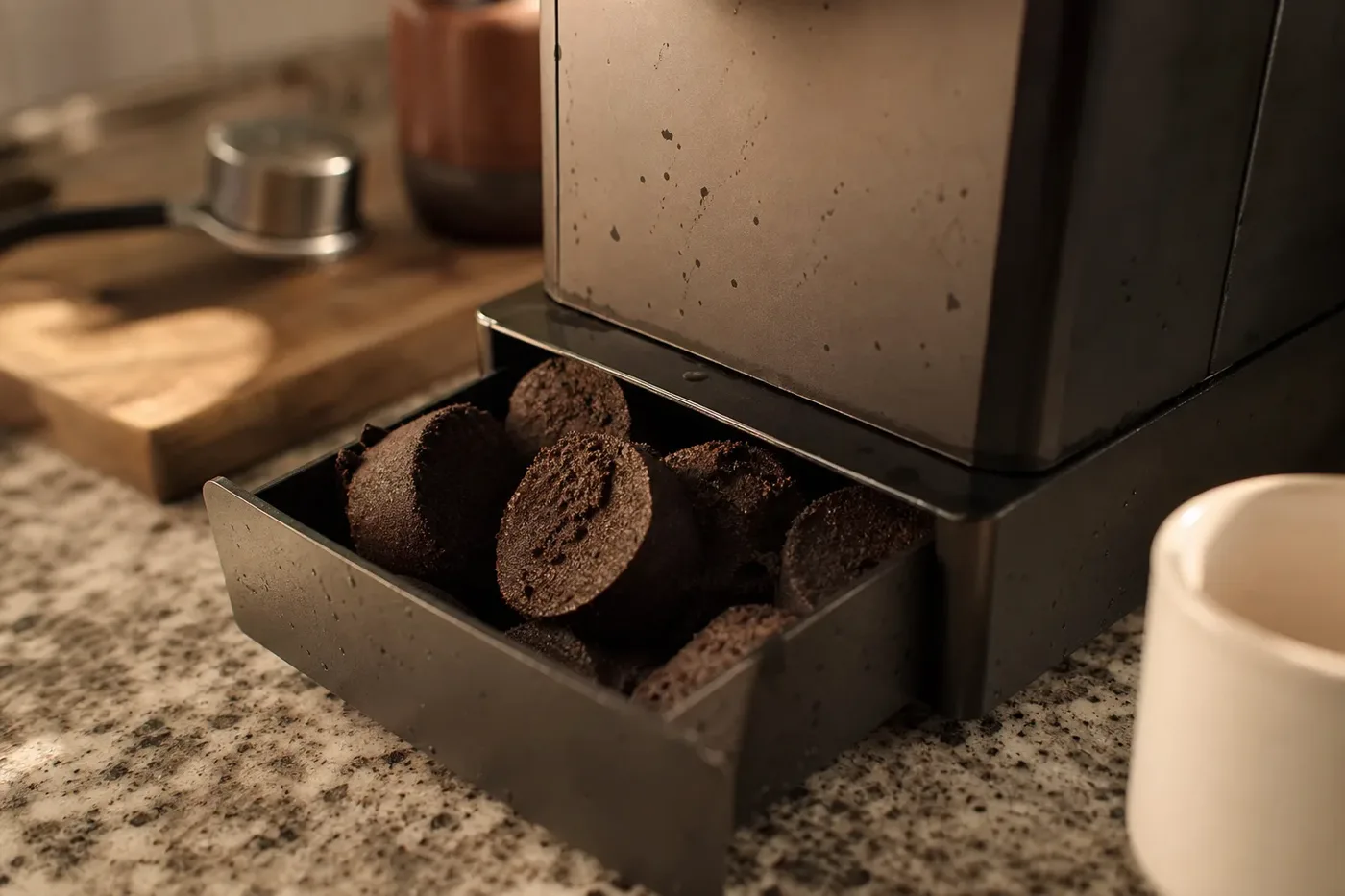
A used tab is a wet puck of coffee. There is nothing to separate, because nothing was ever around the dose itself, so the spent tab goes wherever the rest of your grounds go. The packaging is still there, one step earlier: Lavazza says the tabs come in paper trays sealed with a plastic film to preserve freshness, inside a paper box, and that the packaging goes out under your local recycling rules. The film is plastic, which most kerbside collections do not take. The machine drops spent tabs into a drawer that holds eight and tells you when it is full.
The machine, and what it brews
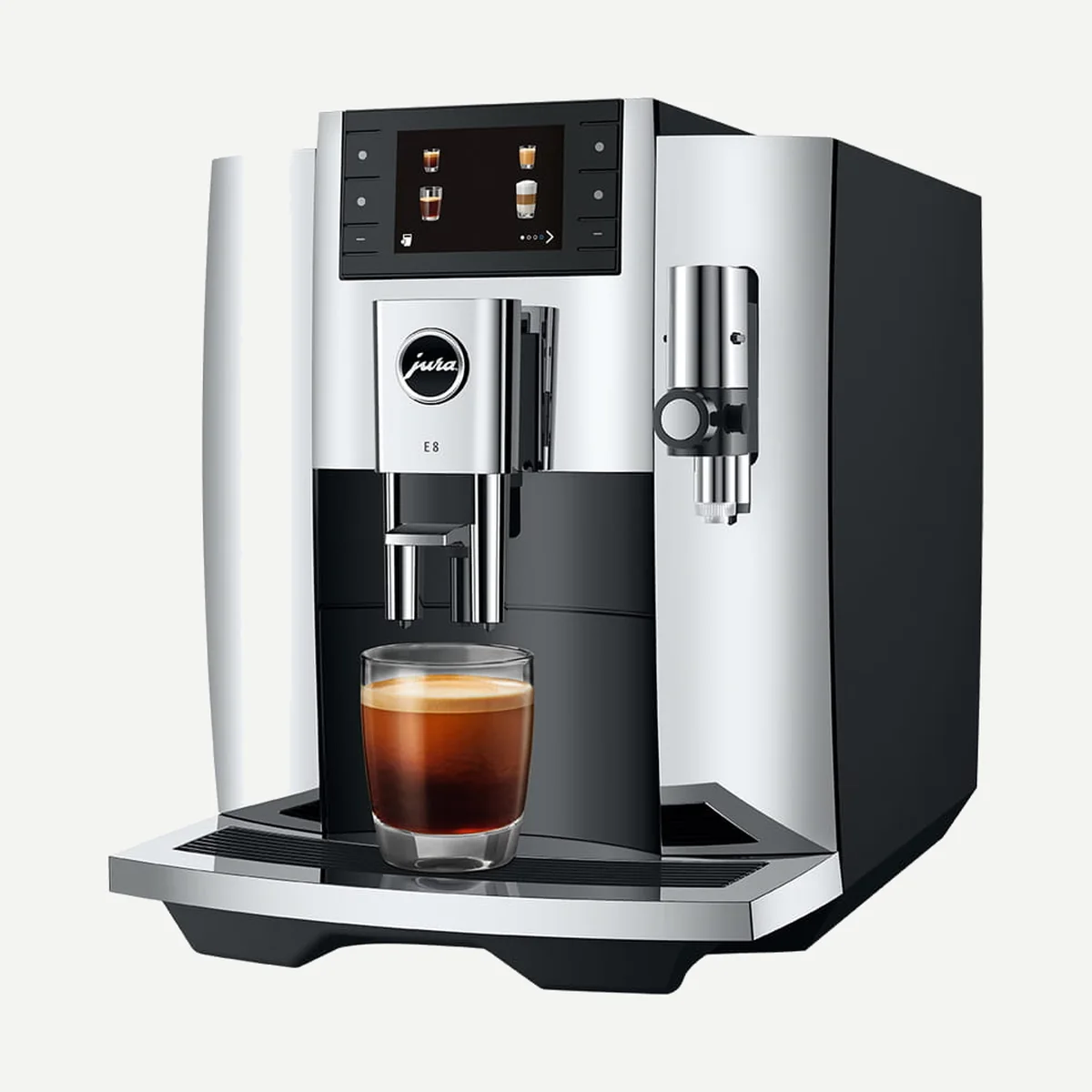
One machine takes tabs: the Lavazza Tablì Espresso Machine, $129.99 on Lavazza's US site. It brews an espresso, a lungo or a double at one button, and the spout tilts so a double can land in two cups or in one. Lavazza calls its extraction Crema Plus and says it builds a thicker crema.
It heats up in 35 seconds, holds 1.2 litres of water, shuts itself off after two minutes and takes no app and no voice assistant, which Lavazza states plainly on its own specification table. There is no milk system; a frother is sold separately. The machines and the tabs together are on the Lavazza Tablì page.
What a tab costs
Lavazza sells five blends and a mixed pack. A box of 48 is $48.00 for the Espresso, Super Crema and Decaf, which is a dollar a shot, and $52.80 for the Lungo and Double, which is $1.10. The 60-tab Variety Collection is $60.00 and holds twelve of each blend.
That puts a tab at the top of what a Nespresso Original capsule costs on this site, 90 cents to a dollar, above the cheapest K-Cup pods at 64 cents, and below Vertuo. The format is priced like the mainstream, not as a premium.
What it locks you in to
The honest catch, and it is the same one every closed system has, only tighter. Tabs fit the Tablì machine and nothing else, the machine takes nothing but tabs, and only Lavazza makes them. There is no third-party tab, no reusable tab and no way to run your own coffee through it. K-Cup is the opposite case: the patent expired, dozens of roasters make pods, and that competition is why a K-Cup can cost 64 cents.
The other practical difference is the box. Nespresso sells sleeves of ten, so trying a coffee costs about ten dollars. The smallest Tablì box of a single blend is 48, which means $48.00 to find out whether you like it, or the Variety Collection to try twelve of each first.
Is a tab better than a capsule?
On waste, it removes most of a step rather than improving one: there is no capsule to empty, rinse or post back after every coffee, only a paper tray and its film once the tray is used up, which is less than any capsule scheme asks of you however well it works. On choice and on price per cup, a capsule system with competition in it still wins. On the coffee itself, nobody can say yet, and anyone who tells you otherwise has had the machine for about as long as everyone else.
Lavazza is first here but will not be alone. Keurig announced in March 2026 that it is launching AltaRounds, coffee pressed into a round and wrapped in a plant-based coating, for a new brewer called the Keurig Alta, with the launch set for the end of September 2026. On Keurig's account the Alta also takes ordinary K-Cups, so unlike a Tablì machine it would not be a brewer that accepts one company's coffee and nothing else.
If pod waste is the thing that bothers you and you drink Lavazza anyway, the format answers a real complaint. If you like changing roasters, the answer is the same as it has always been: an open system, or a grinder and a bag of beans.
Common questions
What is a coffee tab?
A dose of coffee pressed into a solid disc with no capsule, wrapper or filter of its own; the tabs are sold together in paper trays sealed with plastic film. It goes into the machine as it is, and what is left afterwards is a wet disc of used coffee grounds.
Which machines take Lavazza Tablì tabs?
Only the Lavazza Tablì Espresso Machine. Lavazza states the tabs work exclusively with Tablì machines, and no third party makes a compatible tab.
How much does a Tablì tab cost?
A dollar a tab for the Espresso, Super Crema and Decaf boxes of 48, and $1.10 for the Lungo and Double boxes. The 60-tab Variety Collection is $60.00.
Are coffee tabs recyclable?
The tab itself is 100% coffee, so a spent tab is wet grounds and can go wherever the rest of your grounds go; Lavazza says it can be thrown away or composted. The packaging is paper trays and a paper box, which go out under your local recycling rules, and a plastic film sealing each tray.