What is the Lavazza Tablì Espresso Machine?
A single-serve espresso machine whose coffee arrives as a pressed tab, with no capsule around it.
Every other single-serve system on this site wraps its coffee in something: aluminium for Nespresso, plastic and foil for K-Cup, plastic for T Disc and Dolce Gusto. The Tablì tab is pressed coffee and nothing else. It goes into the machine bare, and what comes out at the end is a spent puck in a drawer rather than a capsule in a bin. Lavazza calls the format an entirely new product category, and on the evidence of the catalogue it is the only one of its kind here.
The machine is $129.99 on Lavazza's US site, in black and brown. This review is based on what Lavazza publishes, measured against the other single-serve machines we cover. We have not tested it hands-on.
What it brews
Three drinks, each on its own button: an espresso, an espresso lungo, and a double. The spout tilts, which is the neat part of the double: pushed down it fills two cups at once, pushed up it puts both shots into one. Lavazza's name for the extraction is Crema Plus, which it says produces a rich and persistent crema.
What it does not do is milk. There is no steam wand, no carafe and no milk button, and Lavazza sells a Tablì milk frother as a separate accessory. If a cappuccino every morning is the reason you are buying a machine, this is not the one, and a system with a milk unit is the better route. The drinks themselves are explained in what espresso is.
Living with it
- Warm-up. 35 seconds, which is the range single-serve machines live in and one of the reasons people buy them.
- Water. A 1.2 litre tank with an empty-tank alert.
- Used tabs. A drawer that holds 8, with an alert when it is full.
- Cleaning. The cup grid, drip tray, used-tab container and tank all come out and go in the dishwasher. The grid is metal rather than plastic.
- Descaling. Required, with an alert to tell you when.
- Power. 1450 W at 120 V, a 2 minute auto shut-off and a low consumption mode.
- Size. 165 x 390 x 327 mm and 4.5 kg. It is narrow and deep, so measure the shelf rather than the counter.
- Connected. No app and no voice assistant, which Lavazza states plainly on its own spec table.
- Made in. Poland.
What it costs to run
A tab is $1.00 for the Espresso, Super Crema and Decaf boxes, and $1.10 for the Lungo and Double. That is dearer than the cheapest K-Cup pods, which reach 64 cents, and it sits at the top of what Nespresso Original capsules cost on this site, 90 cents to a dollar.
The difference is the box. Nespresso sells sleeves of ten, so a new coffee costs about $10 to try. Lavazza sells tabs in 48-count boxes, so the smallest restock is $48.00, and the Tablì Tabs Variety Collection at $60.00 is the only way to buy less than 48 of any one blend. Money up front, not money per cup.
The waste, which is the actual argument
A Nespresso capsule is aluminium and goes back through a mail-back scheme. A K-Cup is plastic with a foil lid, and the lid has to come off and the grounds come out before the cup can go in a kerbside bin. Both work, and both depend on somebody doing them every day.
A tab removes the step rather than improving it. There is no capsule, so there is nothing to rinse, peel, sort or post after each coffee, and the spent tab is wet coffee that can go in a food or garden waste bin like any other grounds. The packaging has not vanished, it has moved: the tabs come in paper trays sealed with a plastic film to preserve freshness, inside a paper box, and Lavazza says the packaging goes out under your local recycling rules. That is the strongest thing about this system, and it is worth being precise about what it is: less packaging to deal with, not a claim about the coffee in the cup.
Lavazza Tablì vs Nespresso Pixie
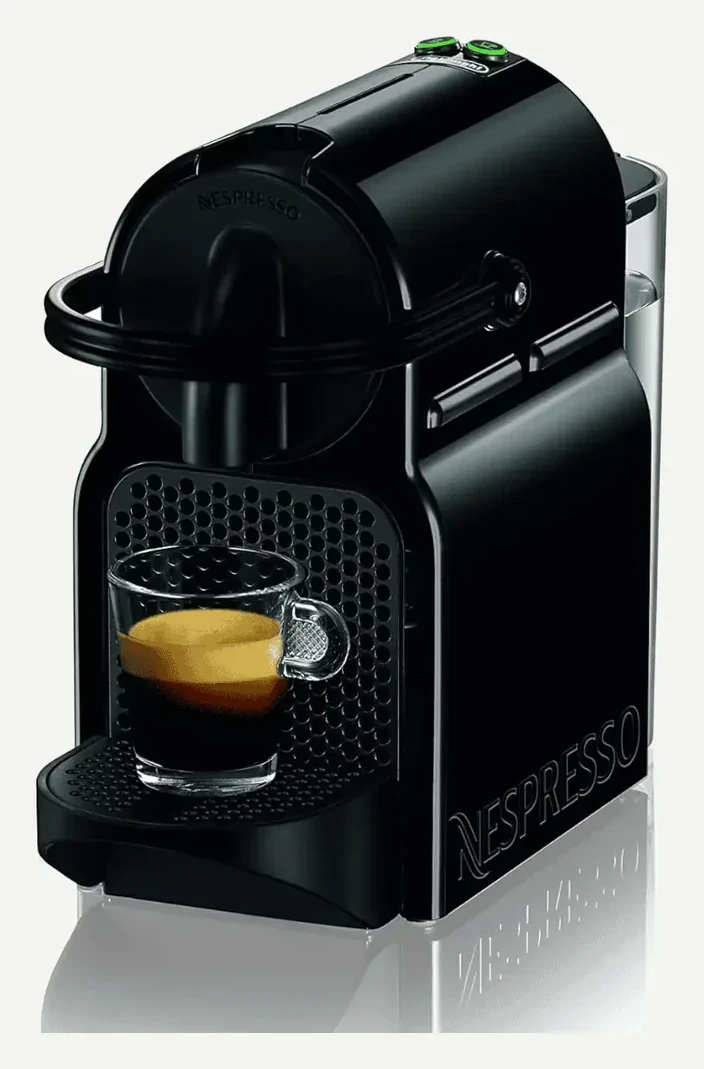
The Nespresso Pixie is the closest comparison at $149.00: a small Original-line machine that makes espresso and lungo, with no milk system. The Pixie's advantage is choice. Nespresso Original is an open-ish format with eleven capsules on this site from several roasters, capsules are sold in tens, and third-party capsules fit.
The Tablì's advantage is the format itself: $19 less for the machine, no capsule to deal with after each cup, and a double-shot button the Pixie does not have. The trade is that every future cup comes from one company. Choose the Pixie if you like changing coffees and buying ten at a time; choose the Tablì if you drink Lavazza anyway and want the waste to stop being a chore.
Is the Lavazza Tablì worth it?
At $129.99 the machine is well priced for what it is, and cheaper than most of the Nespresso line. The question is not the machine, it is the lock-in: you are buying a coffee supply as much as a brewer, from one company, in 48-count boxes, with no third-party tabs to fall back on and no way to run your own coffee through it.
It is worth it for a Lavazza drinker who wants espresso at a button and is tired of dealing with capsules. It is the wrong buy for someone who likes trying roasters, who wants milk drinks built in, or who wants the cheapest cup on the shelf, which is still a K-Cup. What the format is and how it differs from a capsule is set out in our guide to Lavazza Tablì and coffee tabs.
Who should buy the Tablì (and who should not)
Buy it if
- You drink Lavazza espresso already and want it at one button.
- Capsule waste is the thing that bothers you about single-serve coffee.
- You want a double shot without brewing twice.
Skip it if
- You want to buy coffee from more than one company.
- You want milk drinks from the machine itself.
- You want the lowest possible cost per cup, or to buy ten at a time rather than 48.
Frequently Asked Questions
Can the Lavazza Tablì use Nespresso capsules?
No. Lavazza states the machine is compatible only with Tablì tabs, and no other system's capsule fits it.
What is a coffee tab?
A dose of pressed coffee with no casing around it. It goes into the machine as it is, and only wet coffee comes out the other end. The tabs are sold in paper trays sealed with plastic film.
How much does a Tablì tab cost?
$1.00 a tab for the Espresso, Super Crema and Decaf boxes of 48, and $1.10 for the Lungo and Double.
Does the Lavazza Tablì froth milk?
Not on its own. It brews espresso, lungo and a double, and Lavazza sells a separate Tablì milk frother.
How long does the Tablì take to heat up?
Lavazza states 35 seconds.
Where is the Lavazza Tablì made?
Poland, according to Lavazza's own technical data.