




Salt in Coffee: Does a Pinch Really Cut Bitterness?
A pinch of salt can soften bitter coffee without making it taste salty, and cultures from Turkey to Vietnam have used it for different reasons.
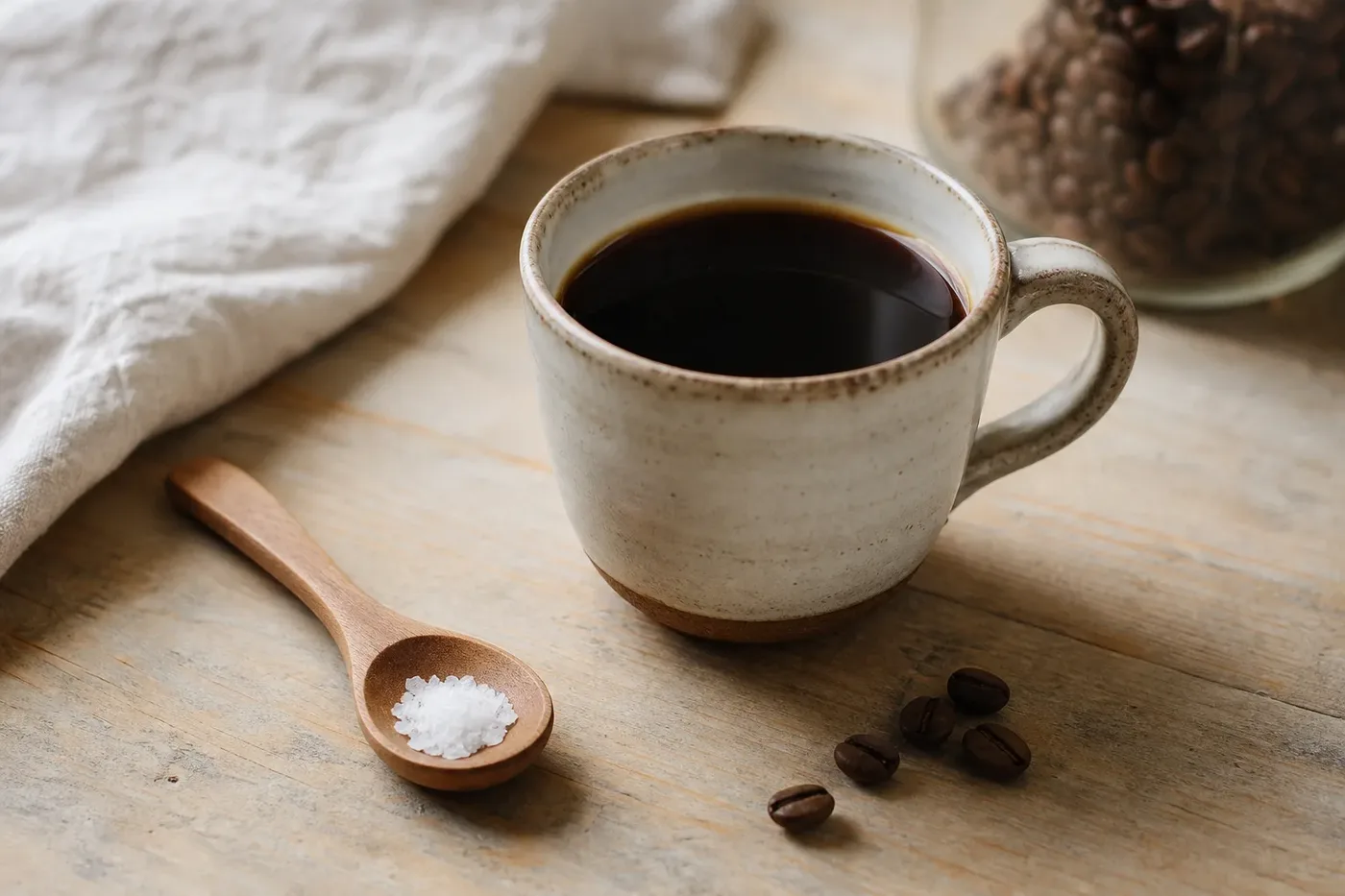
A pinch of salt in coffee reduces how bitter it tastes. The sodium in salt interferes with the way your tongue registers bitterness, so a very small amount can smooth a harsh or over-extracted cup without making it taste salty. The effect is real but modest, and it works best on coffee that was bitter to begin with.
Why does salt reduce bitterness in coffee?
Sodium suppresses bitter taste. Food scientists have known this for decades, though the exact mechanism is still not fully understood.
The best known work is by Breslin and Beauchamp. Their 1995 paper in Chemical Senses showed that sodium suppresses bitterness, and a 1997 paper in Nature carried the headline idea that salt enhances flavor by suppressing bitterness. The food science writer behind the Khymos blog, who reviews this research, says it is the sodium ion that interferes with how bitter taste is transmitted, and adds that the mechanism is not fully understood.
One caution is worth stating. That research covers bitterness in general, not coffee in particular. The coffee tests the Khymos author describes were informal. So the idea is well founded, but any claim of a precise percentage drop in bitterness in your cup deserves doubt.
How much salt do you put in coffee?
As little as you can get away with. For one cup, the common advice is a small pinch stirred into the brewed coffee, or sprinkled into the grounds before brewing. Tasting as you go matters more than any measurement.
Salt in the grounds
Alton Brown is reported to add a quarter teaspoon of kosher salt to 12 tablespoons of ground coffee. Another account gives a quarter teaspoon per 6 tablespoons, so sources disagree on his exact ratio.
Salt in the brew
A small pinch stirred into a finished cup is enough. One food writer suggests about a quarter teaspoon per three cups for a full pot, adjusted to taste.
The aim is to dull bitterness, not to season the drink. If you can taste salt, you used too much. Kosher or fine sea salt dissolves easily, so either is a sensible choice.
Which coffee tastes better with a pinch of salt?
Salt helps most where bitterness is the problem. Over-extracted coffee, such as a long percolator brew or a French press left too long, is the classic case. So are very dark roasts and cheap or over-roasted beans. If you drink a lot of dark roast, a pinch is a quick fix, and the dark roast hub is where bitter cups show up most.
A fresh, well extracted light roast does not need it. The bright acidity and fruit that people buy such beans for can flatten under salt. Better beans and a cleaner brew are the long term fix, and you can browse coffee beans if the problem is the coffee rather than the method.
Where does salt in coffee come from?
Salting coffee is an old habit in several places. The Khymos post says it is a tradition in northern Scandinavia, Siberia, Turkey and Hungary, and it describes northern Sweden, where salt is added to coffee made with glacier meltwater. It does not go into detail on Turkey or Hungary, so treat those as pointers rather than a full history.
Turkey has the best documented custom. During traditional courtship, the bride-to-be serves Turkish coffee to the guests, and she sometimes salts the groom's cup instead of sweetening it. His reaction is the test: if he drinks it without complaint, he is judged patient and good tempered. Accounts differ on how common it is now, and several describe it as a well meant joke. If you want to make the coffee itself, Turkish coffee pots are the traditional tool.
What is Vietnamese salt coffee?
Vietnamese salt coffee, cà phê muối, is a drink from Hue. Most accounts credit a husband and wife, Mr. Phong and Mrs. Huong, who opened a small cafe called Cà Phê Muối and kept the recipe secret for years. The date is murky. One source puts the invention around 2010, and the style spread to nearby cafes and then across Vietnam toward the end of the 2010s.
The drink combines strong robusta coffee, condensed milk and a salted cream topping. Vietnam Coracle describes the taste as a fine balance of bitter and sweet, reminiscent of salted caramel, with the salt offsetting the harsh bitterness of robusta. Stories about sailors brewing with seawater or an American inventor are folklore or hearsay, and no source read for this article documented them.
Can you make salted coffee drinks at home?
Salted black coffee
Brew your usual cup and stir in the smallest pinch of salt. Taste, and add a second pinch only if the bitterness is still sharp.
Salted caramel style latte
Add a pinch to a sweetened milk drink. The salt does what it does in salted caramel: it trims bitterness and makes the sweetness taste rounder.
Vietnamese style salt coffee
Sweeten strong coffee with condensed milk and top it with a lightly salted cream, then drink it without stirring first. Keep the salt in the cream light so the coffee stays the main flavor.
Start with the black coffee version. It shows quickly whether salt improves your usual brew, and it costs nothing to test.
Salt in coffee FAQ
Why do people put salt in coffee?
Mainly to reduce bitterness. Sodium ions interfere with how we taste bitter compounds, so a tiny amount can make an over-extracted or dark roasted cup smoother. Some people also like the way it rounds out sweetness, as in Vietnamese salt coffee.
How much salt should you put in a cup of coffee?
Very little. A small pinch stirred into a brewed cup is the usual advice. For grounds, Alton Brown's reported ratio is a quarter teaspoon of kosher salt to 12 tablespoons of coffee, though one source gives it per 6 tablespoons. Start small and taste.
Does salt make coffee taste salty?
Not at the amounts people use. The point is to add just enough to dull bitterness without a salty taste. If you can taste the salt, you added too much, and the fix is to brew a fresh cup with less.
Does salt in coffee actually work?
The underlying research is solid: sodium suppresses bitterness, shown in work by Breslin and Beauchamp in the 1990s. Tests on coffee itself are mostly informal, so how well it works depends on how bitter the cup is to begin with.
Which coffee benefits most from salt?
Bitter coffee. Over-extracted brews, very dark roasts and cheap or over-roasted beans are the usual cases. A well made light or medium roast rarely needs it and may lose some of its brightness, so taste the coffee first. Salt is a fix for bitterness, not an upgrade for every cup.
What is Vietnamese salt coffee?
Cà phê muối is a drink from Hue made with strong robusta coffee, condensed milk and a salted cream topping. The salt offsets bitterness and brings out sweetness, a flavor often compared to salted caramel. The drink became popular across Vietnam toward the end of the 2010s.