What is the San Francisco Bay OneCUP 100% Colombian?
A single-origin Colombian medium roast in a plant-based K-Cup capsule, sold by San Francisco Bay Coffee in boxes of 36, 80 and 120.
San Francisco Bay Coffee positions this as a straightforward single-origin option for K-Cup owners who want more provenance than a blend offers. The coffee is medium roasted and unflavored, with published tasting notes of cherry, citrus, and a long cocoa finish on a syrupy body.
The capsule shell is plant-based and carries BPI certification for commercial compostability, which distinguishes it from the standard plastic K-Cup. At 120 capsules the largest box is the biggest in this category by some way, and it is where the price per pod falls to 64 cents.
What is in the capsule
Brewed through any standard K-Cup machine, it delivers a medium-roast Colombian with cherry and citrus up front and a cocoa finish.
The published tasting profile, cherry, citrus, and cocoa on a syrupy body, suggests a coffee with enough acidity and sweetness to stand out from flat, generic medium roasts. Single-origin sourcing from Colombia gives the flavor a coherent regional identity rather than the smoothed-out character of a multi-country blend.
The medium roast level keeps the brighter fruit notes intact rather than burning them off, which is consistent with the citrus and cherry descriptors. Buyers who prefer a very dark, low-acid cup may find this profile too lively, but for the stated notes it is a reasonable match.
- Cherry and citrus tasting notes indicate enough acidity to notice, so light-roast drinkers will feel at home and dark-roast drinkers may not.
- The cocoa finish and syrupy body description suggests the cup has enough weight to hold up with milk, though this is unflavored coffee.
- Single-origin Colombia means the flavor profile is tied to one source, which gives consistency within a box but no variety across it.
- Medium roast is the stated level, which keeps this versatile across most K-Cup brew sizes without the bitterness risk of a dark roast.
Which machines does it fit?
Compatible with most K-Cup brewers, it brews a single cup at a time across the standard size range those machines offer.
Because the capsule fits any standard K-Cup brewer, buyers are not locked into a proprietary machine. Most K-Cup machines offer brew sizes from roughly 6 oz to 12 oz, and the medium roast and syrupy body should hold reasonable flavor at the smaller sizes without becoming too thin at the larger ones.
This is a straight brewed coffee capsule. It is not designed for espresso-style pressure extraction, and K-Cup machines do not produce espresso. Buyers looking for a concentrate to build lattes or cappuccinos with would need a different system.
- Works in any standard K-Cup brewer, so existing Keurig or compatible machine owners need no new hardware.
- The syrupy body holds up better at 6 to 8 oz brew sizes than at 10 to 12 oz, where dilution can flatten the fruit notes.
- This is not an espresso capsule, and K-Cup machines cannot replicate espresso pressure, so milk-based espresso drinks are outside its scope.
- The 120-count box suits households brewing two or more cups daily, keeping restocking frequency low.
Living with it, day to day
Day to day it fits into any K-Cup routine without any change in machine upkeep or brewing process.
Switching to this from a standard plastic K-Cup does not change the brewing routine at all. You load the capsule, select your brew size, and the machine handles the rest. The plant-based shell behaves the same as a conventional K-Cup in the machine.
The compostable capsule requires a separate disposal step if you want to use the BPI certification. It cannot go in a standard recycling bin. It needs a commercial composting stream, which means either a municipal program that accepts BPI-certified compostables or a local drop-off point. Buyers without that access will most likely bin it.
- No change to K-Cup machine descaling or cleaning schedules is needed when switching to this capsule.
- The plant-based capsule should be composted commercially rather than recycled or landfilled to make use of the BPI certification.
- A box of 120 needs somewhere to live, so cupboard space is worth thinking about before the bulk saving decides it for you.
- Single-use capsule format means no grinder cleaning, no filter replacement, and no grounds handling between cups.
San Francisco Bay OneCUP 100% Colombian vs Nespresso Vertuo Melozio
The OneCUP Colombian and the Melozio are both unflavored medium roast pods, but they run on incompatible systems with different cost structures.
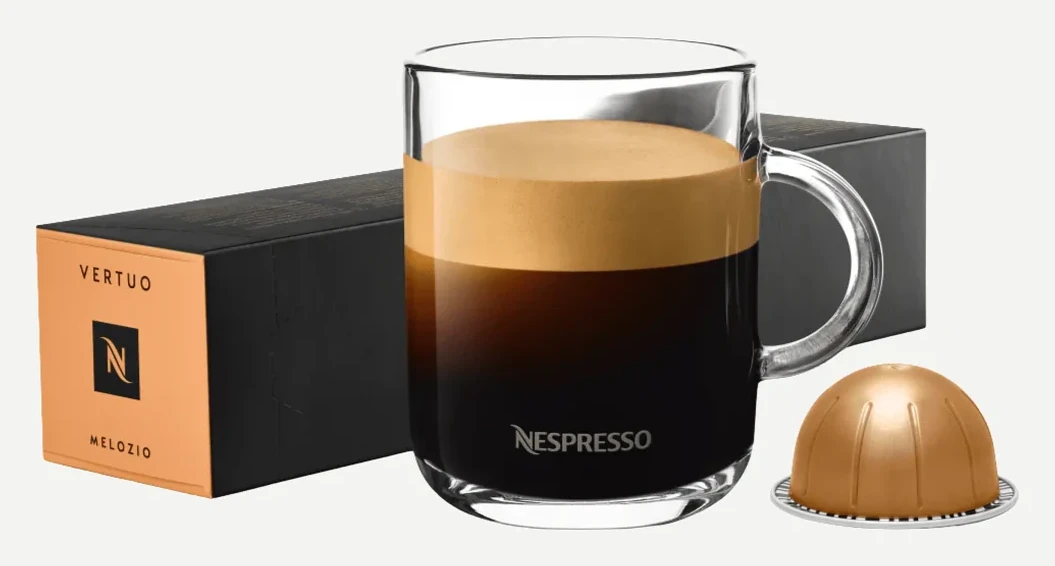
The Melozio is a Nespresso Vertuo capsule, so it requires a Vertuo machine. It costs $1.40 per capsule in a 10-count box, and Nespresso runs a mail-back aluminium recycling scheme with free collection bags. The Colombian runs on any K-Cup brewer, making it accessible to anyone who already owns one, and its plant-based capsule is commercially compostable rather than mail-back recyclable.
On flavor, the Melozio is a Brazil and Latin America blend with honeyed sweetness and a cereal note, rated intensity 6 on Nespresso's own scale. The Colombian is a single-origin with cherry, citrus, and cocoa on a syrupy body. They target different palates: the Melozio is mild and rounded, the Colombian is brighter and more characterful.
- The Melozio wins on recycling logistics: aluminium mail-back is more widely accessible than commercial composting for most US buyers.
- The Colombian wins on hardware flexibility, fitting any K-Cup machine rather than requiring a Vertuo-specific brewer.
- The Melozio wins on flavor transparency for mild-preference buyers, with a smoother, nuttier profile and a stated intensity rating.
- The Colombian wins on origin specificity, offering single-origin Colombia against the Melozio's multi-country blend.
Is the San Francisco Bay OneCUP 100% Colombian worth it?
San Francisco Bay prices the 120-count box at $76.49 on its own store, which is 64 cents a capsule and the cheapest pod on this site.
The coffee itself delivers a genuinely differentiated profile for a K-Cup: single-origin, unflavored, with a flavor map that goes beyond the typical flat medium roast. The plant-based capsule is a meaningful step up in disposal terms, provided you have commercial composting available. Both of those things are worth paying a modest premium for.
At $1.40 per cup, the Melozio is a clear benchmark to check against. At 64 cents against $1.40 it comes in at less than half, with better hardware flexibility and a more distinctive flavour profile. If it comes in above it, the Melozio's recycling infrastructure and Nespresso's supply reliability become harder to argue against. Find the current box price before deciding.
Who should buy it (and who should not)
Existing K-Cup owners who want a step up in origin transparency and flavor complexity are the natural buyers here.
The Colombian suits buyers who already own a K-Cup machine and are frustrated by generic medium roast blends that taste interchangeable. The cherry, citrus and cocoa profile gives them something with a clear identity, and buying 120 at a time is what makes it the cheapest cup here.
It is not the right choice for anyone without a K-Cup brewer, anyone who needs espresso-style output, or anyone without access to commercial composting who cares about responsible disposal. Dark roast drinkers who find bright acidity unpleasant will also find the profile a mismatch.
Buy it if
- You already own a K-Cup brewer and want a single-origin Colombian rather than another anonymous medium blend.
- You brew enough cups daily to make a 120-count box a practical purchase rather than a storage problem.
- You have access to commercial composting and want a capsule that can actually use that infrastructure.
Skip it if
- You need a Nespresso or Vertuo machine, which cannot accept K-Cup capsules of any kind.
- Your municipality does not accept commercially compostable packaging and the disposal claim matters to your buying decision.
- You strongly prefer low-acid, dark roast coffee, since the cherry and citrus notes in this profile point in the opposite direction.
Frequently Asked Questions
Is the San Francisco Bay OneCUP 100% Colombian good for espresso?
K-Cup machines brew by pressure-assisted drip rather than the high-pressure extraction espresso requires, so this capsule will not produce espresso. It brews a full-bodied drip coffee with cherry, citrus, and cocoa notes, which works well as a straight cup or with milk, but it cannot replicate an espresso shot or the crema that comes with one.
San Francisco Bay OneCUP 100% Colombian vs Nespresso Vertuo Melozio: which is better?
They run on incompatible systems, so the first question is which machine you own. If you have a K-Cup brewer, the Colombian gives you single-origin flavor and a larger box at a cost you should confirm before buying. If you own a Vertuo machine, the Melozio at $1.40 per cup is your option, with a blend profile that is milder and nuttier and aluminium recycling via Nespresso's mail-back scheme.
How many cups does the largest box make?
Each capsule makes one cup, so the 120-count box yields 120 cups. That is about seventeen weeks for a single daily drinker, or eight to nine weeks for a two-cup household. It is the largest box in this category by some distance: the other two K-Cup products here are sold in tens and fifties.
Are the capsules actually compostable in a home bin?
The BPI certification covers commercial composting only, not home composting. Commercial composters run at higher temperatures that break down plant-based materials the way a backyard bin cannot. If you put these in a home compost pile, they are unlikely to break down in a useful timeframe. Check whether your municipal curbside program accepts BPI-certified compostables before assuming they can be diverted from landfill.
What does the Colombian taste like compared to a standard medium roast?
The published tasting notes are cherry, citrus, and a cocoa finish on a syrupy body. Most standard K-Cup medium roasts are blended to be neutral and inoffensive, with little distinctive character. This profile has a brighter, fruitier edge from the single-origin Colombian sourcing. Buyers who find typical pod coffee flat or boring are the most likely to notice the difference.
Does San Francisco Bay Coffee make a decaf version of this pod?
San Francisco Bay Coffee sells a decaf K-Cup in their OneCUP range, though it is a separate product rather than a decaf version of this exact Colombian. Buyers who want the compostable capsule format without caffeine should look at that decaf offering on the retailer listing for the full range.