
Coffee Certifications: What Each Label Actually Guarantees
Fair Trade, Rainforest Alliance, organic, Bird Friendly and direct trade promise different things, and one of them is not a certification at all.
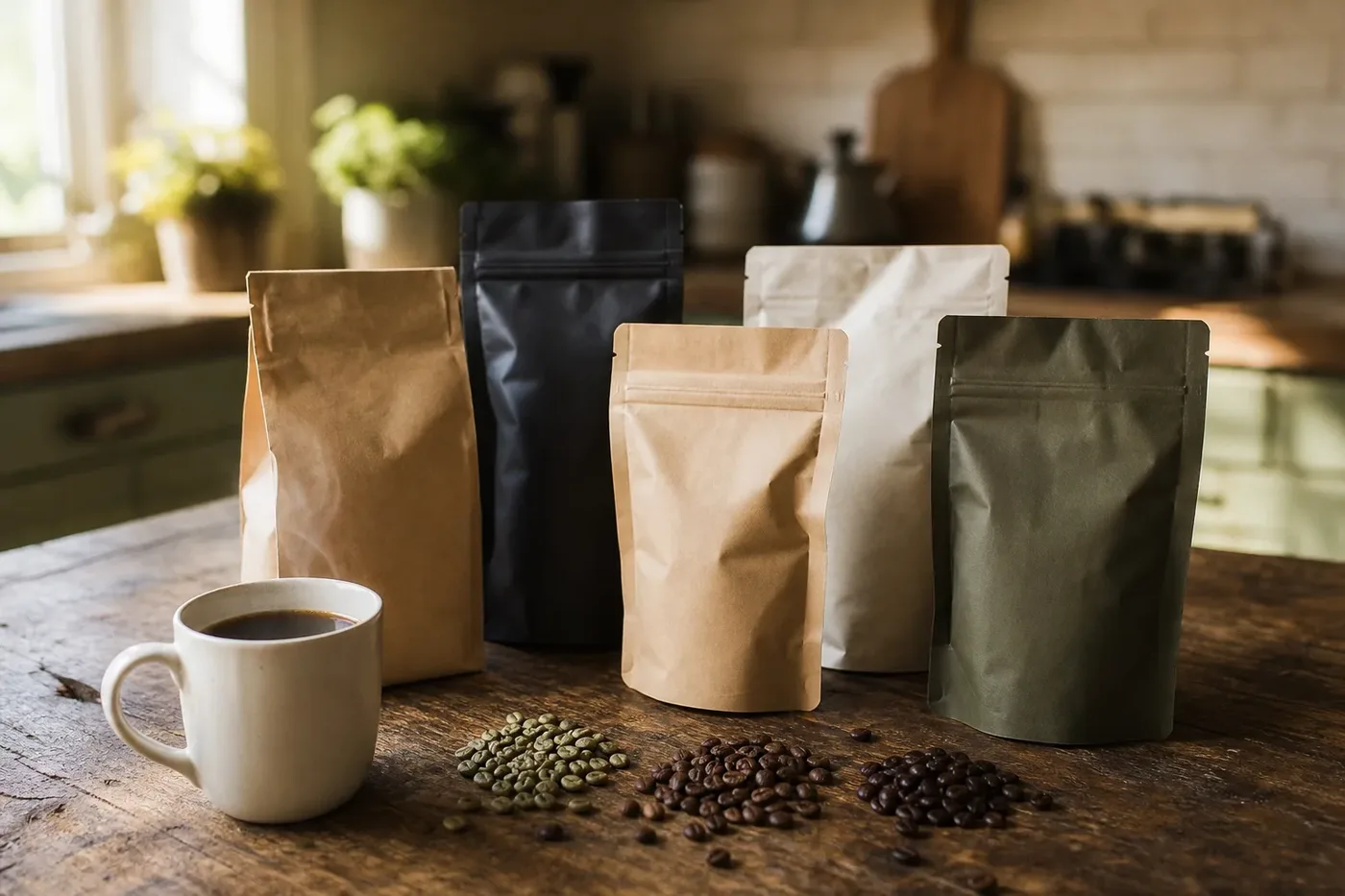
Five labels turn up on coffee bags and they are not variations on one idea. They certify different things, are audited by different bodies, and one of them is not a certification at all. Knowing which is which is the difference between buying an outcome and buying a logo.
What Fair Trade coffee certification guarantees
Fair Trade is fundamentally about economics. It sets a minimum price that buyers must pay regardless of where the commodity market sits, and adds a premium the producer organisation spends on community or business projects. It also sets terms around contracts and pre-financing.
What it is not is a quality mark or a strong environmental one. It answers the question "was the grower insulated from the market falling", and it answers it well. It does not tell you the coffee is good.
Rainforest Alliance coffee certifications: farm management
Broader and less specific. It covers environmental practice, working conditions and farm management together, against a standard the farm is audited on. It is the one most likely to appear on large commercial brands, partly because it is achievable at scale.
The breadth is both the strength and the criticism: it addresses more subjects than Fair Trade and guarantees less on any single one, including price.
What organic coffee means
A statement about inputs. No synthetic pesticides or fertilisers, verified by audit. That is a real and checkable claim and it stops there. It says nothing about what the grower was paid or how workers were treated.
It is also the certification whose absence means least. A great many small farms already grow without synthetic inputs and never certify, because the fees and paperwork cost more than the premium returns.
Bird Friendly coffee: the strictest standard
Administered by the Smithsonian Migratory Bird Center, and the most demanding environmental standard in coffee. It requires organic certification first, then adds shade cover requirements: canopy height, tree species diversity, actual forest structure rather than a row of the same tree.
It is rare because it is hard. If your concern is habitat rather than economics, this is the label that means the most.
Is direct trade coffee a certification?
Direct trade means a roaster buys from a farm or cooperative without an intermediary, and often pays well above any certified minimum. At its best it is the strongest arrangement here, because the money goes further and the relationship is ongoing.
But nobody audits it. There is no standard, no body, and no penalty for using the phrase loosely. The test is disclosure: a roaster doing it properly will name the farm, the region and often the price paid. One that says only "direct trade" on the bag has told you nothing. Our direct-trade coffee page lists the roasters on this site that make the claim.
Which coffee certifications matter for what you care about?
Decide which question you are asking. If it is about the grower's income, look for Fair Trade or verifiable direct trade. If it is about habitat, Bird Friendly first and shade-grown second. If it is about chemical inputs, organic.
Then remember that the labels cost money the producer usually pays, so an uncertified coffee from a transparent roaster can be a better purchase than a certified one from an opaque one. The label is evidence, not the whole of it.
Coffee certifications compared side by side
The quickest way to see that these are not interchangeable is to put what each one actually promises next to the others.
- Fair Trade. Guarantees a minimum price and a community premium. Says nothing about quality or habitat. Audited by a certifying body.
- Rainforest Alliance. Covers environment, labour and farm management together. No price guarantee. Audited.
- Organic. Covers inputs only, meaning no synthetic pesticides or fertilisers. Nothing about pay or habitat structure. Audited.
- Bird Friendly. Requires organic first, then adds canopy and species requirements. The strictest environmental standard here. Audited, and rare.
- Direct trade. No standard, no auditor, no definition. Can be the best arrangement on this list or entirely meaningless, depending on the roaster.
What coffee certifications do not tell you
Two things, and both matter more than the argument between labels.
Nothing here certifies quality. Not one of these standards tastes the coffee. A Fair Trade certified bag can be poor coffee and frequently is, because the certification governs the transaction rather than the crop.
Nothing here certifies freshness. A roast date on the bag tells you more about how the coffee will taste than every logo on it combined, and it is the one piece of information a roaster can print for free. Our coffees with roast dates page exists because so few of them do.
How to read a coffee bag in ten seconds
In order of how much each thing tells you:
- A roast date, not a best-before date.
- A named farm, co-op or region, rather than a country or nothing at all.
- The varietal and process, which indicate a roaster who knows what they bought.
- Then the certifications, read for the specific question you care about.
A bag with the first three and no logos is usually a better purchase than a bag with every logo and none of the first three. That is not an argument against certification. It is an argument that the labels were designed to answer questions about supply chains, and most of what you want to know about a bag of coffee is not a supply chain question.
Coffee certifications FAQ
Which coffee certification is the best one?
They answer different questions, so there is no single best. Fair Trade is about price and terms for the grower. Rainforest Alliance is about farm management and environment. Organic is about inputs. Bird Friendly is about habitat and is the strictest environmentally. Decide what you are buying for and read the label that covers it.
Is direct trade better than Fair Trade?
It can be and it is not verified. Direct trade means the roaster buys from the farm without a certifying body in between, so the quality of the claim depends entirely on the roaster's transparency. Good direct trade pays well above Fair Trade minimums. Bad direct trade is a word on a bag.
Does organic coffee taste better?
Not inherently. Organic certifies what was and was not applied to the crop, which is a question about farming inputs rather than about the cup. Plenty of excellent coffee is uncertified, often because the certification costs more than a small farm can justify.
Who pays for certification?
Largely the producer, through fees and audits, which is the part of the system most often left out. It is also why absence of a label is weak evidence of anything: many small farms meet the standard and cannot afford to prove it.