Steeping Coffee Like Tea: Coffee Bags and How Long to Brew Them
Ground coffee in a permeable bag, steeped in the cup. What the makers say about timing, and why a dark roast suits it better.
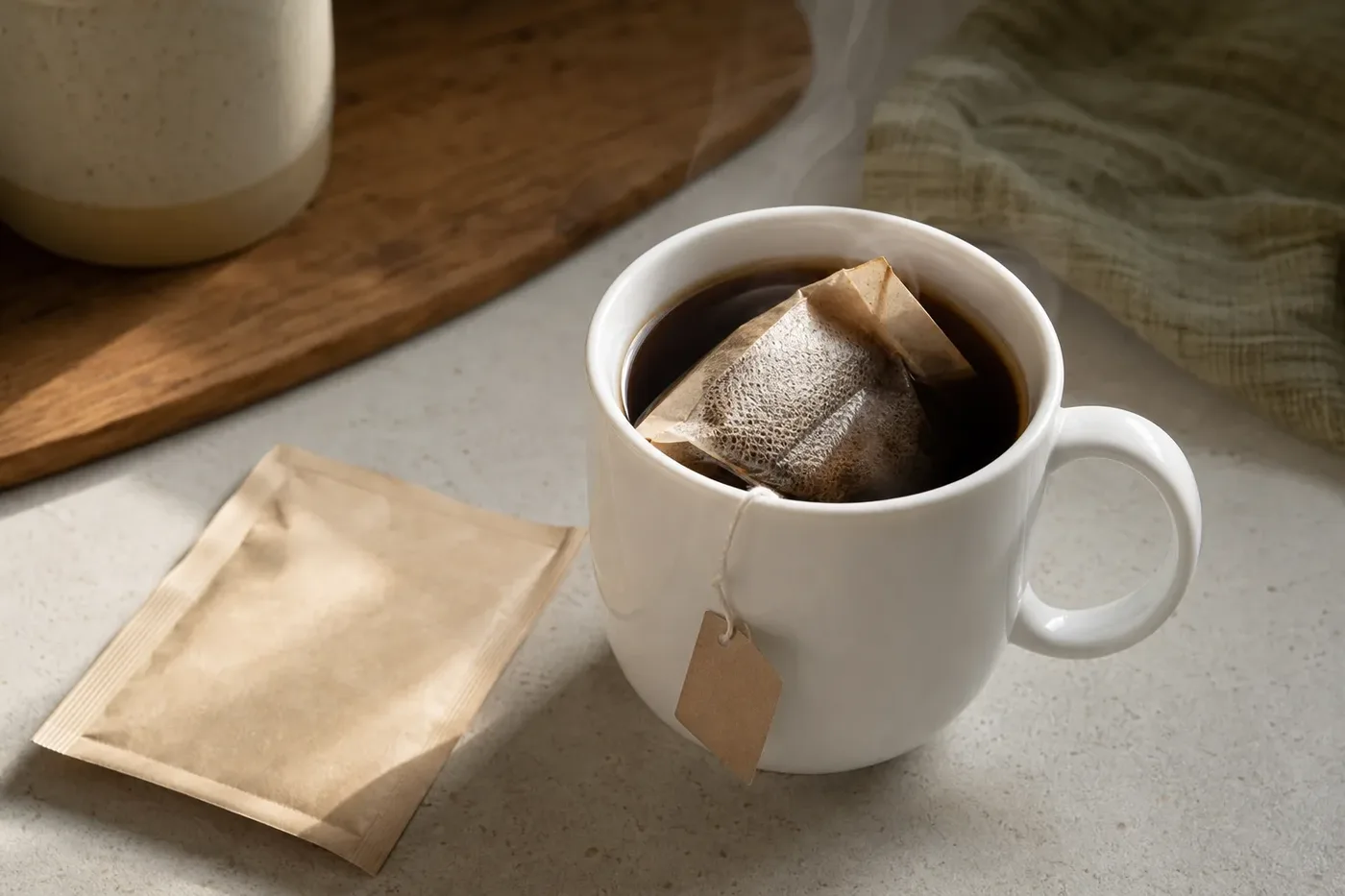
A coffee bag is ground coffee sealed in a pouch, like a tea bag, and steeped in the cup the same way. No brewer, no filter, no press, and the only variable you control is time.
How long to steep
Steeped Coffee's own instructions are to drop the bag in, pour about 8 oz of hot water, dunk it for 15 to 30 seconds, then leave it in and drink after five minutes or more, to taste. Coffee Review's survey of the category found recommended times across makers running from five to eight minutes.
The dunk at the start matters more than it looks. It wets the grounds and gets water moving through the bag, which is the same reason a tea bag is agitated rather than dropped and abandoned.
How much coffee is in one
More than a tea bag and less than a French press scoop. Of the brands Coffee Review weighed, Steeped Coffee uses 14 g a bag, Nostalgia 12 g and Wildland 16 g. Against the SCA's filter reference of 55 g per litre, a 14 g bag suits a mug of about 250 ml, which is roughly what these are built around.
Grind is the one specification nobody publishes. Roasters grind to what each considers the right particle distribution for a bag, and no brand or standard names a number.
Why roast matters here
Coffee Review's report makes a practical point about roast. Lighter roasts needed longer steeping, and the longer the bag sits, the more heat the cup loses, so a light roast can end up both under-extracted and lukewarm. The roaster quoted there draws the parallel with a French press: for this method, a darker roast is the easier choice.
That is the opposite of the usual specialty advice, and it comes from the format rather than from taste: you cannot add heat mid-brew, and you cannot grind finer to speed things up without choking the bag.
How it differs from a French press
Both are immersion: the grounds sit in the water for the whole brew, unlike a pour over where water passes through once. The difference is what separates the coffee from the grounds. A French press uses a metal mesh pushed down at the end, which lets oils and fine particles through. A bag keeps the grounds enclosed the whole time and you lift it out, so the paper does more of the filtering and the cup is cleaner.
It is also the tidiest way to brew coffee away from a kitchen, which is the actual reason most people buy them. How the format compares with the other no-equipment option is in coffee bags vs instant, and the bags we have reviewed are in coffee bag reviews.
Who makes them
The format is no longer a novelty. Alongside Steeped Coffee, Nostalgia and Wildland, Coffee Review's survey names Red Rooster, Red Bay, Mostra, Evans Brothers, Kakalove, Euphora, Olympia and Big Creek as roasters selling brew bags, which is a reasonable cross-section of American specialty rather than a supermarket own-label category.
Instructions vary in how much they tell you. Some print a time and a volume; others say little more than add hot water. Where a brand gives no steep time, five minutes is the sensible starting point from the figures above, adjusted by taste rather than by the clock.
Without a bag
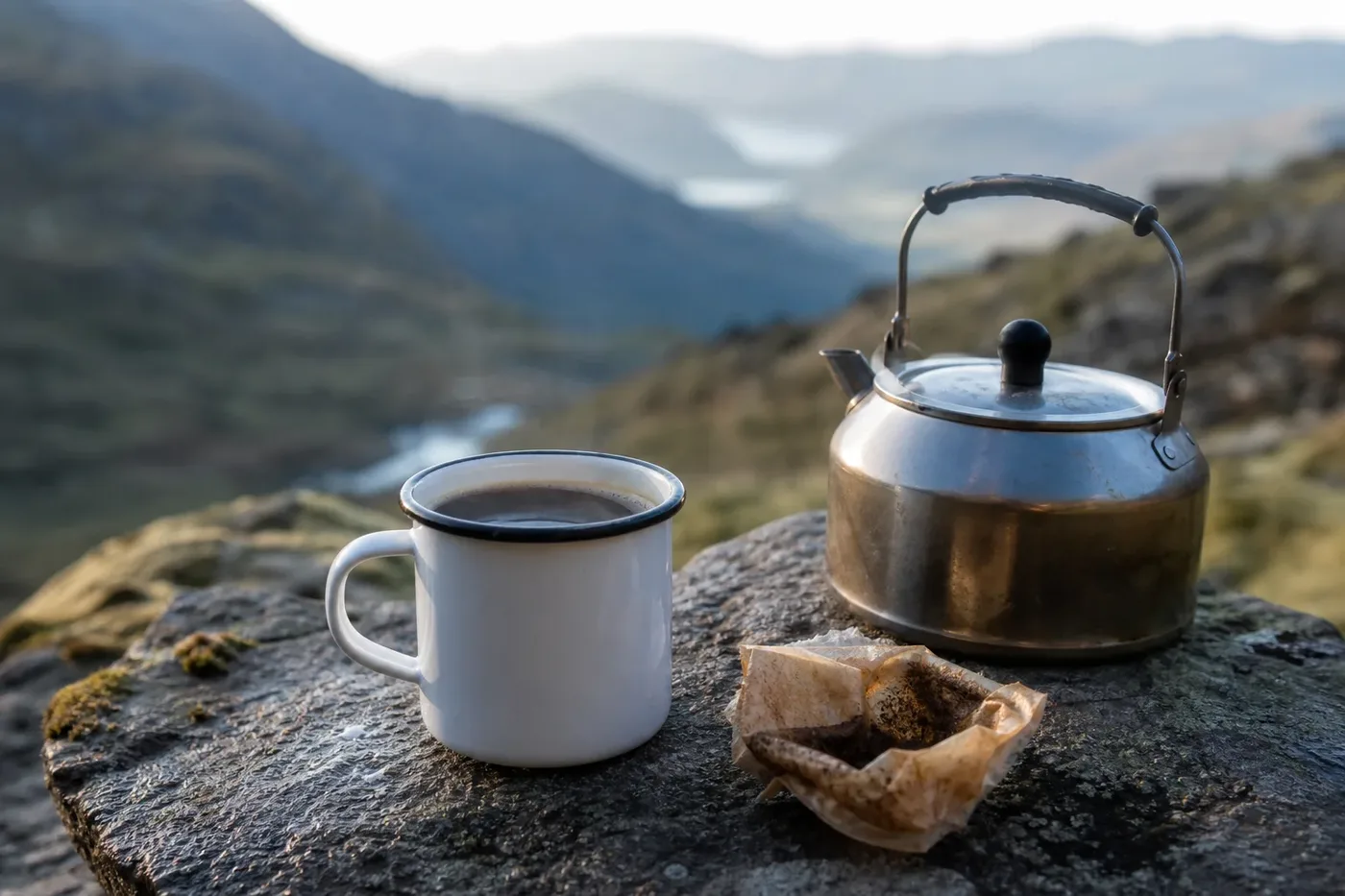
Steeping loose grounds in a pot, the method usually called cowboy coffee, is the same idea with a settling problem at the end: coarse grounds, near-boiling water, about four minutes, then time for the grounds to sink before pouring. Worth knowing that no standards body or institution describes this one; every source for it is a brand or a lifestyle site, so the numbers are custom rather than tested.
Getting a stronger cup
The most common complaint about coffee bags is that the cup is weak. There are three ways to fix it. Use less water: most bags are sized for a standard mug, so a big travel mug dilutes them. Steep for longer, towards the top of the maker's range, and dunk the bag a few times during the steep, which moves water through the coffee the way stirring does in a French press. And use water just off the boil rather than water that has been sitting, because cooler water extracts less. If you want a strong cup every time, two bags in one mug works, though it doubles the cost.
Coffee bags for travel and work
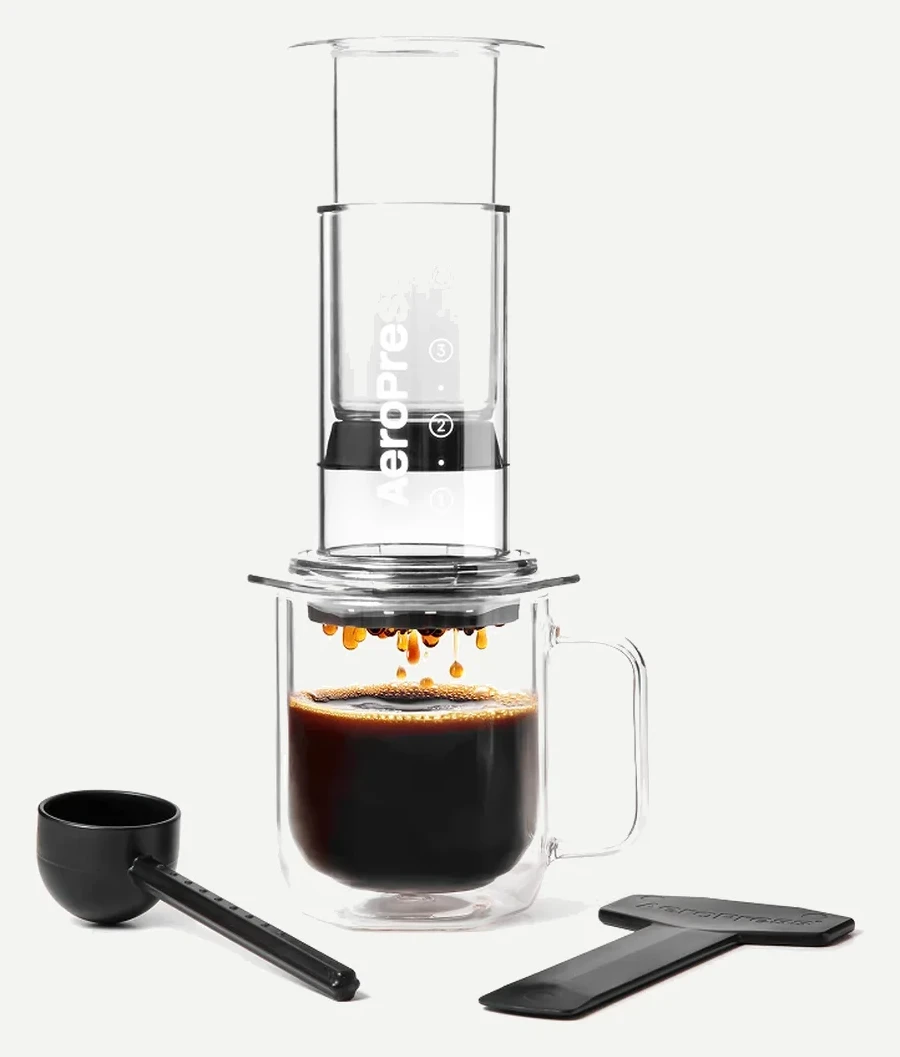
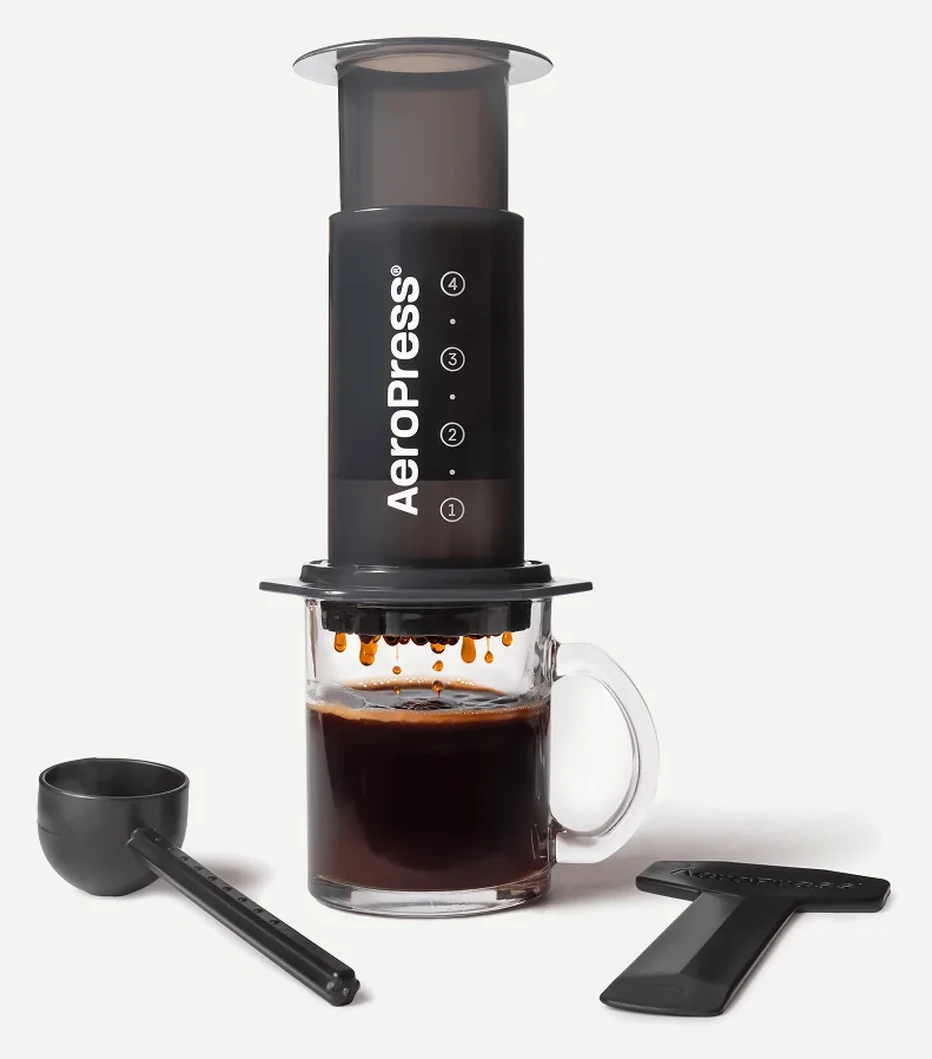
Coffee bags earn their place where there is no coffee maker: hotel rooms, offices, camping and long journeys. They need only hot water and a mug, there is nothing to clean afterwards, and the used bag goes in the bin or the compost. Against instant coffee they taste closer to fresh brewed coffee, because the grounds are steeped rather than dissolved; against a portable press they are lighter and need no gear. Our guide to using an AeroPress covers the next step up if you want better coffee on the road.
Common questions
How long do you steep a coffee bag?
Makers recommend five to eight minutes. Steeped Coffee says to dunk the bag for 15 to 30 seconds first, then leave it in and drink after five minutes or more, to taste.
How much coffee is in a coffee bag?
Usually 12 to 16 g. Steeped Coffee uses 14 g a bag, Nostalgia 12 g and Wildland 16 g, which suits a mug of about 250 ml.
Is a coffee bag the same as a French press?
Both steep the grounds in the water, but a press separates them with a metal mesh at the end while a bag keeps them enclosed and is lifted out, so a bag gives a cleaner cup.
What roast works best in a coffee bag?
Darker roasts tend to suit the method, because lighter roasts need longer steeping and the cup loses heat while they do.