Cold Brew Drip Towers: Kyoto-Style Coffee, Explained
A drop of cold water a second for six hours. It is the slowest brewing method in coffee and it produces something no immersion cold brew does.
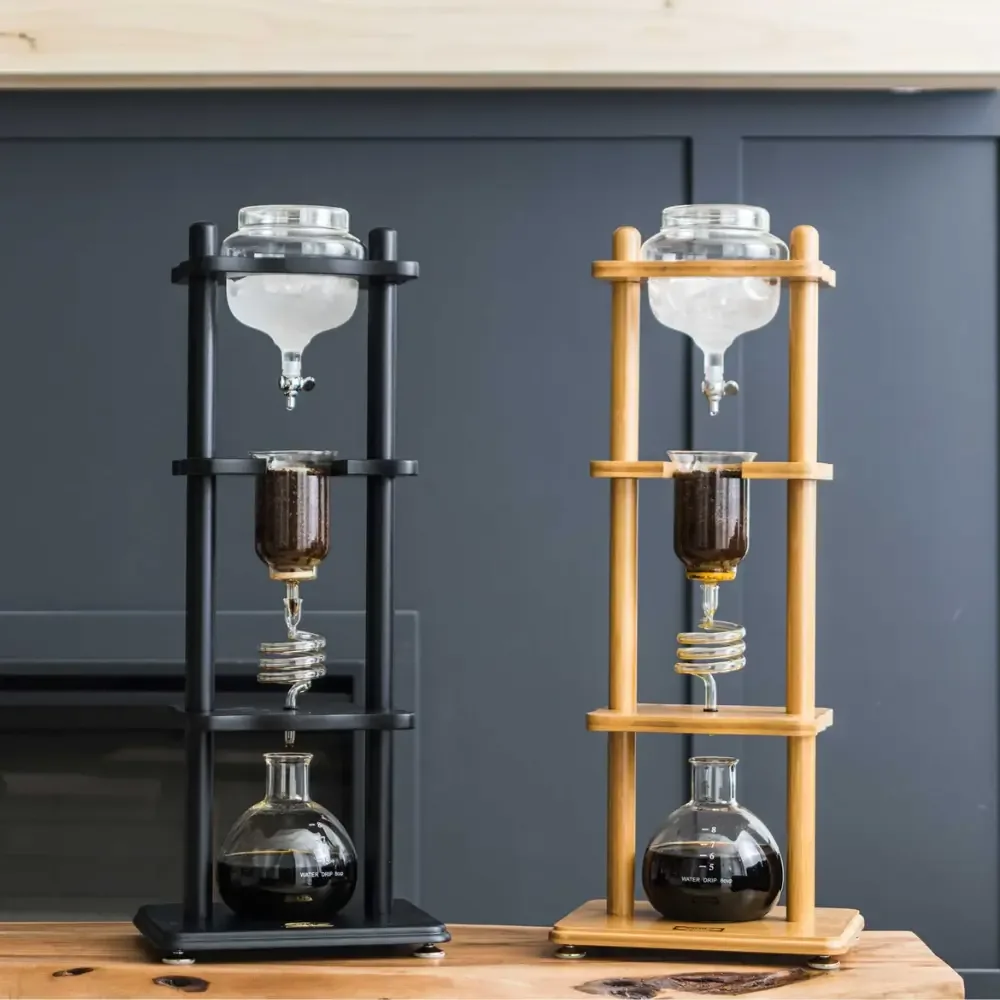
A cold drip tower is a tall glass apparatus that releases cold water onto a bed of coffee one drop at a time, over several hours, and collects what comes through. It is called Kyoto-style after the Japanese coffeehouses that made the method famous, and it is the slowest way anyone brews coffee on purpose.
How a cold brew drip tower works
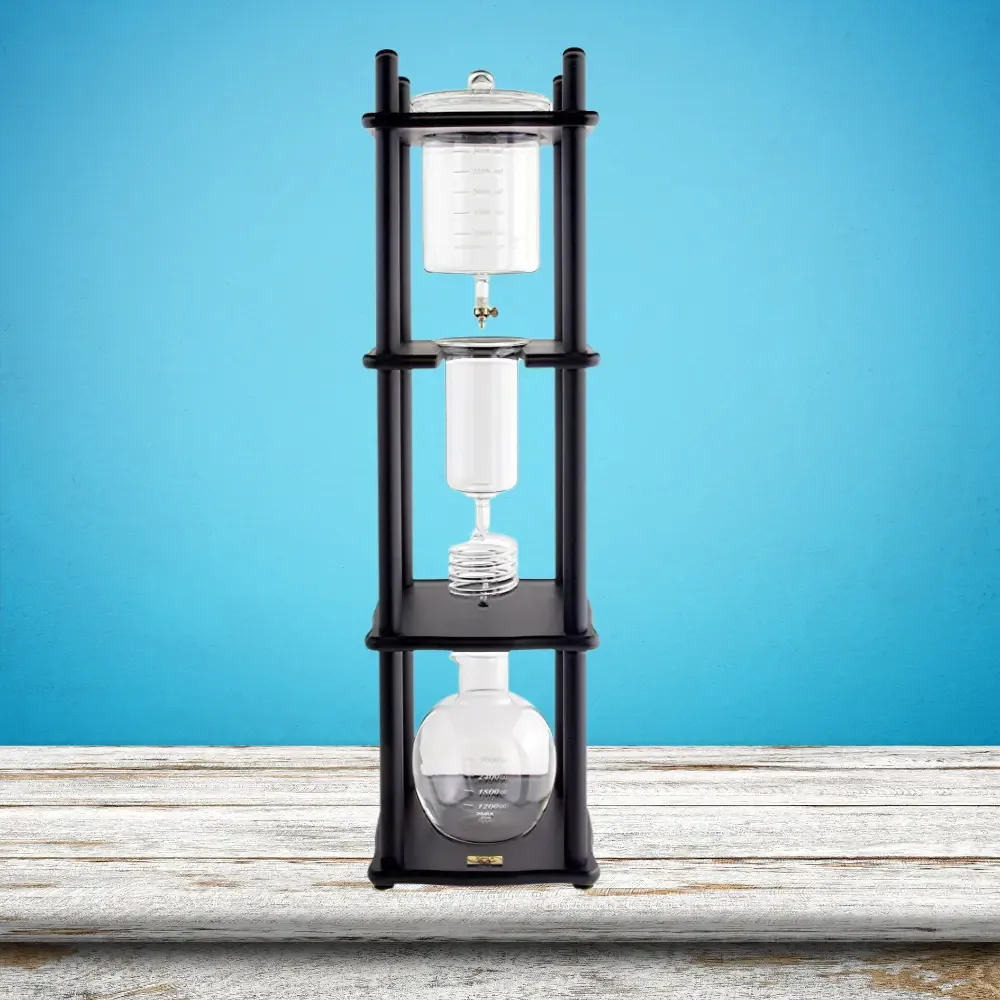
Three chambers stacked vertically. Cold water and ice sit at the top, behind a valve that is opened to a slow drip. The middle chamber holds the coffee bed, damp and slowly percolating. The bottom collects the finished coffee.
The rate is the whole craft. Around one drop per second is the usual target, and adjusting the valve to hold that rate as the head of water falls is the part that takes attention.
Cold brew drip tower vs immersion cold brew
Immersion cold brew steeps everything in everything. Every particle sits in the same water for the same twelve hours, and the result is heavy, sweet, low in acid and slightly muddy in the way that suits milk.
Cold drip percolates: fresh water meets the bed continuously and leaves. Nothing sits in a saturated solution, so the extraction stays efficient throughout and the cup comes out clean, light-bodied and much more tea-like. Acidity survives that immersion flattens.
Which you prefer is genuinely a preference. Cold drip is the more delicate of the two and shows off a good single origin; immersion is the better base for an iced latte.
How to use a cold brew drip tower
- Grind medium, not coarse. Unlike immersion, this is a percolation method and a coarse grind will simply pass water through without extracting.
- Pre-wet the bed. Dry grounds channel exactly as they do in espresso, and a dry patch in a six-hour brew is six hours of water avoiding coffee.
- Watch the rate, not the clock. The head of water falls as the reservoir empties, so the drip slows unless you adjust it.
- Rest it. Cold drip improves noticeably after a night in the fridge, which is one of the few claims in coffee where the difference is not subtle.
Should you buy a cold brew drip tower?
Honestly, only if you want it. The coffee is excellent and it is not several times better than immersion cold brew made in a jar, which costs nothing. Towers are large, fragile, slow to clean and mostly made of glass.
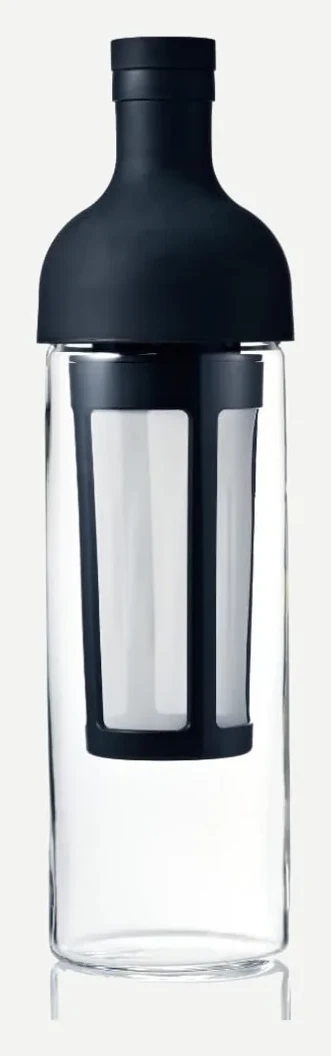
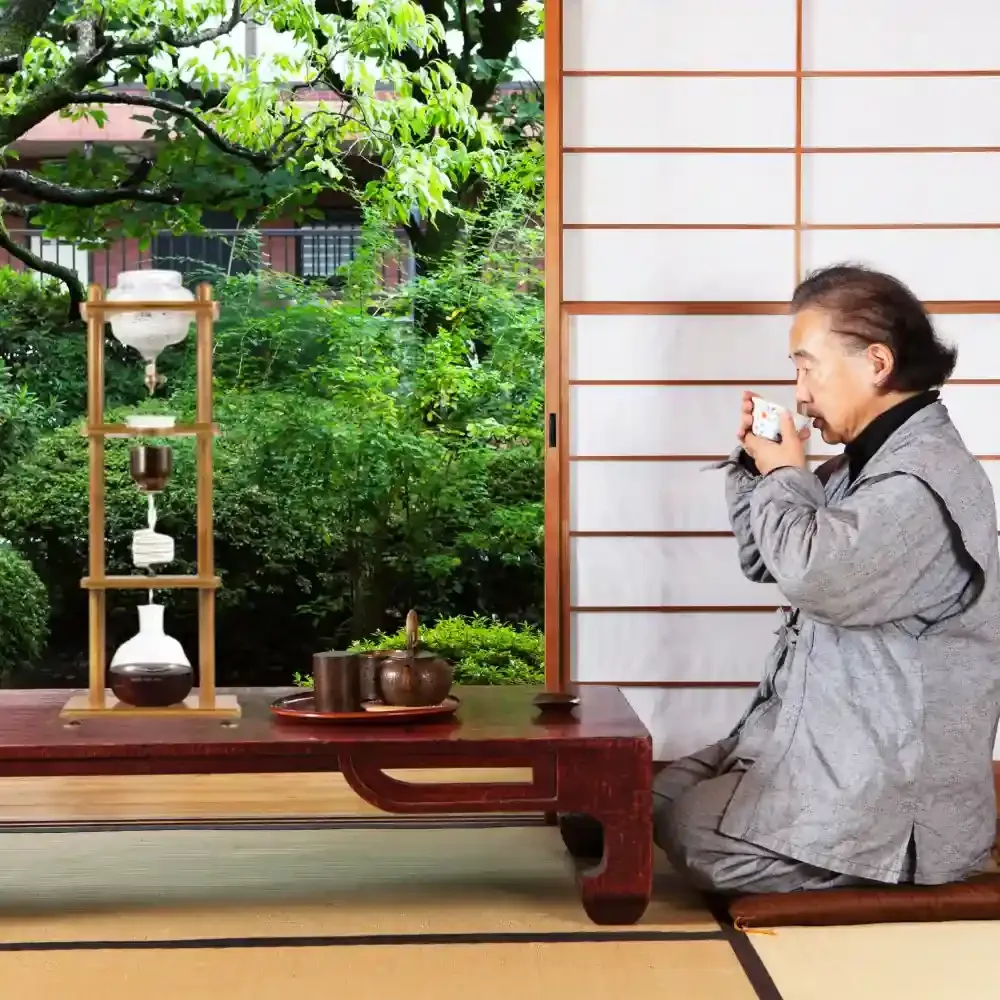
What they are is genuinely enjoyable to use and to watch, and a good cold drip is a cup you cannot buy easily anywhere else. If that is the appeal, it is a fair purchase. If you just want cold coffee in the fridge, a cold brew bottle does that for a fraction of the money and takes ten seconds to fill.
Cold brew drip tower recipe and ratio
Towers vary in size, so work from the ratio rather than a gram figure.
- 1:8 coffee to water for a concentrate to dilute later, or 1:12 to drink as it comes.
- Medium grind, roughly what a drip machine would use.
- Half the ice, half cold water in the upper chamber, which keeps the temperature down as the hours pass without slowing the drip.
- One drop per second, giving three to five hours for a typical 600 ml tower.
Taste the first run and change one thing. Thin and sour means the drip is too fast or the grind too coarse. Harsh and drying means the opposite.
Storing and serving drip tower coffee
Sealed in the fridge it holds for about a week at full quality and remains drinkable for two. It is far more perishable than immersion concentrate, because the delicacy that makes it worth brewing is the first thing to fade.
Serve it neat over one large cube rather than a glass of small ones, which dilute it as they melt. Milk is a waste of it, and if that is what you want you are better served by the immersion version, which was built for it.
Cold brew drip tower FAQ
What is the difference between cold drip and cold brew?
Cold brew steeps grounds in cold water for many hours. Cold drip passes cold water through a bed of coffee one drop at a time. One soaks the coffee, the other trickles water through it, and they taste noticeably different.
How fast should the drips be?
Roughly one drop per second is the usual target. Faster under-extracts and gives you cold, weak coffee; much slower risks the bed drying unevenly between drops.
How long does a cold drip take?
Three to twelve hours depending on the volume and the drip rate. A typical home tower producing 600 ml runs somewhere around six to eight hours.
Is a drip tower worth buying?
For the coffee alone, no: immersion cold brew is far cheaper and very good. Buy one because you want that specific clean, tea-like cup and enjoy the process. It is an enthusiast's object and honest sellers say so.