Alkaline Coffee: Is Coffee Acidic and Does pH Matter?
Coffee is mildly acidic, and the evidence for alkaline or low-acid versions making a health difference is thin.

Coffee is not alkaline. Brewed coffee is mildly acidic, with a pH that usually falls between about 4.85 and 6 depending on the beans, the roast and the brew. "Alkaline coffee" is mostly a marketing phrase, and the evidence that it does anything special for your body is thin. Here is what the term means, what the pH numbers show and what you can do if coffee sits badly with you.
What is alkaline coffee?
There is no official definition. The phrase gets attached to coffees that are treated, blended or roasted to taste smoother, and to products that claim to be gentler on the stomach. In practice most of them still measure on the acidic side of neutral. Alkaline means above pH 7, and ordinary drinkable coffee is nowhere near that line.
It also helps to separate two ideas that get mixed up. The sour, bright taste people call acidity in coffee is a flavor note. pH is a measurement of the liquid. A coffee can taste sharp and sit at the same pH as one that tastes mellow.
What is the pH of coffee?
A 2018 study from Thomas Jefferson University measured hot and cold brews of light roast coffees from several origins and found pH values between 4.85 and 5.13. A study of commercial brands in Food Chemistry, summarized in a reference article on low-acid coffee, found brewed regular coffees from 4.95 to 5.99 and decaf from 5.14 to 5.80. The same work found a moderate link between lower pH and higher chlorogenic acid, a natural compound in coffee.
Roast makes a modest difference. One cited analysis puts light roast brews near pH 5.0 and dark roast near 5.3. Even the highest readings are mildly acidic, not alkaline.
Coffee sits around pH 5, mildly acidic. A pH of 7 is neutral and above that is alkaline, which brewed coffee does not reach.
Low-acid coffee vs alkaline coffee claims
Low-acid is the more common label, and it is just as loosely used. One suggested definition is a brew above pH 5.5, but there is no agreed standard. When researchers tested 11 products marketed as low-acid, the pH values ranged from 4.97 to 5.72, most between 5.0 and 5.29. Only one cleared 5.5, and the authors said nearly all of them were as acidic as regular coffee despite the label.
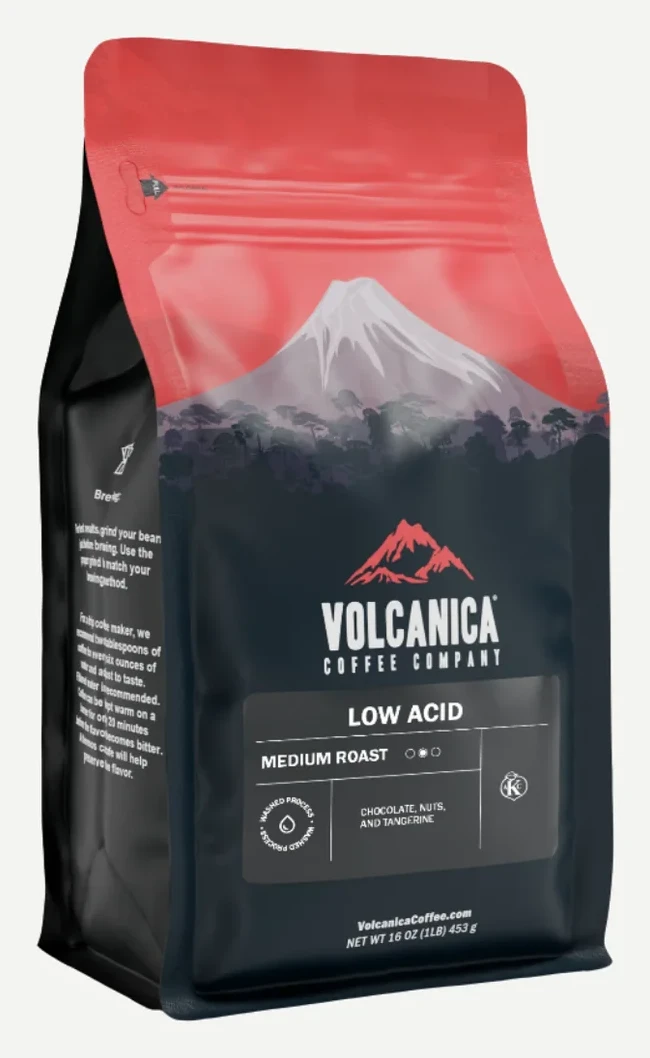
That does not mean every low-acid coffee is a dud. Some beans and roasts really do taste rounder. If you want to try one, the Volcanica low-acid coffee blend is a labeled example, and the same caution applies: the label tells you the maker's intent, not a measured pH.
Does alkaline or low-acid coffee help with acid reflux?
The evidence does not support that claim. A large study of women in the Nurses' Health Study II linked coffee, tea and soda to more reflux symptoms, in a dose related way. A cross-sectional study of 8,013 people in Japan found no association between coffee and reflux disease. Findings differ, and observational work cannot prove cause.
Some research suggests compounds other than pH, such as caffeic and chlorogenic acid, may play a role in heartburn, which a low-acid label does not measure. A small pilot trial of 40 people with reflux disease found dewaxed coffee linked to fewer symptoms than standard coffee, but it is a pilot, not a settled result. If you get heartburn often, talk to a doctor.
How to make alkaline-style coffee gentler on your stomach
No method is proven, but several are easy to try one at a time. Pay attention to your own response, because people vary a lot.
Darker roast
Analyses show darker roasts reading a little higher in pH. The gap is small, but some people find dark roast milder to drink.
Cold brew
The 2018 study found similar pH to hot brew, though less total acid. It may taste smoother. It is not a guaranteed fix.
Milk
Milk softens flavor and moves the drink toward neutral. That is about taste, not proof of a health effect.
Does a darker roast make coffee less acidic?
A little, by measurement. Roasting breaks down chlorogenic acids, and a dark roast reads slightly higher in pH than a light one. You can browse the dark roast coffees or read how roasting changes a bean. Remember the shift is small, and very dark roasts can taste bitter or burnt.
Is cold brew or milk better for sensitive stomachs?
Neither has strong proof behind it. For cold options see the cold coffee section, and for dairy-free swaps read about milk alternatives in coffee. Switching to decaf is another option some people try, though research suggests it reduces reflux only partly.
Treat the whole idea with some skepticism. Selling coffee as alkaline implies a benefit that nobody has shown, and a plain, freshly roasted cup brewed well is often easier to tolerate than a treated one. Your own experience is the best test available.
The simple approach is to change one thing for a couple of weeks and see how you feel. For wider reading, start at coffee and health. Persistent symptoms, more than a couple of times a week, are worth a doctor's visit.
Alkaline coffee FAQ
Is coffee acidic or alkaline?
Coffee is mildly acidic. Brewed coffee usually lands around pH 4.85 to 5.1 in research on light roasts, and commercial brands have been measured from roughly 4.95 to 6. That is a weak acid reading, but it is well short of alkaline, which means above pH 7.
What is alkaline coffee?
The term has no standard definition. Most products sold as alkaline or low-acid are ordinary coffee, treated coffee or a gentler roast, and they still read as mildly acidic. Some patents describe adding alkali to coffee to raise pH, but those products stay near neutral at most.
Does alkaline coffee help with acid reflux?
There is no good evidence that it does. Research on coffee and reflux is mixed, and the compounds linked to heartburn in some studies are not what a pH label measures. If you get frequent heartburn, talk to a doctor rather than relying on a coffee label.
Is cold brew less acidic than hot coffee?
Not by pH, according to one 2018 study. Hot and cold brews both measured between 4.85 and 5.13. Hot brew did have more total titratable acids, so it may taste sharper, but the authors cautioned that cold brew is not a guaranteed fix for stomach discomfort.
Does adding milk make coffee less acidic?
Milk is closer to neutral than coffee and mellows the taste, so a latte often feels gentler. That is a flavor and mixing effect, not proof of any health benefit. Some people find dairy bothers them as well, so it is a personal test.
Does low-acid coffee really have less acid?
Not always. One analysis of 11 products labeled low-acid found pH values from 4.97 to 5.72, and most sat between 5.0 and 5.29, the same range as ordinary coffee. Only one cleared 5.5. Labels are not backed by a common standard.