Milk Alternatives in Coffee: What Each One Does
Oat, almond, soy and the rest behave differently in a hot cup, and the barista versions exist for a reason that has nothing to do with taste.
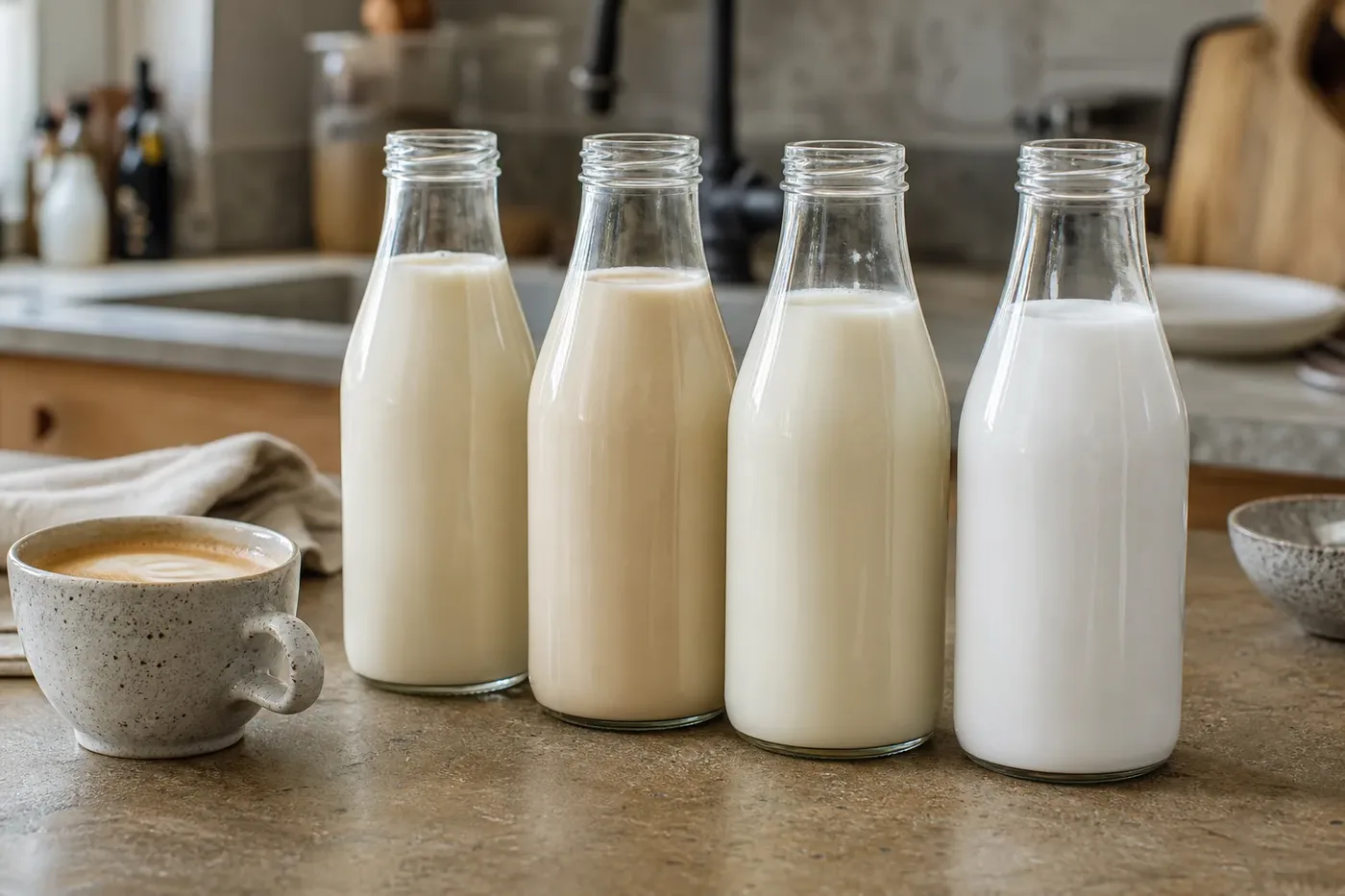
Plant milks are not interchangeable in coffee. They differ in how they foam, whether they split, how sweet they taste and what they do to the flavour of the coffee underneath, and the differences come down to protein, fat and acidity rather than to brand.
Why dairy is the benchmark for plant milk in coffee
Milk foams because its proteins unfold under heat and agitation and form stable walls around air bubbles, while its fat gives the result body. That combination is what produces microfoam, and it is what latte art is poured with. Every plant milk is trying to imitate a structure it does not naturally have.
Oat milk: the most forgiving plant milk in coffee
The current default, because it foams reasonably well and tastes mild and slightly sweet. That sweetness is real rather than added: the process that makes oats drinkable uses enzymes to break starch into sugars. It is the most forgiving alternative in a cappuccino and holds a pattern better than the others.
It is also the one most likely to be similar to semi-skimmed dairy on calories rather than lighter, which surprises people who chose it for that reason.
Almond milk: the hardest plant milk to foam
The lightest in calories by a clear margin and the hardest to foam, because it has very little protein. It also has the strongest flavour of its own, which some people want and which can fight a delicate coffee. It is the most likely to split in a hot acidic cup.
Soy milk: the best foaming plant milk
The oldest option and still the best foamer of the alternatives, because it has the most protein, close to dairy. Its weakness is splitting: it curdles more readily than oat, particularly against hot, acidic coffee. It has a distinct beany note that is either fine or not depending on the drinker.

Coconut, rice, pea and other plant milks in coffee
Coconut is high in saturated fat and low in protein, so it gives body but poor foam, and it dominates the flavour. Rice is thin, sweet and effectively unfoamable. Pea protein versions foam surprisingly well and are the least widely stocked. Hemp and cashew sit in the same low-protein category as almond.
What barista edition plant milk actually changes
They add fat, usually rapeseed oil, and often a stabiliser such as dipotassium phosphate, which buffers acidity. The fat improves the foam and the buffer makes splitting less likely. That is the whole difference, and it is why a barista carton behaves so much better than the standard one from the same brand, and why it is higher in calories.
Why plant milk splits in coffee and how to stop it
Splitting is acid and heat, not spoilage. Coffee is mildly acidic, plant proteins are less stable than dairy ones, and heat pushes them over the edge. Why oat milk curdles in coffee covers the fixes in detail: warm the milk before it meets the coffee rather than pouring cold into hot, do not overheat it, and use a less acidic coffee.
That last point is the one people miss. A bright light roasted coffee is far more likely to split a plant milk than a medium-dark roast, which is another reason milk drinks are traditionally built on darker roasts.
Cold coffee and milk alternatives
Everything above is about hot drinks. Cold, the picture inverts: none of them foam properly, so the foaming advantage of soy and oat stops mattering, and what counts instead is whether they split against cold acidic coffee and how they taste undiluted by heat.
Almond and coconut are more likely to separate visibly in iced coffee, partly because nobody warms them first. Oat holds together best and its sweetness is more noticeable cold. If you drink iced coffee with plant milk and it keeps curdling, pouring the milk in first and the coffee over it helps more than changing brand.
Which plant milk should you choose?
For foam and forgiveness, oat, in a barista version. For the lowest calories, unsweetened almond, accepting that it will not foam. For the closest texture to dairy, soy, accepting that it splits more easily. And if you are drinking espresso black, none of this applies, which is worth remembering before buying four cartons.
Milk alternatives FAQ
Which milk alternative foams best in coffee?
Soy, because it has the most protein, closely followed by oat. Almond and coconut have very little protein and foam poorly. Barista versions of any of them foam better because they have added fat and a stabiliser.
What is the difference between barista oat milk and normal oat milk?
Added fat, usually rapeseed oil, and often an acidity regulator such as dipotassium phosphate, a salt that stops the milk splitting in acidic coffee. The fat improves the foam. It is also higher in calories as a result.
Why does my plant milk curdle in coffee?
Acid and heat, not spoilage. Coffee is mildly acidic and plant proteins are less stable than dairy ones. Warm the milk before it meets the coffee, avoid overheating, and use a darker, less acidic roast.