Microfoam: What Good Steamed Milk Actually Is
Not froth, and not hot milk. A single mass of milk and air with bubbles too small to see, which is why it pours instead of sitting on top.
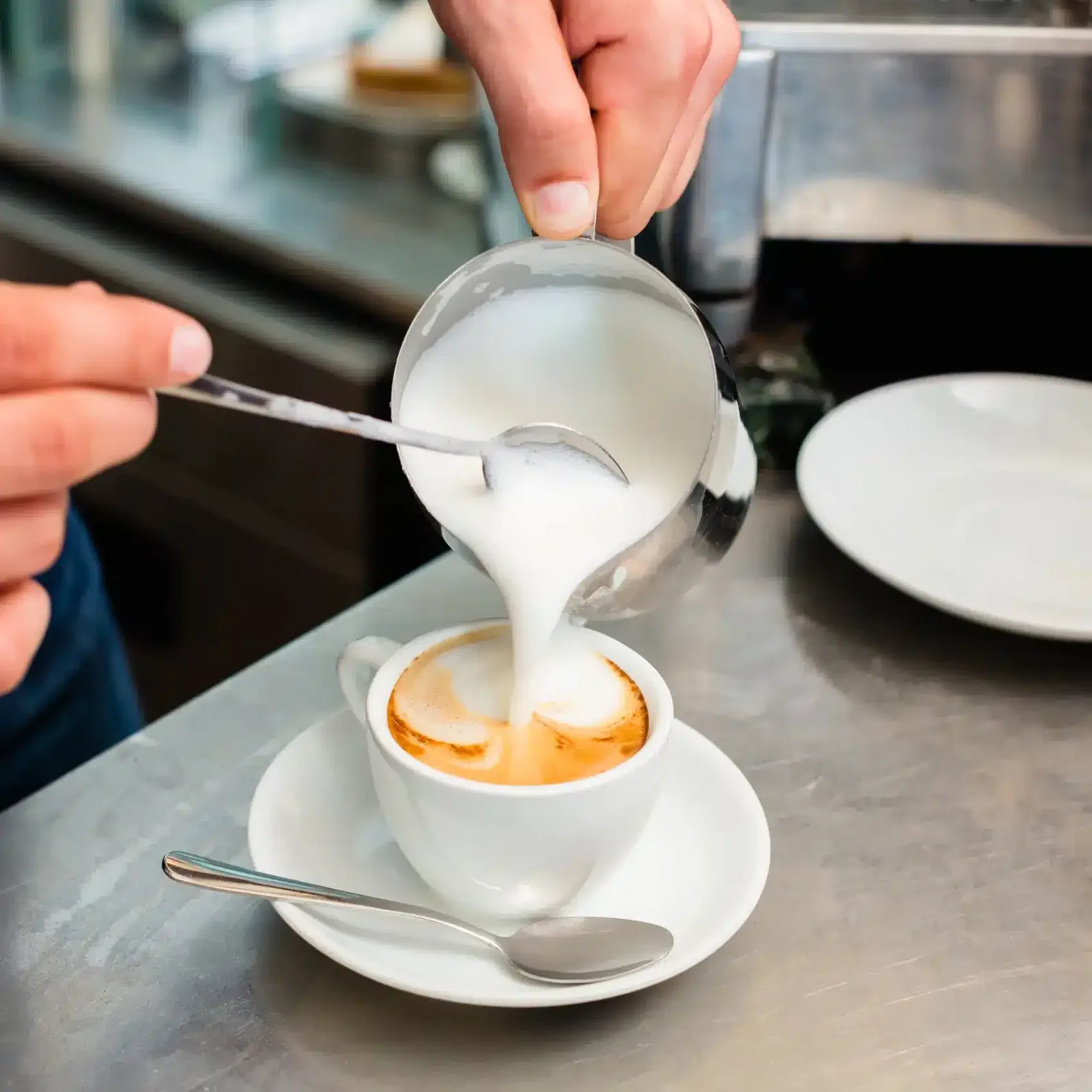
Microfoam is milk and air combined into a single material, with bubbles small enough that you cannot pick one out by eye. It looks like wet paint and pours like it. Getting it is the difference between latte art and a cappuccino with a lid of bubbles on top.
How to steam microfoam in two phases
Steaming milk is two distinct phases and running them together is why most home attempts fail.
Stretching comes first. The wand tip sits just under the surface and pulls air in, and you hear a light tearing sound. This lasts a few seconds, not the whole time. All the air the drink needs goes in here.
Texturing comes second. The wand is submerged and angled so the milk spins in a whirlpool. No more air enters; the vortex breaks the bubbles you already made into progressively smaller ones and folds them through. This is the phase that turns froth into microfoam, and it is the one people cut short.
How much air microfoam needs for each drink
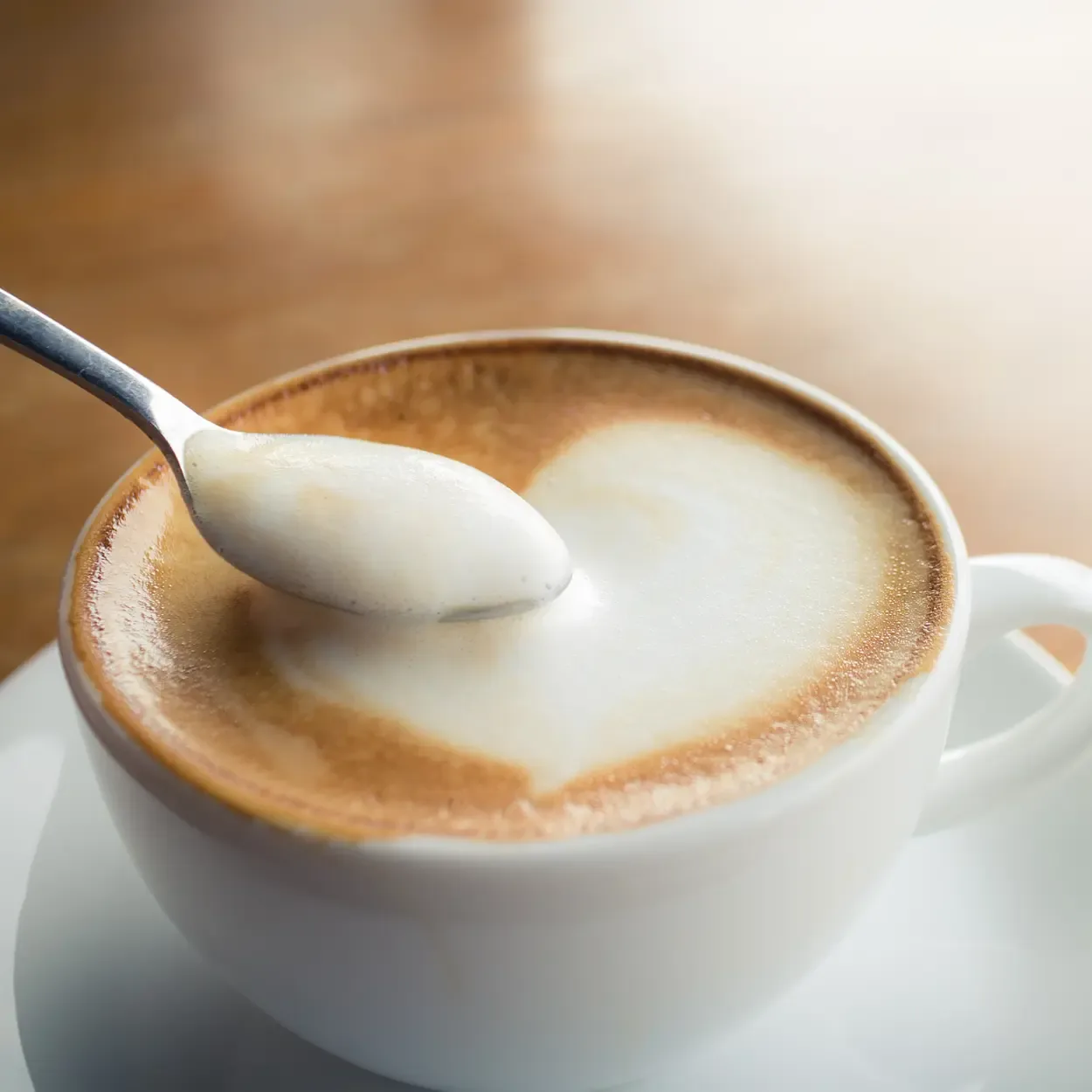
Less than you think, and it depends on the drink.
Best steamed milk temperature for microfoam
Between about 55 and 65 °C. Milk tastes sweetest around there because lactose is most perceptible, and past roughly 70 °C the proteins denature, the sweetness disappears and a scalded note arrives that no coffee will hide.
You do not need a thermometer to learn it. Hold the jug: when it becomes uncomfortable to keep your hand there, you are at the top of the range. Two or three attempts with a thermometer will calibrate your hand permanently.

Why whole milk makes the easiest microfoam
Fat gives the foam stability and body; protein gives it structure. Whole dairy milk has enough of both, which is why it is the default in every cafe.
Skimmed milk foams more, and worse: without fat you get volume that collapses. Plant milks vary enormously, and barista formulations exist because the standard versions cannot hold fine bubbles. They also split in hot coffee for a related reason.
Can you make microfoam without an espresso machine?
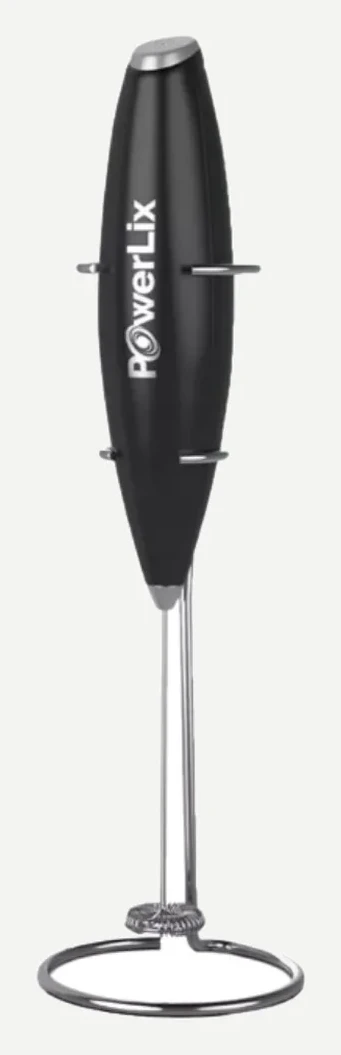
A handheld frother gets closer than people expect, especially if you warm the milk first and keep the whisk below the surface after the first few seconds. It will not match a steam wand, which is injecting hot vapour rather than just whipping, but it produces something pourable rather than a raft of bubbles.
Why the milk jug matters for microfoam
A good jug fixes more problems than an upgraded wand does, and it is the cheapest thing in the chain.
Size first. Milk roughly doubles in a well-steamed jug, so fill to just below the base of the spout and use a jug you will fill between a third and a half. Too large and the wand cannot establish a whirlpool in a shallow pool. Too small and it overflows before it is textured.
Shape second. A sharp, defined spout gives you a thin stream for pouring patterns and a wide rounded one does not. Most of the jugs sold as accessories are fine, and the common mistake is buying one jug far too big for the drinks actually being made.
How to groom microfoam before you pour
Milk out of the wand is not ready. There will be a few large bubbles on top and the foam will begin to separate from the liquid within about thirty seconds.
Two actions fix it, and cafes do both without thinking. Tap the jug firmly on the counter once or twice to burst the big bubbles. Then swirl it continuously until you pour, which keeps the foam folded through the milk instead of floating on it.
Milk that has sat for a minute can usually be swirled back together once. After that it is done, and pouring it gives you a thin drink with a lump of foam on top.
Microfoam FAQ
What is the difference between microfoam and froth?
Bubble size. Froth is large visible bubbles sitting on top of liquid milk, in two separate layers. Microfoam is one material throughout, with bubbles too small to see, and it pours as a single glossy mass.
What temperature should steamed milk be?
Stop between roughly 55 and 65 °C. Above about 70 °C the proteins begin to denature, the sweetness goes and a scalded flavour arrives. If the jug is too hot to keep a hand on, you have gone past it.
Why is my milk full of big bubbles?
You introduced air for too long, or with the wand tip too close to the surface. Air goes in during the first few seconds only; after that the wand should be submerged and the job is spinning the milk, not adding to it.
Can you get microfoam with plant milk?
With barista formulations, yes, and they are formulated specifically for it. Standard plant milks lack the protein and fat structure to hold fine bubbles and collapse within a minute.