Choosing Beans for a Bean-to-Cup Machine
Oily beans, old beans and flavoured beans all cause the same three problems. What to buy instead.
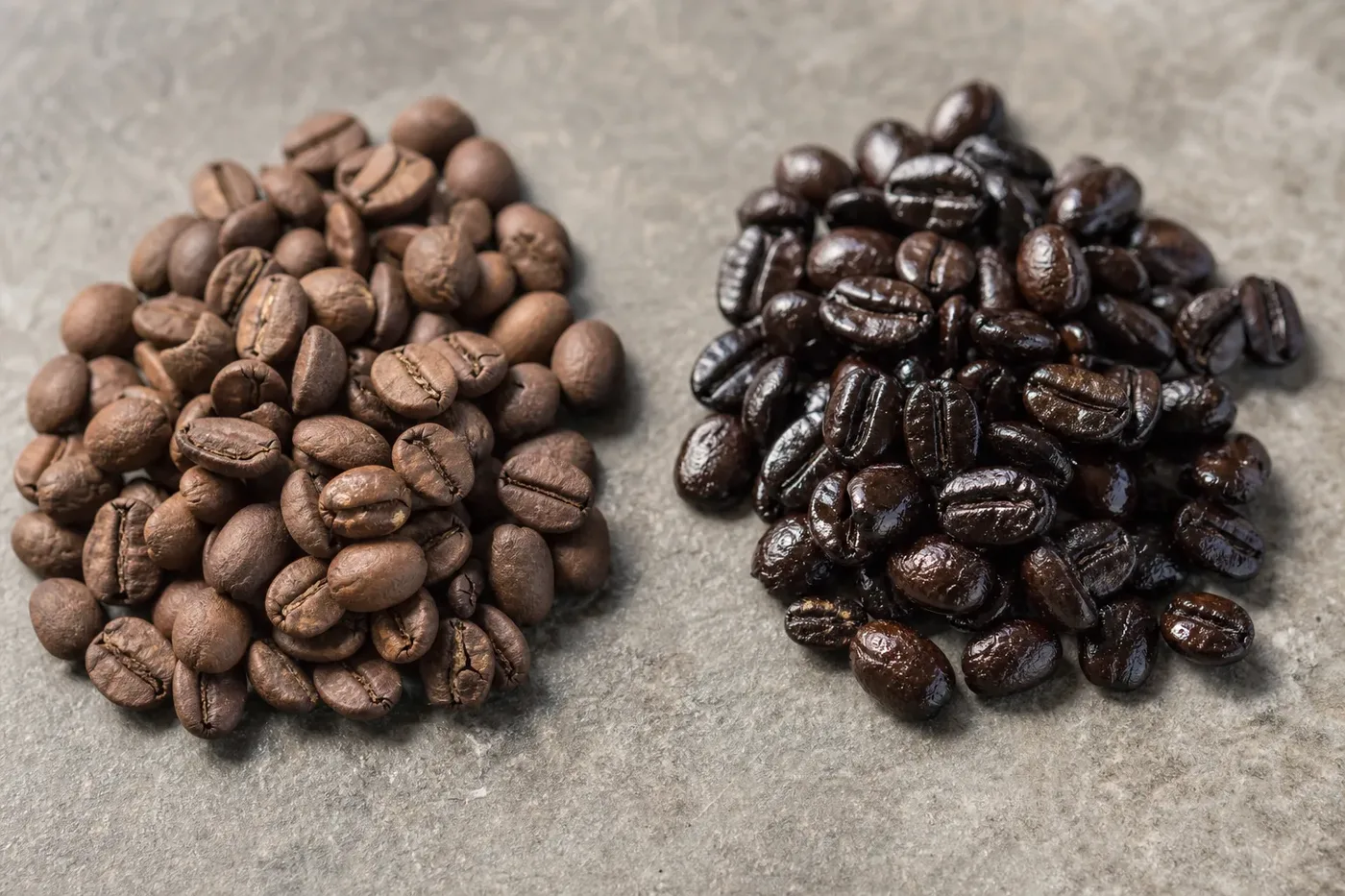
A bean-to-cup machine is fussier about beans than a jug or a press, and for a mechanical reason rather than a culinary one. The beans have to fall through a hopper, travel a chute and pass between burrs without help. Anything sticky interferes with all three.
Oily beans in a bean-to-cup machine
Dark roasts push oil to the surface of the bean. Some of that is desirable, and a bean with a light sheen is nothing to worry about. A bean that looks wet is a different matter: the oil coats the hopper walls, the grounds clump in the chute, and the machine either grinds unevenly or reports that it has no beans while sitting on a full hopper.
This is the single most common complaint about these machines and it is usually the coffee rather than the machine. Medium to medium-dark is the range that gives you a coffee strong enough to carry through milk without the beans arriving greasy.
How fresh beans should be for a bean-to-cup machine
Coffee starts losing aroma from the moment it is roasted, and grinding accelerates that enormously. Buying whole beans for a machine that grinds each cup is the whole point, so it is worth buying coffee that carries a roast date rather than a best-before date two years out.
There is a limit at the other end too. Very freshly roasted coffee is still releasing carbon dioxide, and under nine bars of pressure that gas has to go somewhere. A few days of rest after roasting generally gives a more predictable extraction than beans opened the day they were roasted.
Our bean listing records whether a roaster prints a roast date at all, which is a surprisingly good test of how seriously they take freshness.
Can you use flavored beans in a bean-to-cup machine?
Flavoured coffee carries its flavour in a coating applied after roasting. That coating is sticky by design, and in a machine that moves beans mechanically it goes onto the burrs, into the chute and around the hopper rather than into your cup.
If you want vanilla coffee, the reliable route is a plain bean and a syrup or an extract in the cup. It tastes the same and it does not take the grinder apart.
How bean-to-cup grind settings work
The grind dial on these machines runs from five settings on the least adjustable to thirteen on the most. That is fewer steps than a dedicated espresso grinder gives you, and it is why the beans matter: the machine cannot compensate for coffee it struggles to feed.
Change the setting one step at a time and pull a couple of drinks before judging the result, because the grinder has to clear the previous setting first. Our grind size guide covers what you are actually adjusting when you move that dial.
How many beans to buy at once
Buy what you will drink in a month. A kilo bag is cheaper per cup and stops being a bargain once the last third has gone flat. Keep the beans in the bag they came in, folded shut, somewhere dark and not in the fridge. The hopper is for the next few days of coffee, not for storage, because that is where light and air get at them.
Why the hopper is a bad place to store coffee beans
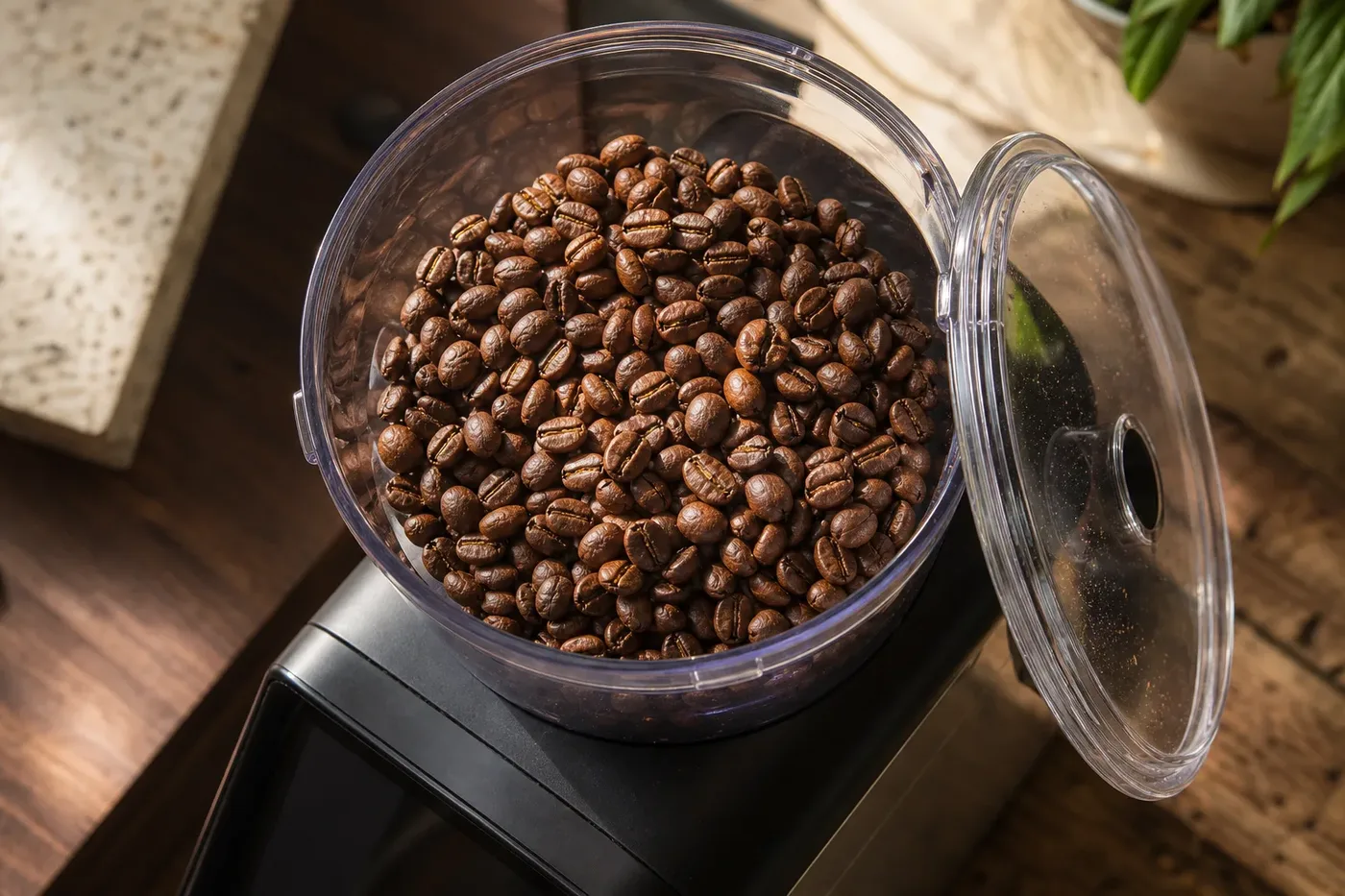
Most hoppers are clear plastic with a lid that lets air move. Light and oxygen are two of the three things that stale coffee, and the third is heat, which the machine provides from underneath. A hopper filled to the top on Sunday is noticeably duller by Friday.
Filling it a few days at a time sounds fussy and takes ten seconds. It also means you can change coffee without running the machine empty first, which is the other reason people end up drinking beans they no longer like.
Using decaf in a bean-to-cup machine
One decaf drink at nine in the evening is a genuine problem on a machine with one hopper, because the alternative is emptying it. This is what the bypass doser is for: a second chute that takes a spoon of pre-ground coffee and skips the grinder entirely.
If anyone in the house drinks decaf occasionally, that specification matters more than any number of recipes, and it is published on most machines as a plain yes or no.
Blend or single origin for a bean-to-cup machine
Blends are built to taste consistent from bag to bag and to hold up against milk, which is most of what these machines make. Single origins are more distinctive and more variable, and a delicate one can disappear entirely under a lot of steamed milk.
Neither is correct. If you drink black coffee from the machine, a single origin gives you something to notice. If you drink lattes, a blend will do the job more reliably and cost less.
Beans for a bean-to-cup machine FAQ
What roast is best for a bean-to-cup machine?
Medium to medium-dark is the safe range. It is dark enough to taste right through milk and not so dark that the beans are visibly oily, which is the thing that causes grinder trouble.
Can you use oily dark roast beans?
You can, and many people do without issue, but it is the most common cause of a hopper that stops feeding and a grinder that needs cleaning more often. If the beans look wet in the bag, expect to wipe the hopper more frequently.
Can you put flavoured beans in a bean-to-cup machine?
Most makers advise against it. The coatings that carry the flavour are sticky, and they end up on the burrs and in the chute rather than in the cup. Add the flavour to the drink instead.
How fresh should the beans be?
Buy coffee with a roast date and use it within a month or so of that date. Coffee that is too fresh, within about three days of roasting, can also behave oddly under pressure because it is still releasing gas.
Does a bean-to-cup machine need espresso beans specifically?
No. Any whole bean coffee works. The espresso label usually signals a darker roast and a blend built for milk drinks, which happens to suit these machines, but it is a style rather than a requirement.