


What Is a Coffee Cherry?
Coffee is a seed inside a fruit, and almost everything that decides how it tastes happens before it stops being one.
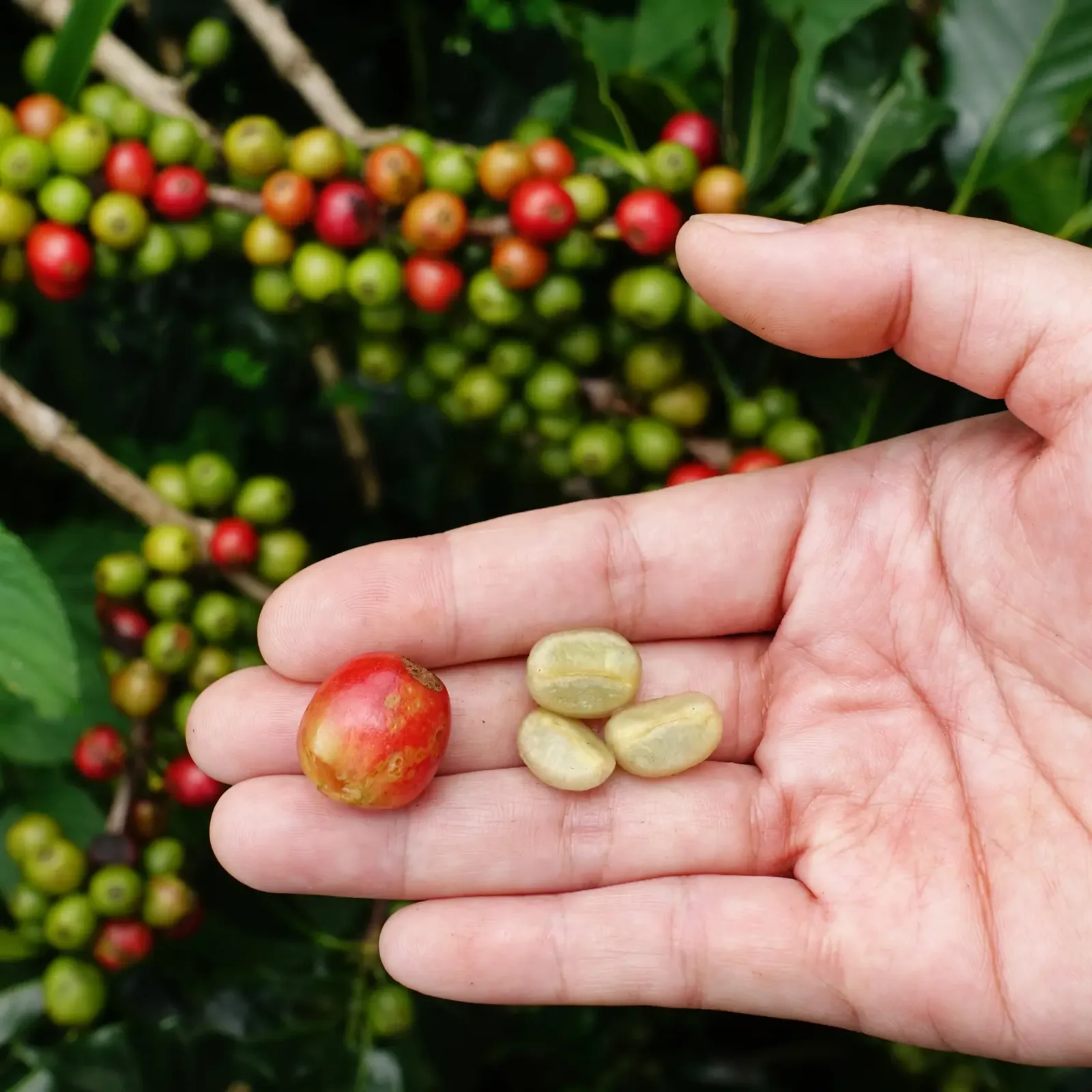
Coffee grows as a fruit. What you buy is the seed of that fruit, dried, roasted and ground, and the decisions made while it is still a cherry set most of what the cup can eventually be.
The layers of a coffee cherry
Working inward from the outside, a coffee cherry has five distinct parts, and the processing names you see on bags all refer to how these are removed.
- Skin. Green when unripe, deep red or yellow when ready.
- Pulp. Thin, sweet flesh. There is not much of it.
- Mucilage. A sticky, sugar-rich layer clinging to the seed. Whether this is washed off or left to dry on is the difference between a washed and a natural coffee.
- Parchment. A papery hull around the seed, removed after drying.
- Silverskin. A fine membrane on the seed itself, which flakes off during roasting as chaff.
Why a coffee cherry usually holds two seeds
A normal cherry holds two seeds, each with one flat face, pressed together. That flat side is the crease you can see on any coffee bean.
In roughly five percent of cherries only one seed develops, and it grows rounded instead of flat. That is a peaberry. They are sometimes sorted out and sold separately at a premium, on the argument that a rounder bean roasts more evenly. Whether they taste better is genuinely disputed; that they roast slightly differently is not.
Coffee cherry ripeness matters more than the roast
Cherries on one branch do not ripen together. A picker passing through will find green, ripe and overripe fruit on the same plant, and will return to the same tree several times across a season.
Selective hand picking takes only ripe cherries and is the single largest labour cost in producing good coffee. Strip picking and machine harvesting take everything at once, which is cheaper and puts unripe fruit into the lot. Unripe cherries taste grassy and astringent and no roaster can remove that later.
When a bag mentions hand-picked or selectively picked, that is what it is claiming, and it is one of the few marketing phrases on a coffee bag that maps to a real cost.
What is cascara?
The skin and pulp were long treated as waste. Dried, they make cascara, brewed as an infusion.
It does not taste like coffee. It is closer to a fruit tea, with notes of rosehip, hibiscus and dried cherry, and it carries far less caffeine. It is also a second income from a crop that already exists, which is why producers have pushed it.
Why the coffee cherry matters to what you drink
Because it explains what the words on the bag mean. Washed, natural and honey-processed are all descriptions of what happened to the mucilage. A roaster who names the process is telling you something concrete about the fruit, and a bag that names nothing is telling you the buyer did not ask.
How coffee cherries are processed: washed, natural and honey
Almost everything that happens between picking and shipping is a decision about the mucilage, and the three common answers are the words printed on the bag.
- Washed. The pulp is stripped and the mucilage fermented and rinsed away before drying. The seed dries clean, so what you taste is the seed: clearer acidity, lighter body, more origin and less fruit.
- Natural. The whole cherry dries intact and the sugars in the mucilage work into the seed. Heavier body, berry and wine notes, and more risk, because fruit drying in the sun can ferment further than anyone intended.
- Honey, or pulped natural. The skin comes off and some mucilage stays on through drying. It sits between the other two, and the colour prefixes, white through black, describe how much was left behind.
None of them is better. Washed suits a coffee bought for clarity and natural suits one bought for sweetness, and a producer choosing against the character of the lot is a more common fault than choosing the wrong method outright.
How much roasted coffee one tree gives
Roughly two to four kilograms of cherry a year from a mature arabica tree, which dries down to somewhere near a pound of roasted coffee.
A whole year of one tree is a few weeks of one household. That is the number worth holding on to whenever the price of a bag looks high.
Coffee cherry FAQ
Is a coffee bean a seed or a bean?
A seed. It is not a legume and is called a bean only because of its shape. Each one is the seed of a small stone fruit.
How many beans are in a coffee cherry?
Two, flat sides facing each other, in the usual case. Around five percent of cherries produce a single rounded seed instead, which is called a peaberry.
What is cascara?
The dried skin and pulp of the coffee cherry, brewed as an infusion. It tastes closer to rosehip or hibiscus tea than to coffee and contains far less caffeine.
Why are coffee cherries picked by hand?
Because they do not ripen together. A single branch will carry green, ripe and overripe fruit at once, and selective hand picking is the only way to take just the ripe ones. Machine harvesting takes everything.