Arabica vs Robusta: The Two Coffees Almost Everyone Drinks
Two species grow nearly all the coffee in the world. They differ in the plant, the climate they need, the caffeine they carry and the cup they make, and most bags only tell you about one of them.
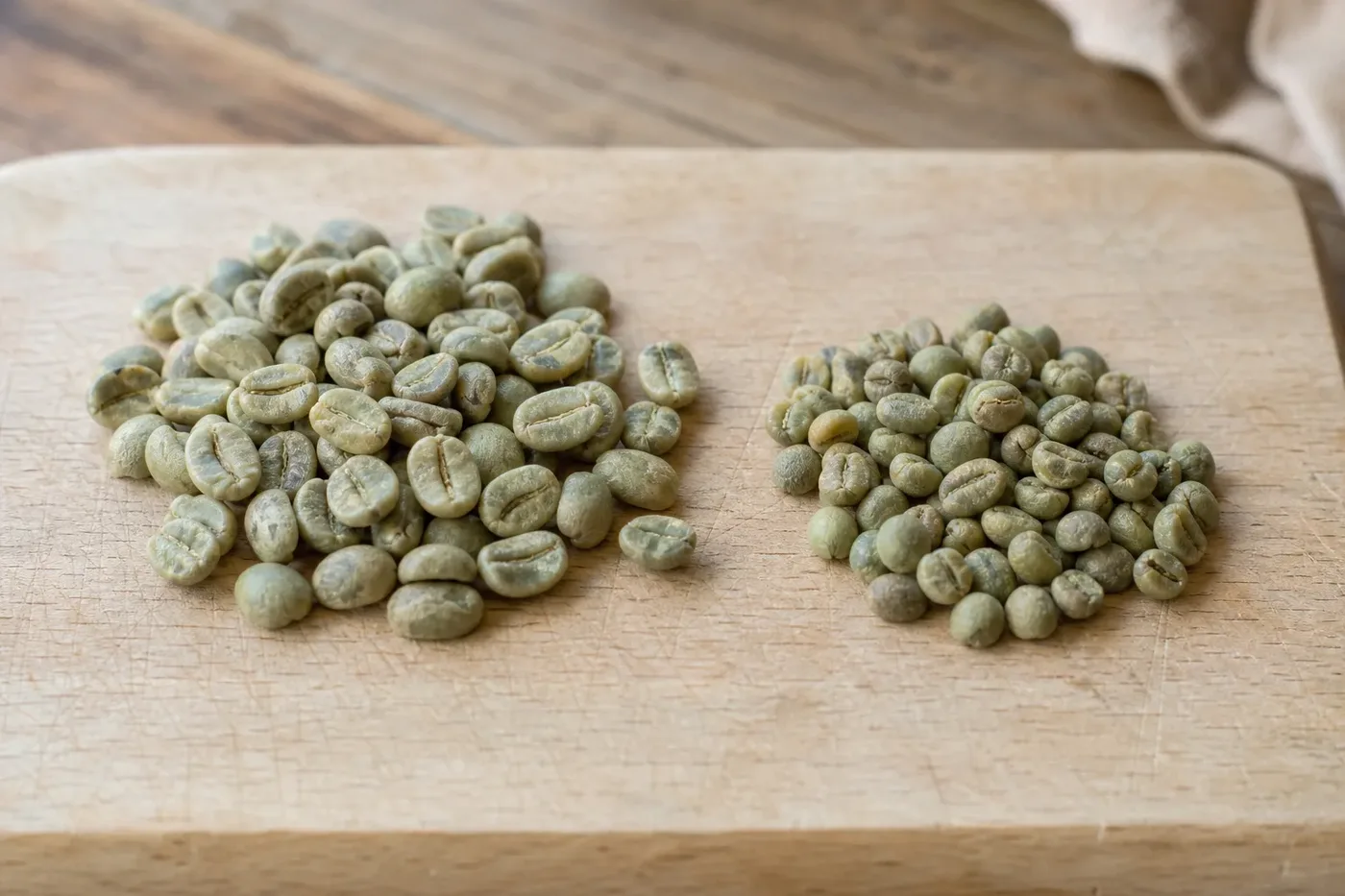
Arabica and robusta are the two coffee species behind almost every cup sold. Arabica is the one printed proudly on bags of specialty beans; robusta is the one inside most instant coffee and a good share of Italian espresso blends. They are different plants with different needs, and the difference reaches the cup in caffeine, bitterness and body.
Two species, not two grades
Arabica is Coffea arabica. Robusta is the common name for Coffea canephora. They are not a better and a worse version of the same thing, they are separate species, and the genetics explain a lot of what follows.
Arabica has 44 chromosomes and robusta has 22. Arabica is largely self-pollinating: a single plant can fertilise its own flowers, with only around 10 percent natural cross pollination. Robusta is self-sterile and depends on pollen from other plants, so a robusta farm is genetically far more varied than an arabica one. That variety is part of why robusta copes with conditions that arabica cannot.
Where each one grows
Both grow inside the tropical band known as the coffee belt, but they want different parts of it. Arabica needs higher altitude, milder temperatures and more rain. Robusta is the hardier plant, able to take more heat, lower altitude and dry spells.
Disease resistance follows the same pattern. Coffee leaf rust, a fungus that has wrecked harvests across Central America, hits pure arabica varieties hardest. A large field trial led by World Coffee Research found that the arabica lines resisting it best carry genes introduced from robusta through the Timor Hybrid, a natural cross between the two species.
The biggest robusta producers are Vietnam, Brazil, where it is usually called conilon, Indonesia, Uganda and India.
Caffeine
Robusta carries roughly twice the caffeine of arabica. Caffeine is bitter and acts as a natural defence against insects, which fits a plant grown in hotter, lower and more pest-heavy places. A cup made from robusta will therefore taste harsher and hit harder than the same cup made from arabica, and a blend that includes robusta will carry more caffeine than an all-arabica one. How much ends up in a real cup depends as much on the brew as the bean, which is covered in how much caffeine is in coffee.
How they taste
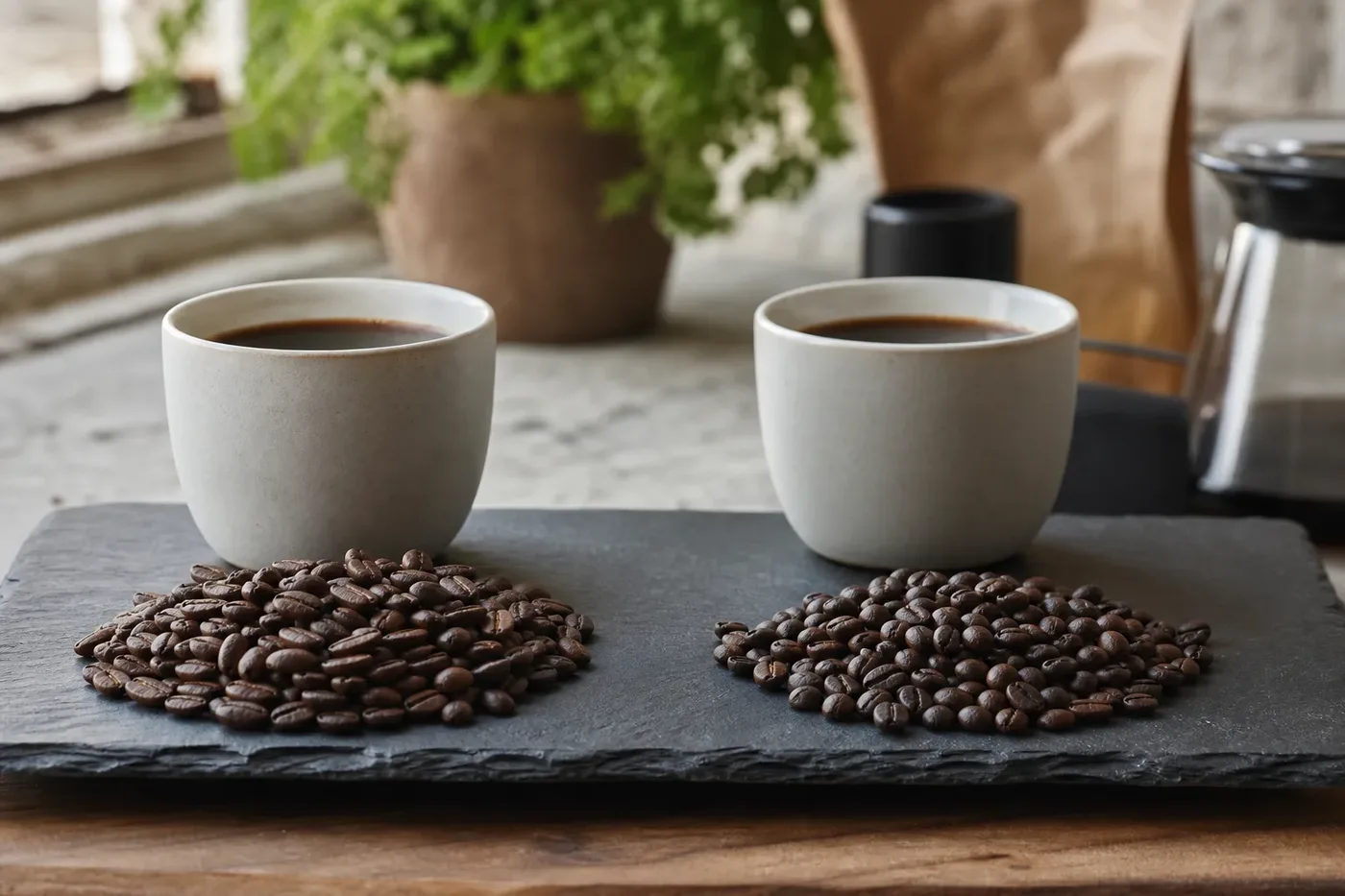
Arabica is valued for sweetness, acidity and the range of flavours it can carry, from berry and citrus to chocolate. Robusta tastes heavier, more bitter and more earthy, with less of the bright acidity arabica is prized for. Most specialty roasters work only with arabica for that reason, and the flavour notes on their bags describe arabica coffees.
Robusta is not simply the lesser bean, though. The Coffee Quality Institute runs a separate grading system for it, and well-grown, carefully processed robusta can score as a fine coffee in its own right.
Why robusta is in espresso and instant
Robusta earns its place in two products. In espresso blends, a portion of robusta builds a thicker, longer-lasting crema and a heavier body, which is why many classic Italian blends include it. In instant coffee, robusta's lower price, strength and body suit a product made in huge volume, which is one reason a jar of instant coffee tastes the way it does.
Price is the other half. Robusta trades on commodity markets well below arabica, so it lowers the cost of any blend it goes into.
Which to buy
- For filter coffee and flavour, single-origin arabica. It shows the most difference between farms and roasts.
- For a strong, heavy espresso with lots of crema, a blend that includes some robusta.
- For the most caffeine per cup, robusta or a robusta-heavy blend.
Every coffee in our coffee bean reviews is scored on what its roaster publishes, including the species and origin where the bag states them.
Common questions
What is the main difference between arabica and robusta?
They are different species. Arabica grows at higher altitude, tastes sweeter with more acidity and has less caffeine. Robusta is hardier, grows lower and hotter, tastes more bitter and carries roughly twice the caffeine.
Does robusta have more caffeine than arabica?
Yes, roughly twice as much. Caffeine is bitter and helps protect the plant from insects, which suits the hotter, lower places where robusta grows.
Is robusta coffee bad?
No. It tastes heavier and more bitter, but it builds crema in espresso blends and well-grown robusta is graded as a fine coffee by the Coffee Quality Institute.
Why is instant coffee made with robusta?
Robusta costs less, has plenty of body and caffeine, and suits production in large volume, so it is widely used in instant coffee.