Can You Put a Coffee Mug in the Oven?
Some mugs can go in the oven and many cannot. The answer is printed on the base or in the maker's care guide, and the thing that breaks a mug is usually the change in temperature, not the heat itself.
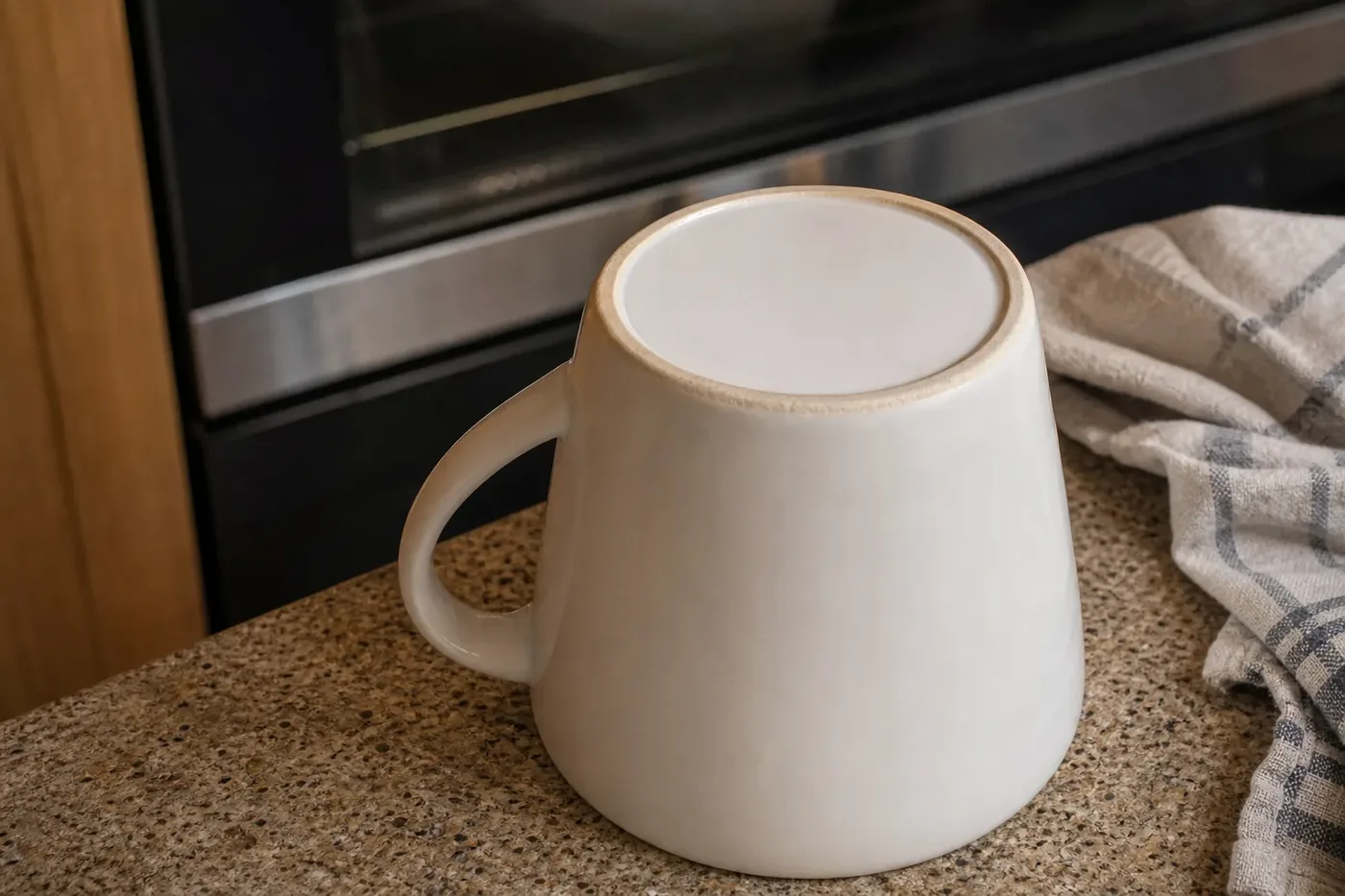
You can put a coffee mug in the oven only if its maker says it is oven safe. Look for an oven-safe symbol or wording on the base, or check the brand's care guide. Mugs without that mark, mugs with metallic decoration and any insulated travel mug should stay out. Even an oven-safe mug can crack if it goes from cold to hot, or hot to cold, too quickly.
How to tell if a mug is oven safe
- Check the base. Many makers print oven-safe wording or a small oven symbol under the mug, sometimes with a maximum temperature beside it. There is no single universal symbol, so read the words if there are any.
- Check the maker's care page. The brand's own guide is the authority for its products, and it usually gives a temperature limit.
- Do not assume. A mug with no marking and no guidance should be treated as not oven safe.
A microwave-safe mark is not an oven-safe mark. A microwave heats what is inside the mug; an oven surrounds the whole mug with hot air for as long as it is in there. Some products carry both ratings, but one does not imply the other.
What the makers say
Corelle states that its products can be used in a microwave or in a preheated conventional oven up to 350 degrees Fahrenheit, or 176 Celsius, and warns against putting a cold Corelle dish straight into a preheated oven because of thermal shock.
Pyrex gives similar rules for its glass. It should never go on a stovetop or under the broiler, it can break if it meets the heating element while the oven is still warming up, and hot glass should never be set down on a cold or wet surface.
Stoneware and porcelain makers publish their own limits, and they vary by brand, so always go by the guide for the exact mug you own.
Why mugs crack: thermal shock
Glass and ceramic expand as they heat and shrink as they cool. When one part of a mug changes temperature much faster than another, the two parts pull against each other and the stress can crack it. That is thermal shock, and it is the usual reason a mug breaks in or near an oven.
The common ways it happens:
- A mug from the fridge or freezer goes straight into a hot oven.
- The mug goes in before the oven has finished preheating, so it sits close to a glowing element.
- A hot mug comes out and is put on a cold stone counter, a wet cloth or into cold water.
- Cold liquid is poured into a mug that is still hot.
So even with an oven-safe mug, let it reach room temperature first, put it into a fully preheated oven, and let it cool on a dry board or trivet when it comes out.
Mugs that should never go in
- Travel mugs and insulated tumblers. Stainless steel double-wall bodies, plastic lids and silicone seals are not made for oven heat.
- Plastic and melamine. They soften, warp or melt.
- Mugs with metallic trim or paint. Gold and silver decoration can discolour or blister, and in a microwave metal can spark.
- Hand-painted or souvenir mugs with no care information.
- Anything already chipped or crazed. Cracks are where thermal stress finds its way through.
Why people put mugs in the oven
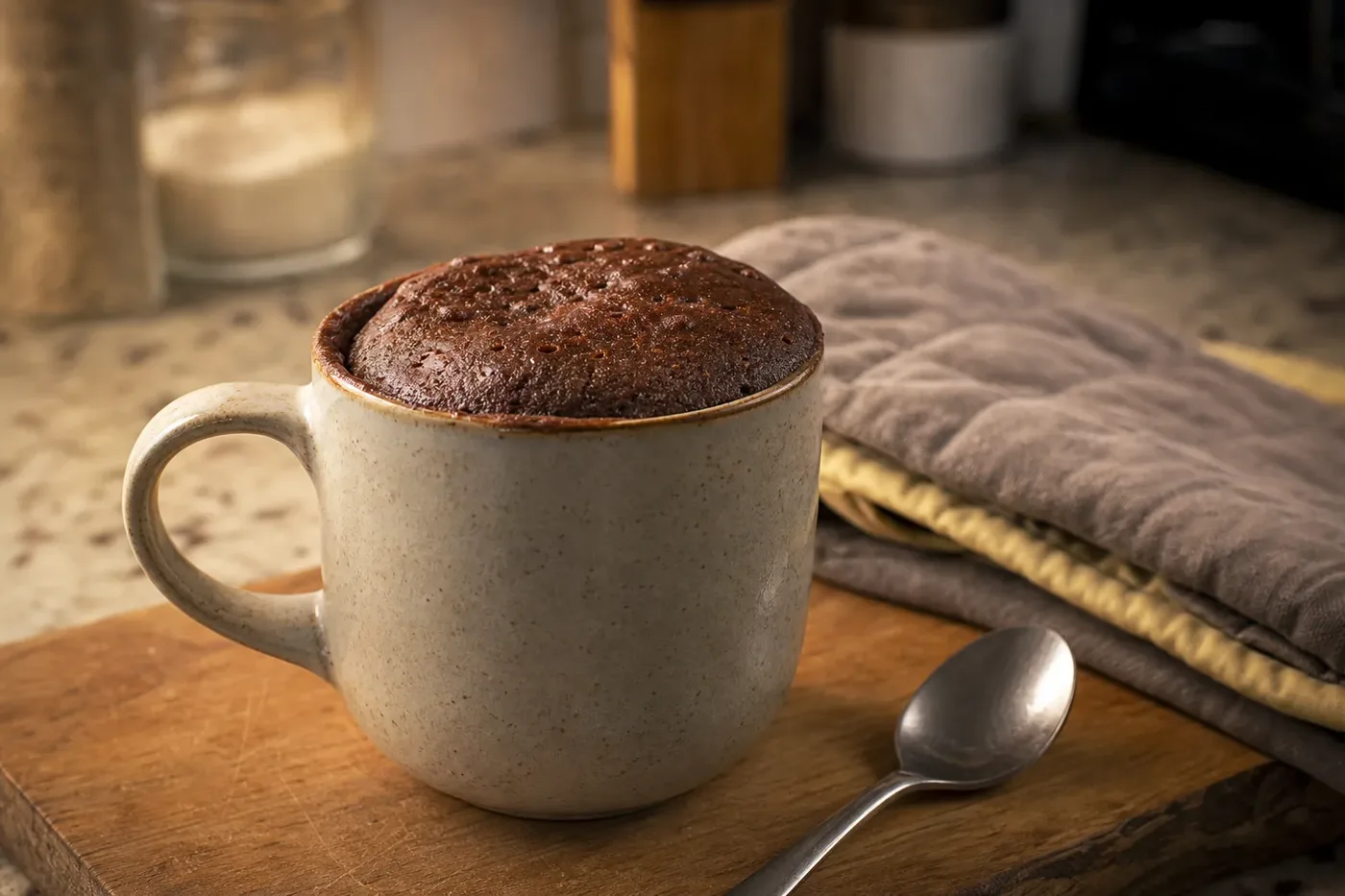
The usual reasons are baking a mug cake, keeping a drink warm or warming the mug itself. For a mug cake, a microwave-safe mug in the microwave is the more common method, and it avoids the oven question entirely. To keep coffee hot, a mug warmed with hot water from the tap or kettle for a minute works without any risk to the mug. Small espresso cups are traditionally warmed on top of the machine for the same reason, as described in our guide to demitasse cups.
If a mug has already cracked
Throw it away. A crack can widen suddenly the next time the mug is filled with a hot drink, and cracks and crazing in a glaze are also hard to clean properly, which matters for the reasons in mold in coffee cups and travel mugs.
Common questions
Can you put a ceramic mug in the oven?
Only if the maker marks it oven safe. Check the base for a symbol or wording, or the brand's care guide, and follow any temperature limit it gives.
What temperature can a coffee mug go in the oven?
It depends on the maker. Corelle, for example, rates its products for a preheated oven up to 350 degrees Fahrenheit. Other brands publish their own limits.
Why did my mug crack in the oven?
Almost always thermal shock: a sudden change in temperature, such as a cold mug into a hot oven or a hot mug onto a cold surface, makes parts of it expand at different rates.
Can travel mugs go in the oven?
No. Insulated stainless steel bodies, plastic lids and silicone seals are not made for oven heat.