
Demitasse Cups: Size, Shape and What to Buy
The small cup espresso is served in. Why it is that size, why the walls are so thick, and what to check before you buy a set.
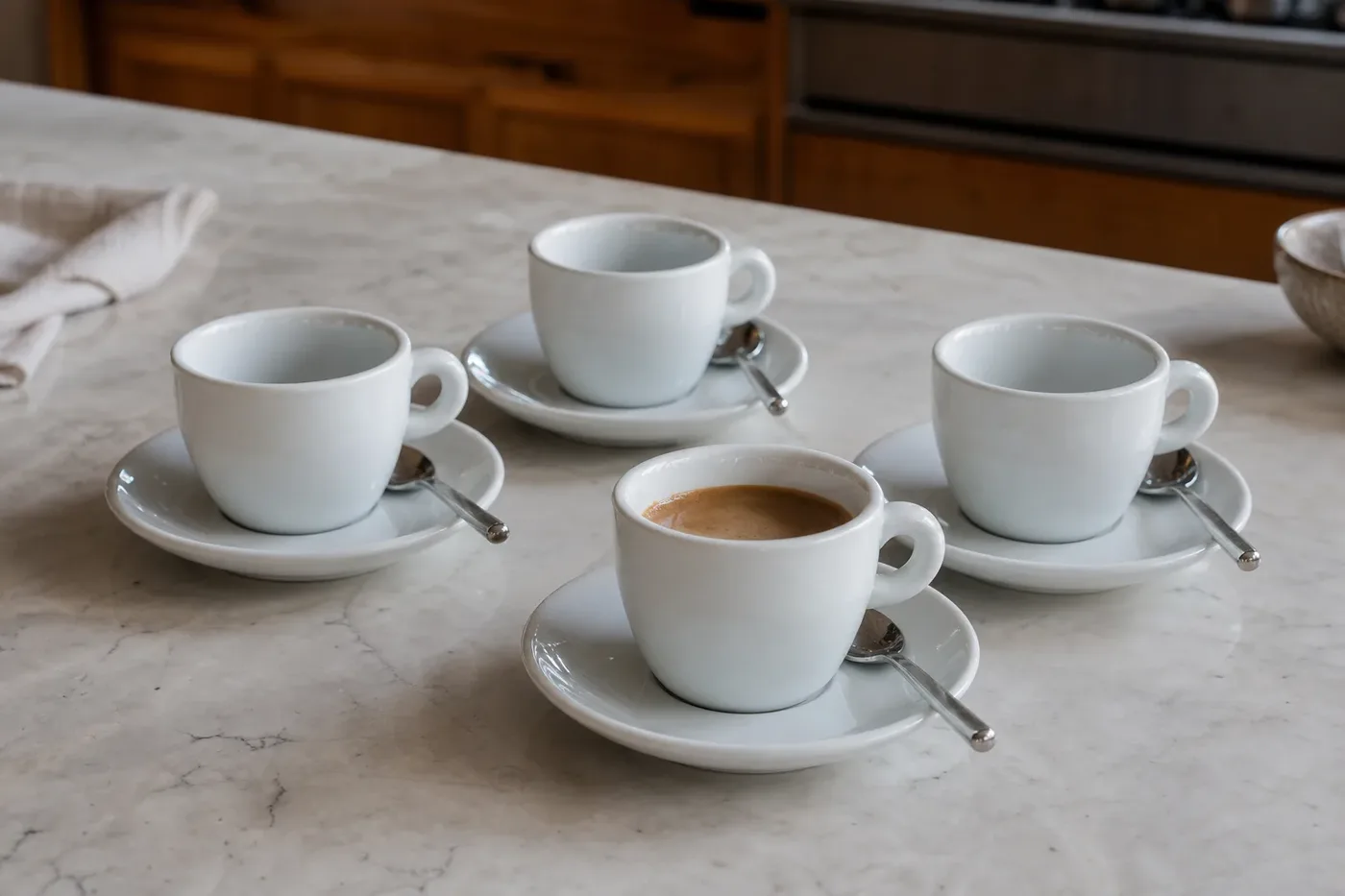
A demitasse is a small coffee cup, usually holding about 60 to 90ml, used for espresso and other short, strong coffees. The word is French for half cup, and for most practical purposes a demitasse and an espresso cup are the same thing.
Where the word demitasse comes from
Demitasse was in use long before espresso machines. In nineteenth-century France and later in Britain and America, strong black coffee was served after dinner in small cups, and the half-cup name described them. When espresso spread in the twentieth century it needed a small cup too, and the old word fitted the new drink.
Why a demitasse cup is so small
A single espresso is about 30ml. In a normal mug that much liquid would sit in a thin layer and cool in a minute, and its aroma would disappear into the empty space above it. A small cup keeps the coffee deep enough to hold its heat and puts your nose close to the surface, which matters for a drink judged partly on smell.
The size is chosen to hold a single or double shot with some room above it, not to be filled to the brim.
Why demitasse cups have thick walls
Espresso cups are traditionally made of thick porcelain. The weight is not decoration. A thick cup stores heat, so once it is warmed it keeps a very small volume of coffee hot instead of pulling heat out of it. That is also why the cup should be warm before the shot goes in. A thick cup straight from a cold shelf takes heat from the coffee instead, and cafes keep their cups on top of the machine for exactly this reason.
Many espresso cups are also narrower at the base and wider at the rim, which some baristas say helps the crema settle and look its best.
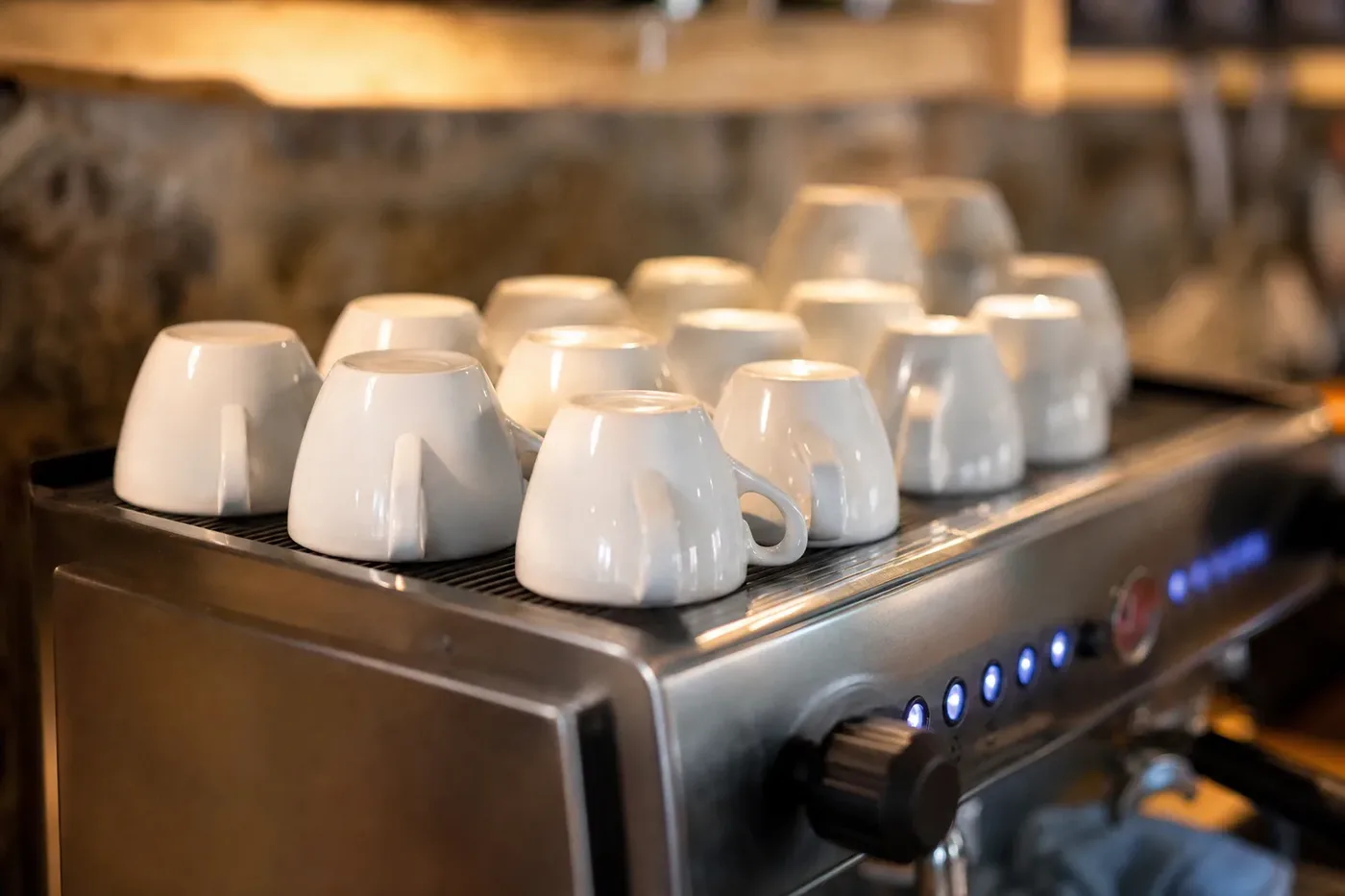
Demitasse cup materials compared
- Porcelain. The standard. Holds heat well, adds no taste, and survives daily use.
- Stoneware. Heavier and more rustic, with good heat retention, though often less even in shape.
- Double-walled glass. Lets you watch the layers of a shot and keeps the outside cool to hold. It retains heat reasonably but is more fragile.
- Stainless steel. Near unbreakable for travel, but it loses heat quickly and can feel odd against the lip.
Demitasse size for espresso, ristretto and doppio
A cup of around 60 to 70ml suits a single espresso or a ristretto. A doppio needs something closer to 90ml or more, and a small milk drink like a Spanish cortado needs a glass or cup larger again. Buying a set that is too small is the most common mistake, because a double shot in a 60ml cup leaves no room to hold it without spilling.
Turkish coffee has its own small cup, the fincan, which is related but used differently. How it compares is covered in Turkish coffee against espresso.
What to check before buying demitasse cups
- Capacity, stated in millilitres, against the drinks you actually make.
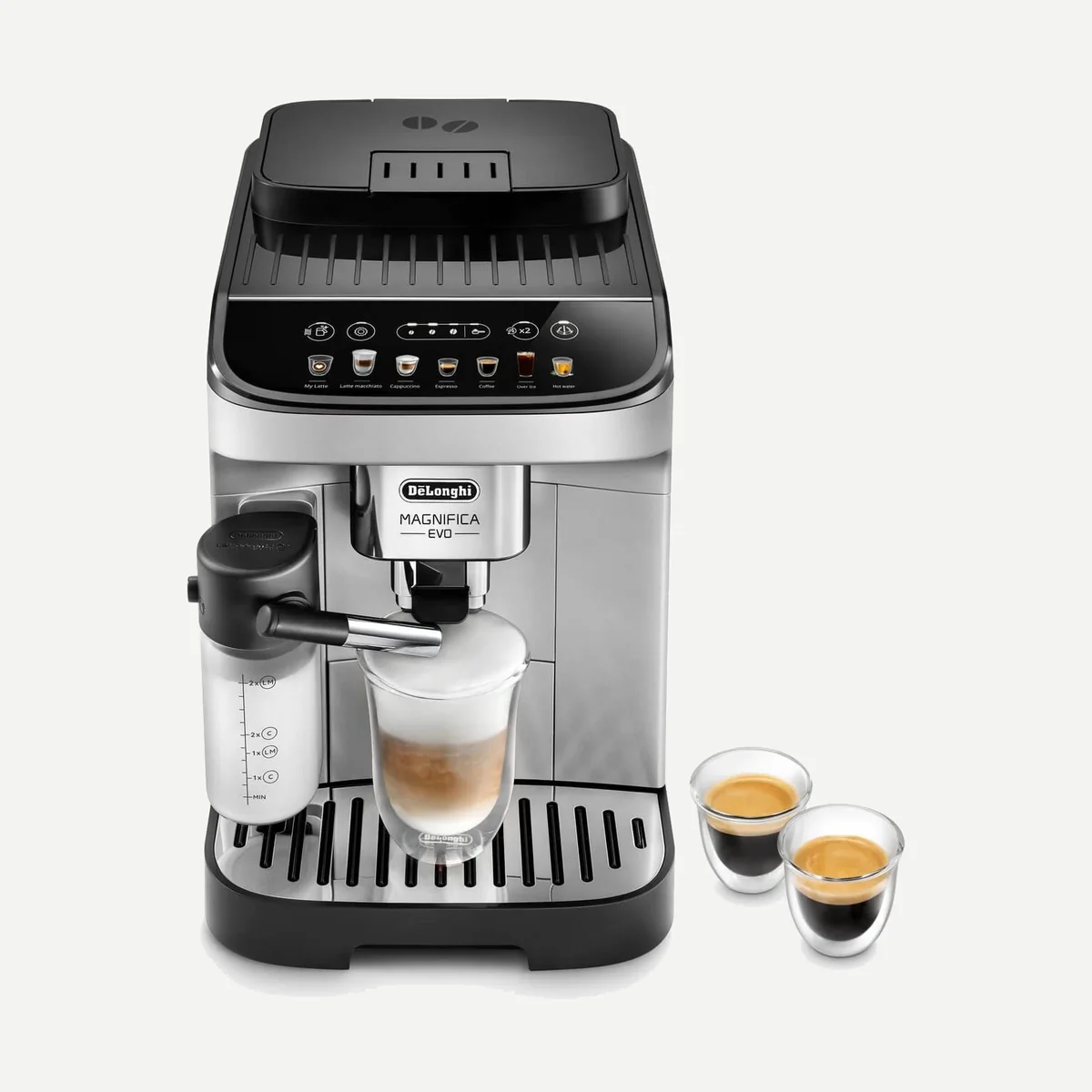
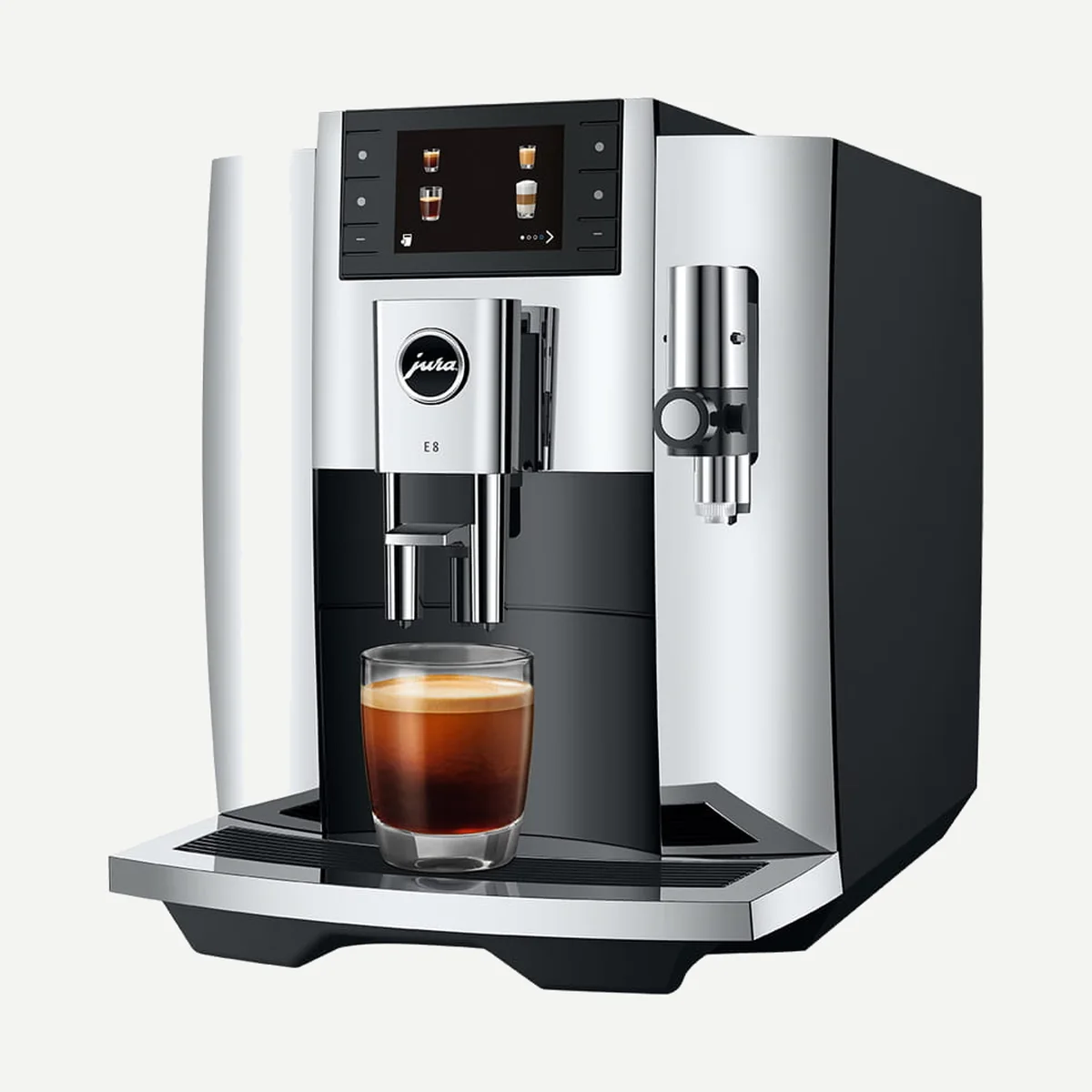
- Height under your machine. Measure the gap under the spout, especially on pod and bean-to-cup machines, where tall cups often do not fit.
- Wall thickness, which you can judge by weight. Heavier is better for heat.
- A handle you can hold, since tiny decorative handles are uncomfortable on a hot cup.
- Saucers, which catch drips and give the cup somewhere warm to sit.
- Dishwasher safety, particularly for anything with a metallic rim or glaze.
The cups, glasses and serving pieces we have reviewed are gathered under coffee accessories.
How to look after demitasse cups
Warm them before use, with hot water or on the machine's cup warmer. Avoid pouring very hot coffee into a cup that is cold from a fridge or a cold room, since sudden temperature changes are what crack porcelain over time. And keep a matching spoon: the small demitasse spoon exists because a teaspoon overbalances the cup.
Demitasse cups FAQ
What is a demitasse cup?
A small coffee cup, usually about 60 to 90ml, used for espresso and other strong coffees. Demitasse is French for half cup.
How many ounces is a demitasse cup?
Typically about 2 to 3 fluid ounces, or roughly 60 to 90ml.
Is a demitasse the same as an espresso cup?
For most purposes, yes. Both are small, thick-walled cups made to hold a single or double espresso.
Why are espresso cups so thick?
Thick porcelain stores heat, so a warmed cup keeps a very small amount of coffee hot rather than cooling it.