
Mold in Coffee Cups and Travel Mugs: Where It Grows and How to Clean It
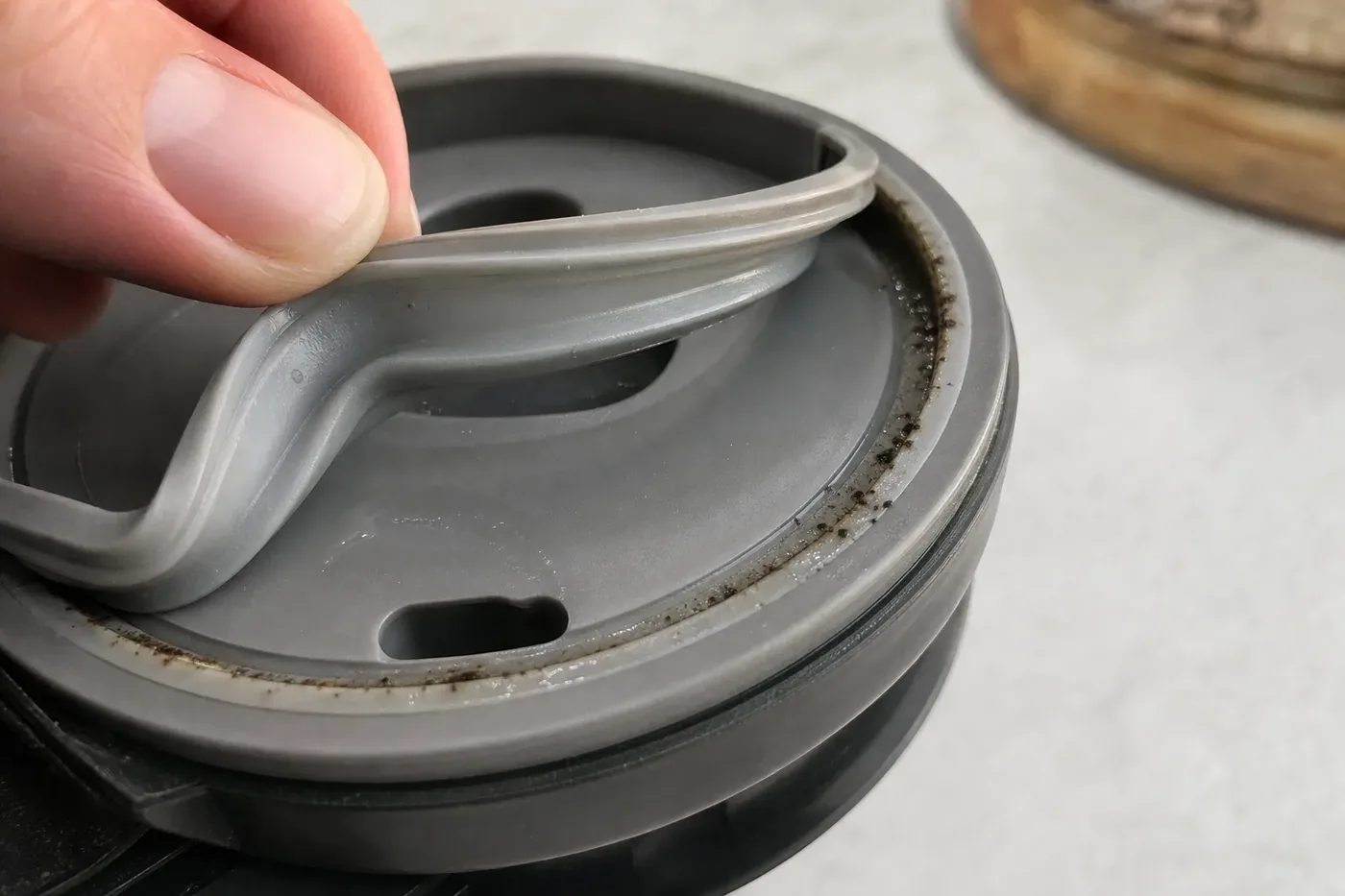
A travel mug is dark, warm and damp inside, which is exactly what mold likes. It hides in the lid, the seal and the drinking slot, and a quick rinse does not reach it.
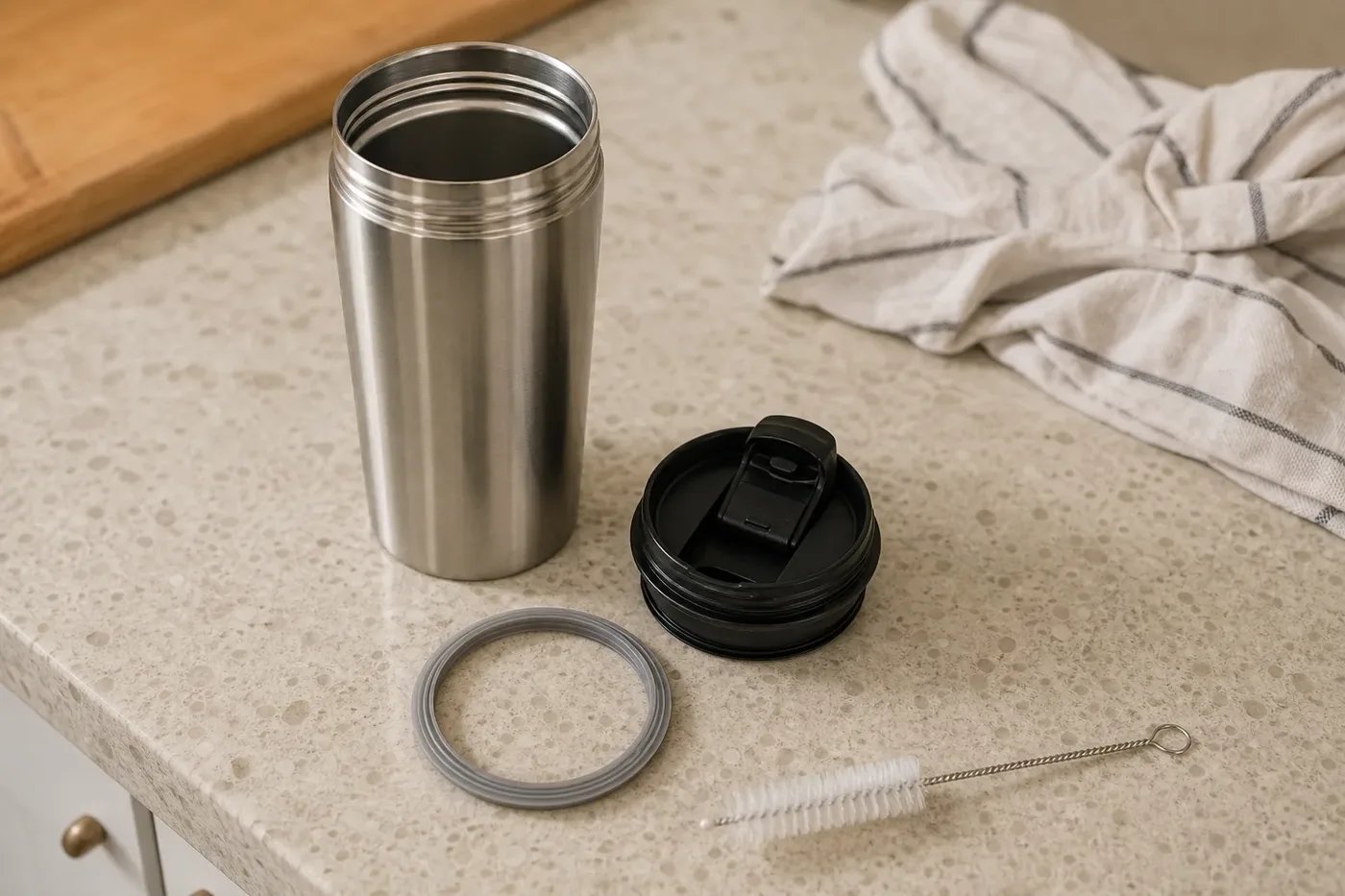
Mold grows in coffee cups and travel mugs because they stay dark, warm and damp, and because coffee, milk, sugar and saliva give it something to feed on. It usually starts in the parts a quick rinse misses: the rubber seal inside the lid, the sliding drink hole and the threads. Taking the lid apart, washing every piece and letting it dry completely before reassembling is what stops it.
Why mugs grow mold
Mold spores are everywhere in the air, and they settle on damp surfaces and start to grow. A closed travel mug with a little coffee left in it is close to ideal: dark, warm and humid. A biology instructor at the University of Alabama at Birmingham points out that when a drink is not replaced regularly, organic matter from saliva gives mold the nutrients it needs. Coffee with milk or sugar left sitting in a sealed mug adds even more.
Cleveland Clinic describes a reusable bottle as able to become an ecosystem of mold and bacteria for the same reasons, and the same applies to a mug that goes back in the bag with a lid screwed on.
Where it hides
- The lid gasket. The rubber or silicone ring that seals the lid traps liquid behind it. Black specks under the gasket are the most common find.
- The drink slot and slider. Push and slide mechanisms have narrow channels that hold coffee.
- Threads. Coffee dries into the screw thread on the mug and the lid.
- Straws and straw seals on cold cups.
- Glaze cracks. In a ceramic mug, crazing in the glaze gives mold a place to sit that a sponge cannot reach.
How to clean a travel mug properly
The steps UAB recommends for drink bottles work for travel mugs too:
- Take it apart. Remove the lid, pull out the gasket and open the slider if it comes apart. Many makers show how in their care instructions.
- Scrub with hot water and dish soap. Use a bottle brush for the body and a small brush for the slot and threads.
- Rinse thoroughly.
- Sanitise with a solution or product made for food-contact surfaces, if the maker allows it. Some makers, Stanley among them, say not to use bleach on their products, so check the care guide first.
- Dry every part completely before putting it back together.
Cleveland Clinic recommends rinsing a reusable bottle daily and running it through the dishwasher once a week. Dishwasher safety varies by product, though: some lids and insulated bodies can go in and some cannot, and the base of the mug or its care card will say.
How to stop it coming back
- Rinse the mug and lid as soon as you finish, rather than when you get home.
- Store it open. Keep the lid off until everything is dry. A lid screwed onto a damp mug seals the moisture in.
- Pull the gasket out regularly, not only when you see a problem.
- Replace worn seals. Many brands sell replacement gaskets and lids.
- Retire cracked ceramic mugs. A crazed glaze cannot be cleaned properly, and cracks can also fail with heat, as covered in can you put a coffee mug in the oven.
If you drank from a moldy mug
Cleveland Clinic notes that drinking something with mold in it may cause an upset stomach, cramps or diarrhoea, and that even small amounts can trigger allergy symptoms, with breathing problems more likely in people with asthma or other lung conditions. If you feel unwell, speak to a doctor. Then clean the mug thoroughly, or replace the parts you cannot get clean.
A note on the coffee itself
Mold is a problem for stored coffee too. Beans and grounds kept somewhere humid or in a container that is opened and closed with wet hands can spoil. The storage rules that keep beans fresh also keep them dry, and they are covered in how to store coffee beans.
Common questions
Why does my travel mug get moldy?
Because it stays dark, warm and damp inside, and leftover coffee, milk, sugar or saliva feeds mold. The lid gasket and drink slot trap moisture that a quick rinse misses.
How do you get mold out of a coffee mug lid?
Take the lid apart and remove the gasket, scrub every piece with hot soapy water and a small brush, rinse, sanitise if the maker allows it, and let everything dry completely before reassembling.
Can you use bleach to clean a travel mug?
Check the maker's care guide first. Some brands, including Stanley, say not to use bleach on their products; others allow a food-contact sanitiser.
Is it dangerous to drink from a moldy cup?
Cleveland Clinic says it may cause stomach upset and can trigger allergy symptoms. If you feel unwell, speak to a doctor, and clean or replace the mug.