What a Coffee Roaster Actually Does, and Why It Shows in the Cup
Green coffee tastes of almost nothing. Everything you recognise as coffee flavour was created in about twelve minutes of carefully controlled heat.
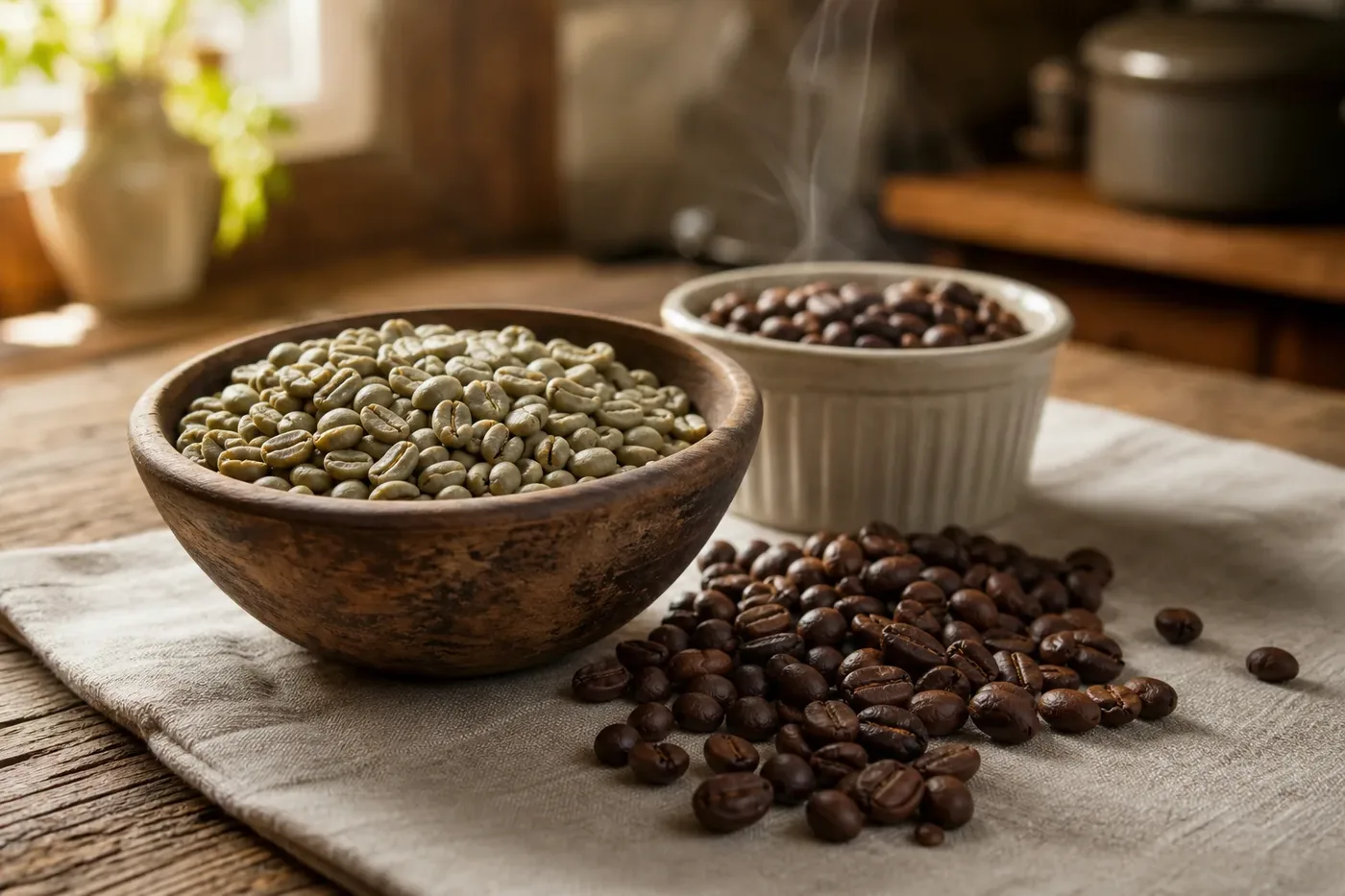
A green coffee bean is dense, grassy and faintly sour, and no amount of good brewing will get anything you would recognise as coffee out of it. Chocolate, caramel, berry, citrus, none of that exists in the bean when it arrives. It is all created in roughly twelve minutes of heat, and that is what a roaster is selling you.
What happens in the drum when roasting coffee
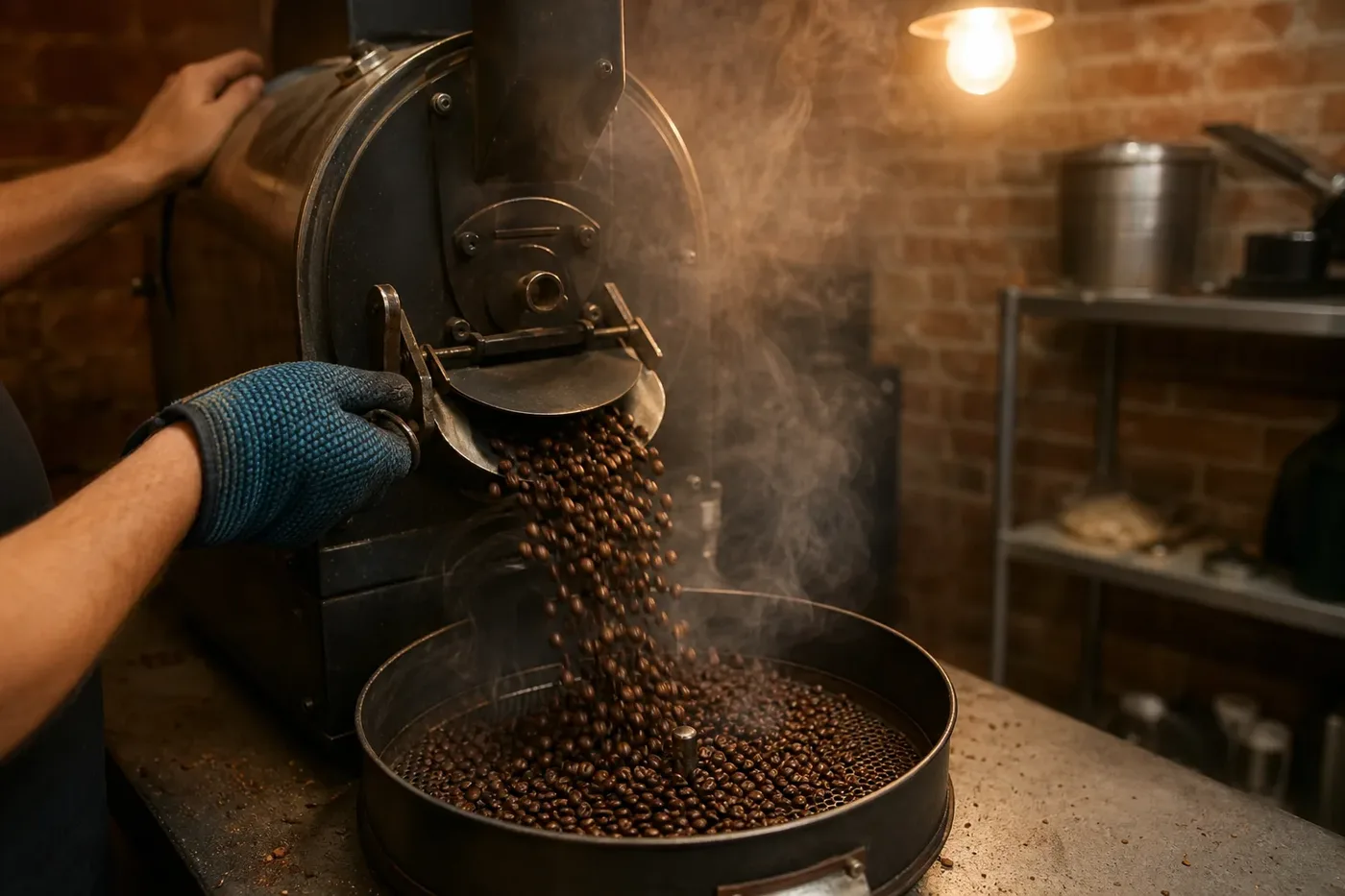
Green beans go into a rotating drum at around 200C. They absorb heat, lose water, and turn yellow, then tan, then brown as the sugars and amino acids inside begin reacting. This is the Maillard reaction, the same chemistry that browns bread and sears steak, and it is where most coffee flavour is manufactured.
Somewhere around eight to ten minutes, the beans reach a temperature where trapped steam bursts the cell structure and they audibly crack. This is first crack, and it is the roaster's most important landmark: before it you do not really have coffee, after it you do.
What the roaster does next is the whole craft. The time between first crack and dropping the beans out is called development, and it decides where on the light-to-dark scale the coffee lands. A short development gives an acidic, fruity, floral cup where the origin's character survives. A long one builds body and sweetness while burning off acidity. Push far enough and you reach second crack, where oils migrate to the surface and the roast starts tasting of roast rather than of coffee.
Why roast level is a choice, not a measure of quality
Dark is not stronger and light is not weaker. Caffeine barely changes across the roast range, and "strength" in the cup is decided by your brew ratio, not by colour.
What changes is what survives. A light roast preserves what the farm and the processing put there, which is why single origins with distinct character are roasted light. A dark roast substitutes its own flavours, which is why blends built for consistency and for milk drinks are roasted darker: the roast becomes the flavour, and the underlying coffee matters less.
That is also why dark roasting is the honest choice for large blends. When you are buying enormous volumes from many farms and need every bag to taste the same this year and next, roasting past the origin character is how you get there. Lavazza blending since 1895 and naming no farms is not a failing, it is a different business from Stumptown Coffee Roasters naming three continents in a blend.
What separates one coffee roaster from another
What they buy
Before any heat is applied, someone chose the green coffee. A roaster naming the farm, the co-operative, the altitude and the varietal is telling you they bought a specific lot rather than a commodity grade. Intelligentsia naming La Tortuga and the Geisha varietal is a claim you can check.
Whether they tell you when
Coffee is a fresh product. It needs a few days to degas after roasting and is best for roughly two to four weeks after that. A roast date on the bag is the single most useful thing a roaster can print, and most do not. Our Koa pages record a printed roast date, which almost nothing else on this site does, and that is why it appears in their reviews as a genuine differentiator rather than a nicety.
A "best before" date twelve months out tells you the opposite: that the coffee is being sold as a shelf-stable grocery item rather than a fresh one.
What they can prove about sourcing
Certifications are the checkable end of this. Kicking Horse putting organic and fairtrade on every bag is a verifiable claim with an audit behind it. Direct trade is often a stronger relationship than either but harder to verify, because it is a claim about a relationship rather than a standard.
Why the same bean tastes different from two coffee roasters
Give two roasters identical green coffee and you will get two different cups. The roast curve, how fast heat goes in and when, changes which reactions dominate. One roaster chases the acidity, another chases sweetness, and both are defensible readings of the same bean.
This is the argument for buying from a roaster you like rather than an origin you like. Origin sets what is possible; the roaster decides which part of it you get.
How to choose a coffee roaster when you buy
Buy recently roasted coffee, in a quantity you will finish in a month, from somebody who tells you where it came from. That is most of it.
Our roaster pages cover the ranges and what each one publishes about its sourcing, and the rating guide for coffee is explicit that taste and roast consistency are left unscored: no specification can stand in for drinking it, so we score what is published and say plainly what we cannot judge from a bag.
What a coffee roaster does FAQ
What does a coffee roaster actually do?
They apply controlled heat to green coffee, which has almost no flavour of its own, and create the flavours you recognise as coffee. The critical decisions are how quickly heat goes in and how long the beans stay in after first crack, which is the point where trapped steam bursts the cell structure. That development time decides the roast level and how much of the origin's character survives.
Is dark roast stronger than light roast?
No. Caffeine barely changes across the roast range, and strength in the cup is set by your coffee-to-water ratio. What changes is character: light roasts preserve the acidity and fruit the farm produced, dark roasts replace it with flavours the roast itself creates.
What is first crack in coffee roasting?
The audible pop, about eight to ten minutes in, when steam trapped inside the bean bursts its cell structure. It is the roaster's main landmark: before it you do not have drinkable coffee, after it you do. The time between first crack and dropping the beans is called development and determines the roast level.
Why does a roast date matter more than a best before date?
Because coffee is a fresh product. It needs a few days to degas and is at its best for roughly two to four weeks after that. A roast date tells you where in that window you are. A best before date twelve months out tells you the coffee is being sold as a shelf-stable grocery item instead.
Why does the same coffee taste different from different roasters?
Because the roast curve changes which reactions dominate. Given identical green beans, one roaster may chase acidity and another sweetness, and both are legitimate readings of the same lot. Origin sets what is possible; the roaster decides which part of it you actually taste.
Reviewed on this site
 Stumptown Coffee RoastersAnybody who wants a roast date on the bag and a named trade relationship behind it
 Intelligentsia CoffeeDrinkers who want a named farm, a published process and a roaster that has been doing direct trade since before it was a marketing word
 Koa CoffeeAnybody buying Kona who wants to know it is actually Kona rather than a ten percent blend
 Kicking Horse CoffeeCertified organic and fairtrade coffee at a price supermarket blends charge
 LavazzaAnybody who wants Italian espresso blends rather than single origin coffee