Brown Sugar in Coffee, and the Shaken Espresso It Became
What brown sugar actually is, what it does in a cup, and what is in the shaken espresso that made it a menu item.
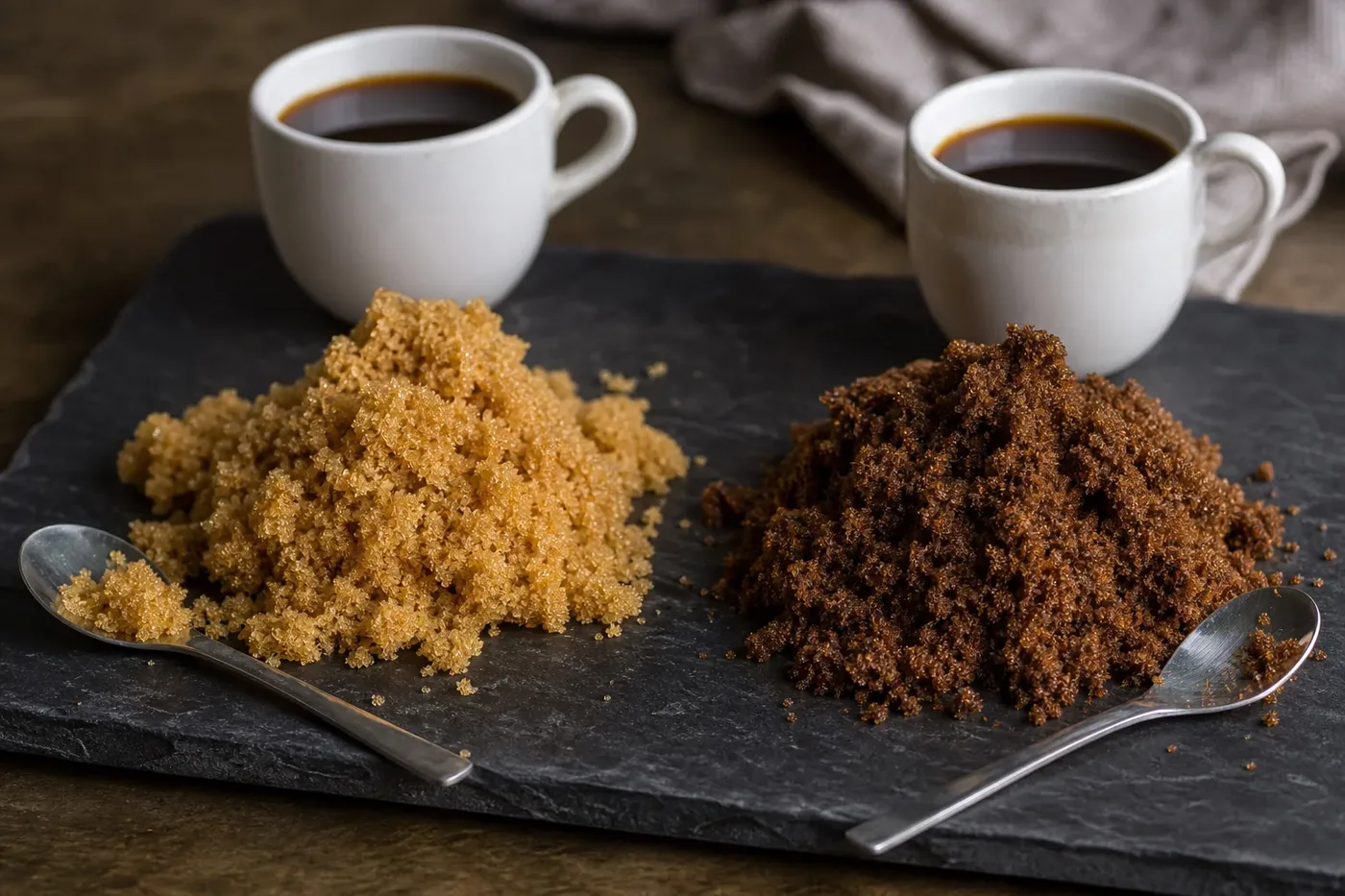
Brown sugar is white sugar with molasses in it, and the molasses is the whole difference: it brings a faint caramel and liquorice note that plain sugar does not have. That is why it survives in a cup where sweetness alone would disappear.
What the two kinds actually are
The USDA's commercial item description for sugar recognises two styles. Light brown sugar "must have a soft texture and uniform light to medium golden brown color" with "a mild sweet molasses odor and flavor". Dark brown sugar "must have a soft texture and uniform brown color" with "a sweet molasses odor and flavor".
The same document sets the chemistry: at least 86 percent sucrose, no more than 4.5 percent moisture, and an ash limit that differs between the two, 2.25 percent for light and 3.25 percent for dark. What it does not do is put a number on the molasses, so the percentages quoted for light against dark online are not a USDA figure, whatever they are attached to.
What it does in the cup
Dark brown sugar is the stronger of the two and can sit oddly with a light, fruity coffee, where it competes with what the roaster was aiming at. It suits a dark roast, which is already in the same register. Light brown sugar is the safer choice with most coffee.
It also clumps, because it holds moisture by design. In a hot drink that resolves itself with stirring; in an iced one it does not, which is the practical reason the cafe version is made as a syrup rather than spooned into a cold glass.
The drink that made it a menu item
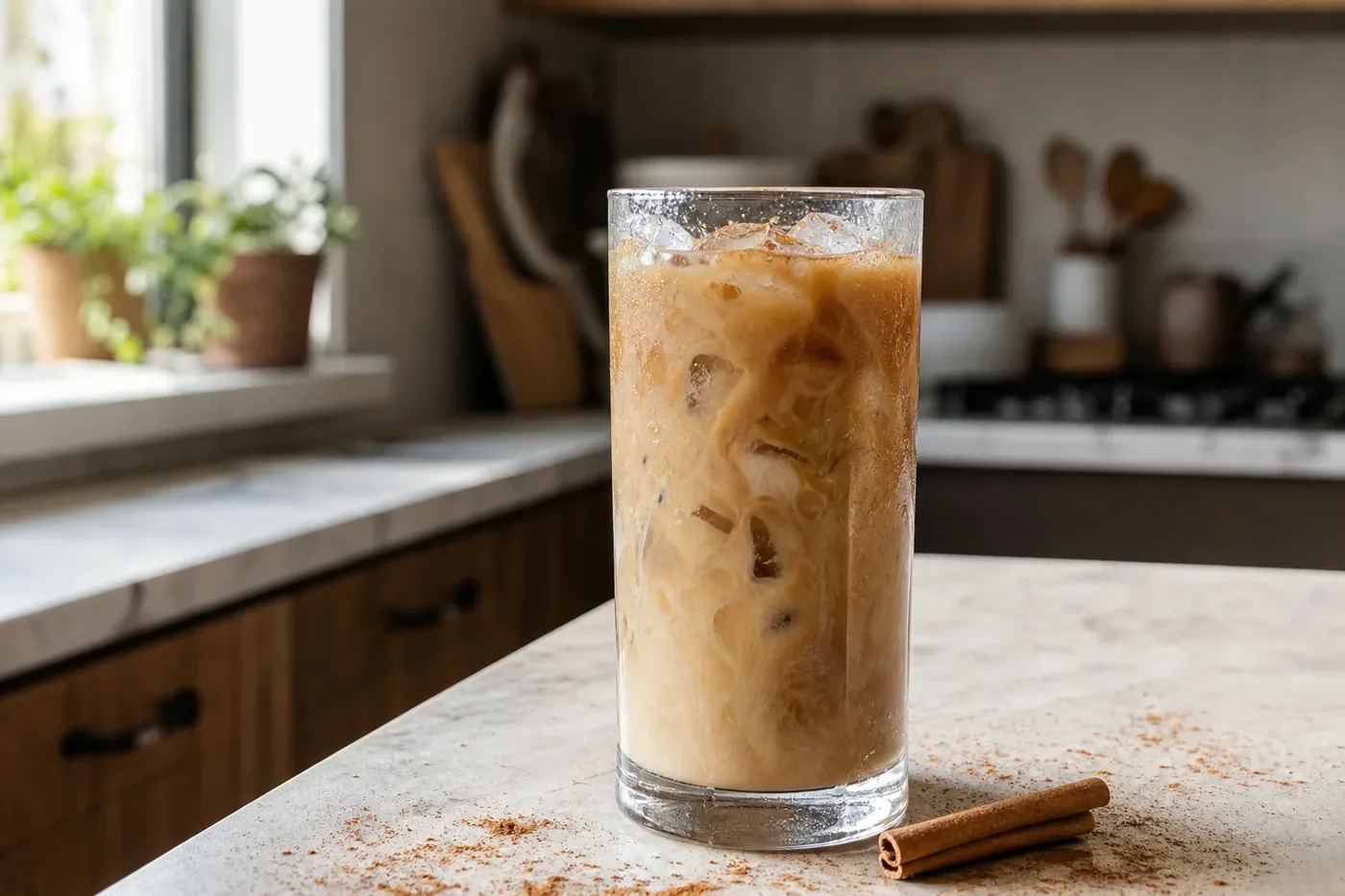
Starbucks describes its iced version this way: "First we shake Starbucks Blonde espresso, brown sugar and cinnamon together, and then top it off with oatmilk and ice." The shaking is the part worth copying at home, because it dissolves the sugar into the espresso before any cold liquid arrives.
Its published ingredient list is ice, oatmilk, brewed espresso, brown sugar syrup and cinnamon, and the syrup itself is listed as invert sugar, brown sugar, water, natural flavour, salt and potassium sorbate. For a grande, Starbucks publishes 150 calories, 15 g of sugars and about 255 mg of caffeine, which is high for the size because blonde espresso is used and the drink is built on several shots.
A note on the numbers
Those figures are for a grande, which is the size Starbucks' own page shows by default. The tall and venti numbers differ and are not repeated here, because they were not read on the page. There is also a hot version on the menu, a Brown Sugar Oatmilk Cortado, sold as a separate drink.
One figure often quoted alongside these is the molasses content of light against dark brown sugar, usually given as a pair of precise percentages. Those do not come from the USDA document that defines the two styles, which sets colour, flavour and ash limits and no molasses figure at all, so treat them as somebody's estimate rather than a standard.
Making one that resembles it
- Dissolve the brown sugar in the hot espresso first, with a pinch of cinnamon, and shake or stir it there rather than in the cold milk.
- Use blonde espresso if you want the same lighter, sweeter base the cafe version starts from.
- Add cold oat milk last. Which alternative milks behave in coffee, and which split, is in milk alternatives in coffee.
Hot, it is simpler still: brown sugar goes into the cup with the espresso and the milk follows. The order is the only technique either drink has.
Brown sugar syrup at home
Granulated brown sugar dissolves slowly in anything cold, which is why cafes use a syrup. It takes five minutes to make: warm equal parts brown sugar and water in a small pan, stirring until the sugar has fully dissolved, then let it cool. A pinch of cinnamon or a few drops of vanilla stirred in at the end makes it taste more like the cafe version. Kept in a clean, sealed jar in the fridge it lasts a week or two. Start with a teaspoon or two per drink and adjust, because syrup tastes sweeter than the same sugar stirred in hot.
Which coffee it suits
Brown sugar's caramel and molasses notes sit best with coffee that already leans that way. A medium roast with chocolate or nutty notes is the easy match; coffees tasting of caramel make it taste richer still. Very bright, fruity light roasts can clash, the molasses fighting the acidity. Over ice, a brown sugar syrup shaken with espresso and topped with milk is close to the cafe drink, and the same syrup works in an iced latte.
Common questions
Is brown sugar better in coffee than white?
It is different rather than better. Brown sugar carries molasses, which adds a caramel note white sugar does not have. Light brown suits most coffee; dark brown can overwhelm a light roast.
What is the difference between light and dark brown sugar?
Colour and strength of flavour. Dark brown sugar has more molasses in it, so it is darker and tastes more strongly of caramel. The USDA describes light brown as golden brown with a mild molasses flavour and dark brown as brown with a fuller one.
What is in a brown sugar shaken espresso?
Starbucks publishes ice, oatmilk, brewed espresso, brown sugar syrup and cinnamon, with the syrup made from invert sugar, brown sugar, water, natural flavour, salt and potassium sorbate.
How much caffeine is in a brown sugar shaken espresso?
Starbucks publishes about 255 mg for a grande, which it marks as approximate. It is high for the size because the drink is built on blonde espresso shots.