Caffè Shakerato: Italy's Iced Coffee, Made in a Cocktail Shaker
Espresso, ice and sugar shaken hard and strained into a cold glass. No milk, no syrup, and no ice in the finished drink.
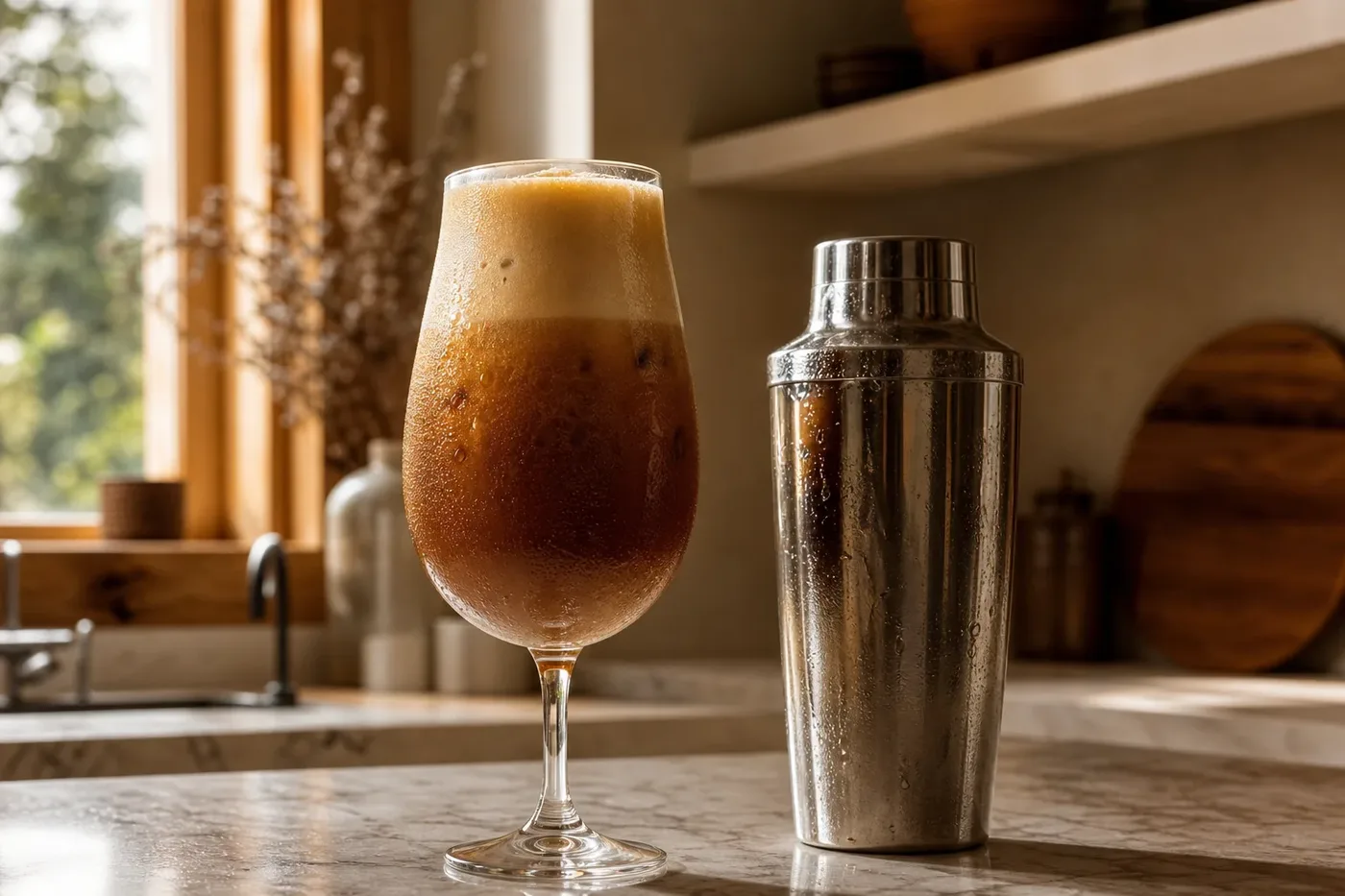
A caffè shakerato is espresso, ice and sugar shaken hard in a cocktail shaker and strained into a chilled stemmed glass. It arrives with a thick pale foam on top and no ice in it at all, and it is the best argument in coffee for owning a piece of bar equipment.
Caffè shakerato recipe
- One or two shots of espresso, fresh and hot.
- A teaspoon of sugar, dissolved into the hot shot before anything else.
- A shaker filled generously with ice.
- Ten to fifteen seconds of genuinely hard shaking.
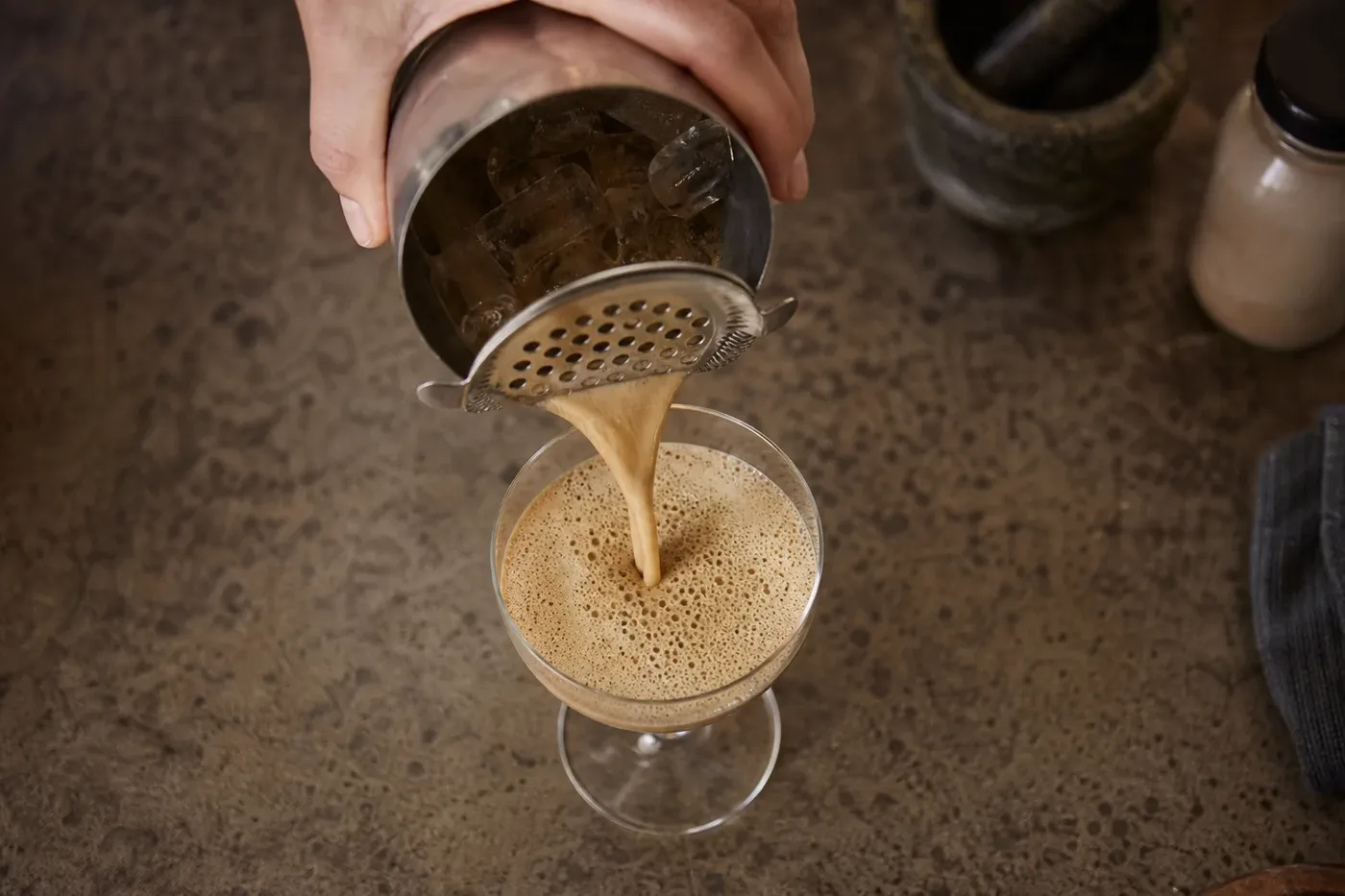
- Strained into a cold glass. The ice stays in the shaker.
The order matters. Sugar goes into the hot espresso so it dissolves, because it will not dissolve once the drink is cold.
Why sugar matters in a shakerato
The foam is the drink. Shaking whips air into the coffee and the crema, and sugar raises the viscosity enough for that foam to hold instead of collapsing while you carry the glass to the table.
You can make an unsweetened version and plenty of people prefer it. What you cannot do is make an unsweetened version with the same texture, and the texture is the reason the drink exists rather than simply pouring espresso over ice.
How hard to shake a shakerato
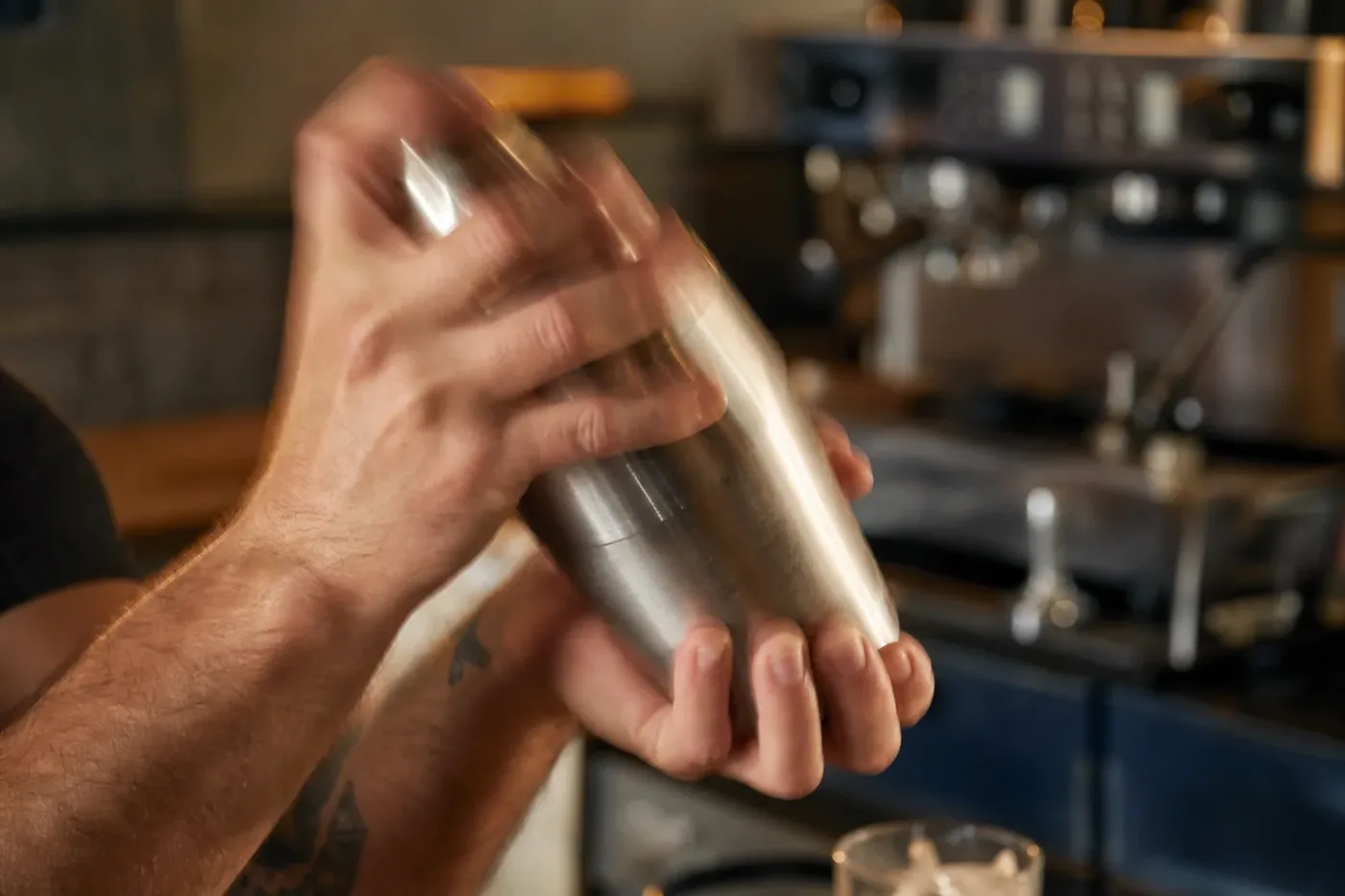
This is where home versions fail. A polite shake chills the coffee and does nothing else. The foam comes from ice colliding with liquid at speed, so the shaker should be loud and your hands should be cold by the end of it.
Fill the shaker properly too. A half-empty shaker lets the ice slide rather than strike, and you get a diluted, flat drink from exactly the same ingredients.
Shakerato without an espresso machine
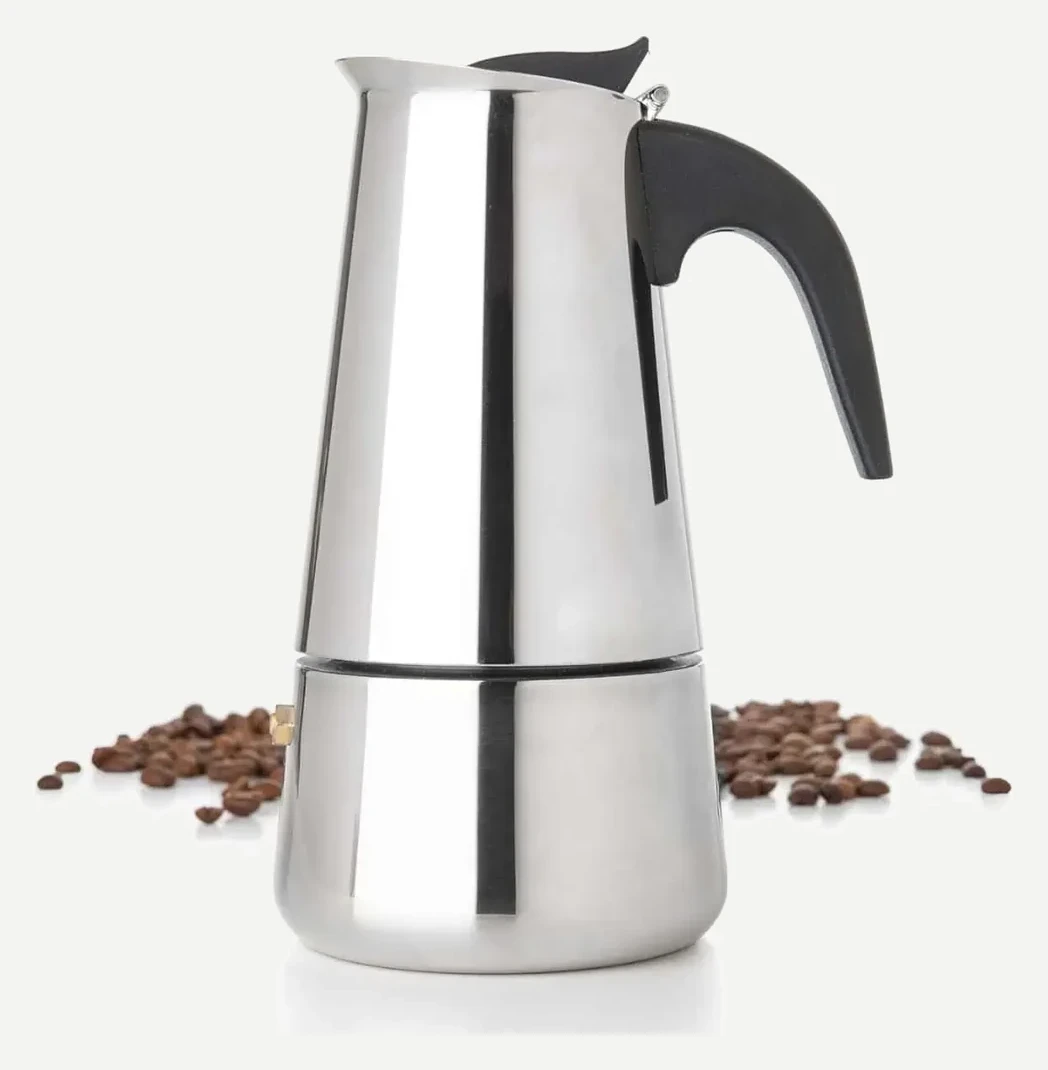
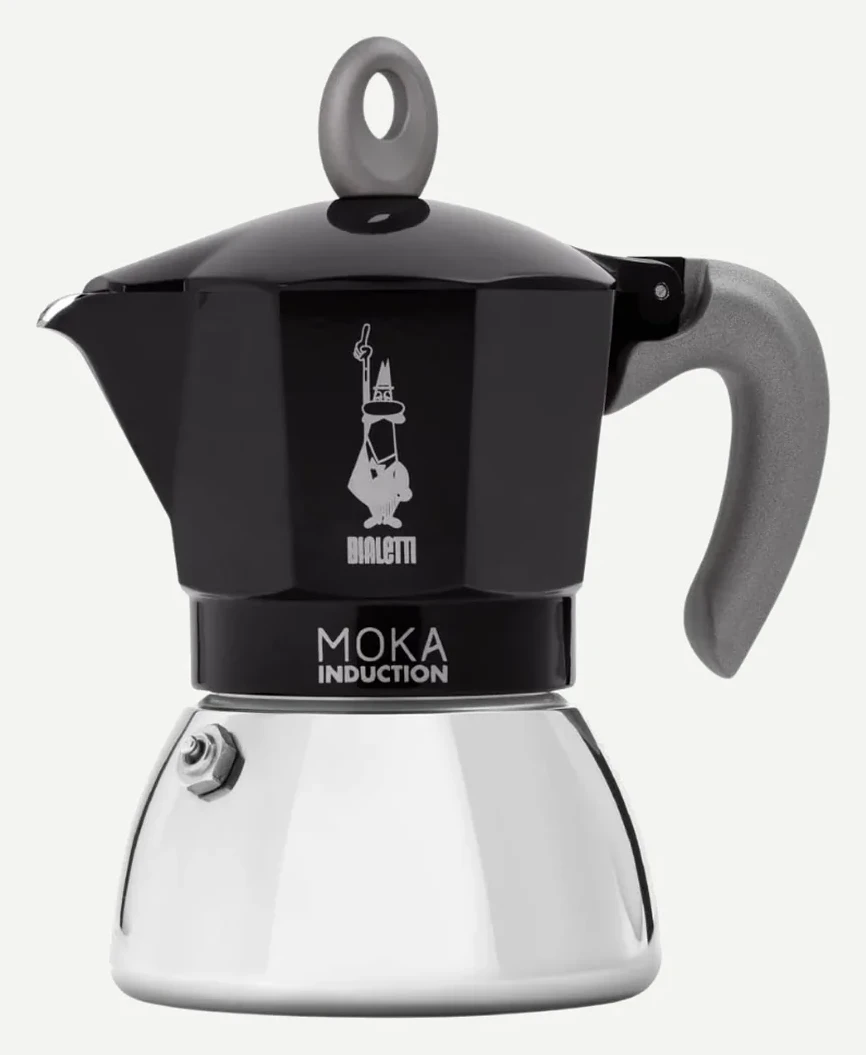
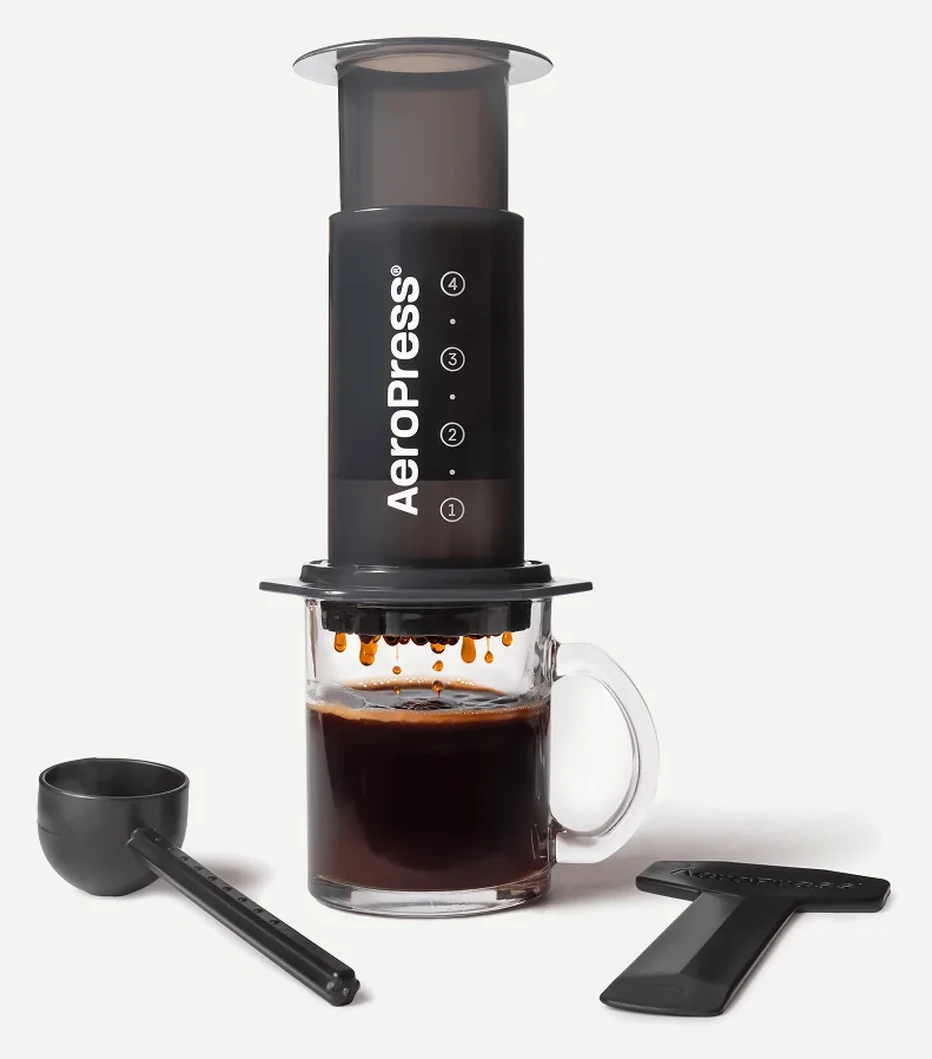
A stovetop moka is what most Italian kitchens would actually reach for, and the Mixpresso moka pot makes something concentrated enough to shake. Expect less foam: a fresh shot carries dissolved gas that a moka pot does not produce, and some of the head you get in a bar comes from that.
Filter coffee does not work here. It is neither strong enough to survive being chilled nor viscous enough to hold air, and what you get is cold coffee with bubbles in it.
How a shakerato is drunk
Quickly, standing up, in summer, in the afternoon. It is not a long drink and it does not survive being nursed: the foam falls, the coffee warms, and what is left is a small glass of tepid espresso. Made properly it is meant to be finished in about the time it takes to have a conversation at the bar.
Shakerato vs freddo espresso and other iced coffees
Three iced coffees are regularly mistaken for each other and they are made completely differently.
- Shakerato. Espresso shaken with ice and sugar, strained, served without ice. Dense foam, small glass, no milk.
- Freddo espresso. Greek rather than Italian. Espresso whipped with ice using a handheld frother rather than a shaker, and served over fresh ice in a tall glass.
- Iced latte. Espresso, cold milk and ice. Milk changes it into a different category of drink entirely.
The shakerato is the only one of the three that arrives with no ice in it, which is the quickest way to tell whether a bar has made you the right thing.
Shakerato variations worth ordering
Bars in Italy will make a shakerato with additions, and the two common ones are worth ordering by name.
Shakerato al caffè con panna adds a spoon of cream, which makes it richer and duller. Shakerato alla nocciola or similar adds a hazelnut or almond syrup, which most purists dislike and which sells well.
There is also a version made with amaretto or Baileys, generally after dinner rather than in the afternoon. It works better than it sounds, because the sugar in the liqueur does the same job as the spoon of sugar.
Common shakerato mistakes at home
Three failures account for nearly all of them.
- Not enough ice. A half-filled shaker slides rather than strikes, and you get a chilled, flat drink.
- Sugar added cold. It will not dissolve, and you get a gritty base and no foam.
- Old espresso. The shot should go into the shaker within seconds. Much of the foam comes from gas that is already leaving the crema.
A warm glass will also collapse the head on contact. Chill the glass while you pull the shot and the drink survives long enough to be photographed, which is apparently half the reason it is ordered.
Caffè shakerato FAQ
Is a shakerato just iced espresso?
No. Iced espresso is poured over ice and stays thin. A shakerato is shaken with ice and strained away from it, which aerates the coffee into a dense foam and chills it without leaving anything behind to dilute it.
Do I have to use sugar?
For the texture, effectively yes. Sugar is what lets the foam hold rather than collapsing in a few seconds. Without it you get cold espresso with a brief head on top, which is a perfectly good drink and not a shakerato.
Can I make one without an espresso machine?
A moka pot is the usual stand-in and Italians use it at home. The result is heavier and foams less, because there is less dissolved gas in it than in a fresh shot, but it works.
Why is it served without ice?
Because the ice has already done its job in the shaker. Leaving it in the glass would keep diluting a drink that is meant to be drunk fast and cold, and it would flatten the foam the shaking created.