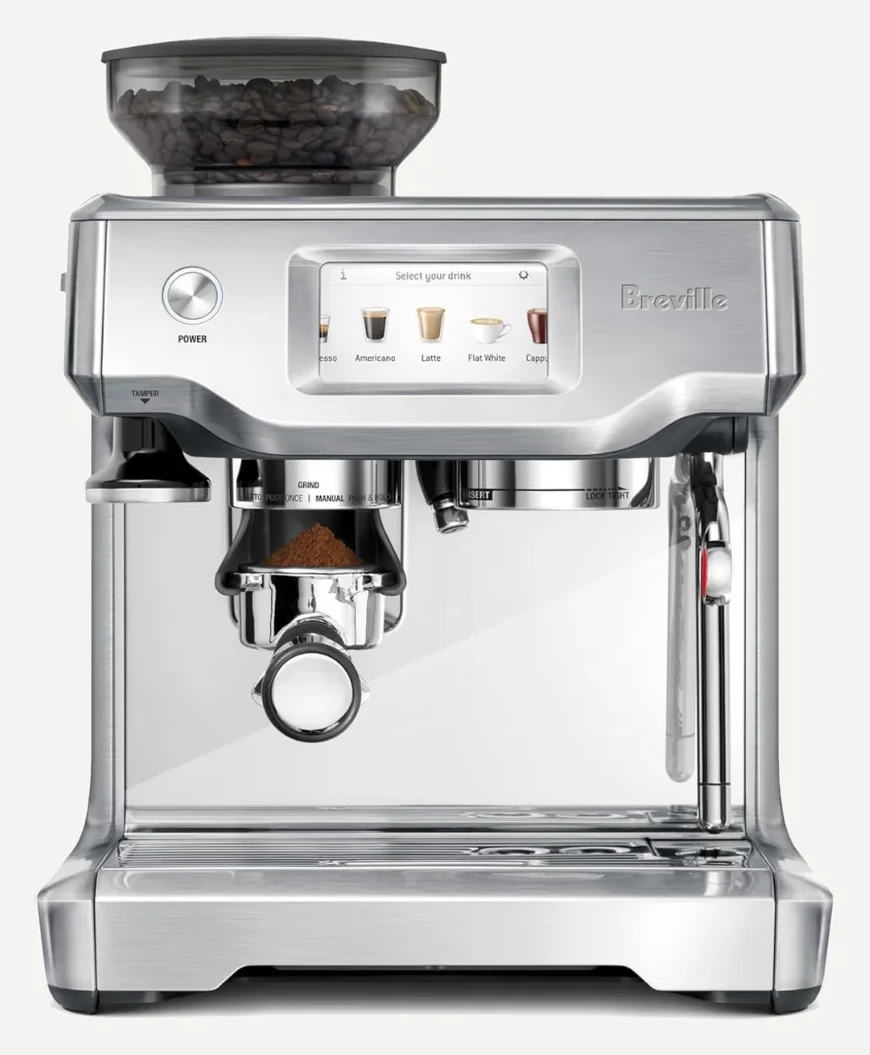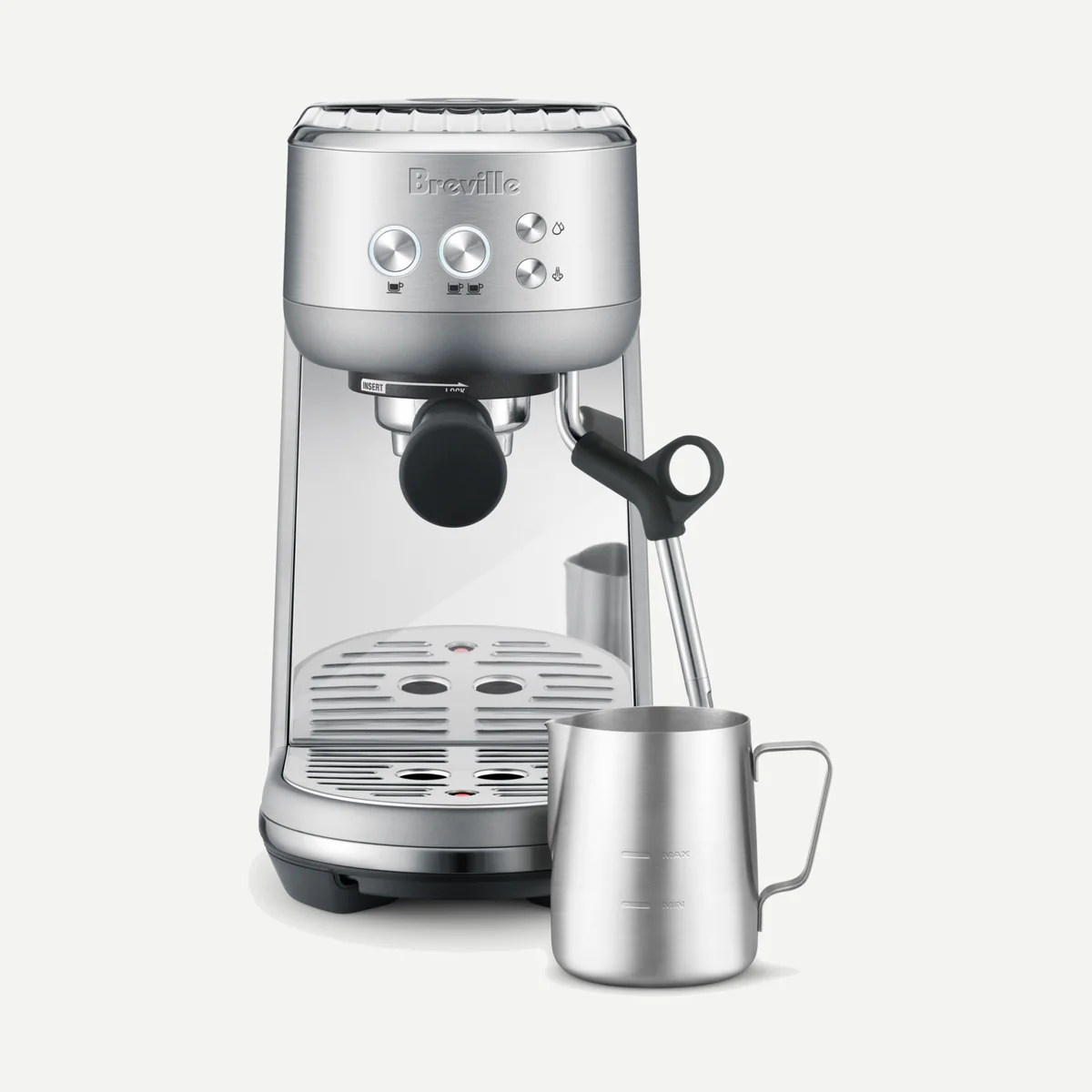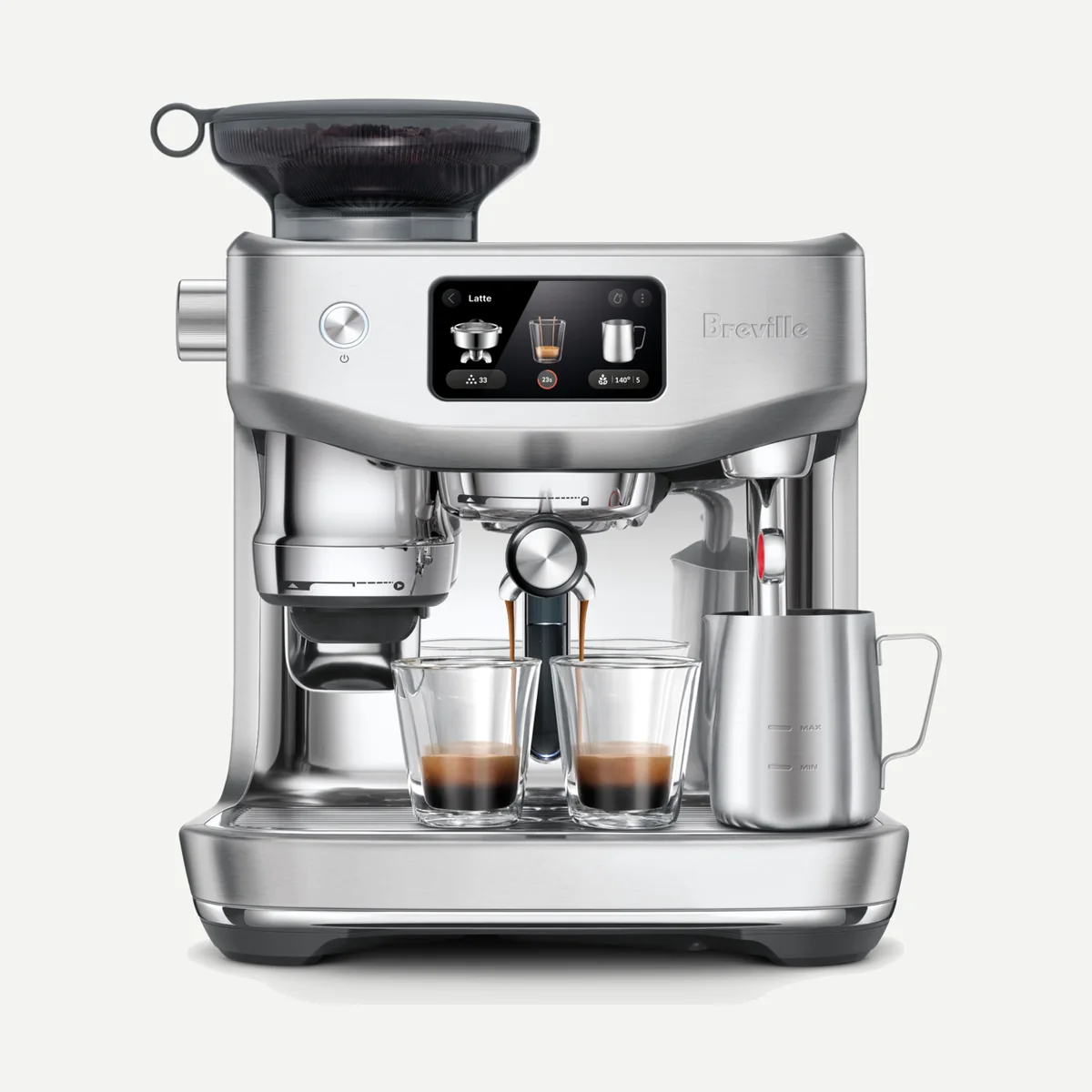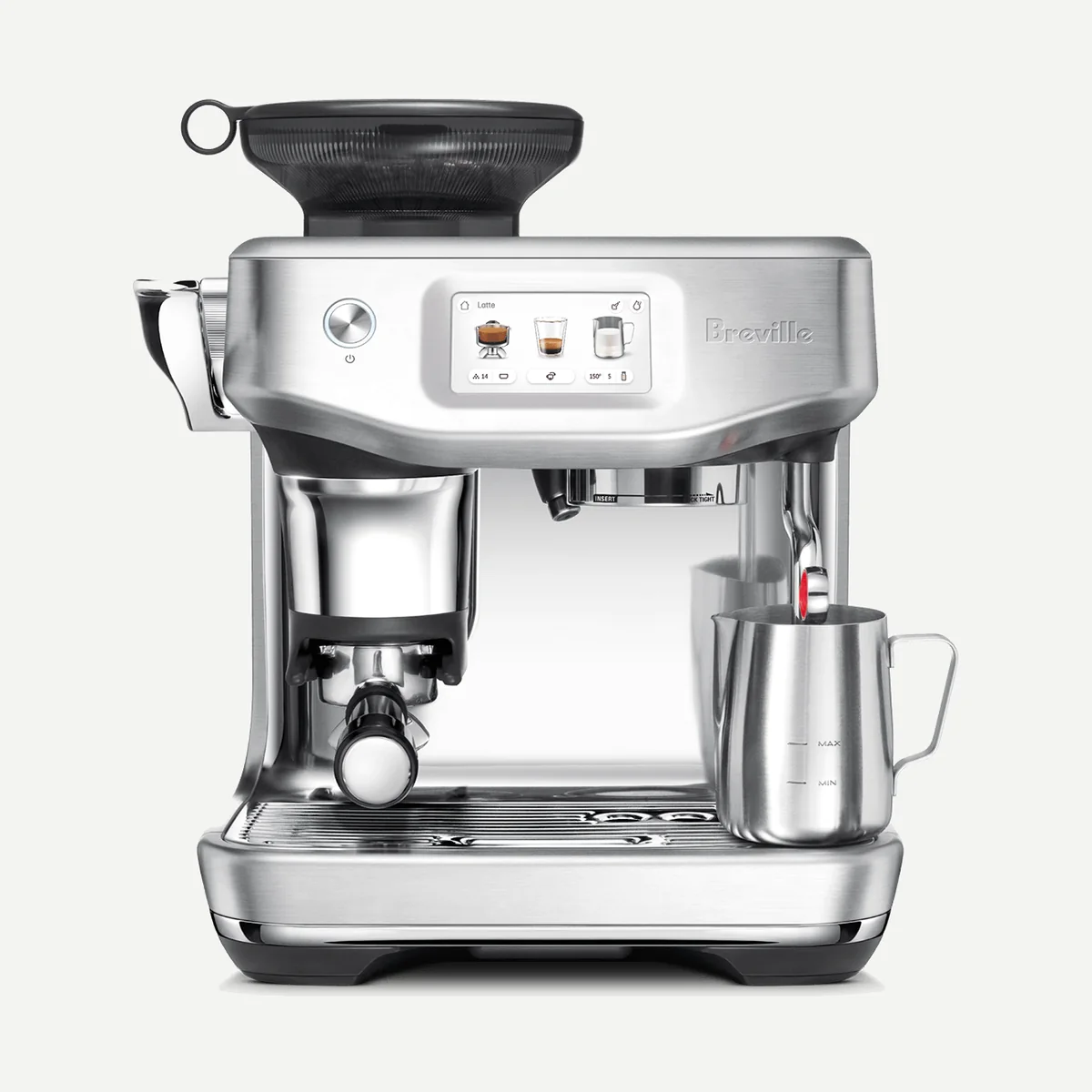
What is the Breville Barista Pro?
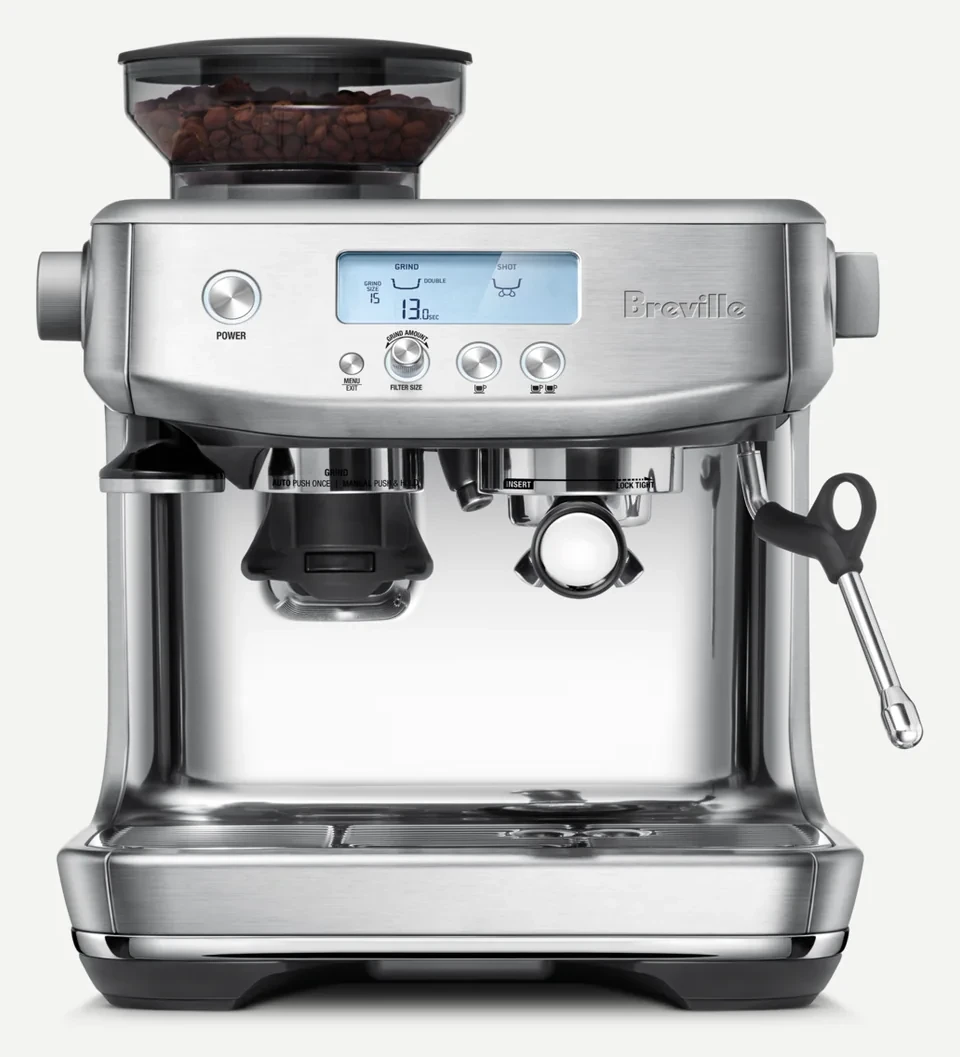
The Barista Pro is a semi-automatic espresso machine that combines a 30-setting conical burr grinder, manual steam wand and ThermoJet heating system.
Its brewing hardware includes PID temperature control, low pressure pre-infusion, nine bar extraction and a 54 mm stainless steel portafilter. Single-wall and dual-wall filter baskets are available, alongside a bottomless option for buyers who want the basket visible during extraction.
The $849.95 package also includes dose control, an LCD shot clock and a three-second warm-up specification. It uses a two litre water tank rather than plumbing, draws 1,680 watts, weighs 9.49 kg and carries a two-year warranty.
Breville Barista Pro shot quality: what it can actually pull
The Barista Pro combines temperature control, staged pressure and multiple basket choices, giving buyers several documented ways to shape espresso preparation.
PID control addresses brewing temperature, while low pressure pre-infusion precedes extraction at nine bar. Those are the most relevant published details for evaluating the brewing system, but they do not establish cup quality without measured results or a hands-on test.
The 54 mm stainless steel portafilter accepts single-wall and dual-wall filter baskets, and a bottomless option is available. That selection lets buyers choose a more forgiving basket or a setup that leaves the basket visible while preparing espresso.
- PID control and low pressure pre-infusion provide documented control over two important parts of espresso preparation.
- Extraction is specified at nine bar, supplied by a 15 bar Italian pump.
- Single-wall and dual-wall baskets support different levels of control within the same 54 mm format.
- A bottomless option makes the basket visible, which is how a channelled shot is spotted and a distribution problem diagnosed.
What you can brew with it
The Barista Pro is equipped for espresso and manually textured milk drinks, with basket choices that accommodate different preparation approaches.
For espresso, buyers can work with single-wall or dual-wall filter baskets in the 54 mm portafilter. The integrated grinder adds 30 settings and dose control, while the LCD shot clock provides a timing reference during extraction.
Milk drinks rely on the manual steam wand because there is no automatic milk frother. That makes it suitable for buyers who want to texture milk themselves, rather than those seeking one-touch preparation through an integrated automatic milk system.
- Espresso preparation is supported by single-wall, dual-wall and available bottomless basket configurations.
- Milk drinks require manual texturing with the steam wand rather than automatic frothing.
- Thirty grinder settings and dose control provide adjustment before coffee reaches the portafilter.
- Buyers seeking fully automatic bean-to-cup drinks should look beyond this semi-automatic format.
Living with it, day to day
Day-to-day ownership combines a three-second warm-up and timed shots with manual refilling, milk texturing, basket care and descaling.
The ThermoJet system has a listed three-second warm-up, and the LCD shot clock provides an on-machine timing reference. A two litre tank supplies water, but the machine is not plumbable, so refilling remains part of the routine.
The integrated grinder keeps grinding and dose control within the machine, reducing the need for a separate grinder. Ownership still includes cleaning the chosen basket, tending the manual steam wand after milk preparation and planning descaling for the ThermoJet system.
- Refill the two litre water tank manually because the machine cannot connect to plumbing.
- Clean the single-wall, dual-wall or bottomless basket used for each espresso preparation.
- Tend the manual steam wand after texturing milk because there is no automatic milk system.
- Include descaling of the ThermoJet heating system in the ongoing maintenance plan.
Breville Barista Pro vs Philips 4300 LatteGo
The Barista Pro favors manual espresso control and costs less, while the Philips 4300 favors automatic bean-to-cup drinks and milk preparation.
At $849.95, the Barista uses PID control, a 54 mm stainless steel portafilter, low pressure pre-infusion and nine bar extraction. Its hardened steel conical burr grinder has 30 settings, and buyers texture milk with a manual steam wand.
At $999, the Philips is fully automatic, with a 12-setting ceramic grinder and automatic LatteGo milk system. Its 1.8 litre tank is smaller than the Barista's two litre tank, while both carry two-year warranties and use 15 bar pumps.
- The Barista wins for basket choice, offering single-wall, dual-wall and available bottomless configurations.
- The Philips wins for automation through bean-to-cup operation and its integrated LatteGo milk system.
- The Barista offers 30 grinder settings, compared with 12 settings on the Philips.
- The Philips suits buyers prioritizing automatic milk drinks, while the Barista suits buyers wanting manual control.
Is the Breville Barista Pro worth it?
The Barista Pro is worth considering at $849.95 for buyers who value integrated grinding, documented brewing controls and manual milk preparation.
The price covers a ThermoJet heating system, PID control, a three-second warm-up, 30 grinder settings, dose control and an LCD shot clock. Single-wall, dual-wall and available bottomless baskets broaden the ways buyers can approach espresso within one machine.
Its value is strongest for someone who will use those controls rather than avoid them. The $999 Philips alternative costs more but automates bean-to-cup brewing and milk frothing, making that model the clearer choice when convenience matters more than manual preparation.
Who should buy it (and who should not)
The Barista Pro suits buyers seeking integrated grinding and hands-on espresso control, but not those wanting fully automatic drinks or milk frothing.
It makes sense for buyers who want PID control, timed shots, dose adjustment and a choice of filter baskets without buying a separate grinder. The manual steam wand also suits people willing to take responsibility for milk texturing.
It is a weaker fit for anyone seeking one-touch bean-to-cup preparation, automatic milk frothing or a plumbed water connection. Buyers who will not use 30 grind settings or multiple basket types may also be paying for adjustment they do not need.
Buy it if
- You want grinding, dose control and shot timing integrated into one machine.
- You prefer choosing between single-wall, dual-wall and bottomless basket setups.
- You are prepared to texture milk manually with a steam wand.
Skip it if
- You want automatic bean-to-cup drinks and integrated milk frothing.
- You need a machine that connects directly to a water line.
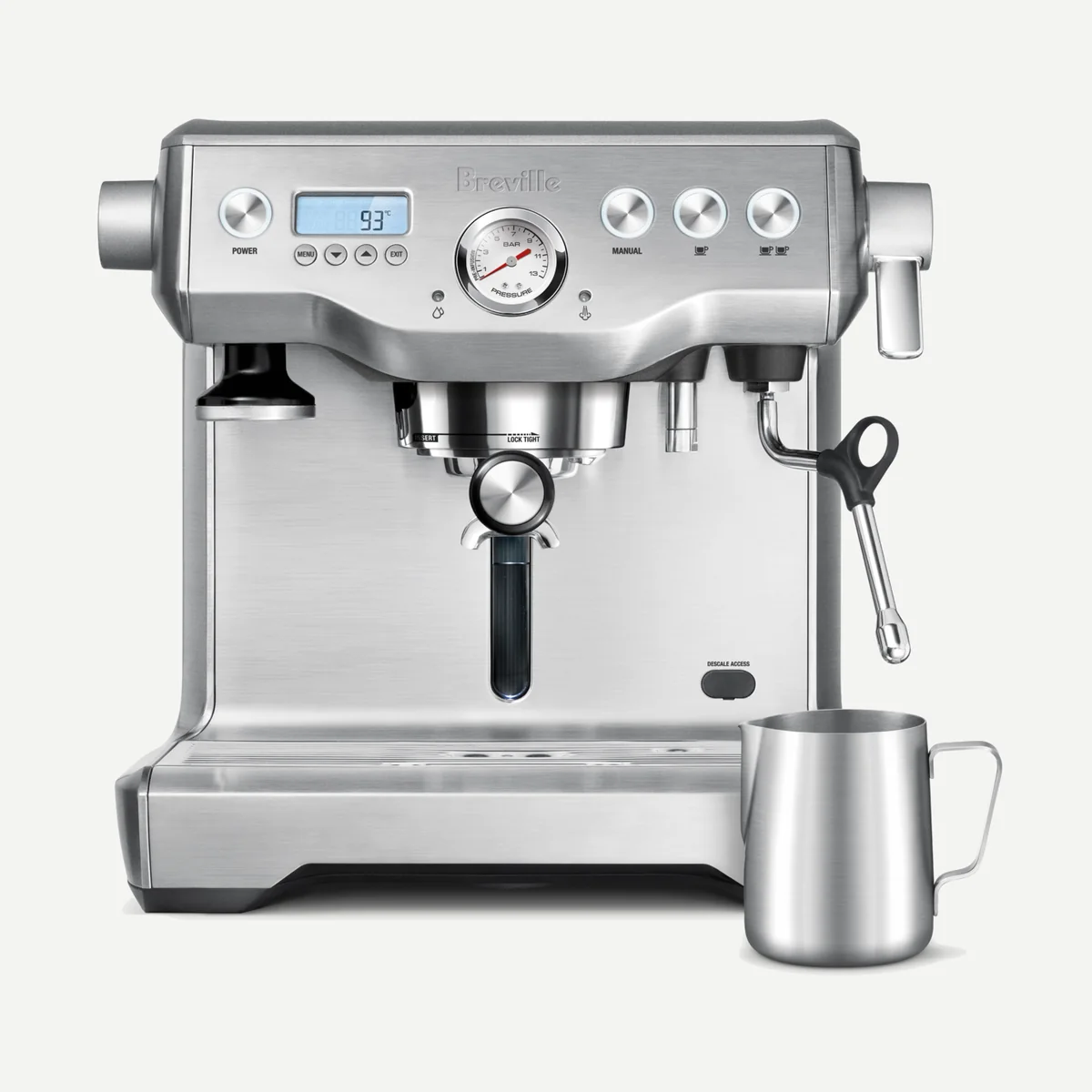
- You make several milk drinks back to back; the Breville Dual Boiler brews and steams at the same time.
- You would rather avoid manual basket, steam wand and descaling upkeep.
Frequently Asked Questions
Is the Breville Barista Pro good for espresso?
Its specification includes PID temperature control, low pressure pre-infusion followed by nine bar extraction, and a 54 mm stainless steel portafilter. Buyers can choose single-wall, dual-wall or available bottomless configurations. These features provide several ways to control preparation, but they do not establish cup quality without measured results or hands-on testing.
How many grind settings does the Breville Barista Pro have?
The integrated grinder has 30 grind settings and dose control. It uses hardened steel precision conical burrs, placing grinding and dosing within the same machine as the espresso hardware. Buyers can adjust the grind before coffee reaches the 54 mm portafilter, then choose between single-wall, dual-wall and available bottomless basket configurations.
Does the Barista Pro make milk drinks automatically?
No. It uses a manual steam wand and does not have an automatic milk frother. The machine can support espresso with manually textured milk, but the buyer remains responsible for steaming. Anyone prioritizing automated milk preparation should note that the Philips 4300 uses an integrated automatic LatteGo system instead.
How fast does the Barista Pro heat up?
The ThermoJet heating system has a listed warm-up time of three seconds. An LCD shot clock is also included for timing extraction. The warm-up figure describes the machine's specification, not a hands-on measurement from this review, so buyers should treat it as the stated system timing rather than an independently verified result.
Does the Barista Pro have a built-in grinder?
Yes. It has an integrated hardened steel precision conical burr grinder with 30 grind settings and dose control. That places grinding and dosing within the same machine as the ThermoJet brewing system. Buyers therefore do not need a separate grinder to use the integrated workflow, though they remain responsible for selecting and adjusting the grind setting.
Is the Barista Pro worth $849.95?
It is worth considering for buyers who will use PID control, 30 grinder settings, dose control, multiple basket options, manual steaming and the LCD shot clock. The Philips 4300 costs $999 and offers more automation, including automatic milk preparation. The better value therefore depends on whether manual control or bean-to-cup convenience matters more.