Wet vs Dry Cappuccino: What the Words Mean
The same cup, the same espresso, a different balance of milk and foam. It is a real difference in the cup, and you can feel it before you taste it.
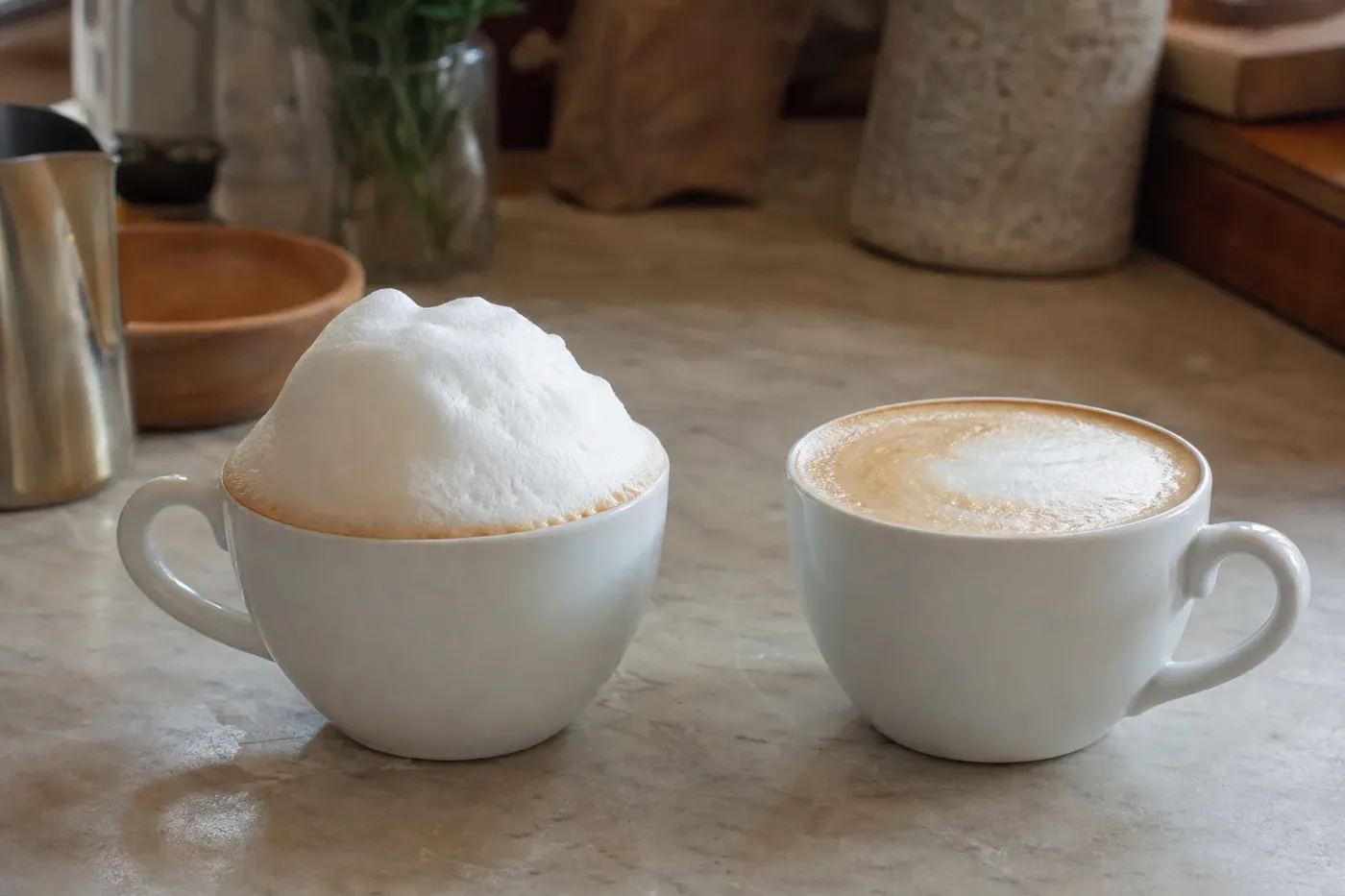
Wet and dry describe how the milk in a cappuccino is split between liquid steamed milk and foam. A wet cappuccino carries more liquid milk and less foam; a dry one carries more foam and less milk. The espresso does not change, and neither does the cup.
Wet vs dry cappuccino: the scale from wettest to driest
- Extra wet. Mostly steamed milk with a thin layer of foam. At this point it is very close to a small latte.
- Wet. More milk than a standard cappuccino, a shallower cap. Creamy and easy to drink.
- Standard. Roughly equal parts espresso, milk and foam, which is the traditional Italian proportion.
- Dry. A deep, stiff cap of foam over a smaller amount of liquid milk.
- Bone dry. Espresso under foam and nothing else, with no liquid milk poured in at all.
Why a dry cappuccino tastes stronger than a wet cappuccino
Foam is mostly air. A spoonful of it holds far less milk than a spoonful of steamed milk, so the drier the cappuccino, the less milk there is to dilute the espresso. A dry cappuccino therefore tastes stronger and more of coffee, even though not a drop of extra coffee went into it.
A wet cappuccino goes the other way: sweeter, rounder and creamier, because warm milk brings its own sweetness and there is more of it. People who find a standard cappuccino too bitter often like it wet without knowing that is what they are ordering.
How to tell a dry cappuccino from a wet cappuccino by weight
Foam weighs very little, so a dry cappuccino feels surprisingly light in the hand, and a bone dry one lighter still. Baristas use this as a check. If you order dry and the cup is heavy, you have been served a standard one.
The foam also insulates. A thick cap slows heat loss from the coffee beneath, so a dry cappuccino tends to stay hot longer, while a wet one cools more like a latte.
Latte art needs a wetter cup than a dry cappuccino
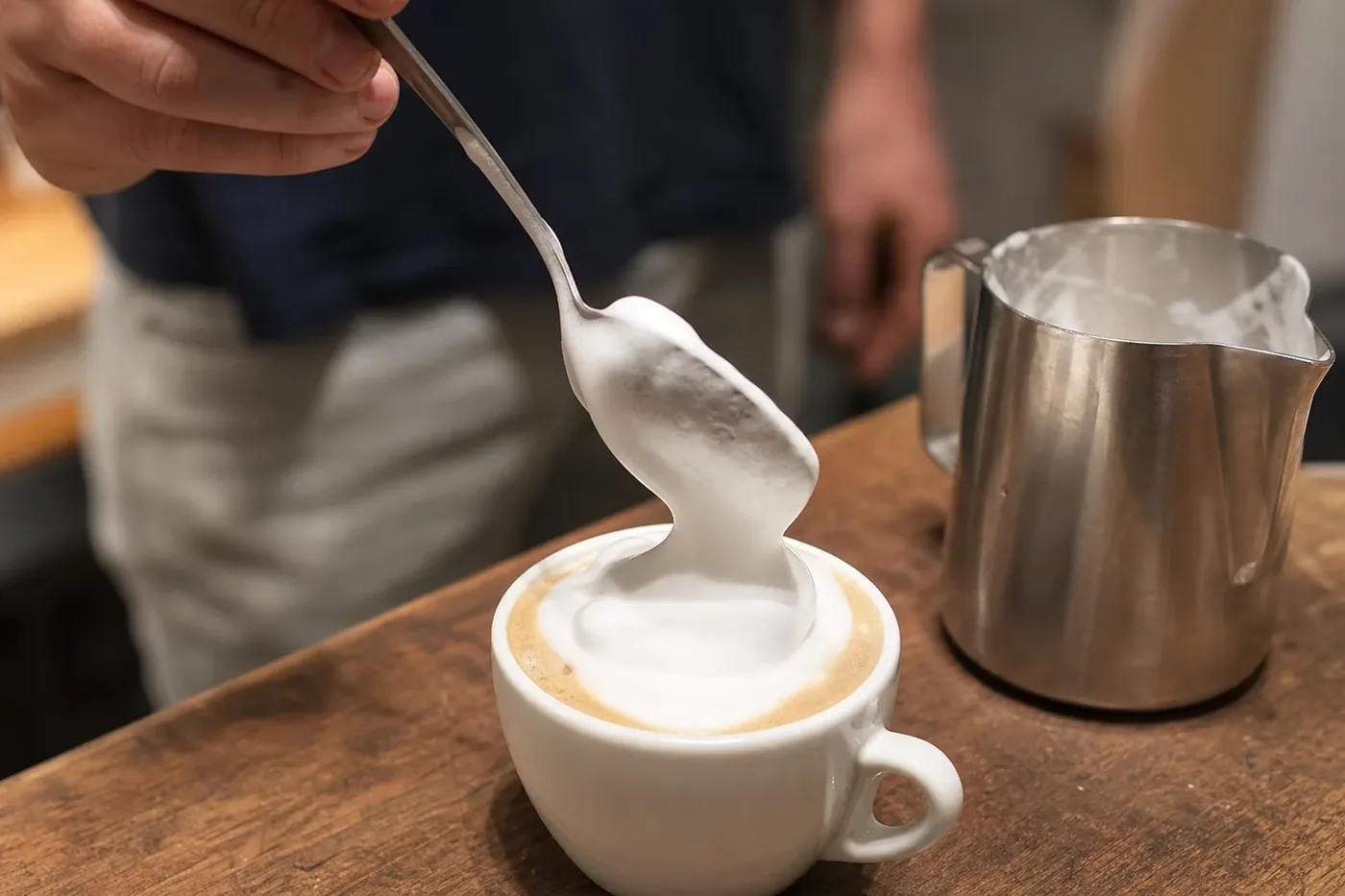
The patterns on top of a flat white or latte are drawn with thin, glossy microfoam that pours. Stiff, dry foam does not flow and cannot hold a design, so a genuinely dry cappuccino arrives with a plain white or cocoa-dusted top. That is the cup doing its job, not a lazy barista. For how a flat white's milk differs from a cappuccino's, see flat white vs cappuccino.
How to order a wet cappuccino or dry cappuccino
The terms were popularised by large chains and are understood almost everywhere, though an independent cafe may look at you a moment before nodding. Saying what you want in plain words always works: more foam and less milk, or the reverse.
If you ask for bone dry, expect a short wait. Building a tall, stable cap of foam takes longer steaming than a normal drink, and the foam is often spooned rather than poured.
How to make a wet cappuccino and a dry cappuccino at home
The difference is almost entirely in how long you stretch the milk, the phase where the steam wand draws air in near the surface.
- For wet, stretch briefly, a second or two, then submerge the wand and heat. Pour steadily so the liquid milk leads.
- For dry, stretch longer until the milk has grown noticeably in the jug, then hold the foam back with a spoon while you pour the milk, and spoon the foam on last.
A steam wand on a home espresso machine makes both. A handheld frother struggles with wet, because it makes foam far more easily than silky milk.
Wet or dry: which cappuccino should you choose?
Order it dry if you want the coffee to lead, drink slowly and like the drink to stay hot. Order it wet if you find cappuccinos bitter, drink quickly, or want something closer to a latte without leaving the smaller cup behind. And if you are not sure, a standard cappuccino from a good cafe is already the balance the drink was designed around, which is a fair place to start before adjusting either way.
Wet vs dry cappuccino FAQ
What is a wet cappuccino?
A cappuccino with more liquid steamed milk and less foam than standard. It tastes creamier and sweeter, and at its wettest is close to a small latte.
What is a dry cappuccino?
A cappuccino with a deep cap of foam and less liquid milk. It tastes stronger and more of coffee because there is less milk diluting the espresso.
What does bone dry cappuccino mean?
Espresso topped with foam only and no liquid milk poured in. It is the lightest and most coffee-forward version.
Why does a dry cappuccino feel lighter?
Foam is mostly air, so a cup full of it weighs much less than one full of steamed milk. Lifting the cup is a quick way to check what you were served.