What is the Bialetti Moka Express?
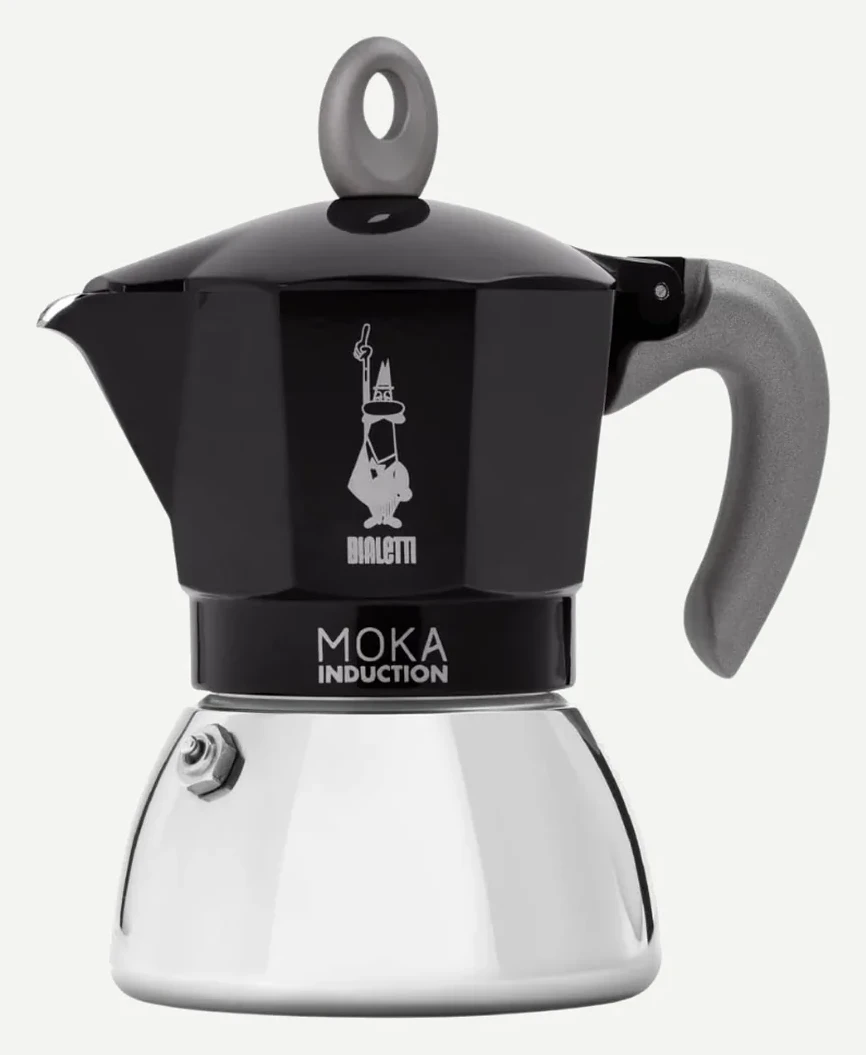
The Bialetti Moka Express is an Italian-made aluminum stovetop moka pot that brews concentrated coffee by forcing pressurized water through a grounds basket.
Bialetti has made this pot in Italy since 1933, and the octagonal aluminum body is one of the most recognized shapes in coffee. The Moka Express is sold in eight sizes, from a single-cup model producing roughly 1.5 to 2 oz up to an eighteen-cup pot producing 27 to 30 oz.
The retail price is $29.99. It ships in one color option, aluminum silver, with a thermoplastic handle. It carries a two-year warranty and is not dishwasher safe. Induction compatibility requires a separately purchased adapter plate.
Bialetti Moka Express brew quality and what it is made of
The Moka Express brews in aluminum, which heats quickly and produces a full-bodied cup, but it is a softer and more reactive metal than stainless steel.
Aluminum transfers heat efficiently, which helps bring the water to brewing temperature without hot spots that can scorch grounds. The result is a concentrated, heavy-bodied cup that is richer than filter coffee but stops short of the pressure levels a pump espresso machine reaches.
The thermoplastic handle is the one piece not made of metal, and its purpose is functional: it stays cool while the body heats up. The two-year warranty covers the standard period for this type of product. Aluminum can absorb coffee oils over time, which some drinkers consider a seasoning benefit.
- Aluminum heats fast and produces a dense, full-bodied brew, though it is more reactive than stainless steel over years of use.
- Eight capacity sizes from 59 ml to 887 ml mean the pot can be matched precisely to how many cups are needed at once.
- Bialetti specifies hand-rinse maintenance only, so buyers who want a fully washable pot should consider this before purchasing.
- The thermoplastic handle is a practical safety feature, keeping the grip cool while the aluminum chamber reaches brewing temperature.
What you can brew with it
The Moka Express brews espresso-style concentrated coffee in sizes from a single 1.5 oz serving up to an eighteen-cup, 30 oz batch.
Eight distinct sizes cover solo drinkers through large households or small gatherings. The smallest produces 1.5 to 2 oz, suitable for one short espresso-style serving, while the largest produces 27 to 30 oz, enough for a group. Sizes in between include two, three, four, six, and nine cup options.
This is a single-brew-style tool. It produces concentrated coffee in the moka pot tradition, which can be diluted with hot water for an americano-style drink or topped with steamed milk, but it does not replicate true espresso pressure and is not designed for filter or cold-brew methods.
- Sizes run from 59 ml to 887 ml, covering solo espresso servings through large-group batches in a single product line.
- The concentrated output works well diluted with hot water or paired with milk, giving drinkers a practical range of drinks from one device.
- This pot is not a substitute for a pump espresso machine; pressure levels are lower and crema production is limited.
- Cold brew and filter-style brewing are outside what this design is built to do.
Living with it, day to day
Day to day, the Moka Express demands a hand-rinse after every use and occasional attention to the gasket and filter basket.
Bialetti specifies rinsing with water as the maintenance method. No dishwasher use is supported, which means every brew cycle ends with a manual rinse of the three main components: the lower chamber, the filter basket, and the upper collector. Soap is generally avoided on aluminum moka pots to preserve the seasoned interior.
The gasket and filter plate are the parts that wear first on any moka pot and will need replacing over time. Bialetti sells replacement gaskets and plates as separate items, which is a practical advantage of owning a pot from a manufacturer with wide distribution. The two-year warranty covers manufacturing defects.
- Rinse all three components with water after every use; soap can strip the interior seasoning that builds up in aluminum over time.
- The rubber gasket and filter plate are wear items; inspect them regularly and replace them when the seal starts to soften or deform.
- Induction users must source and use a separate adapter plate, which adds a step to setup and an extra piece to store.
- No dishwasher cycle is supported, so factor in a daily hand-rinse as a fixed part of the routine before buying.
Bialetti Moka Express vs The London Sip
The Moka Express and the London Sip share the same hob compatibility and warranty length, but differ in body material, size range, and price.
The London Sip is built from stainless steel, which is harder, less reactive, and easier to clean than aluminum. It comes in three colors, black, copper, and silver, against the single aluminum finish of the Moka Express. The London Sip costs $23.99, which is $6 less for buyers who prioritize the steel body.
The Moka Express offers eight size options from one cup to eighteen, against three sizes on the London Sip, topping out at ten cups and 562 ml. For households that brew for large groups, or want precise sizing from one to eighteen cups, the wider range on the Moka Express is the practical advantage.
- The London Sip costs $6 less and uses stainless steel, which resists corrosion and coffee-oil absorption better than aluminum.
- The Moka Express offers eight sizes up to 18 cups; the London Sip tops out at 10 cups across three size options only.
- Both require hand-washing, carry a two-year warranty, and need an adapter plate for induction, so neither wins on day-to-day upkeep.
- The Moka Express is made in Italy, which is the country the design comes from and a term Bialetti puts its name to.
Is the Bialetti Moka Express worth it?
At $29.99, the Moka Express is a well-priced entry into stovetop brewing, but whether it beats the competition depends on what material and size range matter most to you.
The eight-size range is a genuine advantage, and $29.99 for a pot made in Italy with a long replacement-parts ecosystem is a reasonable ask. Buyers who want stainless steel and are happy with fewer size choices can spend $6 less on the London Sip and get a harder-wearing body.
For most buyers who already own an induction hob and factor in the adapter plate cost, or who want a specific small or large size that the London Sip does not offer, the extra $6 is easy to justify. For buyers who want the simplest possible maintenance and a steel body, the London Sip undercuts it on both.
Who should buy it (and who should not)
The Moka Express suits buyers who want a wide size range and an established replacement-parts network, and is less suited to those who prioritize low-maintenance materials.
Buyers who brew for varying group sizes on different days will get the most from the eight-size lineup. The one-cup model down to the eighteen-cup pot covers a span that no three-size rival can match, and replacement gaskets and filter plates are easy to find.
Buyers who want to avoid any daily hand-rinsing ritual, or who prefer stainless steel for longevity, will find the London Sip a better fit. Induction households should also budget for an adapter plate, which adds to the real cost.
Buy it if
- You brew for different numbers of people on different days and want a size option for each scenario.
- You want a stovetop moka pot with a wide replacement-parts network and long manufacturer history.
- You already have a gas or electric hob and want induction compatibility to remain an option with an adapter plate.
Skip it if
- You want a stainless steel body that resists coffee-oil absorption and is easier to maintain over years of use.
- You brew for no more than ten cups at a time and would rather spend $6 less on a steel alternative.
- You want to put your moka pot in the dishwasher, even occasionally, as no stovetop pot in this category supports it.
Frequently Asked Questions
Is the Bialetti Moka Express good for espresso?
It produces a concentrated, full-bodied coffee in the moka pot style, which is richer than filter coffee but brewed at lower pressure than a pump espresso machine. The result is closer to espresso than anything a drip machine makes, but it will not produce the same crema or extraction as a dedicated espresso machine. It is a practical middle ground for most home drinkers.
Is the Bialetti Moka Express dishwasher safe?
No. Bialetti specifies hand-rinsing with water as the correct cleaning method. The aluminum body can degrade and discolor in a dishwasher, and repeated machine washing would strip any seasoning that builds up inside the pot over time. All three components, the lower chamber, the filter basket, and the upper collector, should be rinsed by hand after every use.
What sizes does the Moka Express come in?
It is available in eight sizes: one, two, three, four, six, nine, twelve, and eighteen cups. In volume, that runs from 59 ml for the one-cup model up to 887 ml for the eighteen-cup version. The cup measurements refer to small espresso-style servings, so the six-cup model produces 8 to 9 oz total, not six standard US mugs.
Does the Moka Express work on induction?
Yes, but only with a separately purchased adapter plate. Aluminum is not inherently induction-compatible, so the pot needs a steel disk placed between the base and the induction surface to work. Gas and electric hobs work without any adapter. Buyers on induction should factor the adapter plate into the total purchase cost.
How long does the Moka Express take to heat up?
A specific heat-up time is not something we have a published figure for. Brew time on a stovetop moka pot depends on the hob type, the heat setting used, and the size of the pot. Aluminum conducts heat quickly relative to other materials, which generally shortens the time from cold water to a finished brew compared with thicker or less conductive bodies.
Where is the Moka Express made?
The Moka Express is manufactured in Italy. Bialetti has produced it there since 1933, and Italy remains the stated country of manufacture. That is worth knowing on a category where most of the field is made in China and sold under a European-sounding name. The aluminum body and thermoplastic handle are assembled as a complete unit before shipping.