How to Use a Moka Pot Without Burning the Coffee
Almost every complaint about moka pots is the same mistake made in the same place. Start with hot water and take it off early, and the pot stops tasting scorched.
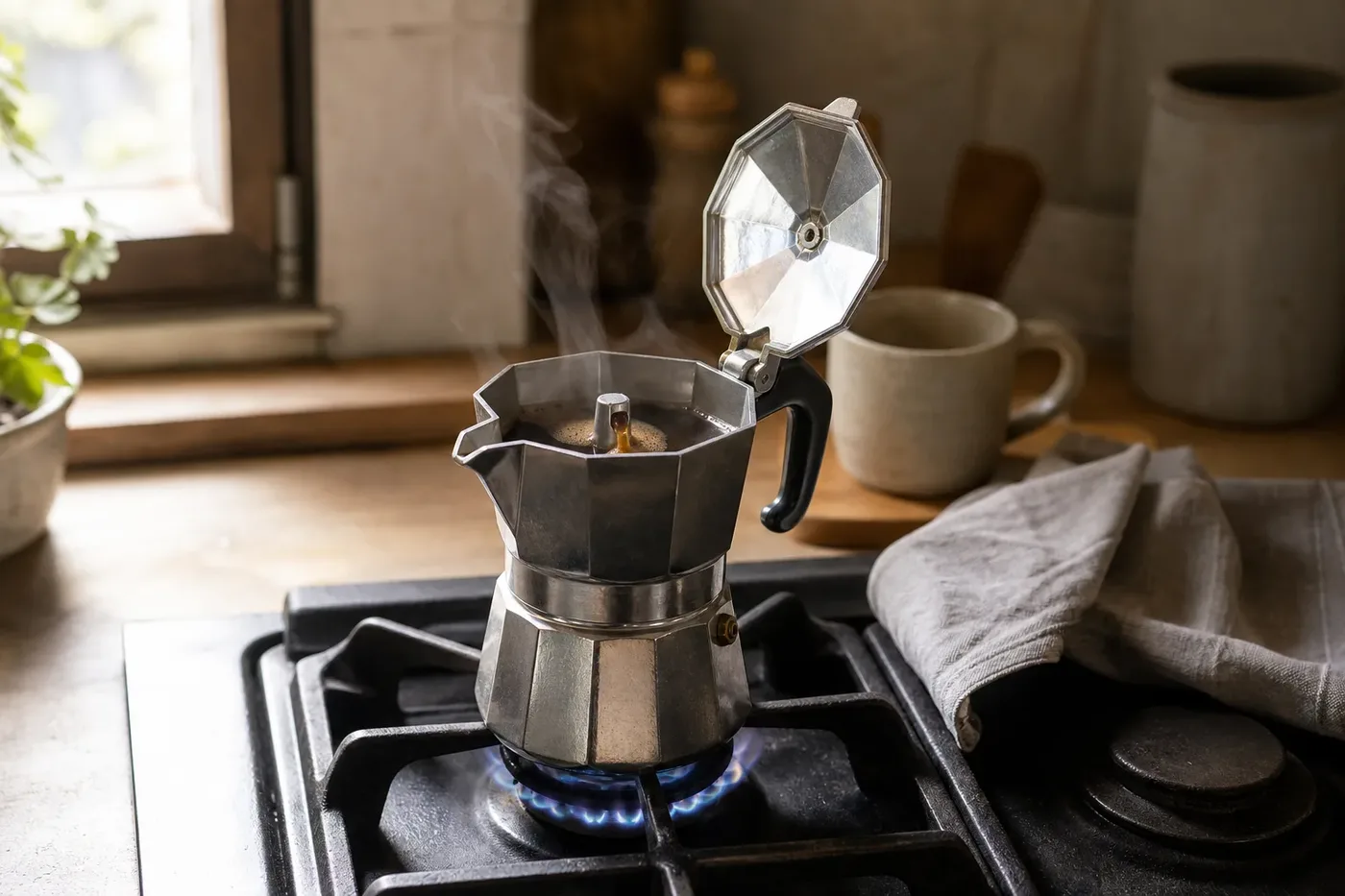
A moka pot makes a strong, syrupy coffee that sits between filter and espresso, and it has been doing so unchanged since 1933. Most people who say they dislike it are describing a burnt cup, and a burnt cup comes from one of three specific mistakes rather than from the pot.
Why to start a moka pot with hot water
This is the single change that fixes most bad moka coffee, and almost nobody does it.
The pot works by heating water in the bottom chamber until steam pressure pushes it up through the grounds. Start with cold water and the whole thing, including the coffee basket sitting directly above the heat, spends several minutes warming up. The grounds are being cooked long before any water reaches them, and that scorched taste is the result.
Fill the base with water already off the boil and the brew starts almost immediately. The coffee is in contact with heat for a fraction of the time. Use a towel to screw it together, because it will be too hot to hold.
How much water to put in a moka pot
There is a small safety valve on the side of the base. Water goes up to just below it, never over.
That valve is a pressure release, and covering it means it cannot do its job. It is also the design's oldest safety feature and the reason a pot that is maintained is not dangerous.
Moka pot grind size and why you must not tamp
Moka grind is fine, but noticeably coarser than espresso. A moka pot builds only one to two bar of pressure against an espresso machine's nine, so an espresso grind chokes it: the water cannot get through, pressure climbs, and it forces steam out of the safety valve instead of coffee out of the spout.
Fill the basket level and sweep the excess off with a finger. Do not tamp. Tamping is for espresso machines that have the pressure to push through a compressed puck. In a moka pot it does exactly what too fine a grind does, and for the same reason.
If your grinder cannot hold a consistent size at this fineness, that will show here more than in almost any other method. Our grinder guide covers why.
What heat to use on a moka pot
High heat does not make it faster in any way that helps. It makes the water arrive violently and sputter, which whips air through the coffee and tastes harsh. Medium is right, and on gas the flame should not lick up the sides of the base.
Leave the lid open so you can see the spout. You are waiting for a specific moment and you cannot judge it by sound alone.
When to take a moka pot off the heat
Coffee comes up the spout in a steady dark stream. Keep watching. It will lighten in colour, turn blonde and start to bubble and hiss.
That hiss is the end of the water and the start of steam being forced through the coffee. Everything that comes out after it is bitter, and it is where the burnt flavour people associate with moka pots actually comes from.
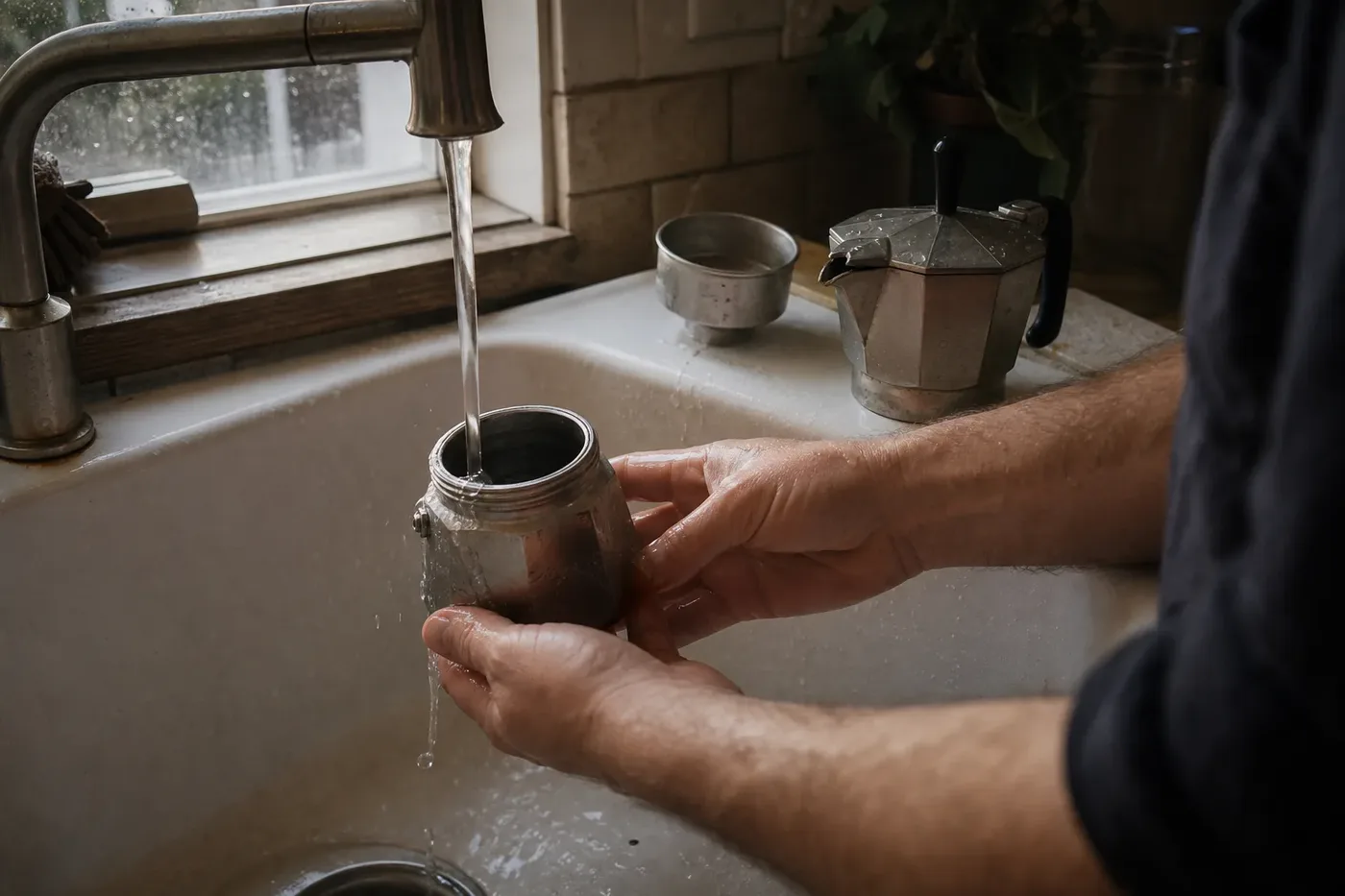
Take the pot off the heat the moment it starts to gurgle, and run the base under a cold tap for a couple of seconds to stop it dead. Pour immediately: coffee left sitting on hot metal keeps cooking.
How to clean a moka pot (no soap)
Rinse with hot water and dry it. Aluminium pots build up a thin layer of coffee oil that seasons the pot, and detergent strips it off, which is why a scrubbed pot tastes metallic for the next few brews.
What does need attention is the rubber gasket and the filter plate. The gasket hardens and cracks with heat and should be replaced roughly once a year, more if you brew daily. A pot that has started leaking steam around the join needs a gasket, not replacing. Our accessories section carries replacements.
Moka pot types: Moka Express vs Venus
The Moka Express is the original design in aluminium and everything above applies to it directly. The Venus is the same idea in stainless steel, which will not season the way aluminium does but also will not react with anything, and it works on induction.
The Brikka adds a weighted valve that holds pressure back until it is higher, producing a layer of crema the standard pot does not make. It is less forgiving about grind for the same reason.
If your hob is induction, check before buying: aluminium will not work on it without a steel base plate, which is why the Moka Induction exists as a separate model. Our rating guide scores hob compatibility directly, because a pot that does not work on your cooker is not a compromise, it is a paperweight.
Why moka pot coffee tastes bad and how to fix it
Bitter and burnt: you went past the gurgle, or started with cold water, or the heat was too high.
Sour and weak: grind finer, or you took it off too early.
Sputtering and violent: heat is too high, or the grind is too fine and pressure is building behind the puck.
Metallic: you washed it with soap, or the gasket needs replacing.
Moka pot FAQ
Should you use hot or cold water in a moka pot?
Hot, just off the boil. Starting cold means the coffee basket sits over direct heat for minutes while the water warms, cooking the grounds before any water reaches them. That is where the scorched taste comes from. Use a towel to assemble it, because it will be too hot to hold.
Should you tamp coffee in a moka pot?
No. Fill the basket level and sweep off the excess with a finger. Tamping is for espresso machines with nine bar of pressure behind them; a moka pot makes one to two, so a compressed puck chokes it and forces steam out of the safety valve instead of coffee out of the spout.
When do you take a moka pot off the heat?
The moment the stream turns blonde and starts to gurgle and hiss. That sound is the water running out and steam being pushed through the coffee, and everything after it is bitter. Take it off and run the base under a cold tap for a second or two to stop the brew dead.
Why does my moka pot coffee taste burnt?
Almost always one of three things: you started with cold water, the heat was too high, or you left it on past the gurgle. All three cook the grounds rather than brewing them. Hot water, medium heat, off at the gurgle.
Can you wash a moka pot with soap?
Do not. Rinse with hot water and dry it. Aluminium pots build up a thin coffee oil layer that seasons them, and detergent strips it, which is why a scrubbed pot tastes metallic for a few brews after. The gasket does need replacing about once a year.
What grind size for a moka pot?
Fine, but clearly coarser than espresso. The pot builds one to two bar against an espresso machine's nine, so a true espresso grind will not let water through. If it sputters violently or forces steam out of the valve, your grind is too fine.
Reviewed on this site
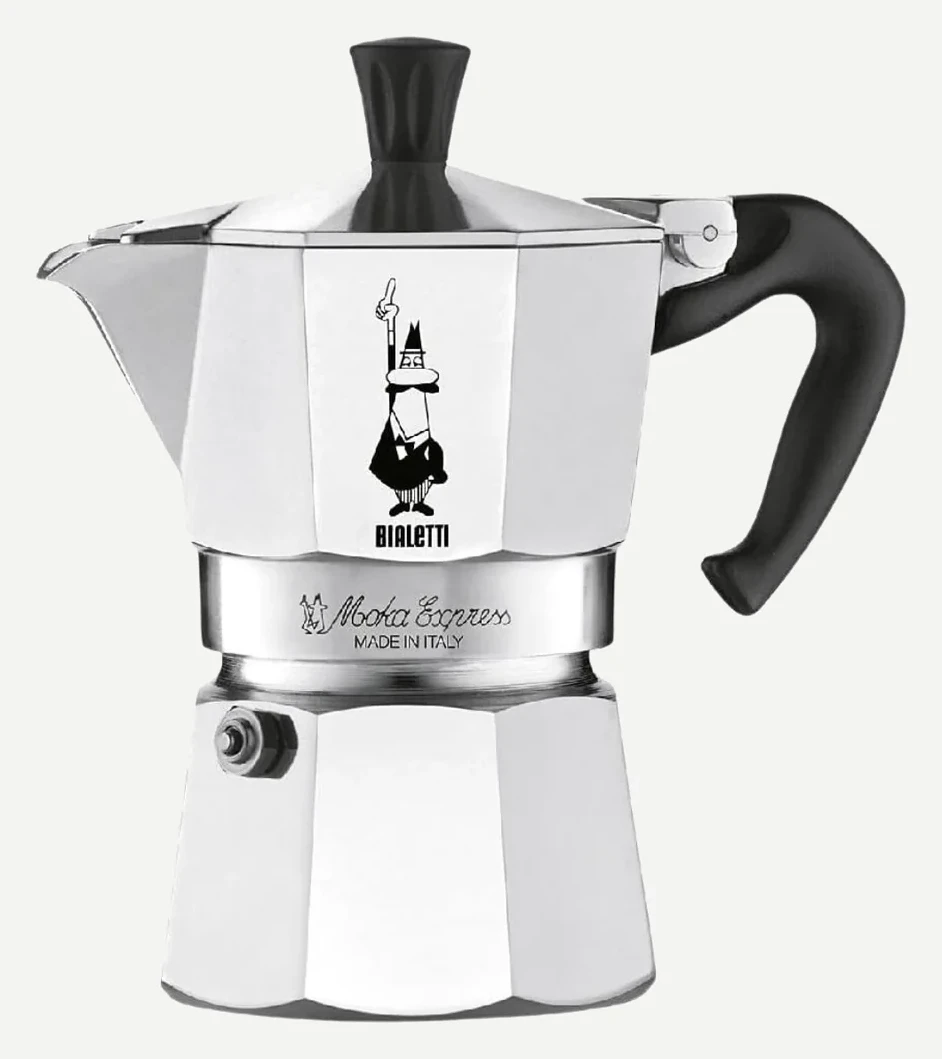 Bialetti Moka ExpressThe pot to buy if you are only ever going to buy one
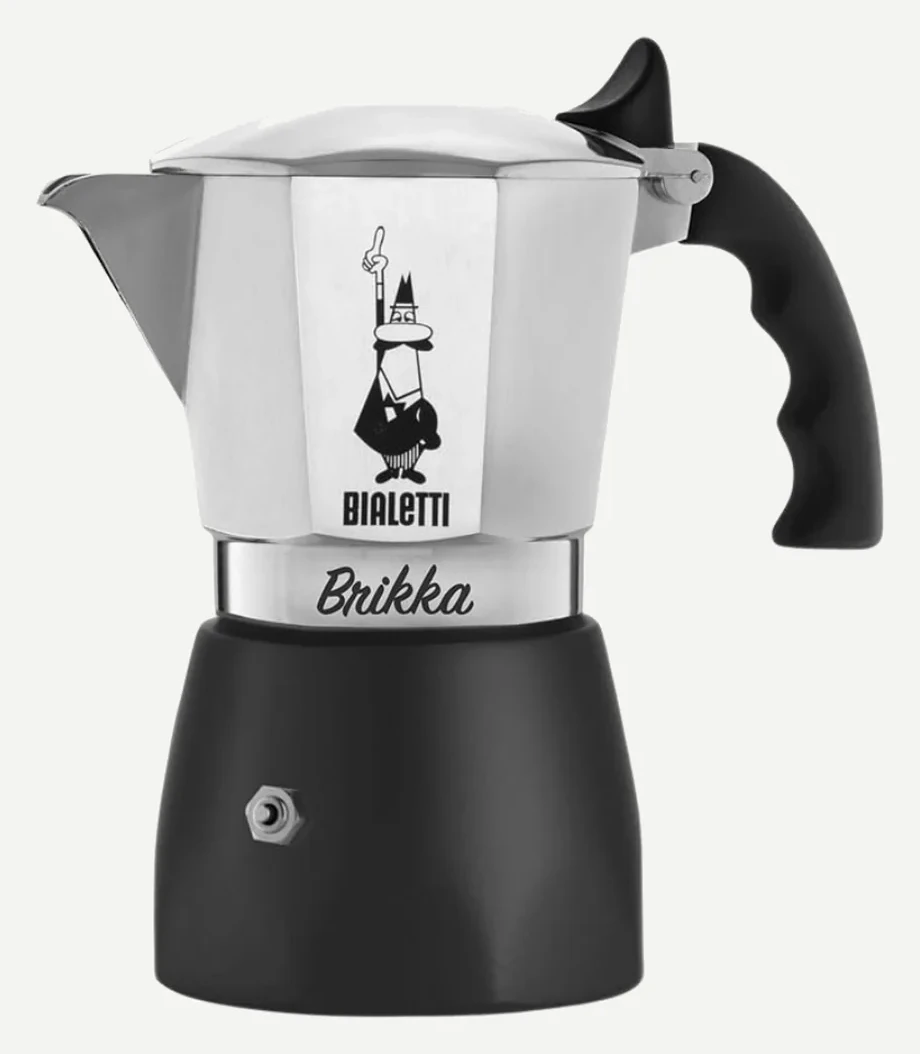 Bialetti Brikka Moka Pot 2 CupThe moka drinker who misses crema and has a gas or electric hob
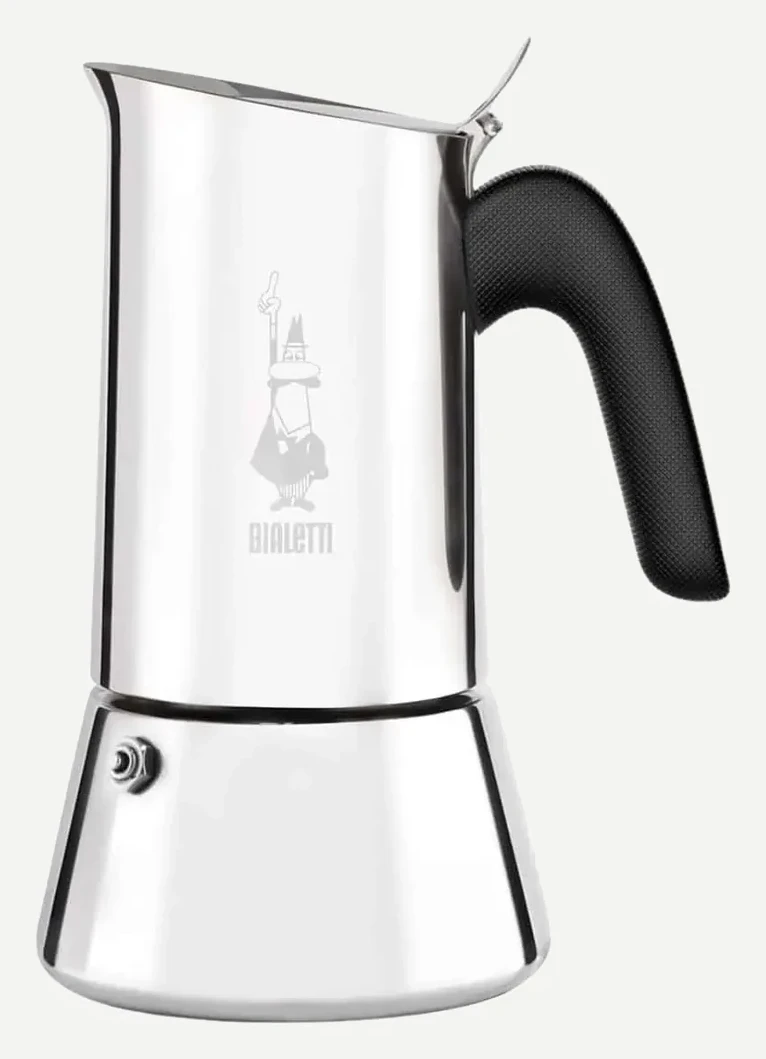 Bialetti Venus Moka PotThe Bialetti for somebody who would rather not brew in aluminium
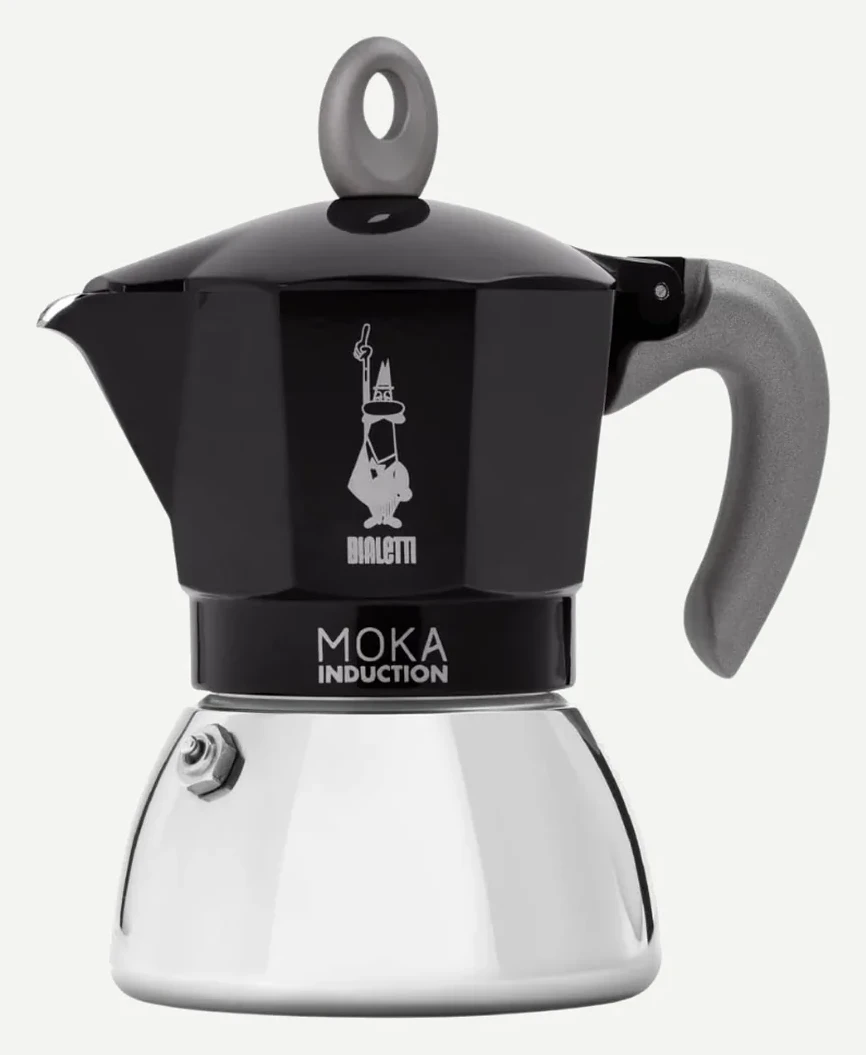 Bialetti Moka Induction 6 CupAn induction kitchen that wants the actual Bialetti rather than a copy
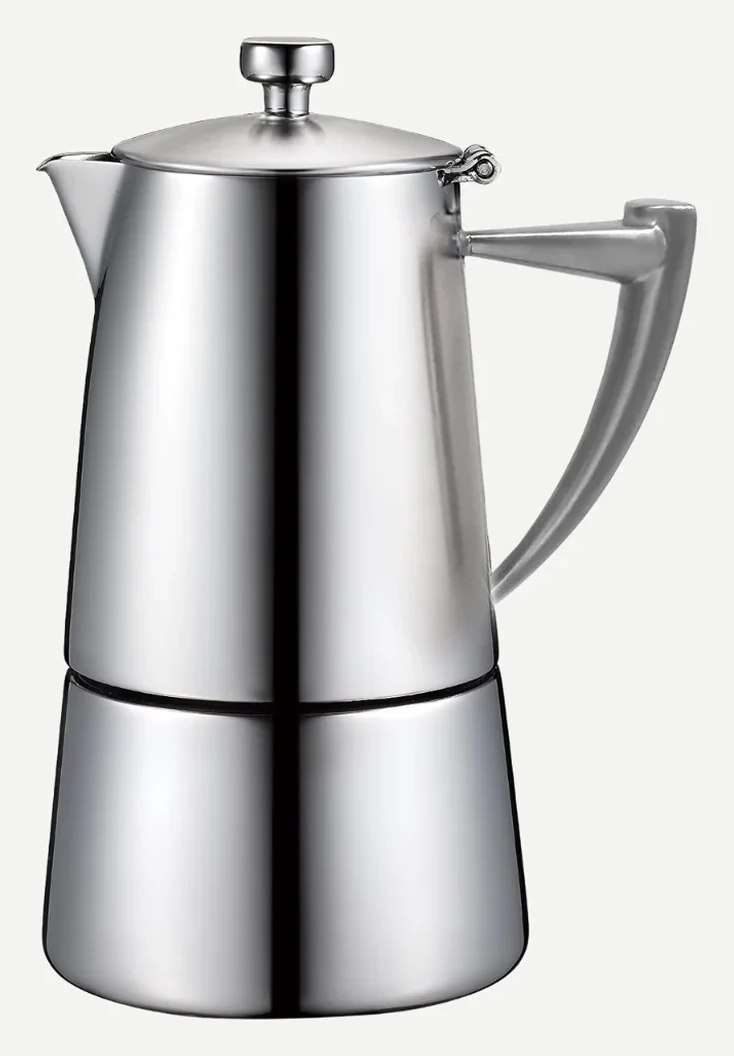 Cuisinox Roma Stainless Moka Pot 4 CupAnybody who wants a moka pot that will outlive several aluminium ones