What is Cartograph instant coffee?
Single-serve sticks that are just coffee, which is rarer in this format than it should be.
Cartograph publishes 50 single-serve sticks per pack sold as a pack of two, freeze-dried powder, a medium roast sold as instant espresso, organic and ethically sourced with no additives, and freshness maintained by the individual packaging. The maker names camping, office and commuting as its uses.
No additives is the claim worth checking a stick format on
Most single-serve coffee sticks are 3-in-1s, and the packet does not always shout about it.
A Kopiko 3 in 1 sachet or a Nescafe Gold Latte stick contains creamer and sugar alongside the coffee, and you cannot separate them. That is fine when it is what you want and a nuisance when it is not, and the stick format is dominated by them because sweetened powders sell.
Cartograph states no additives. That means it behaves like a jar of instant in stick form: you decide the milk and the sugar, or have it black. For anybody who wants portion control without a sweetened drink, that is the whole reason to buy it.
Why individual sticks keep coffee fresher
Instant coffee's enemy is moisture, and a sealed stick has almost none of it.
Freeze-dried coffee is hygroscopic: it pulls water out of the air, and once it does the crystals clump and the flavour flattens. An opened jar is exposed every time you use it, which is why the last cups from a jar are worse than the first.
A single-serve stick is opened once and used entirely. The other forty-nine are still sealed. That is a genuine quality argument for the format and it is why sticks tend to taste better than the bottom of a jar, price aside.
The cost is packaging, both in money and in waste. Fifty sachets is fifty pieces of foil, which is the honest environmental trade against a 14oz bag.
"Instant espresso" here means strength, not espresso
There is no such thing as instant espresso in the technical sense, and it is worth saying.
Espresso is defined by the method: about nine bars of pressure through a compacted bed of finely ground coffee. Nothing dissolved in a cup can reproduce that, and no instant powder has crema in the real sense.
What "instant espresso" signals on a listing is a darker, more concentrated powder meant to be made in a small volume of water, or used in cooking. Cartograph pairs it with a medium roast, which suggests a drink rather than a baking ingredient like the Ferrara 2oz instant espresso tin.
Cartograph vs Waka Colombian singles
Two organic-leaning single-serve formats, and the difference is sourcing detail.
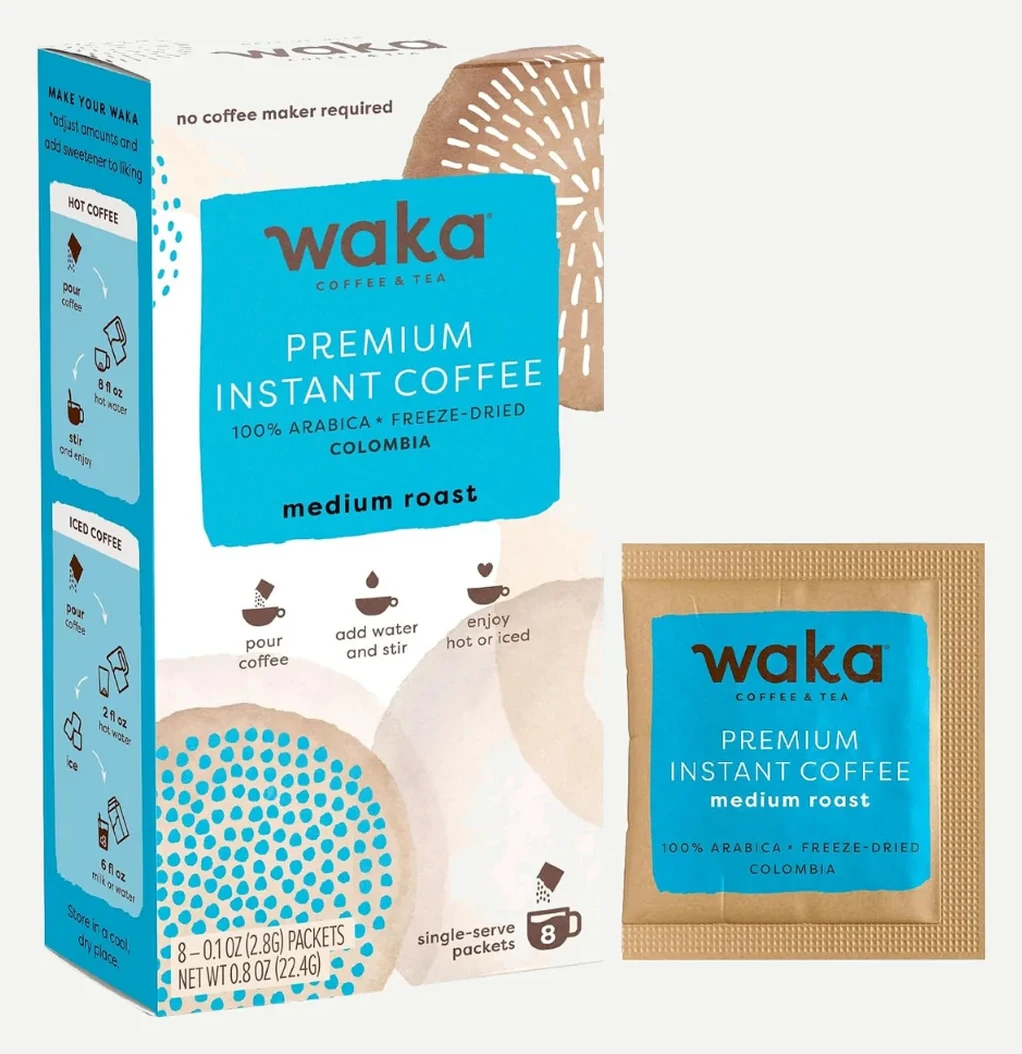
The Waka Colombian singles name a country, which Cartograph does not.
Cartograph answers with organic certification, a much larger count at 50 per pack sold in twos, and an explicit no-additives statement. If origin matters to you, Waka. If certification and cost per stick matter, Cartograph.
Is Cartograph worth it?
Worth it as the plain organic stick, which is a small field.
Fifty sticks twice over is a lot of coffee for a stick format, and the combination of organic, freeze-dried and no additives is genuinely uncommon.
Cartograph's own site describes subtle notes of chocolate and cinnamon, but it publishes no origin country, no roaster, no caffeine figure and no price per serving. "Ethically sourced" is stated without a certification named for it, which is a claim rather than a credential, and it carries 327 reviews.
Who should buy it (and who should not)
Buy it for a rucksack, a desk or a hotel, when you take coffee black.
It suits camping, commuting, an office drawer and anybody who wants portioned coffee without sugar and creamer in it.
Do not buy it if you want the cheapest cup, where a bag beats sticks every time. Do not buy it for origin character, since none is published. And do not expect espresso, because no instant powder is espresso.
Frequently Asked Questions
Do Cartograph sticks have sugar or creamer in them?
No. The maker states no additives, which most single-serve coffee sticks cannot say.
How many sticks do you get?
50 per pack, sold as a pack of two.
Is instant espresso really espresso?
No. Espresso is defined by pressure through a coffee bed. On a label it signals a darker, more concentrated powder.
Why sticks instead of a jar?
Instant coffee absorbs moisture from the air once opened. A sealed stick stays fresh until the moment you use it.
Where is it from?
Not published. Cartograph states organic and ethically sourced without naming a country, a roaster or a certifying body for the sourcing claim.