What are Nescafe Gold Latte sachets?
A milky coffee-shop-style drink built from a powder.
Nescafe publishes instant coffee with whitener and sugar, no hydrogenated vegetable oil, and suitability for vegetarians. Add hot water and it makes a latte-style cup.
What 3 in 1 means, and why it is a different product
Coffee, whitener and sugar in one sachet, pre-dosed, made with water alone.
A 3 in 1 is not instant coffee that happens to come with extras. It is a complete drink powder in which coffee is one of three ingredients and usually not the largest by weight. Add hot water and you have a white, sweet cup; there is nothing to add and nothing to decide.
That is why Amazon files these under Coffee Substitutes rather than coffee, and why comparing one to a jar of freeze-dried misses the point of both. A freeze-dried instant jar is coffee you make into a drink. This is the drink.
The format exists because of where it is drunk: offices, building sites, trains, hotel rooms, anywhere with a kettle and nothing else. In much of Asia, the Middle East and Eastern Europe it is the default way coffee is consumed at home, not a compromise.
Our scoring reflects the trade honestly. Sachets rank highest on packaging, because each dose is sealed until use. The whitener and sugar are recorded as additives, and no process, origin or certification is published for any of these, so they score below the specialty jars on everything the site can measure.
Whitener, hydrogenated oil, and why the claim is on the packet
Coffee whitener is not milk powder, and what it is made of has changed.
Whitener is a manufactured creamer, typically glucose syrup solids with a vegetable fat and an emulsifier. It is used instead of milk powder because it dissolves instantly in water at any temperature and does not go off, which milk powder does both worse.
The fat used to be partially hydrogenated vegetable oil, which is where industrial trans fats came from. Trans fats have since been restricted or banned across much of the world, and reformulation was compulsory rather than optional.
So Nescafe publishing "no hydrogenated vegetable oil" is a real fact about the current formulation and also a claim that most competitors could now make. It is worth knowing what it means rather than reading it as a health feature.
Is it worth it?
Worth it if a latte from a kettle is the thing you want.
It does something no jar of instant does: makes a milky drink with no milk in the building. For an office, a hotel room or a desk that is genuinely useful.
No servings count, no process, no origin and no sugar content are published, and it is the least documented of the three Nescafe sachets we hold.
Who should buy it (and who should not)
Buy it if you want milky coffee and have no milk.
It suits travel, offices and anybody who cannot keep fresh milk. Vegetarian suitability is published, which whitener-based products can offer where dairy ones cannot.
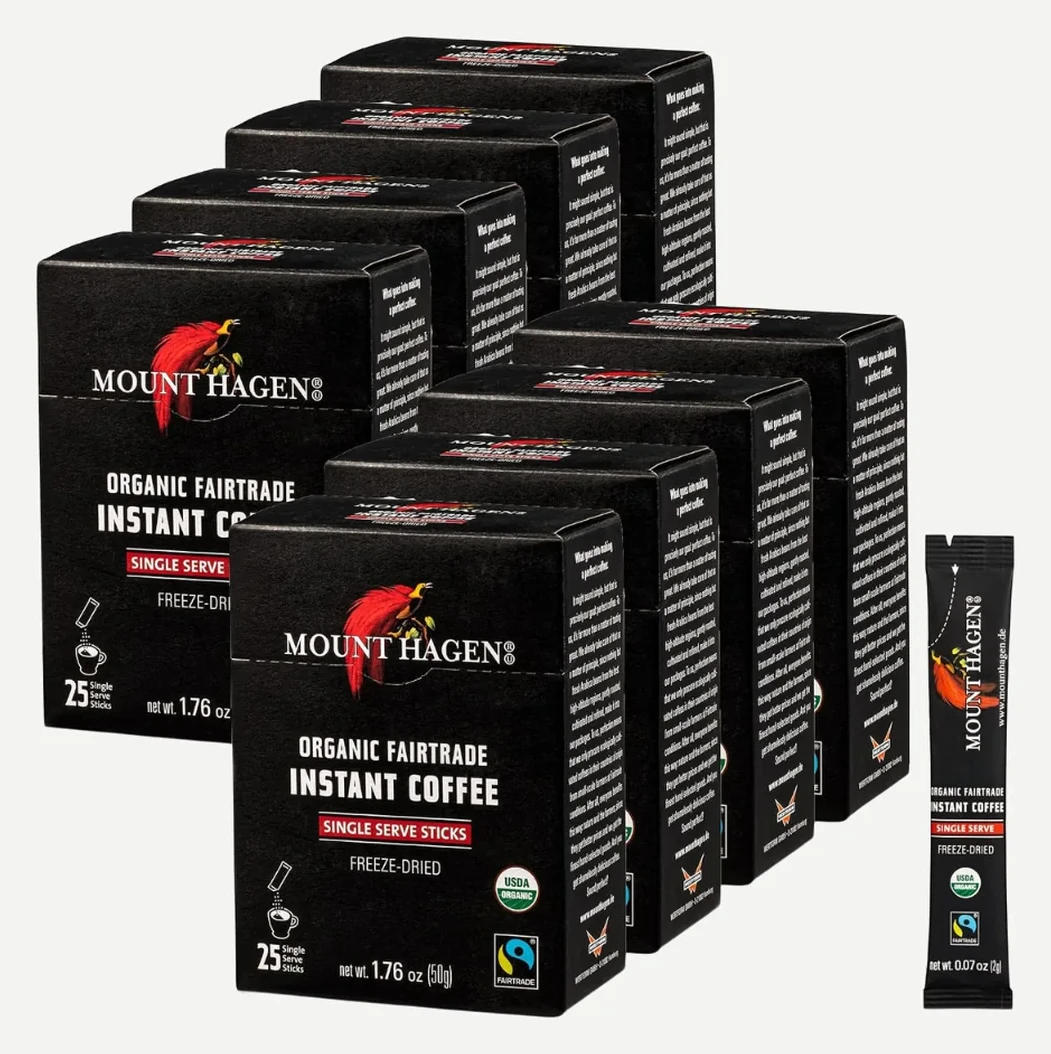
Do not buy it if you have milk and a kettle, where a good instant stick, such as Mount Hagen's organic sticks, and real milk makes a better drink for similar money. And it is not dairy-free by default, so check the pack if that is the requirement.
Frequently Asked Questions
Is coffee whitener the same as milk powder?
No. Whitener is a manufactured creamer, usually glucose syrup solids with vegetable fat and an emulsifier. It dissolves better than milk powder and keeps far longer.
What does "no hydrogenated vegetable oil" mean?
Partially hydrogenated oils were the source of industrial trans fats and have been restricted across much of the world. The claim describes the current formulation rather than a special feature.
Is it dairy free?
Not stated. It is published as suitable for vegetarians, which is a different claim. Check the pack if dairy is the concern.
How is it different from a 3 in 1?
It is the same idea aimed at a latte-style drink rather than a plain white coffee.