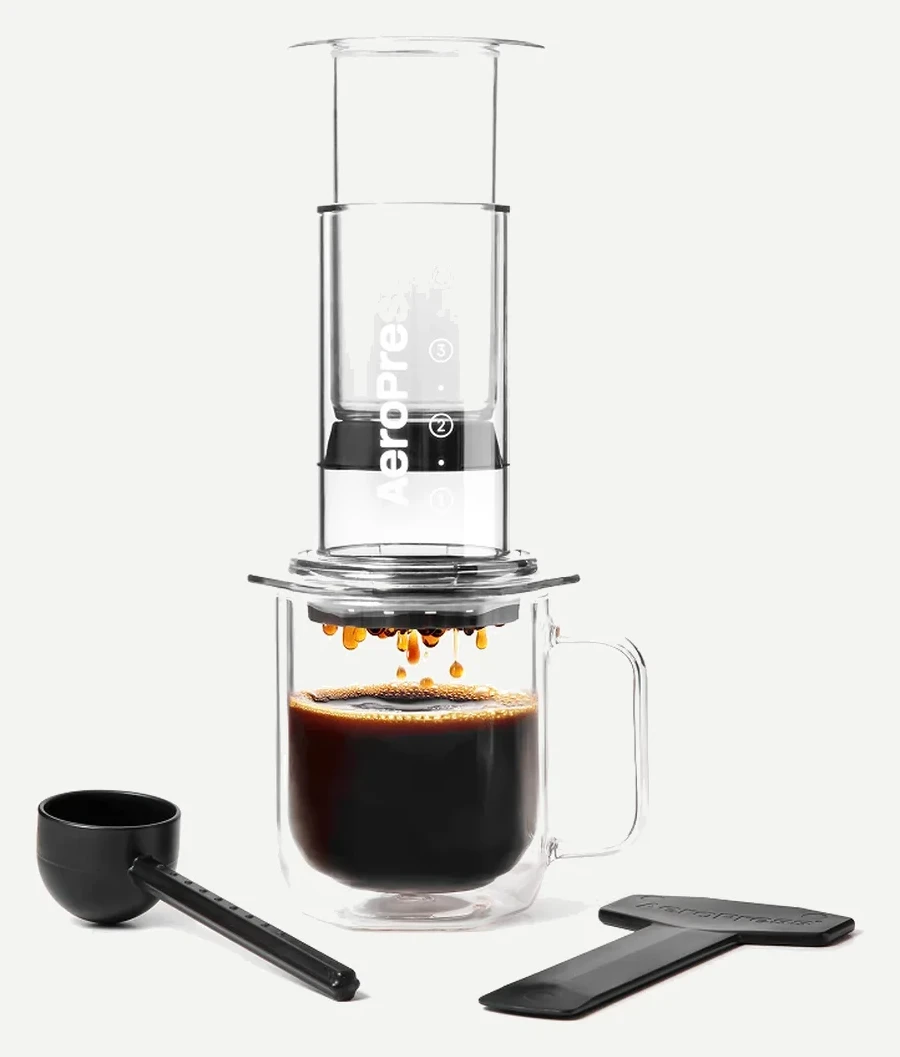
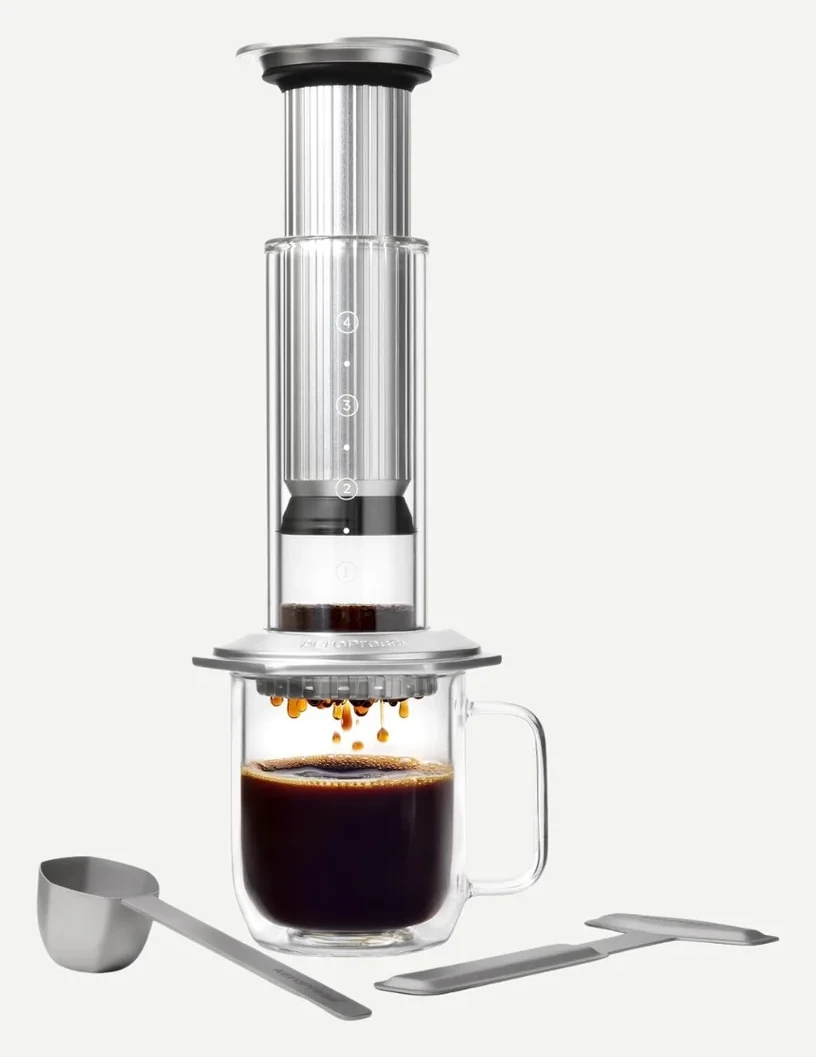
An AeroPress is a tube, a plunger and a paper filter. Coffee and hot water steep together in the
chamber for a minute or two, then you press the plunger down and push the brew through the filter into
your cup. The result has some of the body of a French press and most of the clarity of a pour over,
without the grit, and the whole thing rinses clean in seconds. It sits in our
immersion brewer category because the coffee steeps rather than
drips.
That matters for how you shop. Every press here brews the same way, takes the same recipes and
produces the same kind of cup, so the range is organised by what surrounds the brewer: how big it is,
what it is made of, and whether it travels. Price climbs with materials and accessories, not with a
better extraction, and the rest of this guide is built around that.
How the AeroPress range is organised
The standard size: Original and Clear
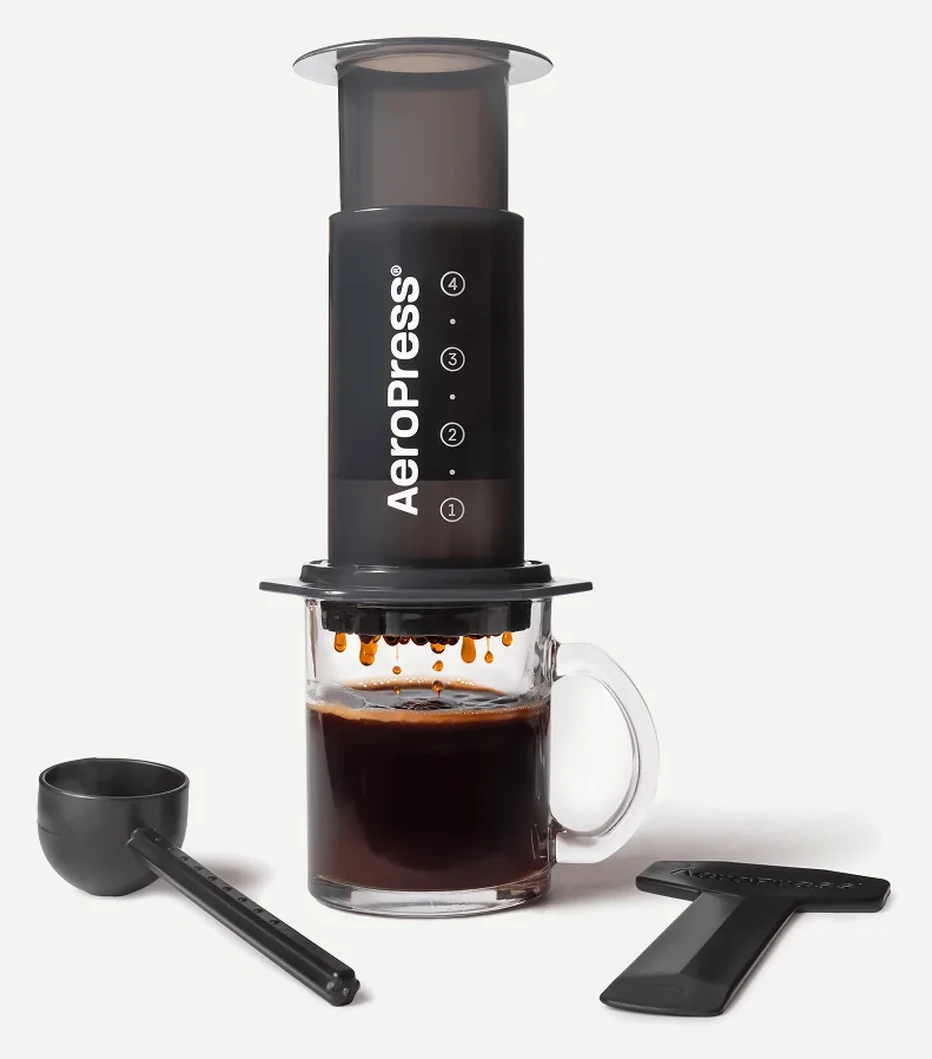
The AeroPress Original is the design the rest of the range is built on. It is polypropylene, holds 296 ml
(one to two cups), stands 133 by 107 mm and has four parts, all of which are sold as spares. The published
brew takes about 120 seconds, and the spent puck pushes out as a dry disc that goes straight in the bin,
which is the main reason people keep using one every morning. There is no travel case and it is
dishwasher safe on the top rack only, but for a first press there is no reason to look further.
The AeroPress Clear is the same brewer rebuilt in Tritan, in clear or six colors. The capacity, the
footprint, the filters and the method are identical, so nothing changes in the cup. What you get is a
body you can see through, which is useful when you are learning: you can watch the water level and see
when the puck compresses. If you cannot
decide between the two, AeroPress Clear vs
Original sets them side by side, and the honest summary is that you are paying for visibility and
color.
Bigger: AeroPress Original XL
The one real limit of a standard AeroPress is that it makes one generous mug or two small cups. The
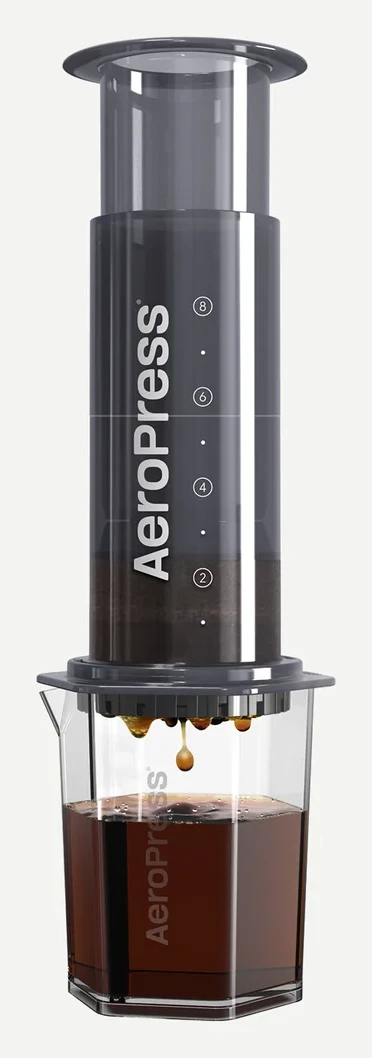
AeroPress Original XL answers it directly with a 591 ml chamber, rated for two to four cups, and a 20 oz
Tritan carafe to press into, because a brew that size will not fit in a mug. The method and the two
minute brew are unchanged. The body is polypropylene, top rack dishwasher safe, and it stands 193 by
152 mm, so it needs more cupboard space than the others. It uses XL paper filters, which are not interchangeable with the Original's.
The decision is close to arithmetic. If you only ever make one cup, the Original does the job in a
smaller package. If two people want coffee at once, the XL saves you brewing twice, as
AeroPress Original vs Original XL
spells out.
Travel: AeroPress Go and Go Plus
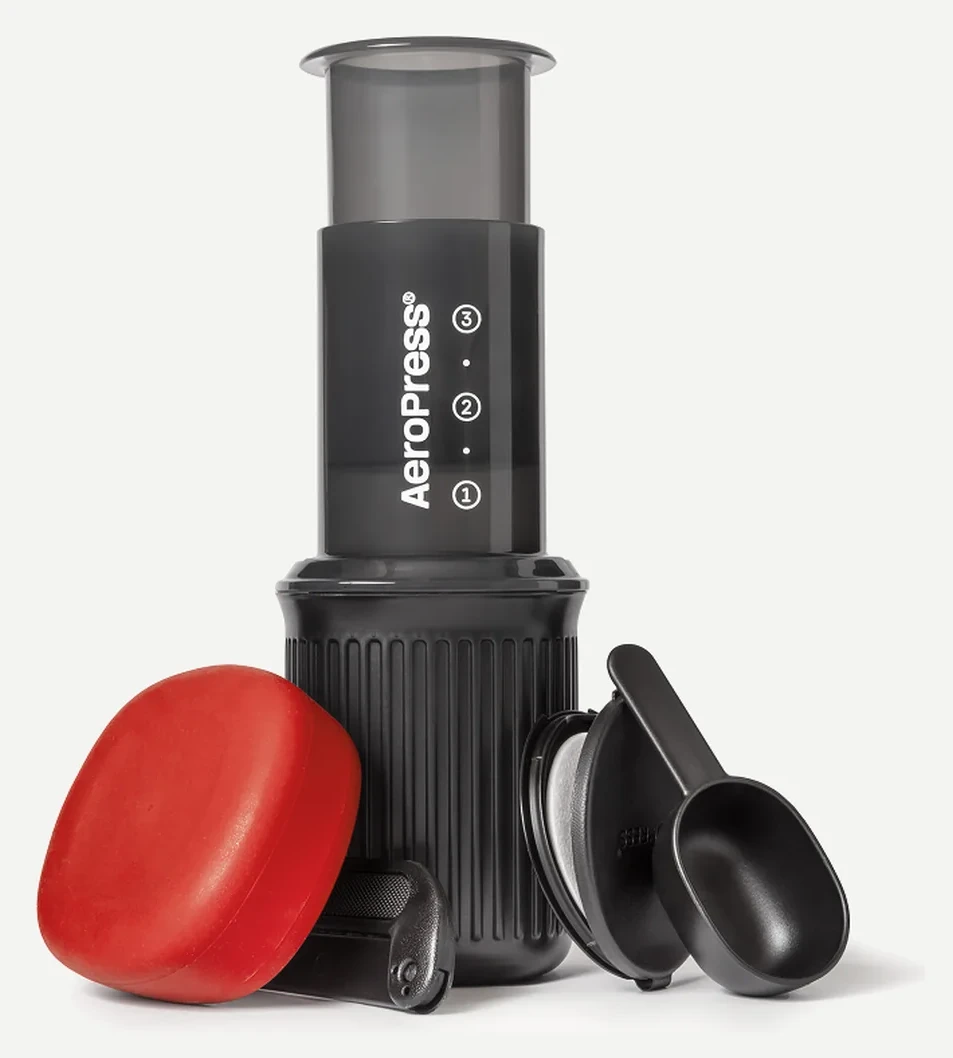
The AeroPress Go is the press for somebody who packs it rather than just owns it. It holds 237 ml,
enough for one cup, weighs 323 g in polypropylene and silicone, and the whole kit (filters, stirrer,
scoop, lid and filter holder) packs inside the mug you brew into. It takes the standard filters, so
nothing is proprietary to it. It is the smallest press here and a single cup is all it makes, which is
the trade for the case. If you are deciding between this and the full-size model,
AeroPress Go vs Original
covers it, and our guide to travel coffee makers shows how the
Go sits against brewers that are not AeroPresses.
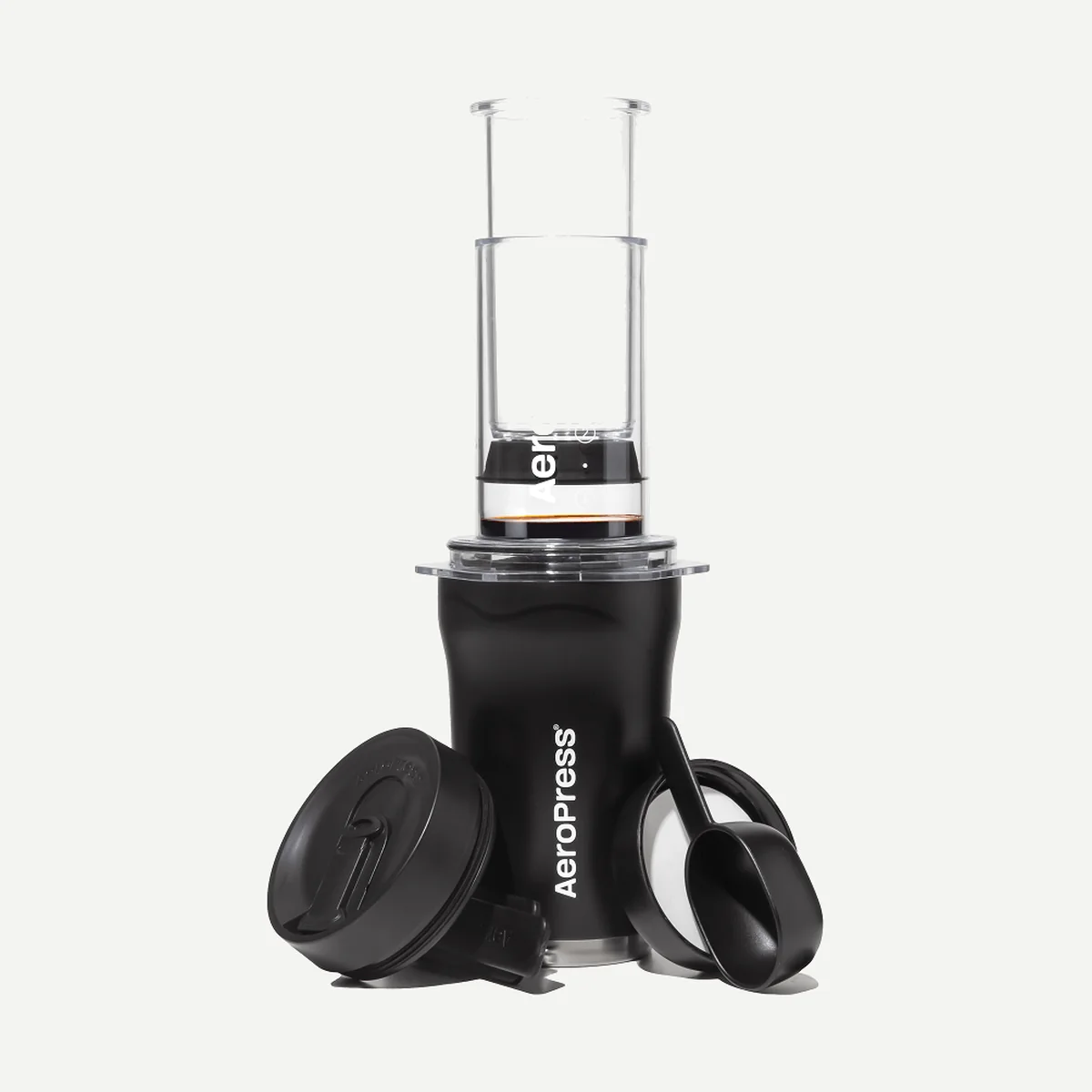
The AeroPress Go Plus builds a different kind of kit. The press is Tritan and holds 296 ml, and it
packs with its scoop, stirrer and filters into a 473 ml (16 oz) double-wall, vacuum-insulated stainless
steel tumbler. You brew into the tumbler and drink from it, so coffee made at a campsite or in a hotel
room stays hot. The lid is magnetic and splash resistant and fits a car cup holder, and a built-in holder
keeps up to 25 paper filters dry. Fully packed it weighs 560 g, heavier than the Go, so choose it when
you will drink in the car or outdoors, and choose the Go when weight is what matters.
No plastic: AeroPress Steel and Premium
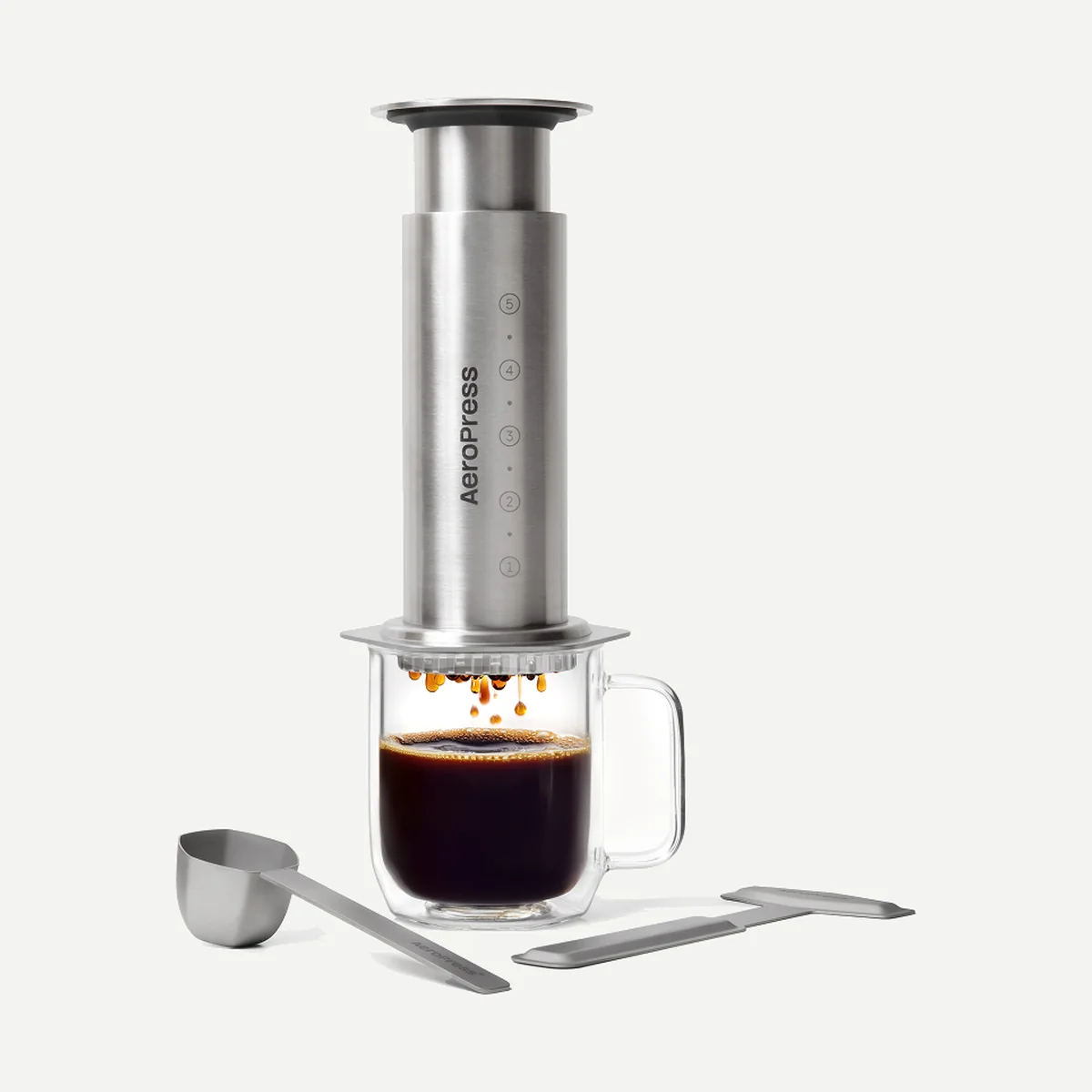
Some people simply prefer not to pour near-boiling water into plastic. The AeroPress Steel answers
that with 304 stainless steel throughout, apart from the silicone plunger seal. The chamber is double
wall and vacuum insulated, it holds 360 ml, and it comes in silver or black. Insulation helps most when a
light roast wants hot water through a longer steep. The trade is that steel is opaque, so there are no
numbered markings, only a laser-etched fill mark inside the chamber. It is dishwasher safe, and unlike
glass it will not crack if you drop it.
The AeroPress Premium goes the other way: a double-wall borosilicate glass chamber with stainless steel
and aluminium parts, 300 ml, available in silver, black or white. The glass holds heat and lets you watch
the brew, but it is the one AeroPress body that breaks if dropped, so it belongs on a counter rather than
in a backpack. Neither makes a different cup from the Original,
and the maker does not claim they do. The
comparison most buyers want is
AeroPress Original vs Steel.
How the models compare
| Model | Capacity | Material | Dishwasher safe |
|---|
| AeroPress Original | 296 ml | Polypropylene | Yes, top rack |
| AeroPress Clear | 296 ml | Tritan | Yes |
| AeroPress Go Travel | 237 ml | Polypropylene, silicone | Yes, top rack |
| AeroPress Go Plus | 296 ml, 16 oz tumbler | Tritan, insulated steel tumbler | Yes |
| AeroPress Original XL | 591 ml | Polypropylene, Tritan carafe | Yes, top rack |
| AeroPress Steel | 360 ml | 304 stainless steel, insulated | Yes |
| AeroPress Premium | 300 ml | Borosilicate glass, stainless, aluminium | - |
A dash means the maker does not publish that figure, or we have not confirmed it.
What to look for in an AeroPress
One cup, two cups, or a crowd
Capacity is the first decision, and it comes in three sizes: 237 ml on the Go, around 300 ml on the
standard presses, and 591 ml on the XL. Be honest about how many cups you make at a time. A press that
is too small means brewing twice, and one that is too big is a bulkier thing to wash and store for no
benefit.
Plastic, steel or glass
Polypropylene and Tritan are light, tough and quiet in a bag, and they brew exactly the same cup as
the expensive materials. Steel gives you insulation and no plastic against the coffee. Glass gives you
insulation and visibility, and it breaks. Decide whether materials matter to you as a preference before
you decide they matter to the coffee, because on the evidence they do not.
Whether it needs to travel
If the press will live on a counter, ignore the travel kits. If it will go in a bag, a case or a
tumbler that carries the filters and scoop is worth paying for, and weight starts to count: 323 g for the
Go against 560 g for the Go Plus. The wider choice of portable brewers is in our list of
manual coffee makers.
The filter system
Every press here is designed around a paper micro-filter, which is what keeps the cup free of grit,
and a stainless steel filter is sold separately for anyone who would rather stop buying paper and
accepts a heavier cup with more oils in it. The XL is the exception on size, since it needs its own
larger filters.
Spare parts and warranty
Every model on this page carries a one-year warranty stated by the maker, so a higher price does not
buy longer cover. What the standard presses do offer is replaceable parts: the chamber, plunger, seal and
filter cap are sold separately, so a worn seal is a small repair rather than a new brewer.
Where AeroPress falls short
It is a one or two cup brewer
Capacity is the ceiling. Past the XL you brew in batches, and even the XL is a hands-on job: you
dose, stir and press every time. If you want to start the coffee and walk away, a different kind of
machine suits you better.
It does not make espresso
The maker describes the AeroPress as part French press, part pour over and part espresso. The first
two are fair. A hand on a plunger cannot approach the nine bar that defines espresso, and what comes out
is a short, strong concentrate that works well over ice or in milk. Treat it as that and you will like
it. Expect crema and you will not.
The result depends on you
A manual press has no thermostat or timer, and repeating a good cup depends on your own routine: the
same dose, the same water and the same plunge speed. A slower press lengthens the contact and a faster
one shortens it. It rewards a little attention, and weighing coffee and water helps.
Plastic presses do not hold heat
Polypropylene has little mass to hold heat across a steep, which shows most with light roasts and
longer recipes. It rarely spoils a standard two minute brew. If it bothers you, the Steel and Premium
are the insulated models.
AeroPress coffee makers by budget
At the prices on our records when this page was checked. The ranked list at the top of the page shows
each one's current price.
| Budget | Models | What you get |
|---|
| Under $60 | Original, Clear, Go | The brewer itself. The Original is the plain one, the Clear adds visibility and color, the Go adds a travel case and a single-cup size. |
| About $80 to $90 | Original XL, Go Plus | More coffee in one press, with a carafe, or an insulated steel tumbler to carry the kit. |
| About $170 and up | Steel, Premium | Steel or glass instead of plastic, and double-wall insulation. The same brew. |
What else you need
Paper filters come in the box, but they run out sooner than you expect, so buy more before you need
them. Past that, the biggest upgrade is the grinder. A medium-fine grind suits most coffees, and
consistent grinding matters more in a brew this short than in a drip machine. A hand grinder is the
natural partner, and our list of manual coffee grinders
picks them out, with the grind size guide for adjusting.
A scale and a kettle come next. Measuring the coffee and the water is how you repeat a good cup, and
water a little off the boil suits most beans. Our guide to
the coffee to water ratio gives starting points. If you are
new to the press itself, how to use an AeroPress walks
through the standard and inverted methods.
Which AeroPress should you buy?
Start with how many cups you make and whether the press leaves the house. For one or two cups at
home, buy the Original: it is the design every recipe is written for and it does everything the more
expensive models do. Pick the Clear if you want to watch the brew, the Original XL if two people drink
at once, the Go if the press travels light, and the Go Plus if you want a kit with its own insulated
mug.
The Steel and Premium are a different kind of purchase. They suit someone who dislikes plastic or
wants a nicer object on the counter, and they should be bought for that reason, not for better coffee. Take the Steel if it might be dropped and the Premium if it will not.
AeroPress against the alternatives
A French press makes more coffee at once and has less
fuss in the process, but the cup carries more oils and fines, and the cleanup is wetter. A pour over is
brighter and takes more technique and a good kettle. The AeroPress sits between them, quicker than a
pour over and cleaner than a press, and it is cheap to try.
If you want to press a button and walk away, or you want real espresso with crema, an automatic
brewer or an espresso machine is the right tool. As a second brewer for the desk, a trip or the
mornings you want a cup made properly, the AeroPress is hard to beat.