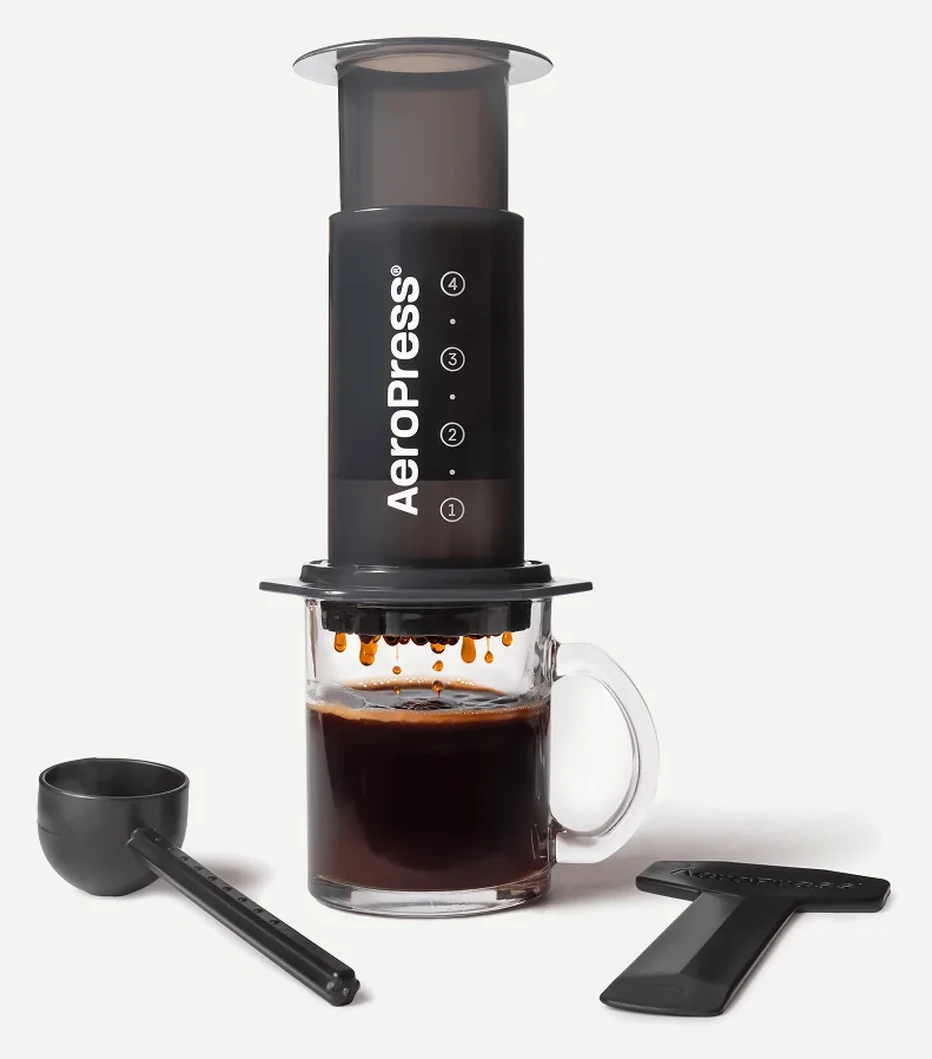
What is the AeroPress Original?
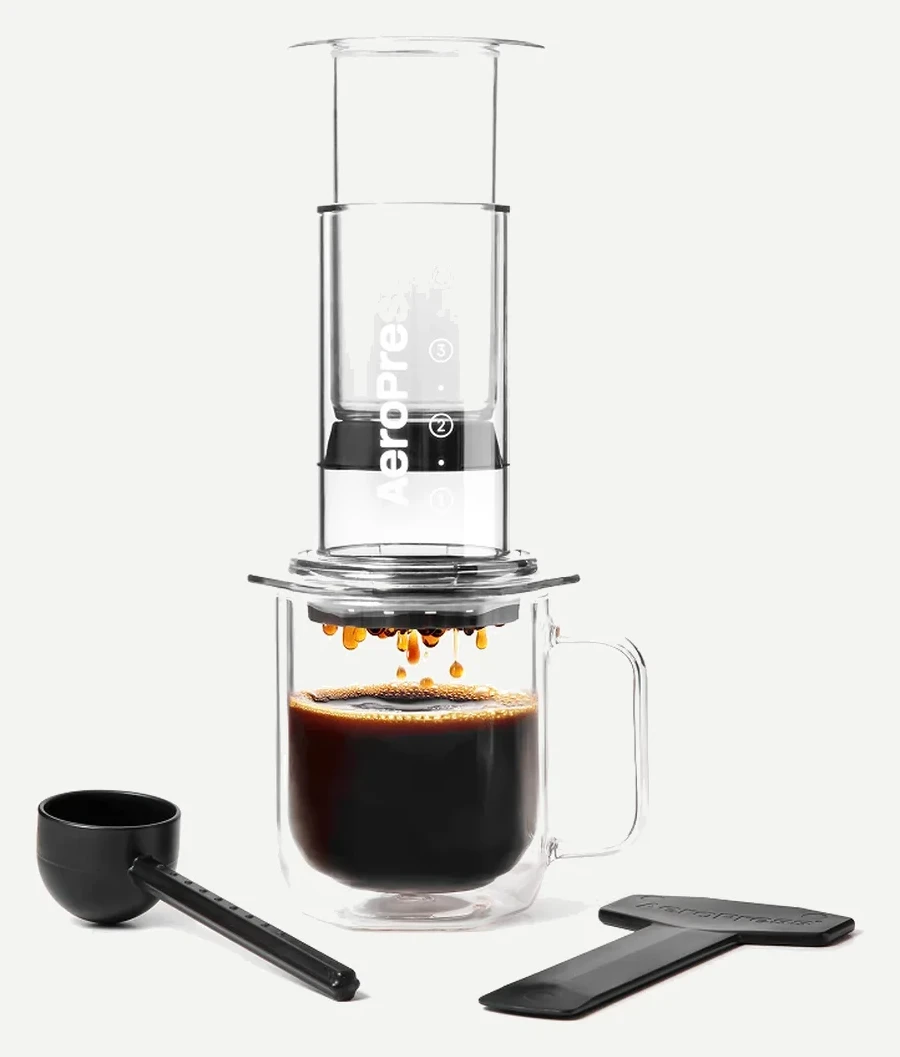
The brewer that started it all: a sealed polypropylene tube, a plunger, and a paper filter, for $39.95.
Alan Adler designed the AeroPress in 2005 to solve a specific problem: a single cup of coffee, brewed fast, without the bitterness that comes from a long steep or the grit that comes from a metal mesh. The answer was to shorten the contact time and then force the water out under pressure rather than waiting for gravity.
Immersion then pressure: coffee steeps in a sealed tube and is pushed through a paper micro-filter by hand. That is a French press without the grit and a filter brew without the wait.
It is $39.95, holds 10 oz, and stands 133 by 107 mm. In the box are paper micro-filters, a stirrer and a scoop. AeroPress say made in USA and add their own note that some products are manufactured overseas, which is more candour than most brands offer.
AeroPress Original what it is like to use
A short steep and a paper filter, which is a genuinely different cup from either a press or a dripper.
A French press steeps for four minutes and separates with a metal mesh, so the cup carries oils, fines and a heavy body. A pour over runs water through a bed under gravity, so it is clean and bright but takes technique and a good kettle. The AeroPress steeps for well under two minutes and then pushes through paper, which gives the body of the first and the clarity of the second.
The maker calls this three-in-one and describes it as part French press, part pour over, part espresso. The first two are fair. The third is not: the pressure a hand can put behind a plunger is a fraction of the nine bars espresso is defined by, and what comes out is a concentrated coffee rather than a shot.
10 oz is one generous mug or two small cups. Anyone regularly making more than that is looking at the XL.
What you can brew with it
One cup at a time, hot or cold, from a two-minute brew.
The standard recipe is a short steep and a slow press. Beyond it the format is unusually flexible: the inverted method holds the water longer for a heavier cup, a coarser grind and a longer steep makes cold brew in the same tube, and pressing a concentrate over ice makes a decent iced coffee in the time a kettle takes to boil.
What it will not do is serve a table. 10 oz is the ceiling and there is no way around it short of brewing twice.
Living with it, day to day
Two minutes to brew and clean, and four parts that ever touch coffee.
Cleaning is the AeroPress's quiet advantage. The plunger pushes the spent puck out as a dry disc that goes straight in the bin, and what is left is a rinse. Compare that with the wet slurry a French press leaves in the bottom.
Chamber, plunger, seal and filter cap are the four parts that need washing. All are dishwasher safe on the top rack, and all are sold as spares, so a perished seal after five years is a $12.95 part rather than a new brewer.
Paper micro-filters are pennies and a stainless steel filter is sold separately for anyone who wants the oils through.
AeroPress Original vs AeroPress Clear
Against the Clear at $49.95, this is the same brewer in a body you cannot see through.
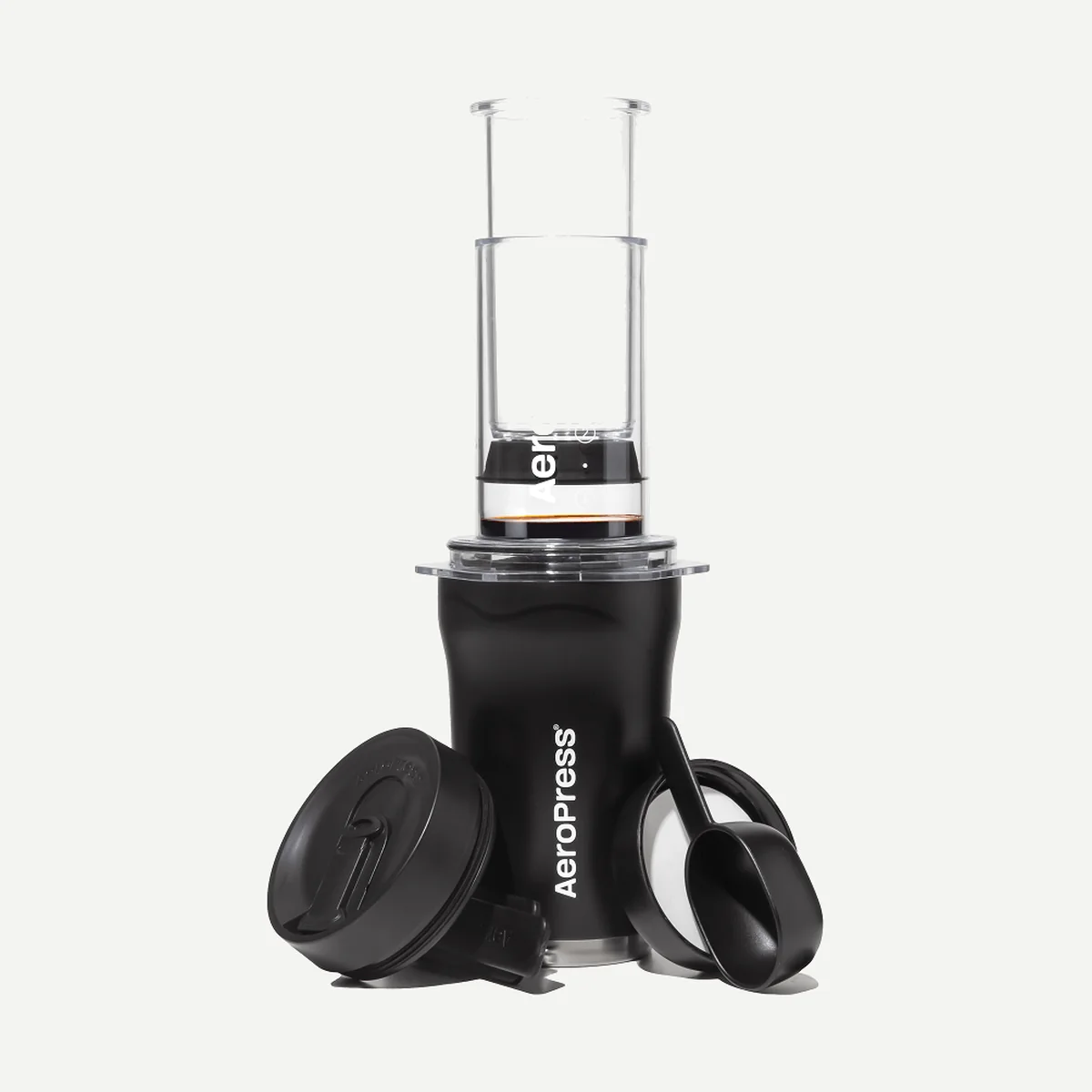
The Clear is the Original in Tritan: identical 10 oz capacity, identical 133 by 107 mm, and it comes in seven colours and is rated dishwasher safe without the top-rack qualifier. Ten dollars buys visibility, a slightly tougher plastic and the colour.
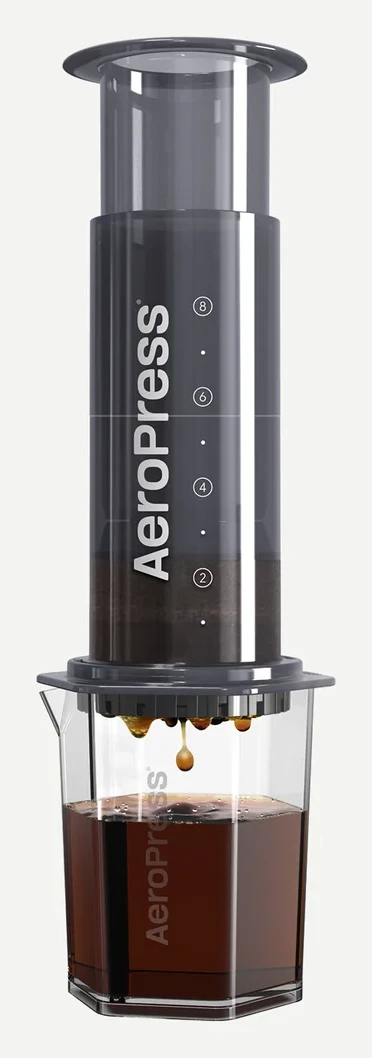
Against the XL at $79.95, that doubles the capacity to 20 oz and adds a Tritan carafe. It also uses XL filters, which are a different size and cost more, so the running cost goes up as well as the price.
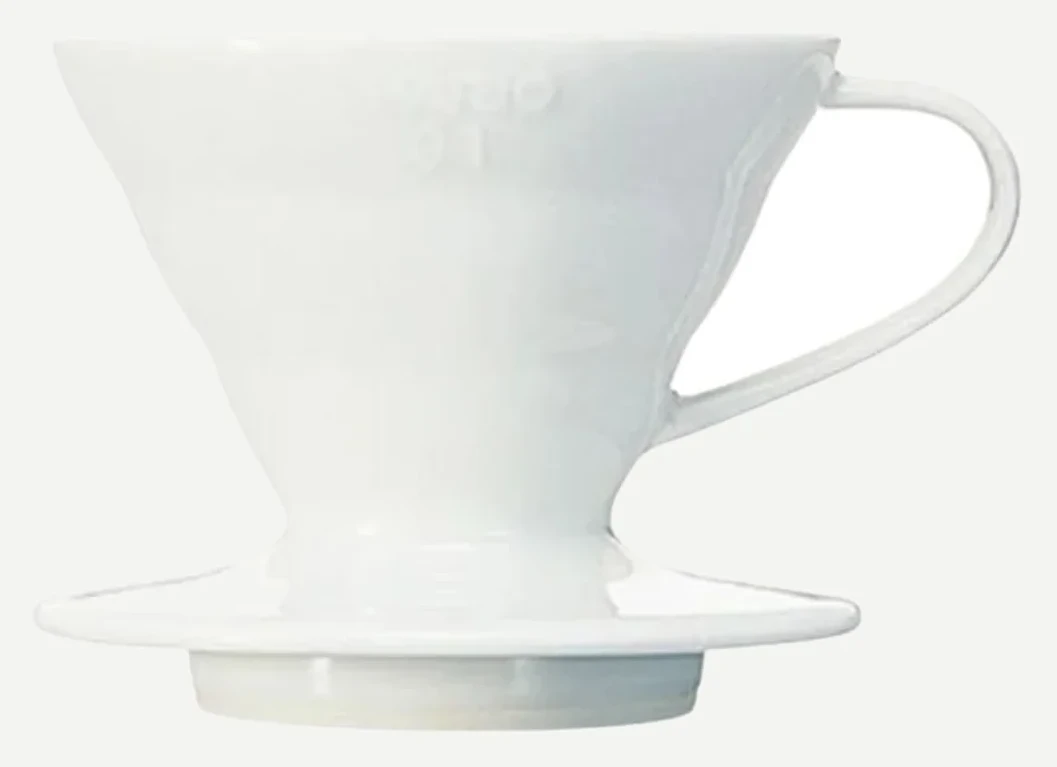
Against a Hario V60, that is a pour over: cheaper, but it needs a gooseneck kettle, a scale and a technique before it beats this. The AeroPress is the one that is good on the first try.
Is the AeroPress Original worth it?
$39.95, and the cheapest entry to a format that has been copied for twenty years.
There is very little on this site at this price that brews as well. A $40 dripper plus the kettle it needs costs more than this does on its own, and a $40 French press gives a muddier cup.
The running cost is paper filters at pennies a cup, or a stainless steel filter bought once. Neither is a lock-in: the standard size is made by several third parties.
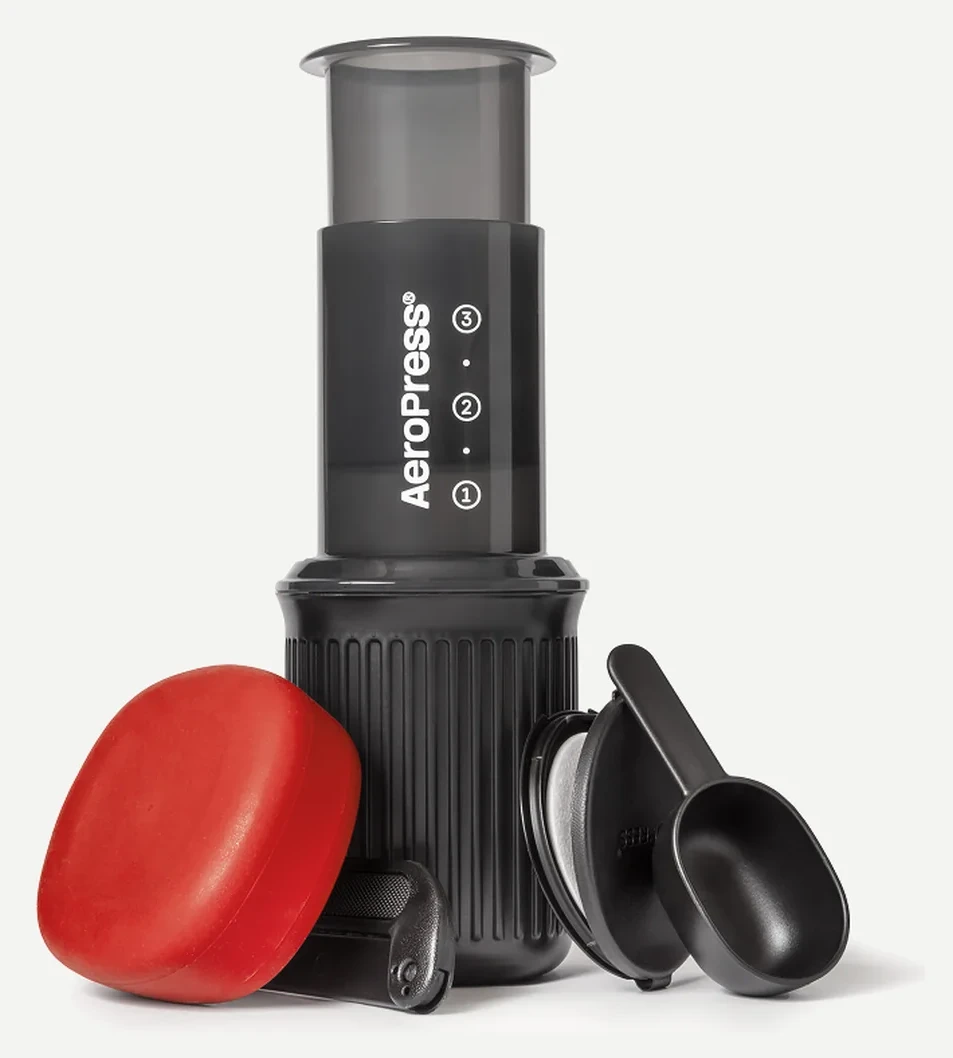
It is not the one to buy if you need more than 10 oz, or if you want to watch the brew, or if you want a travel case. Those are the XL, the Clear and the Go respectively, and all three are the same idea.
Who should buy it (and who should not)
Right for one or two cups a day, made fast, by somebody who does not want a ritual; wrong for a table of guests.
Buy it if you drink one good cup in the morning and want it in two minutes with two minutes of washing up. It is forgiving of grind, forgiving of water temperature and almost impossible to break, which is a rare combination at any price.
Take the XL if two people want coffee at once, the Clear if the look matters or you want the tougher plastic, and a V60 or Chemex if the ritual is the part you enjoy. This is the unfussy one.
Frequently Asked Questions
What is the AeroPress Original?
A single-cup immersion brewer: coffee steeps in a sealed polypropylene tube and is then pushed through a paper micro-filter by hand. It holds 10 oz, brews in under two minutes, costs $39.95 and comes with filters, a stirrer and a scoop.
Does the AeroPress make espresso?
No, and the marketing is generous here. AeroPress describe it as part espresso, but hand pressure on a plunger is a fraction of the nine bars espresso is defined by. What it makes is a concentrated coffee that works well in milk, not a shot.
AeroPress Original or Clear?
The same brewer in different plastic. Both hold 10 oz and both measure 133 by 107 mm. The Clear is $49.95, made from Tritan, comes in seven colours and is listed dishwasher safe without the top-rack qualifier the Original carries.
How much coffee does it make?
10 oz, which AeroPress rate as one to two cups. That is one large mug or two small ones. For more than that the Original XL doubles it to 20 oz for $79.95, with a Tritan carafe in the box.
Is the AeroPress dishwasher safe?
Yes, on the top rack only, and that qualifier is the maker's. It is also the brewer least likely to need a dishwasher: the plunger ejects the spent grounds as a dry puck and what remains is a rinse.
Do you have to buy AeroPress filters?
No. The standard size is widely made by third parties, and AeroPress themselves sell a stainless steel filter for anyone who wants the oils through rather than trapped. The paper ones cost pennies a cup.