

Automatic Turkish Coffee Machines: What the Machine Is Actually Judging
Turkish coffee is defined by the foam and ruined by the boil. An automatic machine exists to watch for the moment between them, which is the one part of the method people get wrong.
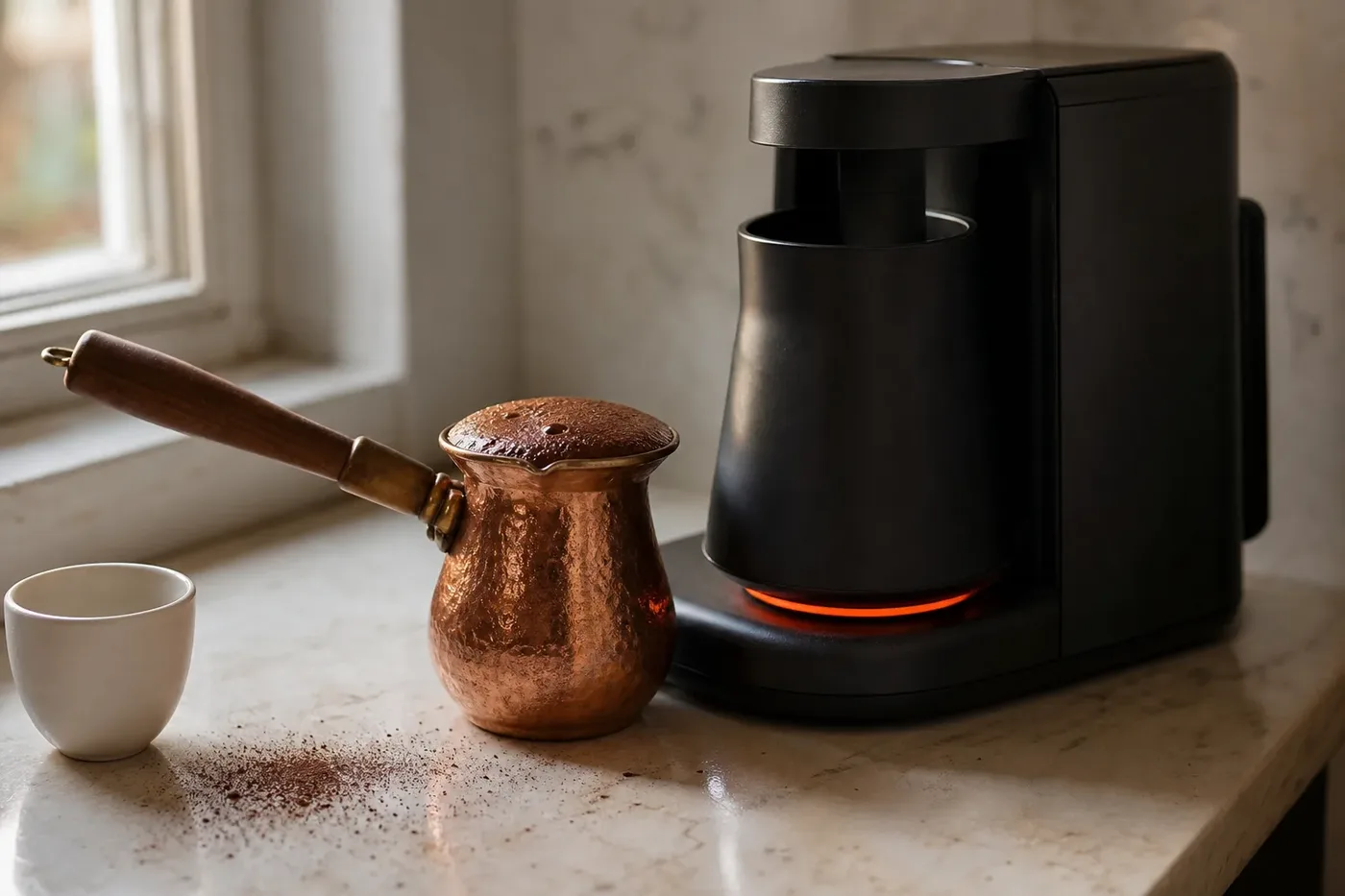
Turkish coffee has one difficult moment. The pot heats slowly, foam builds on the surface, and there is a narrow window where you must take it off the heat. Let it go past and the foam collapses into a boil, and a boiled Turkish coffee is not a slightly worse cup, it is a failed one.
That is the entire problem an automatic machine is built to solve. Everything else about the method, the very fine grind, the cold water start, the sugar added at the beginning, is easy and unchanging. The timing is the part that takes practice, and it is the part a sensor can do.
How an automatic Turkish coffee machine knows when to stop
These machines do not use a thermometer to decide when to stop, because temperature is not what matters. Turkish coffee is taken off before boiling, and the useful signal is the foam rising, not the water reaching a number.
So they watch for the rise itself. Our Arzum Okka Automatic Turkish Coffee Machine entry records an overflow detection system, and that phrase is doing real work: the machine is sensing the coffee climbing the pot and cutting the heat before it goes over. That is the same judgement a person makes by eye, made by a sensor that never looks away.
It is also, honestly, the limit of what these machines do. They are not tasting anything and not adjusting an extraction. They are heating slowly and stopping at the right moment, reliably, every time.
What a Turkish coffee machine adds beyond timing
Serving into the cup
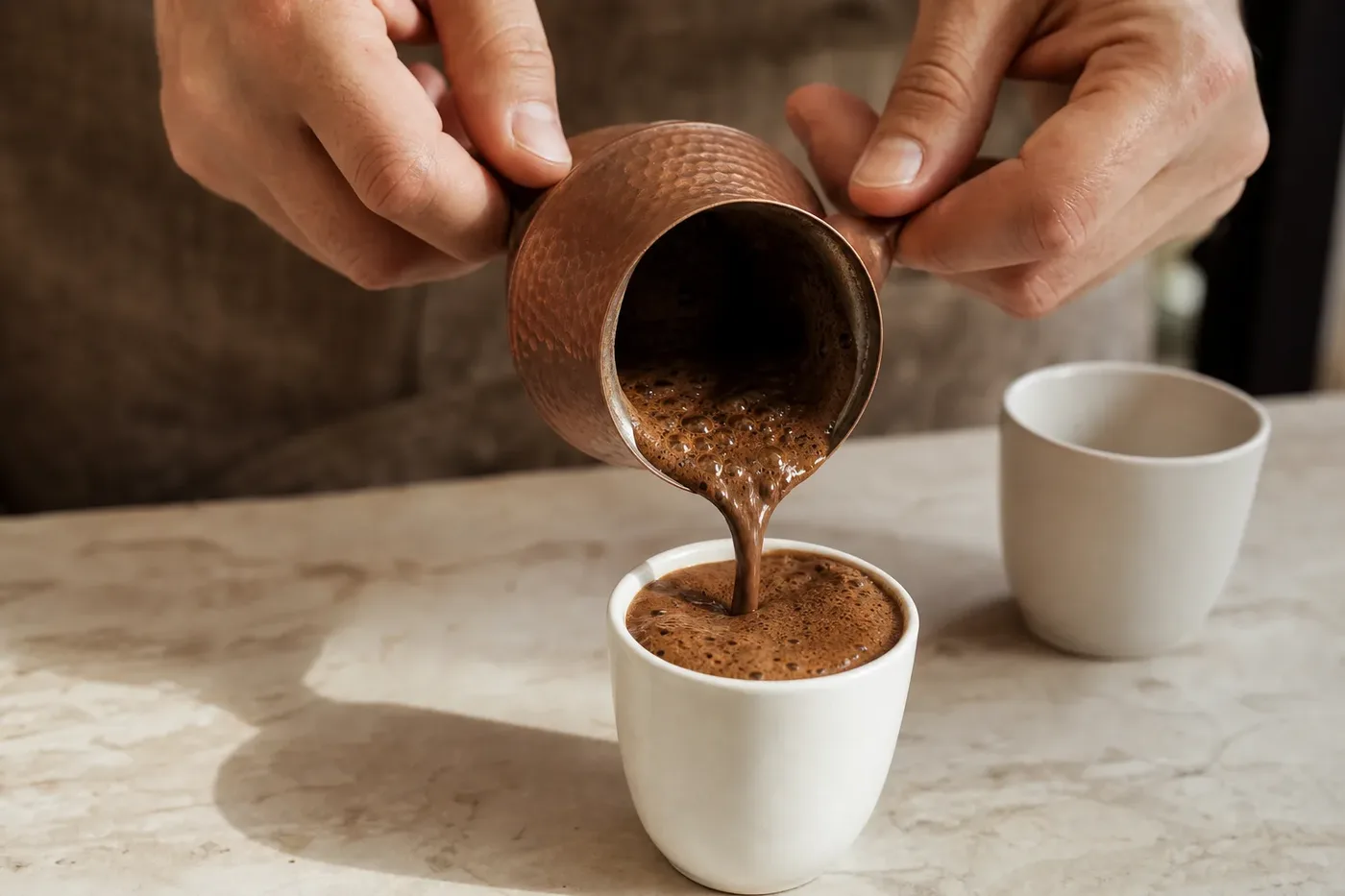
Several pour automatically, which sounds like a gimmick and is not: pouring Turkish coffee badly leaves the foam in the pot, and the foam is most of the point. A machine that pours evenly across cups distributes it the way a careful host would.
More than one cup
A cezve makes what it makes. The Karaca Hatir brews five cups, which matters because Turkish coffee is a social drink and making it one or two at a time for a room of people is a long evening.
Portability
The Arcadia Go portable Turkish coffee maker is rechargeable, which puts Turkish coffee somewhere there is no hob at all. That is a genuinely different proposition rather than a convenience.
Turkish coffee machine vs cezve: what you give up
Control, mostly. On a hob you decide the heat, and experienced makers use that: lifting the pot, letting the foam settle and returning it, sometimes more than once. That is a technique with real effects on the foam, and no machine offers it.
You also give up the pot. A hand-hammered copper cezve is an object people keep for decades and hand on. A machine is an appliance with a cord.
And you give up material. Our Turkish pot reviews score copper with a tin lining highly for a real reason: copper's conductivity gives the even, slow heat the method wants. A machine's heating element is designed around the sensor, not around conduction.
What Turkish coffee machine makers do not publish
This is a small category and a secretive one. Our rating guide lists eight inputs that fewer than one maker in four states here, which is the highest count of any category on the site. Pot volume, boil-dry protection, whether the pot is removable, whether it is dishwasher safe: routinely absent.
That is why scores in this category come out of less than a hundred. We do not guess at a figure nobody publishes, and we would rather say the gap is ours than imply a machine lacks a feature nobody has mentioned either way.
Turkish coffee grind: what the machine cannot do
Turkish coffee needs the finest grind of any brewing method, finer than espresso, close to icing sugar. The powder stays suspended in the cup and settles at the bottom, which is the point: there is no filter anywhere in the method.
No machine grinds for you here, and most grinders cannot reach the size at all. Hand grinders built for Turkish coffee exist because the traditional mills were designed for it, and many modern burr sets simply stop before they get there.
This is the most common reason a machine disappoints. If the grind is too coarse the coffee is thin and the foam is poor, and no amount of overflow detection fixes a dose that was never going to extract. Check what your coffee grinder reaches before buying anything else.
When the sugar goes in for Turkish coffee
Sugar goes in at the start, with the cold water and the coffee, not afterwards. This is not a preference, it is part of the method: the sugar dissolves during the slow heat and contributes to the foam structure. Stirring a spoonful into the finished cup is a different drink and a flatter one.
Cardamom, where it is used, goes in at the same time. The machines handle all of this the same way a pot does, because it happens before any heating starts.
What you cannot do on most machines is stir. Traditional practice stirs at the beginning, until the coffee is wetted, then leaves it alone. On a sealed machine you load and press, so getting the coffee properly wetted before the cycle starts matters more than it does on a hob.
Cleaning a Turkish coffee machine, and what to check first
Turkish coffee leaves a thick sediment, and the pot has to be cleaned after every brew. On a cezve that is thirty seconds under a tap. On a machine it depends entirely on whether the pot detaches.
A removable pot is easy. A fixed reservoir means cleaning around an electrical component, and the listings are frequently silent on which you are getting. Removable pot and dishwasher safe are two of the eight inputs our rating guide records as published by almost nobody in this category, and it is the practical reason that gap matters rather than an abstract one.
Why foam is the measure of good Turkish coffee
A well-made Turkish coffee has a fine, even layer of foam across the surface, and it is served with it intact. In practice the foam is how the coffee is judged, socially as much as technically: serving a cup without it reads as carelessness.
That is why the automatic pour matters more than it first appears. Pouring badly concentrates the foam in the first cup and leaves the last one bare, and a machine that distributes evenly is doing something a hurried host frequently does not.
Is a Turkish coffee machine worth buying?
If you make Turkish coffee often, for other people, and you have burned it more than once, yes. The machine solves precisely the thing that goes wrong, and it solves it every time.
If you make it occasionally, buy a cezve and learn the moment. It takes about five attempts, the pot costs a fraction of the machine, and the result at the end is better because you can work the foam in a way no machine does.
Either way the grind decides more than the equipment. Turkish coffee needs to be ground finer than espresso, close to powder, and most grinders cannot reach it. That is worth checking before you buy anything, and our grind size guide covers where it sits against every other method.
Automatic Turkish coffee machines FAQ
How does an automatic Turkish coffee machine know when to stop?
It watches for the foam rising rather than measuring temperature. Turkish coffee is taken off the heat before boiling, so the useful signal is the coffee climbing the pot. The overflow detection recorded on machines like the Arzum Okka senses that rise and cuts the heat, which is the same judgement a person makes by eye.
Is an automatic Turkish coffee machine better than a cezve?
More reliable, not better. It solves the one difficult moment, catching the foam before it boils, and it does that every time. A cezve on the hob gives you control a machine cannot: lifting the pot, letting the foam settle and returning it. If you make Turkish coffee often for other people, the machine earns its place; occasionally, learn the moment instead.
Why do these machines have so few published specifications?
It is a small category and the makers publish very little: eight of the things we score, including pot volume and boil-dry protection, are published by fewer than one maker in four, more gaps than in any other category on this site. We only score what is published, so these machines are scored out of fewer points than elsewhere. We would rather show the gap than guess at a figure.
What grind do I need for Turkish coffee?
Finer than espresso, close to a powder. This is the most common obstacle: many grinders physically cannot reach it, and a machine will not rescue a grind that is too coarse. Check your grinder before buying anything else.
Reviewed on this site
 Arzum Okka Automatic Turkish Coffee MachineThe full-size Okka, which brews and then pours into the cup for you
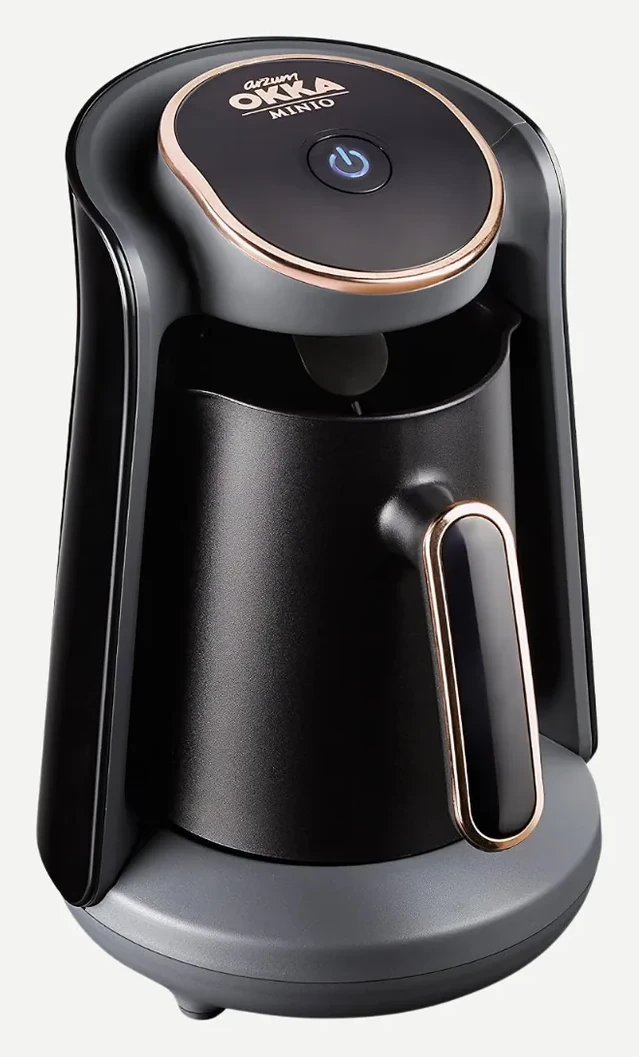 Arzum Okka Minio Automatic Turkish Coffee MachineThe buyer who wants the name the category is built on, in its smallest form
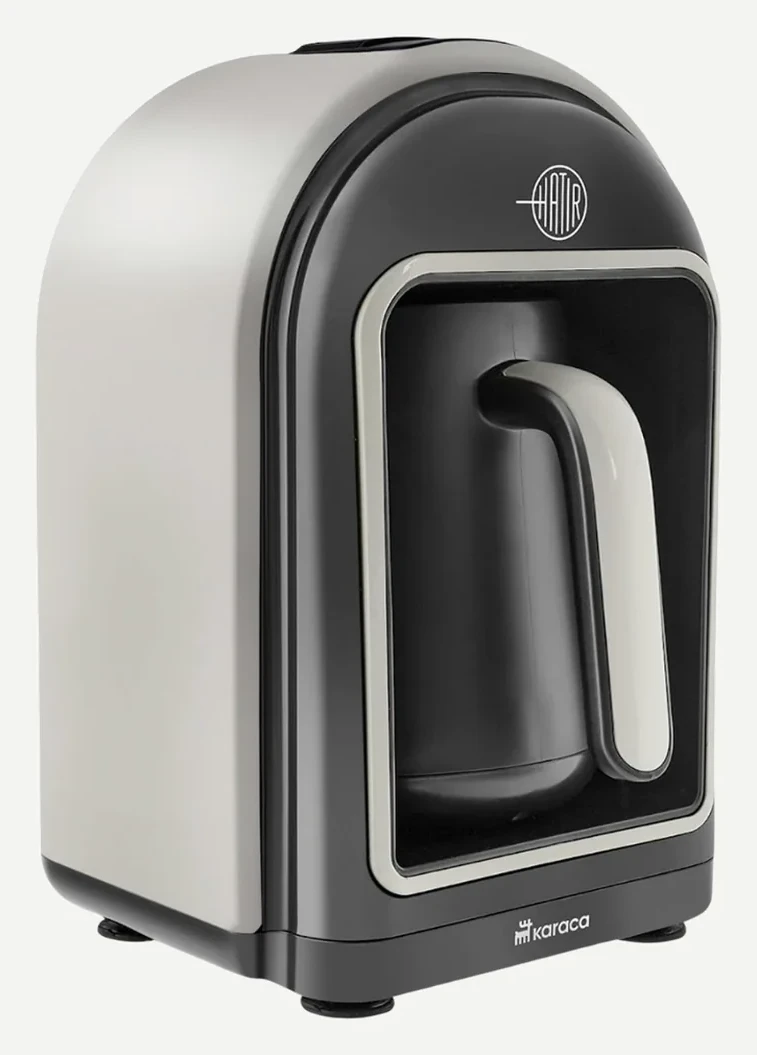 KARACA Hatir Turkish Coffee Maker 5 CupsServing five people at once, with the machine telling the room when it is ready
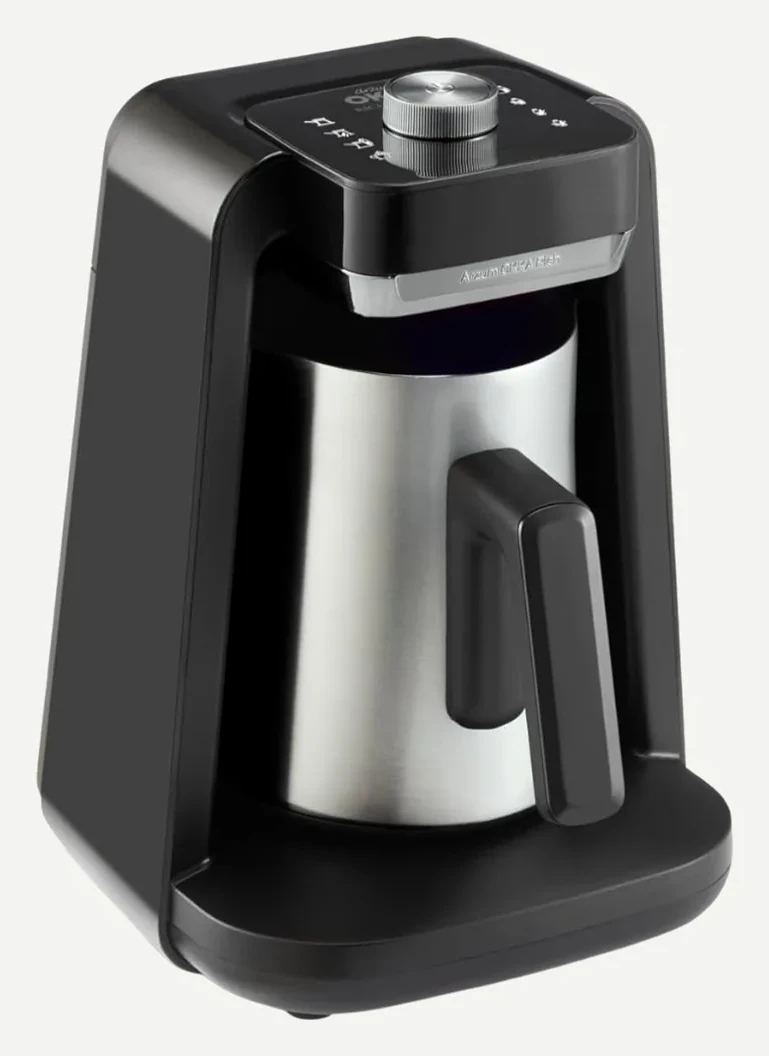 Arzum Okka Rich Spin Pro Turkish Coffee MakerA household that wants Turkish coffee, hot chocolate and salep out of one machine
 Arcadia Go Rechargeable Portable Turkish Coffee MakerTurkish coffee on a campsite, in a hotel room or at a desk with no socket free