How to Use a French Press Properly
The press is the most forgiving brewer there is, and the two things people get wrong are the same two every time: the grind, and pressing it like a plunger rather than a lid.
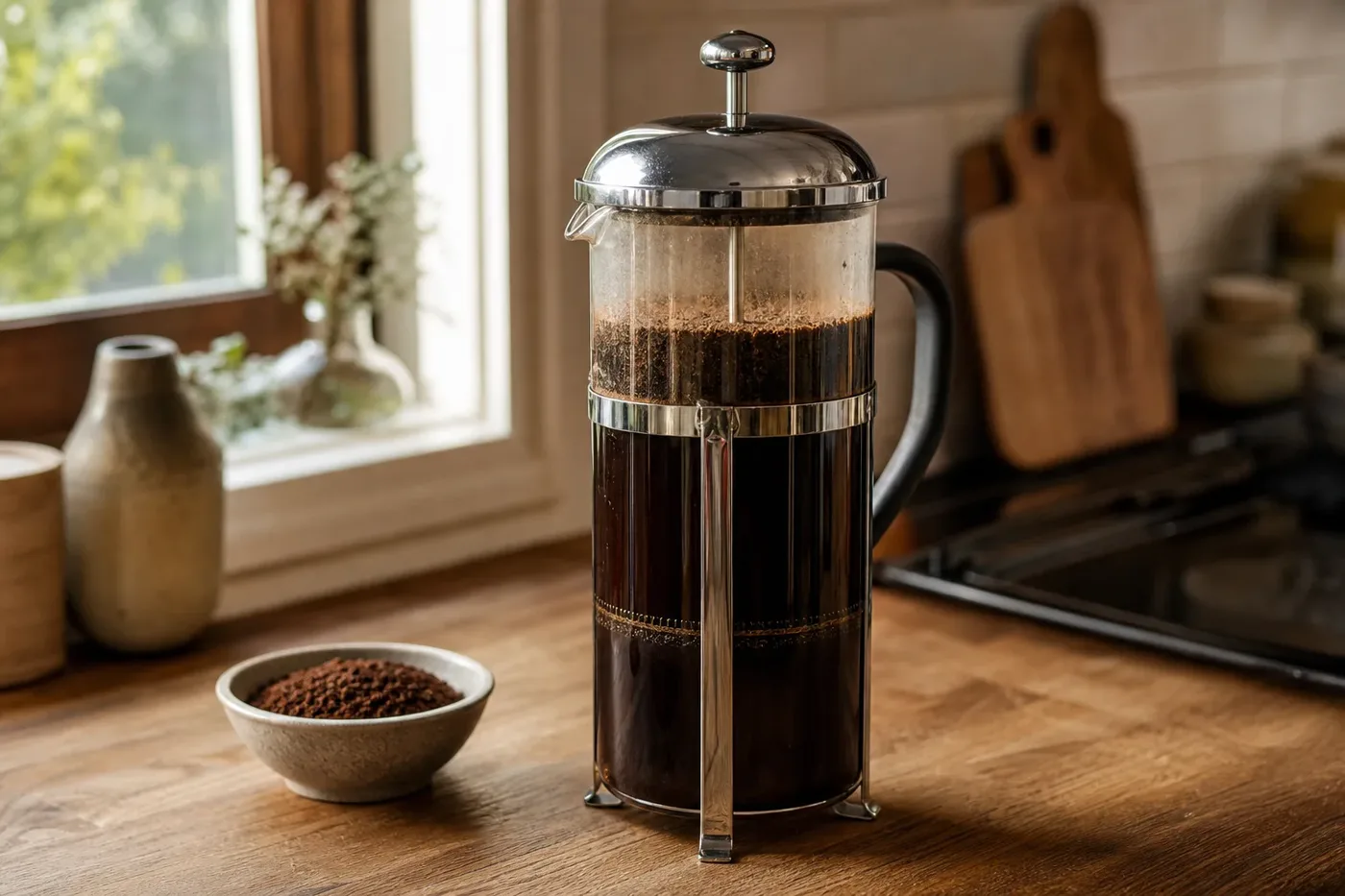
A French press is the easiest good coffee there is. Nothing about it depends on your pouring technique, there is no filter to buy, and the method has one genuinely important moment in it. It is also the brewer most often blamed for muddy, bitter coffee, and that is almost always the grind.
French press coffee ratio
Start at 1:15, so 60g of coffee to 900ml of water for a full 34oz press, or about 30g to 450ml for a half. That is a strong-ish filter strength which suits the method's heavy body.
If it tastes too strong, go to 1:16 or 1:17 rather than steeping for less time. Ratio changes strength; time changes extraction, and they are different problems with different tastes. Our ratio guide covers that distinction in more detail.
French press grind size
Coarse. Like sea salt, and coarser than most people go.
The mesh in a press is a strainer, not a filter. Anything small enough to pass through it ends up in your cup, and that is where the sludge at the bottom comes from. Grind fine and you get two problems at once: silt in the cup, and over-extraction, because fine particles give up their bitterness quickly and the coffee sits in the water for four full minutes.
This is also why a press is the least forgiving brewer for a blade grinder. A blade produces dust and boulders together, the dust goes straight through the mesh, and no adjustment fixes it. If your press coffee is muddy, the grinder is the reason.
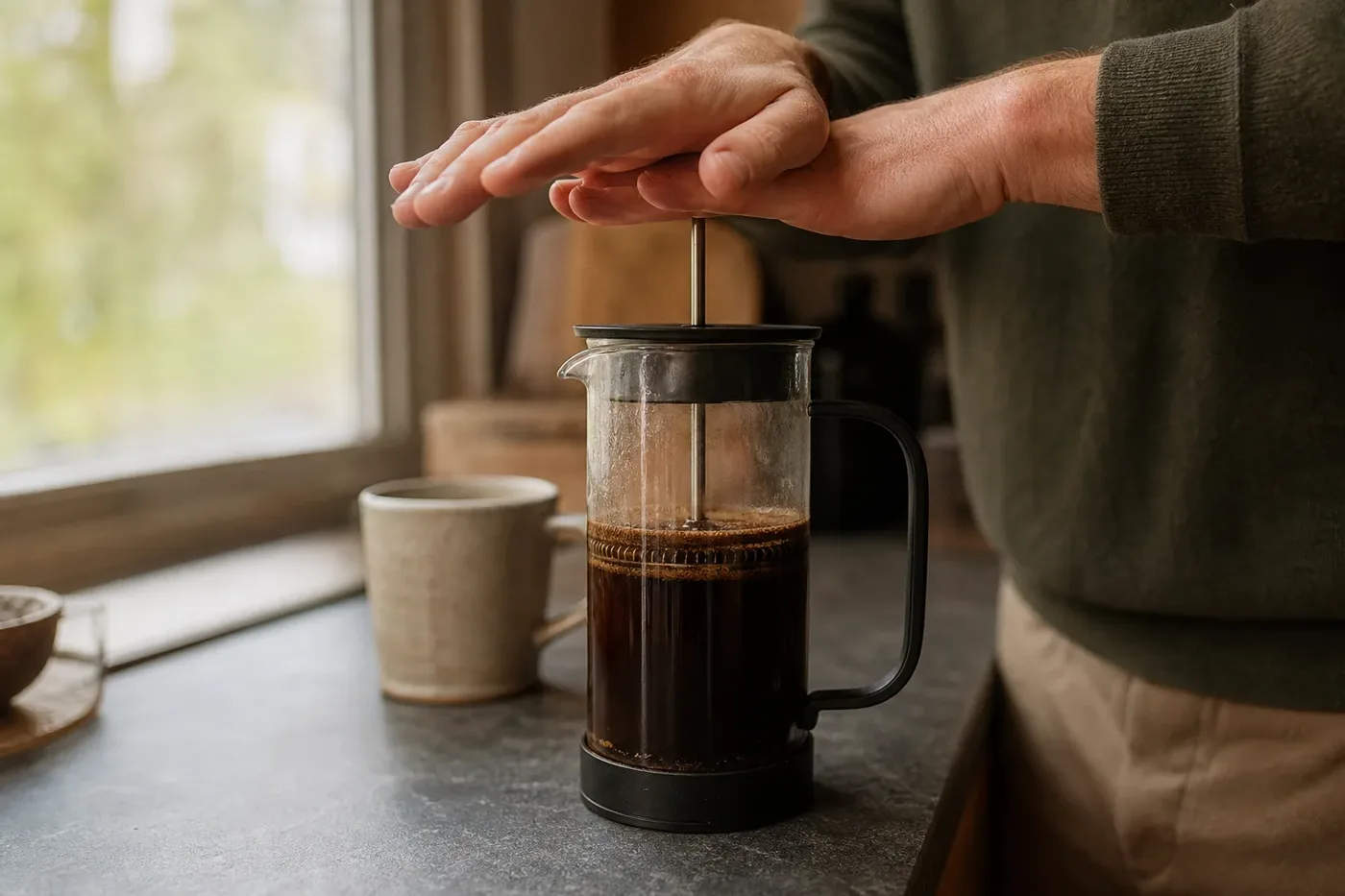
How to use a French press, step by step
Warm the jug. Rinse it with hot water and tip it out. Glass steals a surprising amount of heat from a brew this size.
Add coffee, then pour to twice its weight and wait thirty seconds. Fresh coffee releases carbon dioxide when it first meets water, and that gas pushes water away from the grounds. Letting it bloom first means the rest of the water actually reaches the coffee.
Pour the rest, then stir. A press develops a thick crust of grounds floating on top, and everything in that crust is barely brewing. One gentle stir breaks it and lets those grounds sink.
Skim, if you want a cleaner cup. After stirring, a layer of foam and floating fines remains. Lifting that off with two spoons removes a good deal of what would otherwise be silt. It is optional and it makes a visible difference.
Lid on, plunger up, four minutes.
Press slowly. This is the part people get wrong. The plunger is not there to squeeze the coffee, it is there to hold the grounds at the bottom while you pour. Pressing hard forces water through the bed under pressure, pushing fines through the mesh and stirring up everything you just settled. It should take about twenty seconds and meet almost no resistance. If you are fighting it, your grind is too fine.
Pour it all out immediately. Coffee left in the press keeps extracting against the grounds and will be bitter within minutes. If you are not drinking it all now, decant it into another vessel.
Why a double-walled French press changes the recipe
Glass loses heat fast, and over four minutes that is a real temperature drop. An insulated press like the Secura stainless press or the Frieling double-walled press holds its heat, which means it extracts more over the same time.
If you move from glass to insulated and keep everything else the same, expect the cup to come out stronger and possibly bitter. Go a step coarser, or shorten the steep.
French press filters: single mesh vs ESPRO
A standard single mesh, like the Chambord's, is the classic and it lets oils and some fines through, which is the body people like the press for.
ESPRO's double micro-filter, on the P3 and P6, is a genuinely different mechanism: two nested filters that trap far more of the fines and effectively stop the brew when pressed. It produces a cleaner cup and it means coffee left in the jug does not keep extracting the way it does in a standard press.
Neither is better. One is a heavier cup, one is a cleaner one, and our rating guide scores filter stages directly rather than declaring a winner.
Why French press coffee tastes wrong and how to fix it
Muddy, silty, gritty: grind coarser. Skim after stirring. Press more slowly.
Bitter: too fine, steeped too long, or you left it sitting in the press after brewing.
Weak and sour: too coarse, or not enough coffee. Change the ratio before the time.
Cold by the third cup: the jug is glass. That is the trade for being able to watch it.
French press FAQ
What is the ratio for French press coffee?
Start at 1:15, so about 60g of coffee to 900ml of water in a full 34oz press. If that is too strong go to 1:16 or 1:17 rather than shortening the steep: the ratio decides how strong the coffee is and the time decides how much flavour comes out of it, and they taste different when you get them wrong.
How long should you steep a French press?
Four minutes from when the water hits the coffee, then press and pour it all out immediately. Coffee left standing on the grounds keeps extracting and turns bitter within minutes, so decant anything you are not drinking straight away.
Why is my French press coffee muddy?
The grind is too fine. The mesh is a strainer rather than a filter, so anything small enough to pass through ends up in the cup. Grind coarser, skim the foam after stirring, and press slowly. If it stays muddy at every setting, a blade grinder is producing dust alongside the coarse pieces.
Should you press a French press hard?
No. The plunger holds the grounds down while you pour; it is not there to squeeze the coffee. Pressing hard forces water through the bed and pushes fines through the mesh. It should take about twenty seconds and meet almost no resistance. If you are fighting it, the grind is too fine.
Do you stir a French press?
Yes, once, after all the water is in. A thick crust of grounds floats on the surface and barely brews, and one gentle stir breaks it so those grounds sink. Skimming the foam afterwards is optional and noticeably reduces silt in the cup.
Does an insulated French press change the brew?
Yes. Glass loses real heat over four minutes, so an insulated press holds a higher temperature and extracts more in the same time. Moving from glass to steel with the same recipe usually tastes stronger or bitter, so go a step coarser or shorten the steep.
Reviewed on this site
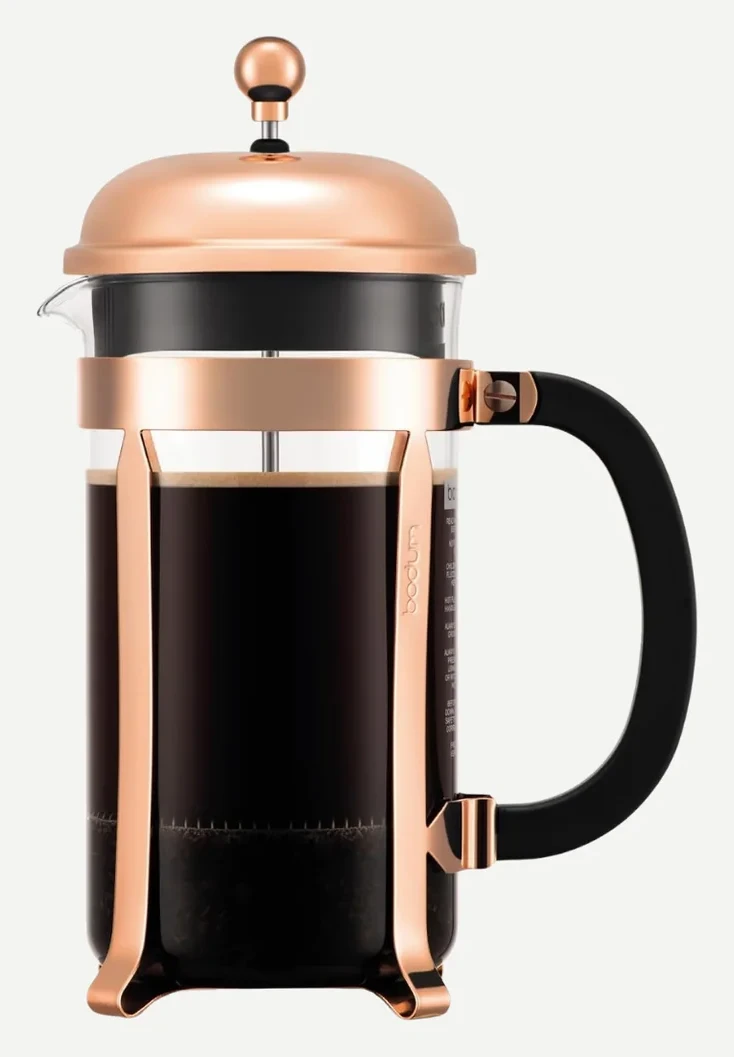 Bodum Chambord French Press 34ozThe default French press, and the one every other press is compared to
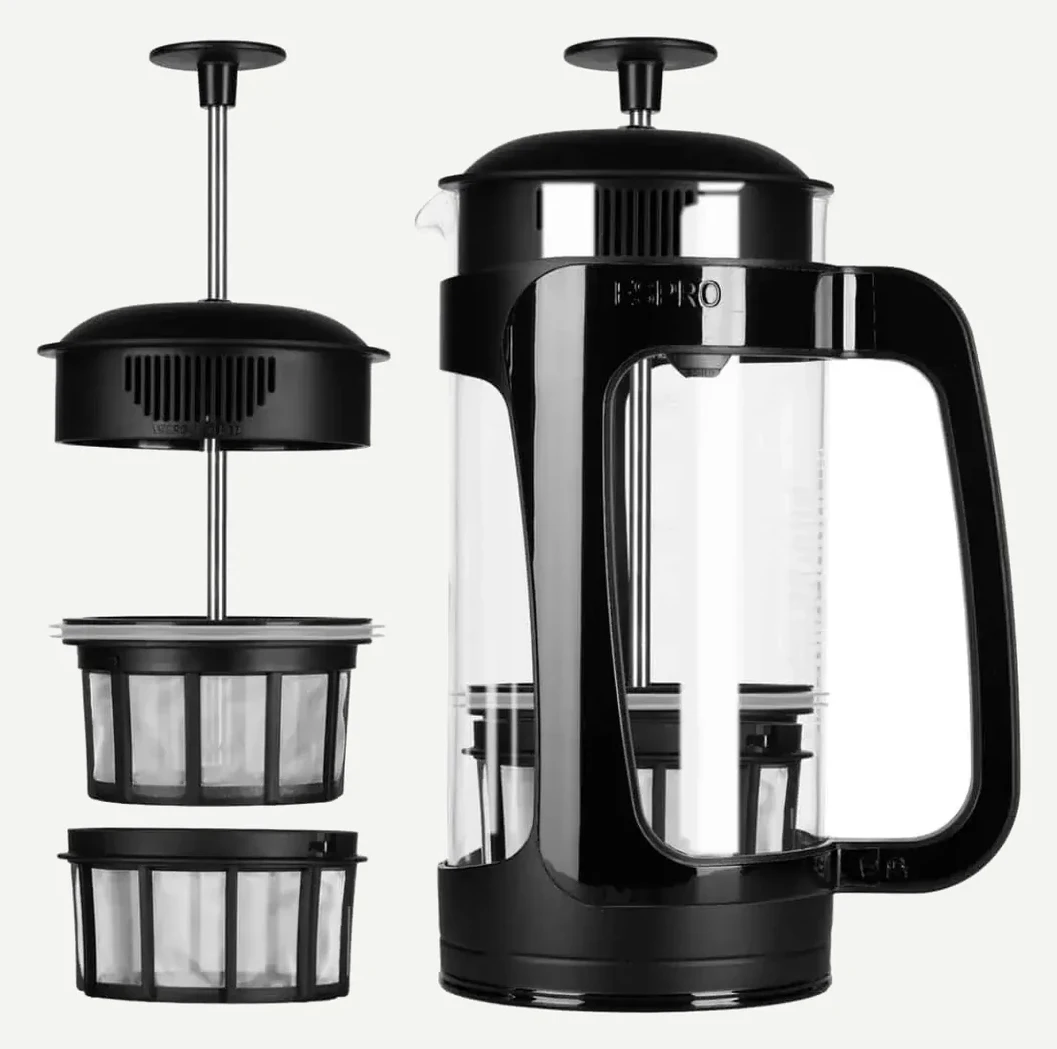 ESPRO P3The cheapest way into ESPRO's double filter, if you can live with glass
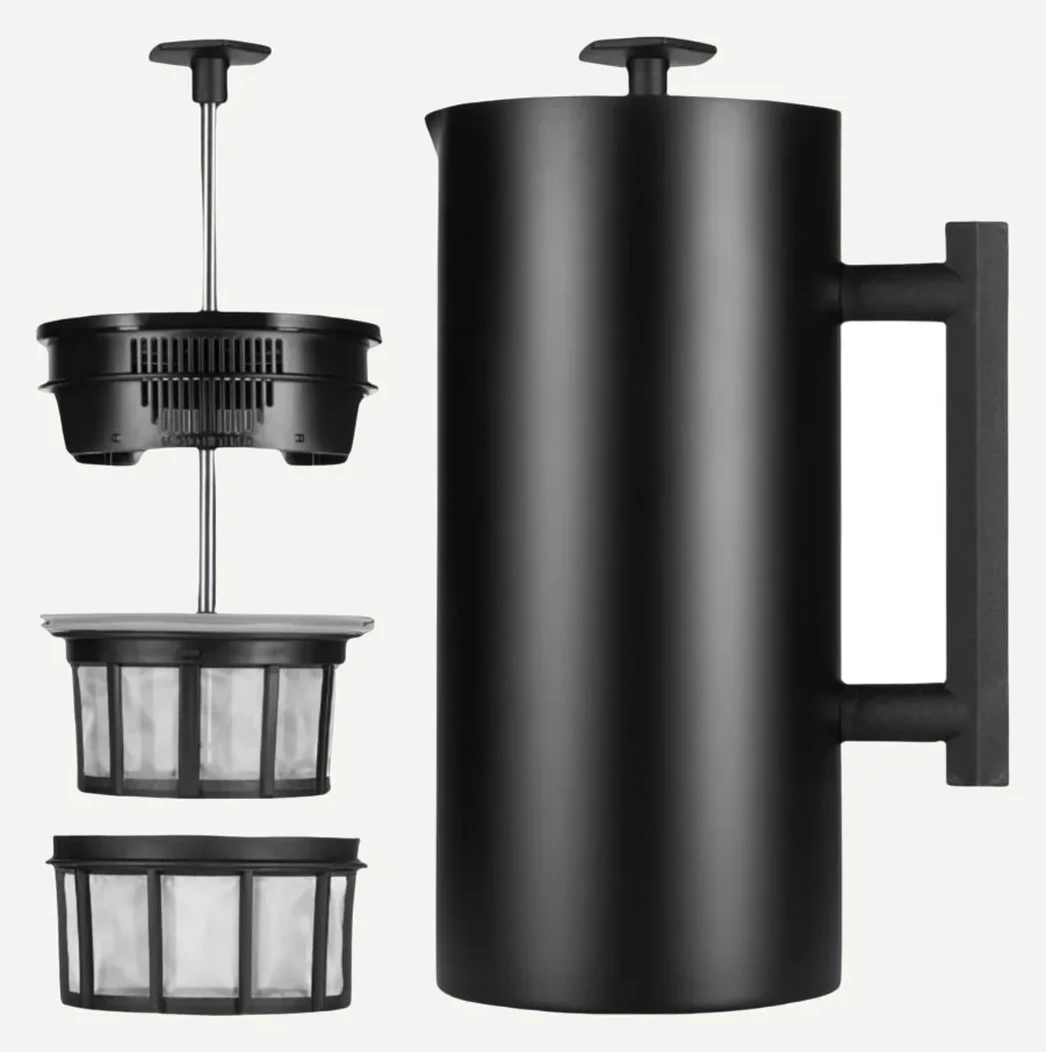 ESPRO P6Anybody who leaves the press on the counter and comes back to it
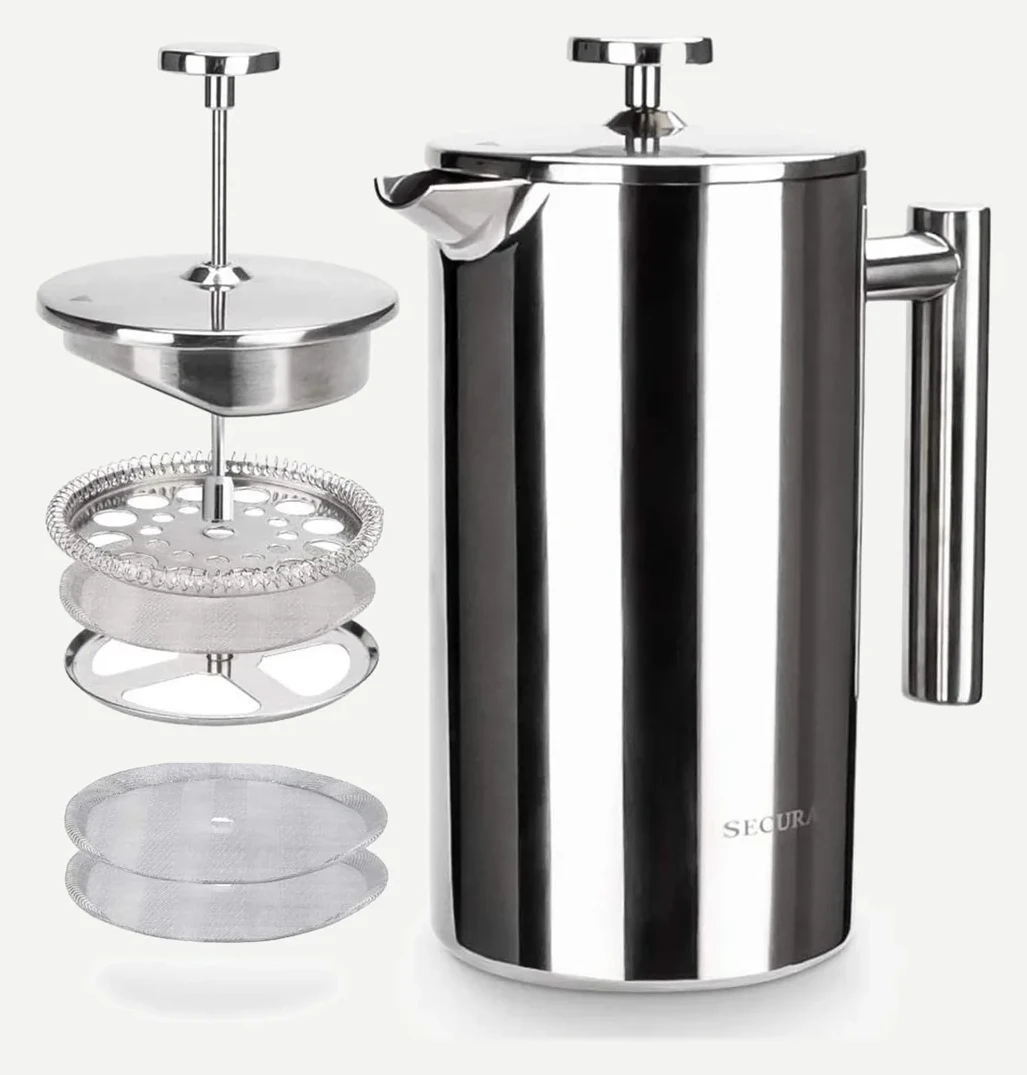 Secura Stainless SteelThe insulated steel press for somebody who does not want to pay ESPRO money
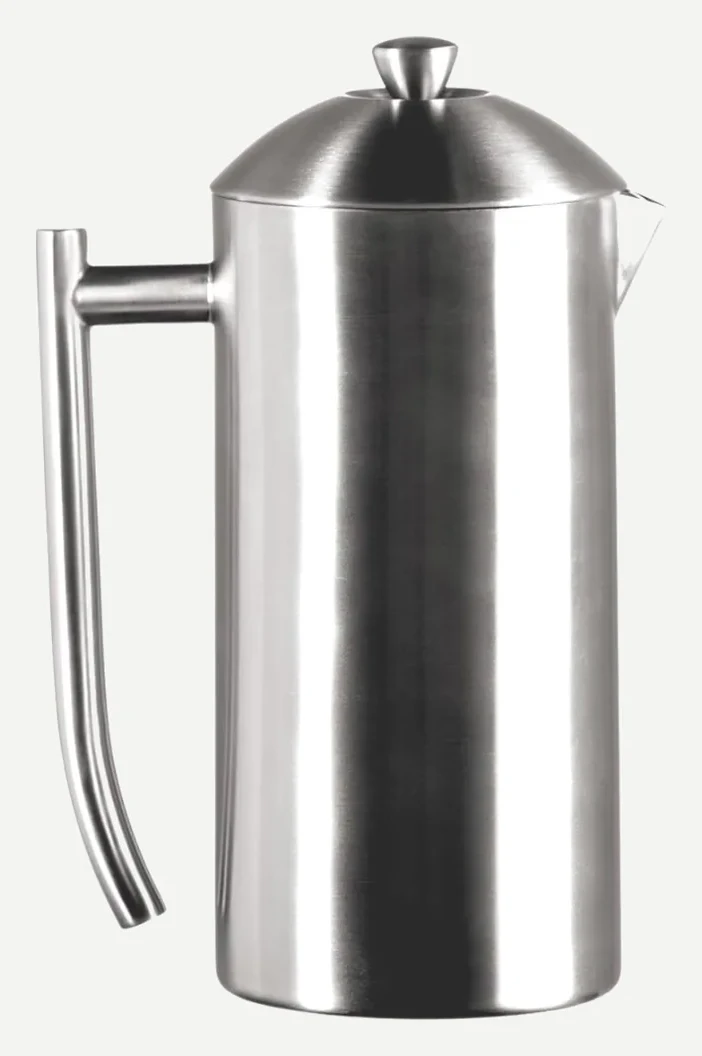 Frieling Double-Walled Stainless Steel French Press 36ozA press that keeps the pot hot and will not shatter, for daily use over decades