Burr vs Blade: Why Grind Consistency Is Most of the Cup
A blade grinder chops, a burr grinder mills to a size. That difference decides how much of your coffee dissolves, and it is the single biggest upgrade most home setups can make.
If you change one thing about how you make coffee, change the grinder. Not the beans, not the brewer, not the kettle. The grinder is the only piece of equipment that decides how much of the coffee dissolves, and almost everything people call a bad cup is really an uneven one.
That sounds like an overstatement. It is not. Brewing is extraction: hot water pulling flavour out of ground coffee over a fixed time. How fast it pulls depends on how much surface area the water meets, and surface area is set entirely by grind size. Get the grind even, and every particle gives up roughly the same amount in the same time. Get it uneven, and you are brewing two coffees at once in the same cup.
What a blade grinder actually does
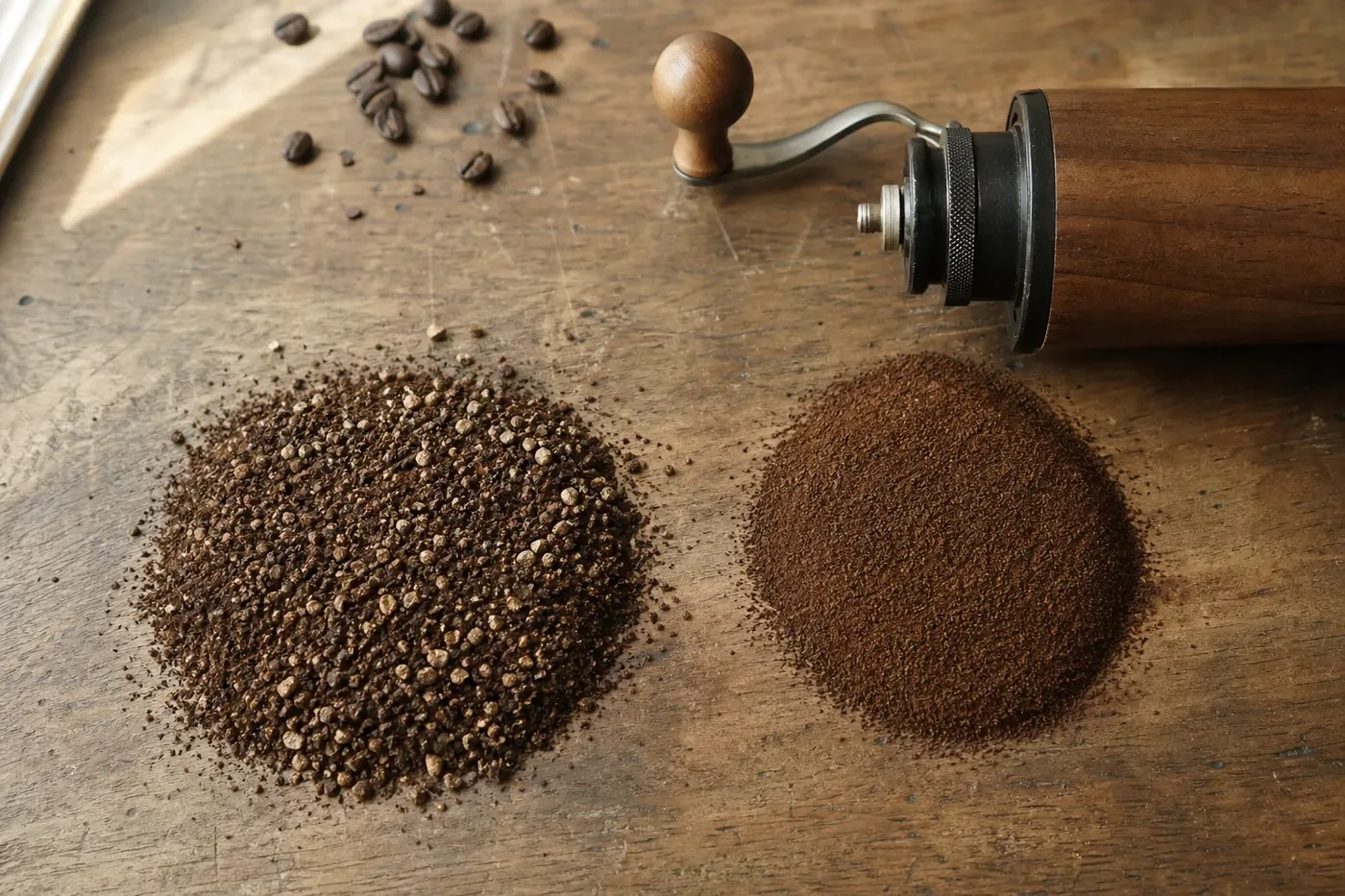
A blade grinder is a spinning knife in a cup. It does not measure anything and it does not stop at a size. It chops whatever it hits, and whatever it misses stays whole until it drifts into the path again. Run it for ten seconds and you get a mixture: some dust, some gravel, some pieces barely touched.
This is not a small difference in quality. It is a different process. The dust over-extracts almost immediately and tastes bitter and drying. The gravel barely extracts at all and tastes thin and sour. Both go into the same brew, and you taste the average of two failures. There is no brew time that fixes it, because the two halves want opposite times.
We have exactly one blade grinder on the site, the BLACK+DECKER One-Touch, and its own listing is honest about what it is: it chops with a spinning blade rather than milling beans to a size. As a spice grinder that is a perfectly good machine. As a coffee grinder it is the thing standing between you and the coffee you paid for.
What a burr grinder does instead
A burr grinder has two abrasive surfaces with a gap between them. Beans fall in, get crushed, and cannot leave until they are small enough to pass through the gap. The gap is the setting. That is the whole idea, and it is why a burr grinder produces a size rather than a mess: nothing exits until it fits.
It will never be perfectly uniform. Every grinder produces some fines, and a small amount of them is useful for body. What separates grinders is how tight the main distribution is around the size you asked for, and how few stragglers sit at the extremes.
Conical or flat
Conical burrs are a cone inside a ring. They are efficient, run cooler at low speeds, and dominate at home. The Baratza Encore is the standard example: 40mm steel conical burrs turning at 550rpm, which is the slow end, where less heat reaches the grounds.
Flat burrs are two parallel rings. They tend to produce a tighter distribution and a more distinct cup, which is why espresso bars favour them, and they usually cost more and retain more grounds. The MOKKOM 64mm is the largest flat set in our grinder reviews by a wide margin.
There is a third answer worth knowing about. The Kingrinder K6 uses heptagonal burrs, and the 1Zpresso K-Ultra uses 1Zpresso's own K burr. Both are conical geometry cut differently to bite the bean more aggressively, which is how a hand grinder gets through a dose without a fight.
Steel vs ceramic burrs in a burr grinder
Steel burrs cut faster and stay sharper longer under load. Ceramic burrs are harder, so they wear slowly, but they are brittle and a stone in the hopper can chip them. Ceramic is common at the cheap end of hand grinders, where the low throughput suits it.
In practice this matters less than the geometry and far less than the size. A large steel burr and a small steel burr are more different from each other than steel and ceramic are at the same diameter.
How many settings a burr grinder needs
Setting counts are the most quoted and least useful number on a grinder listing. Forty well-spaced settings that cover coarse to fine beat two hundred crammed into the filter range.
What matters is where the range sits. Espresso needs both fine grinding and fine adjustment, because the difference between a good shot and a choked one is smaller than one click on most filter grinders. This is where cheap all-purpose grinders fail: they will physically grind fine, but they cannot be adjusted in steps small enough to dial a shot. The K-Ultra's answer is 20 microns per click, which is why it can do espresso at all.
If you brew filter only, you need far less than the marketing suggests. If you might buy an espresso maker later, buy the grind range now: it is the harder half to upgrade.
Hand vs electric burr grinder
A hand grinder buys you burr quality for less money, because you are not paying for a motor, a housing and a hopper. That is the entire trade. A Kingrinder K6 puts 48mm stainless burrs in your hands for less than most electric grinders charge for 40mm.
The cost is time and effort, and it scales badly. One or two cups is a pleasant minute. Grinding for four people before work is a chore you will stop doing, and a grinder you stop using is worse than a cheaper one you keep using.
Burr grinder specs: what the numbers are worth
Burr diameter
Bigger burrs cut more of the dose per rotation, which means fewer passes, less heat and usually a tighter distribution. It is the single most informative number on a grinder listing, and unlike setting counts it is hard to inflate. Forty millimetres is the home standard; the Kingrinder K6 runs 48mm by hand and the MOKKOM 64mm flat, which is commercial territory.
Motor speed
Low rpm is a feature, not a weakness. Slower grinding puts less heat into the grounds and tends to produce fewer fines. The Encore runs at 550rpm and the Sette 270Wi at 650rpm on a much bigger motor; when a cheap grinder advertises speed, it is advertising the thing the careful grinders deliberately avoid.
Retention
Retention is how much ground coffee stays inside the grinder instead of coming out. It matters for two reasons: you paid for it, and yesterday's grounds come out mixed into today's dose. On a single-dose workflow it is the difference between grinding 18g and getting 18g back.
It is also the clearest example of the gap between what we would like to score and what anyone publishes. Retention is one of four inputs in the grinder rating guide that fewer than one maker in four states, so its weight leaves the total rather than being guessed at. That is why some grinder scores here are out of less than 100.
Grinder static, mess and the things nobody mentions
Grinding builds a static charge, particularly with dry beans and low humidity, and the grounds cling to whatever they touch. The widely used fix is the Ross Droplet Technique: one drop of water stirred into the beans before grinding. It costs nothing and eliminates most of the problem.
Single-dose grinders often ship with bellows, which push the retained grounds out with a puff of air. The MOKKOM's silicone bellows double as its single-dose hopper, which is a neat piece of design: the same part solves the loading and the clearing.
When burr grinder burrs wear out
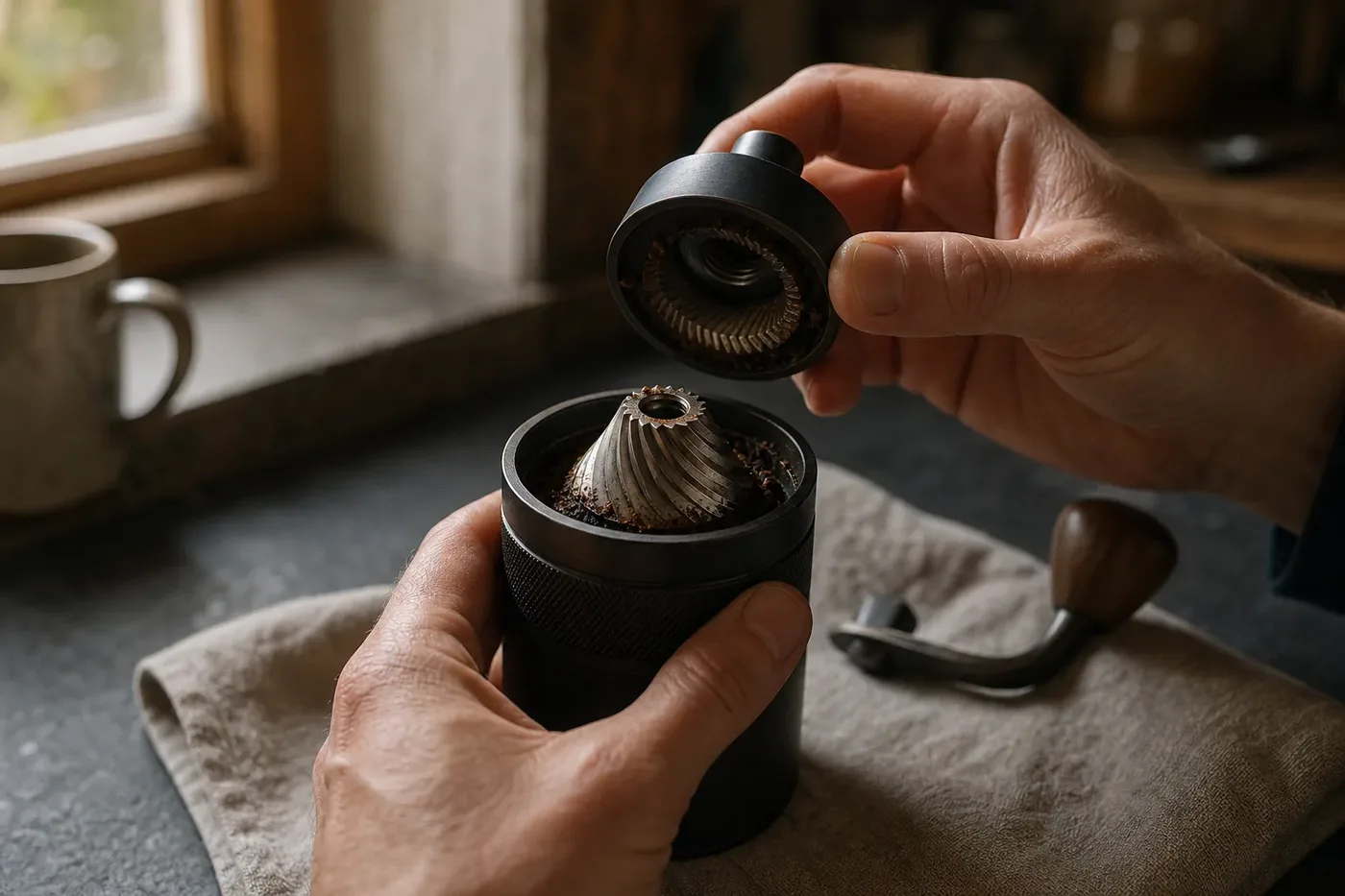
Burrs are consumable. Steel burrs dull gradually over hundreds of kilos, and the symptom is not a dramatic failure but a slow drift: the grinder starts producing more fines at the same setting, and your coffee gets muddier without your having changed anything. Most people re-dial and never realise.
This is the strongest practical argument for buying Baratza at the entry level, and the reason our reviews keep mentioning it. Replacement burrs and parts are actually purchasable, which turns a four-year grinder into a ten-year one. Most brands at this price sell you a sealed unit and a warranty, and when the burrs dull you buy another grinder.
Burr grinder prices: what you get for the money
Under fifty dollars
Hand grinders with ceramic conical burrs, like the Hario Mini-Slim Plus at about $40, or the Hario Skerton Pro for a little more. These are a genuine step up from any blade grinder and perfectly good for French press and drip. Adjustment is coarse and the shaft usually has some play, which shows up as inconsistency at fine settings. Fine for filter, not for espresso.
Around a hundred and fifty
The sweet spot. Either a serious hand grinder with large steel burrs, or an entry electric like the Encore. This is where grind quality stops being the limiting factor in your cup, and the choice becomes convenience against burr size for the money.
Three hundred and up
You are buying espresso capability, adjustment resolution and workflow rather than a fundamentally better filter grind. The Sette 270Wi doses by weight with a scale reading to 0.1g rather than running on a timer, which is a workflow difference, not a taste one. Worth it if you pull shots daily, hard to justify if you brew a carafe.
Grinder, beans, brewer: the order to spend in
Grinder, then beans, then brewer. That order surprises people who have just bought an expensive dripper, but it follows from what each thing controls. The grinder sets the particle distribution and nothing downstream can repair it. The beans set the ceiling on what flavour is available. The brewer, within reason, just decides how you get there.
Which is also why a $40 dripper with an even grind beats a $300 one with an uneven grind. The dripper has no mechanism for fixing a distribution the grinder never produced.
Which burr grinder we would buy
If you brew filter and want to stop thinking about it, the Baratza Encore, mostly because Baratza sells the spare parts, which no other brand here reliably does.
If you are patient and want the most burr for the money, the Kingrinder K6.
If you are heading toward espresso, buy the adjustment resolution now. The 1Zpresso K-Ultra at 20 microns a click will still be enough grinder when the machine arrives.
And if you currently own a blade grinder, the upgrade to almost any burr grinder will change your coffee more than any bag of beans you could buy with the same money.
Burr vs blade grinders FAQ
Is a burr grinder really better than a blade grinder?
Yes, and it is not a matter of degree. A burr grinder mills beans to a size set by the gap between two surfaces, so nothing leaves until it fits. A blade grinder chops whatever the spinning blade happens to hit, which produces dust and gravel at the same time. The dust over-extracts and tastes bitter, the gravel under-extracts and tastes sour, and you drink the average of both. No brew time fixes that, because the two halves want opposite times.
Conical or flat burrs, which should I buy?
Conical for almost everyone. They are efficient, run cooler at low speeds and cost less at the same diameter. Flat burrs generally produce a tighter particle distribution and a more distinct cup, which is why espresso bars prefer them, but they cost more and retain more grounds in the machine. Burr diameter and how well the grinder is built matter more than which shape it is.
How many grind settings do I actually need?
Fewer than the listings imply. Forty well-spaced settings covering coarse to fine are more useful than two hundred crowded into the filter range. What matters is where the range sits and how fine the adjustment is at the espresso end, because the gap between a good shot and a choked one is smaller than one click on most filter grinders.
Are ceramic burrs better than steel?
Not better, different. Steel cuts faster and stays sharper under load. Ceramic is harder so it wears more slowly, but it is brittle and a stone in the hopper can chip it. Ceramic suits the low throughput of cheap hand grinders. Either way, burr size and geometry make far more difference to the cup than the material does.
Should I buy a hand grinder or an electric one?
A hand grinder buys you better burrs for the money, because you are not paying for a motor and housing. That is the whole trade, and the cost is effort. One or two cups is a pleasant minute; grinding for four people before work is a chore you will give up on. Buy the hand grinder if you brew for one or two, the electric one if you brew for a household.
Will a better grinder improve my coffee more than better beans?
Usually, if you are grinding unevenly now. Good beans ground badly still brew as two coffees at once, one bitter and one sour, and the bag cannot fix that. Once your grind is even, beans become the bigger lever. The order matters: grinder first, then beans, then brewer.
Reviewed on this site
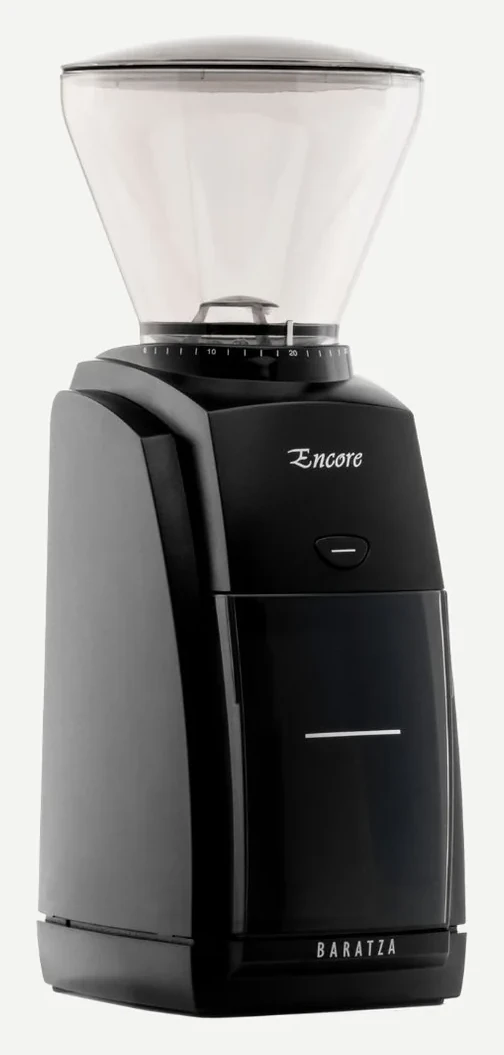 Baratza Encore ZCG485BLKThe first real grinder, from the one brand here that sells you the spare parts
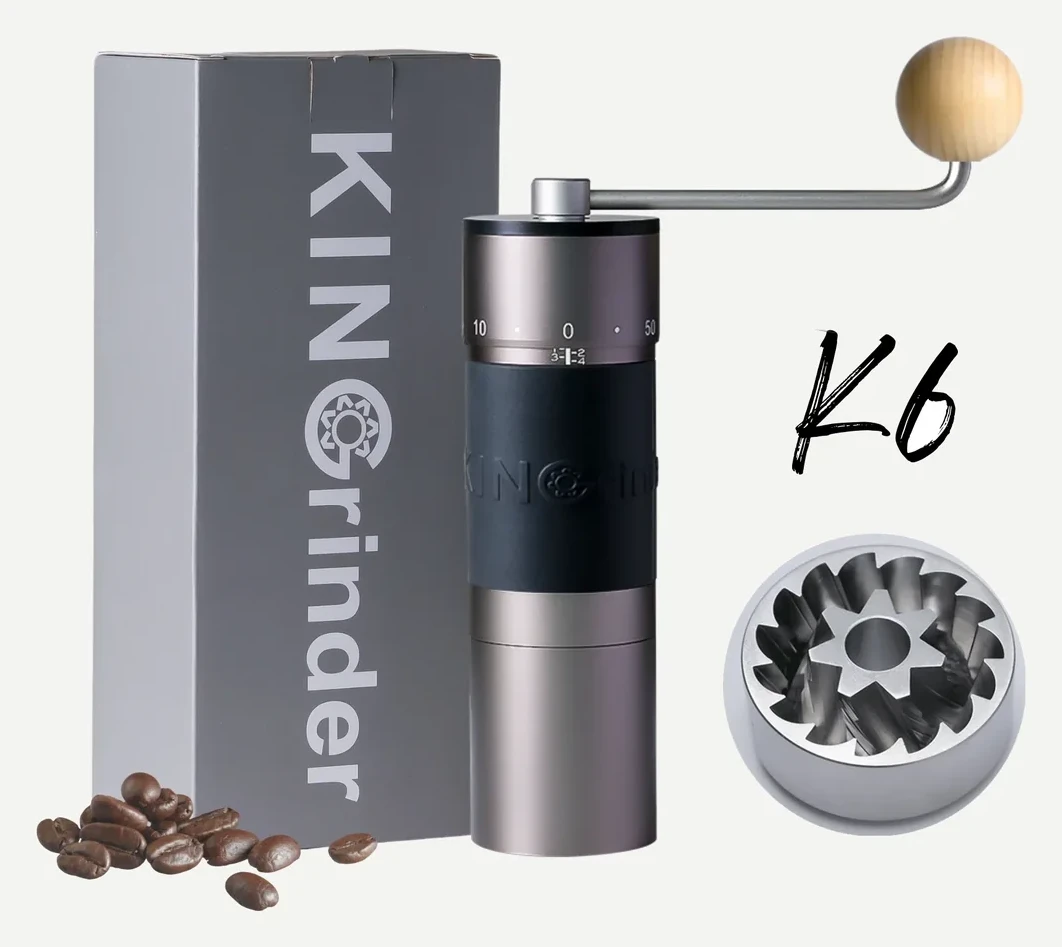 Kingrinder K6Coffee enthusiasts seeking a precise, portable manual grinder for travel, camping, and home use
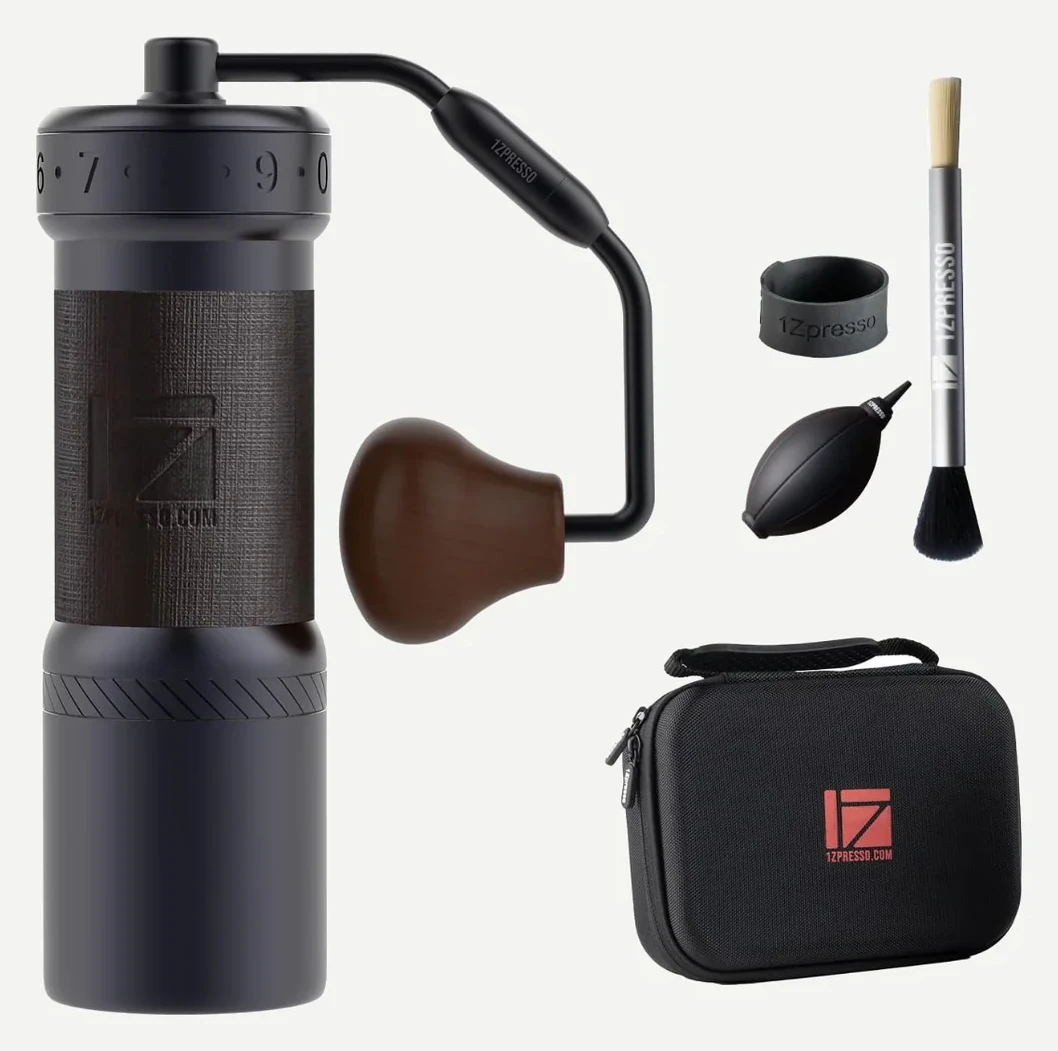 1Zpresso K-Ultra Manual Coffee GrinderThe manual grinder that handles espresso and filter without compromise
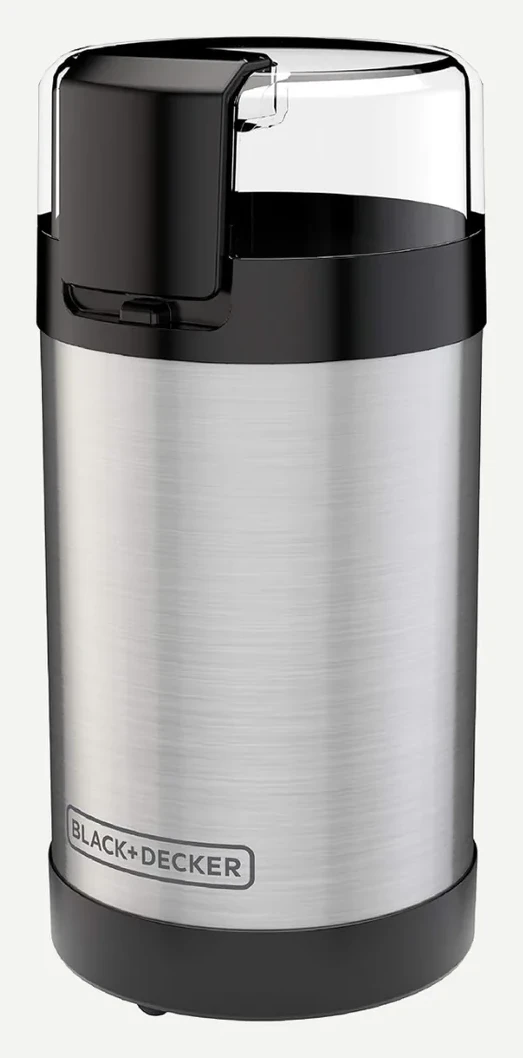 BLACK+DECKER One-Touch Coffee & Spice GrinderGrinding spices, and understanding what a burr grinder is actually for
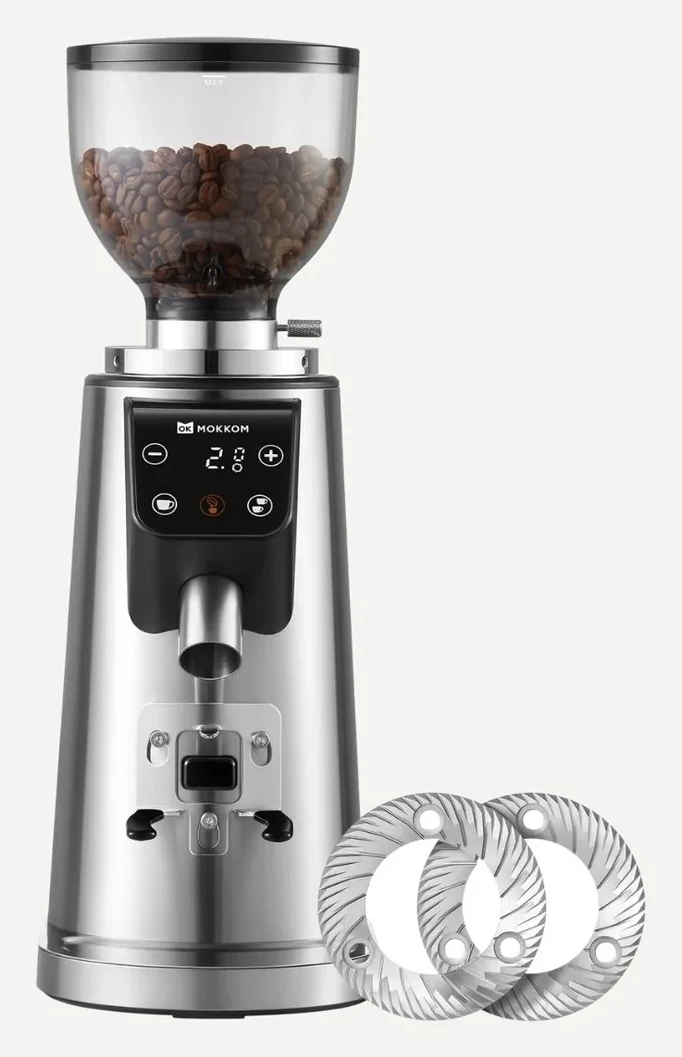 MOKKOM 64mm Flat Burr Coffee GrinderFlat burrs and single dosing without commercial money