Moka Pot vs French Press: Which to Choose
Both are cheap, simple and built to last. One makes a short, intense coffee with pressure; the other makes a full mug by steeping. The choice is about the cup.
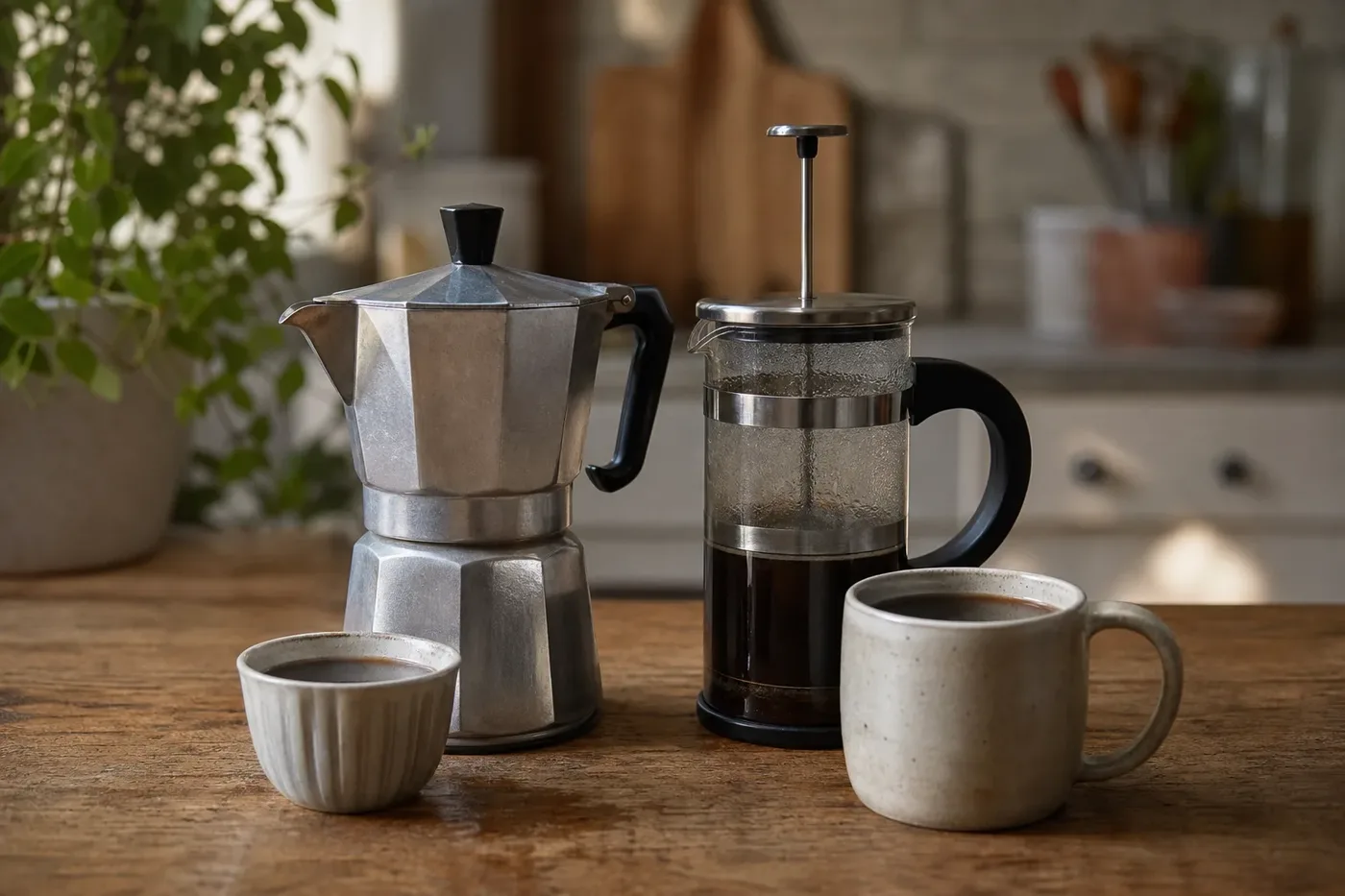
A moka pot and a French press are the two cheapest serious ways to make coffee at home, and they make very different cups. The moka pot uses steam pressure to push water up through the coffee and makes something short, strong and intense. The French press steeps coffee in water and filters it through a mesh, making a full-bodied mug.
How a moka pot and a French press brew
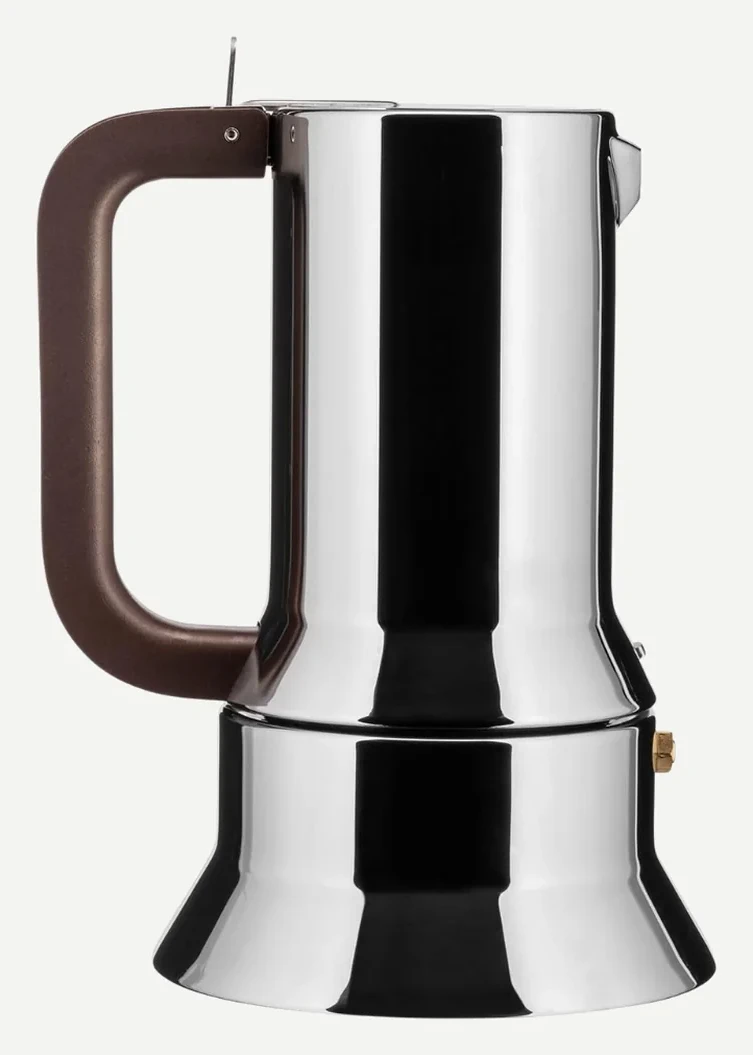
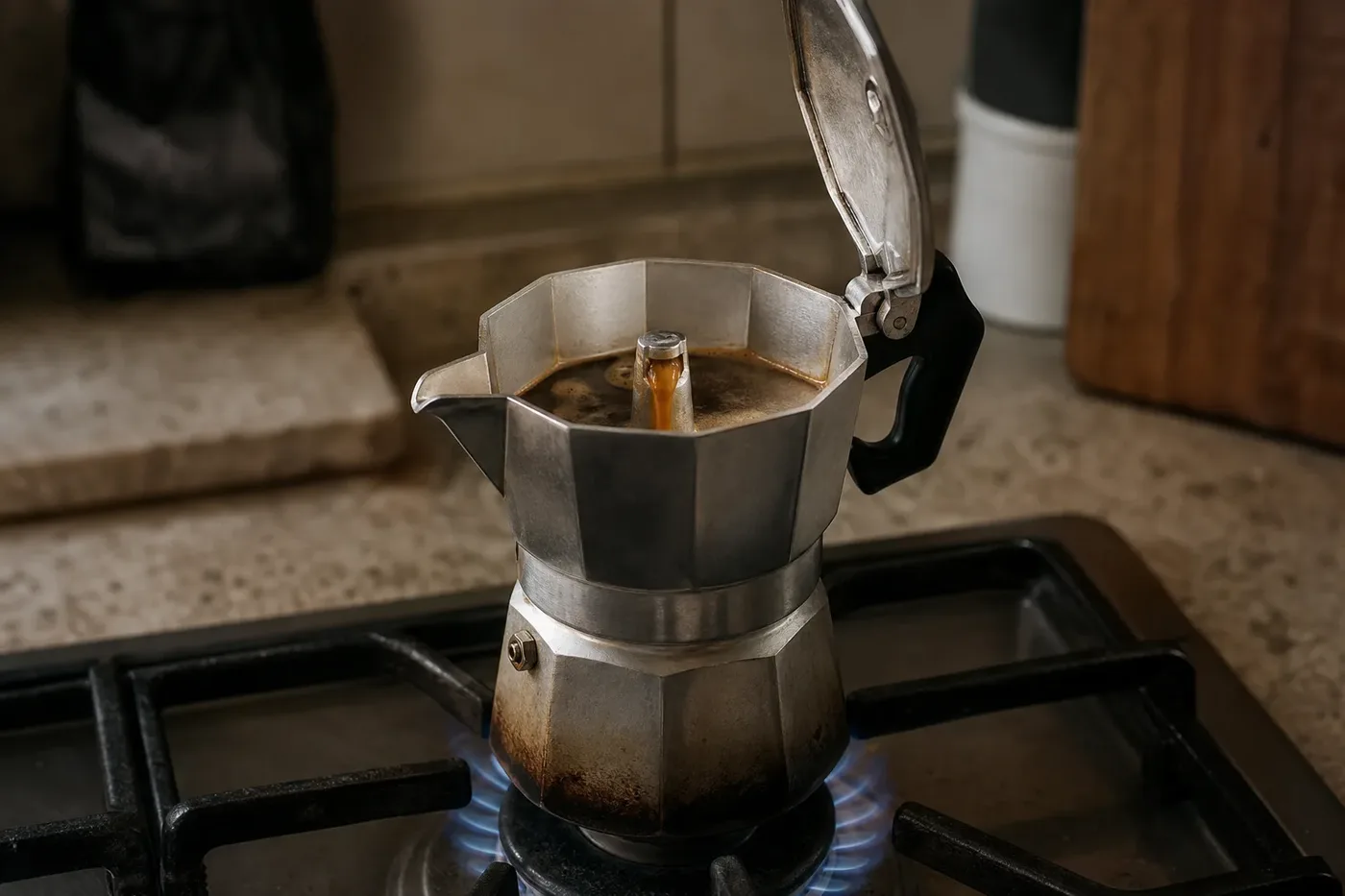
The moka pot sits on the hob. Water in the base heats until the steam above it builds enough pressure to force the water up through a basket of ground coffee and into the top chamber. It is a pressure method, though a gentle one, far below the pressure an espresso machine uses.
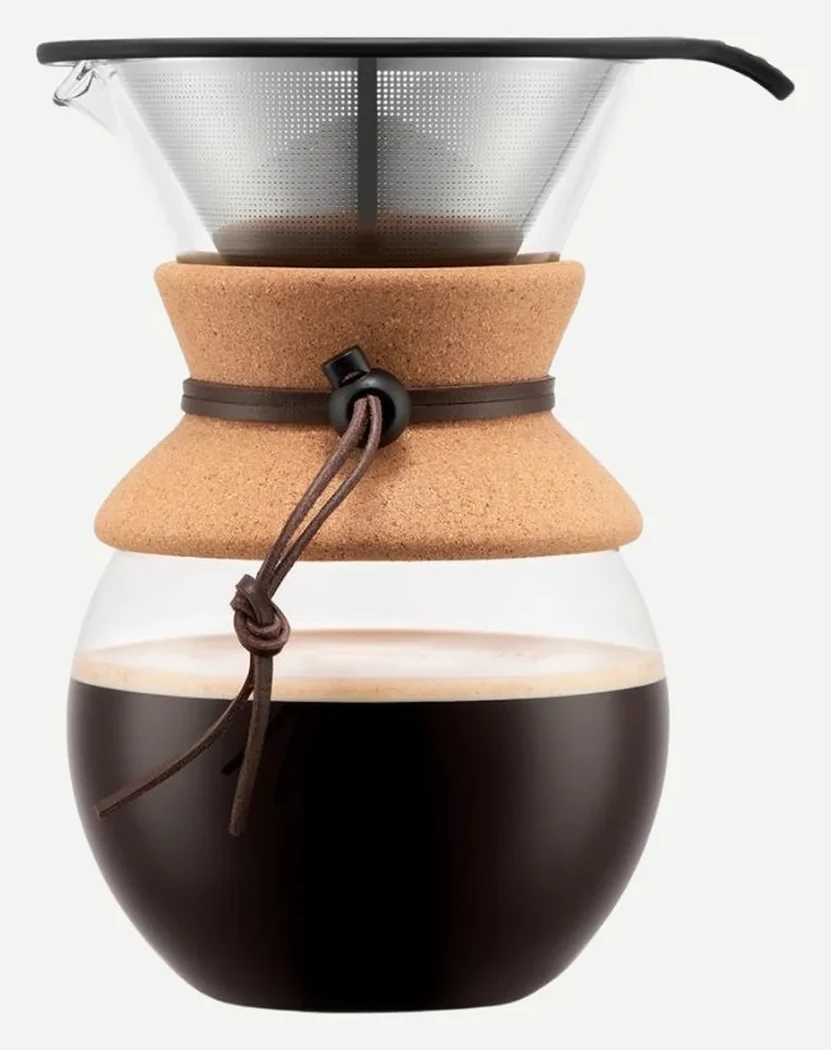
The French press is immersion. Hot water and coarse coffee sit together for about four minutes, then a metal mesh is pressed down to hold the grounds at the bottom. Every particle spends the same time in the same water. The difference between the two principles is set out in immersion against percolation.
Moka pot vs French press side by side
- Strength. The moka pot makes a concentrated coffee, close in character to espresso though not the same. The French press makes a normal-strength mug.
- Volume. A moka pot's cups are small ones; a six-cup pot makes a few short servings. A French press makes several full mugs at once.
- Body. Both are heavy. The press keeps the coffee oils and some fine sediment, the moka pot has an intense, syrupy weight.
- Grind. Moka: fine, but coarser than espresso. French press: coarse.
- Time. Both take about five minutes, the moka pot on the hob and the press while it steeps.
- Heat. The moka pot needs a hob. The press needs only a kettle.
Moka pot vs French press taste and common faults
The French press is the more forgiving of the two. Get the grind roughly right, time four minutes, and it is hard to make a bad cup. Its common faults are sludge from too fine a grind and bitterness from leaving the coffee on the grounds after pressing.
The moka pot is quicker to turn harsh. Too much heat or leaving it on the hob after it starts to sputter gives a burnt, metallic taste. Low heat and taking it off as soon as the coffee flows steadily fix most problems. Both methods are covered step by step in how to use a moka pot and how to use a French press.
Moka pot or French press for milk drinks
The moka pot wins. Its concentrated coffee holds up under milk and makes a good home latte or cappuccino base, where French press coffee turns weak once milk goes in. The press has one trick of its own, though: pumping the plunger through warm milk in a clean press makes a passable foam.
Cleaning and durability of a moka pot vs a French press
A moka pot rinses clean in a minute but should not be scrubbed with detergent or put in a dishwasher if it is aluminium, and its rubber gasket needs replacing every so often. A French press is messier to empty, because wet grounds cling to the glass and mesh, but the parts wash easily. A glass press breaks; steel ones do not. Either will outlast almost any electric coffee maker.
Moka pot or French press on an induction stove
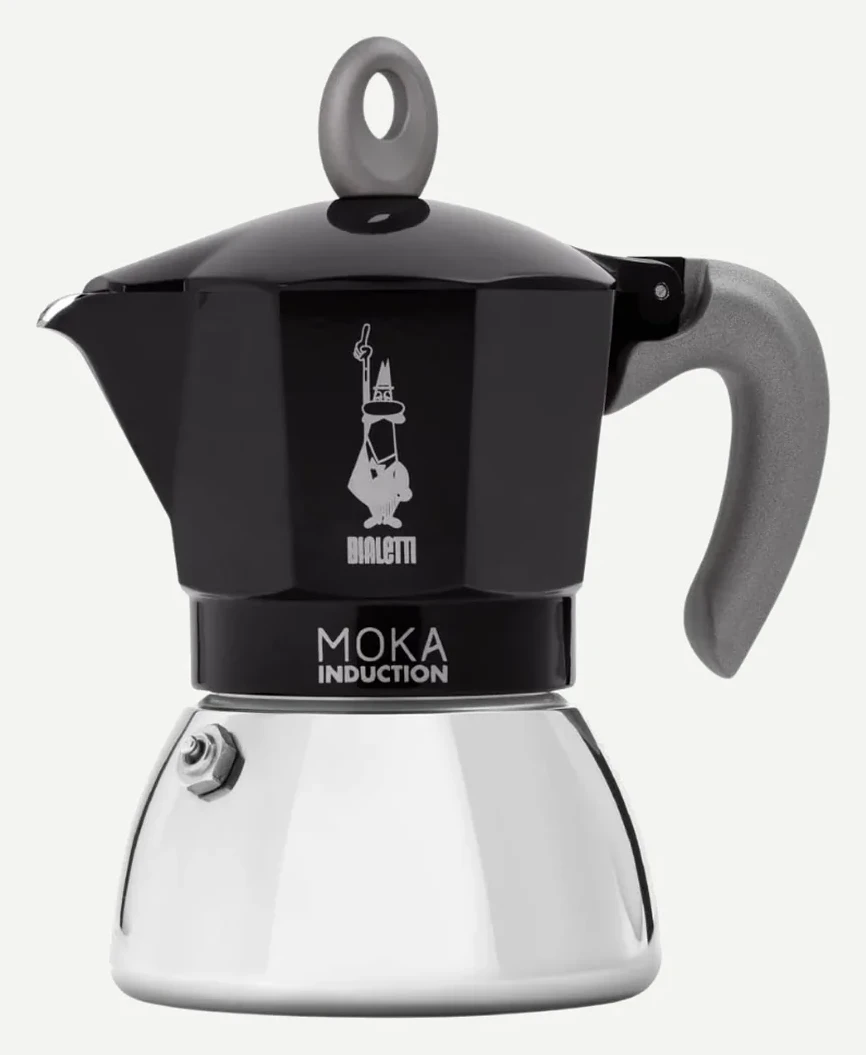
This settles the choice for some kitchens. Classic aluminium moka pots do not work on induction. You need a steel pot or one made for induction, and our list of induction moka pots covers the ones that do. A French press does not care what hob you have.
Moka pot or French press: which should you choose?
Choose a moka pot if you like strong, espresso-like coffee, drink small cups, or want a base for milk drinks without buying an espresso machine. Choose a French press if you drink mugs of black coffee, make coffee for several people at once, or want the most forgiving method there is. Many coffee drinkers end up owning both, and at their prices that is a reasonable place to land. Our reviews of moka pots and French presses rank the ones worth buying.
Moka pot vs French press FAQ
Which is stronger, a moka pot or a French press?
The moka pot. It makes a concentrated, espresso-like coffee, while a French press makes a normal-strength mug.
Can you use the same grind for a moka pot and a French press?
Not well. A moka pot needs a fine grind, coarser than espresso, while a French press needs a coarse grind to avoid sludge and bitterness.
Which is better for lattes, a moka pot or a French press?
A moka pot, because its concentrated coffee holds up under milk. French press coffee turns weak once milk is added.
Does a moka pot work on an induction hob?
Only steel or induction-ready models. Classic aluminium moka pots do not work on induction, while a French press works anywhere you can boil a kettle.