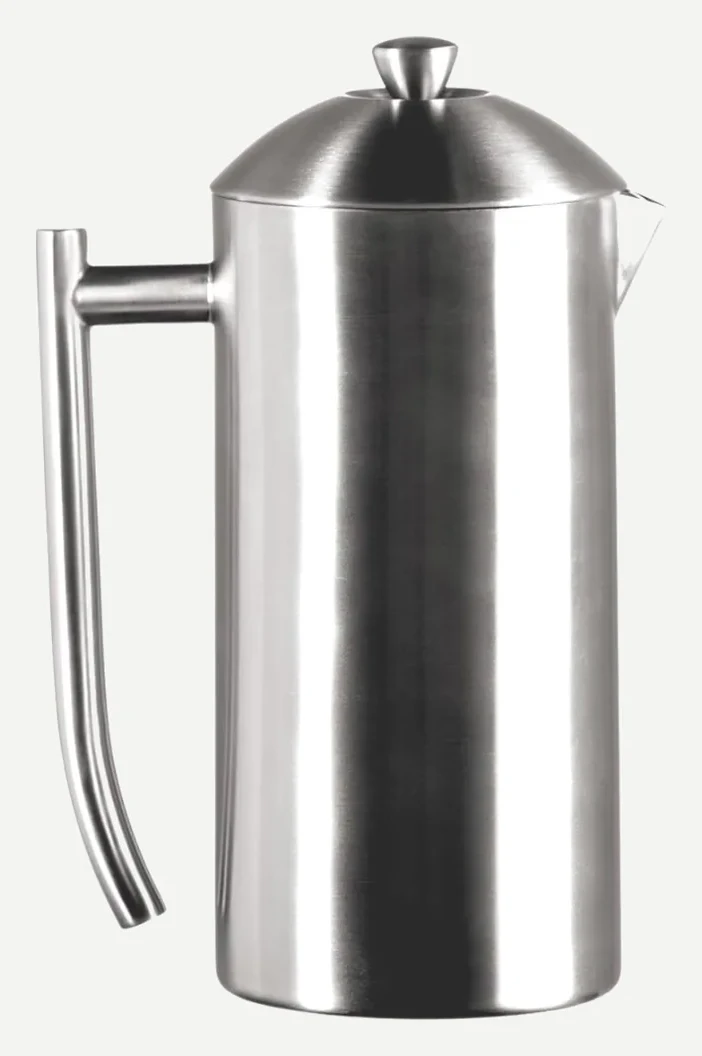
What is the Frieling French press?
A French press with the glass problem engineered out of it.
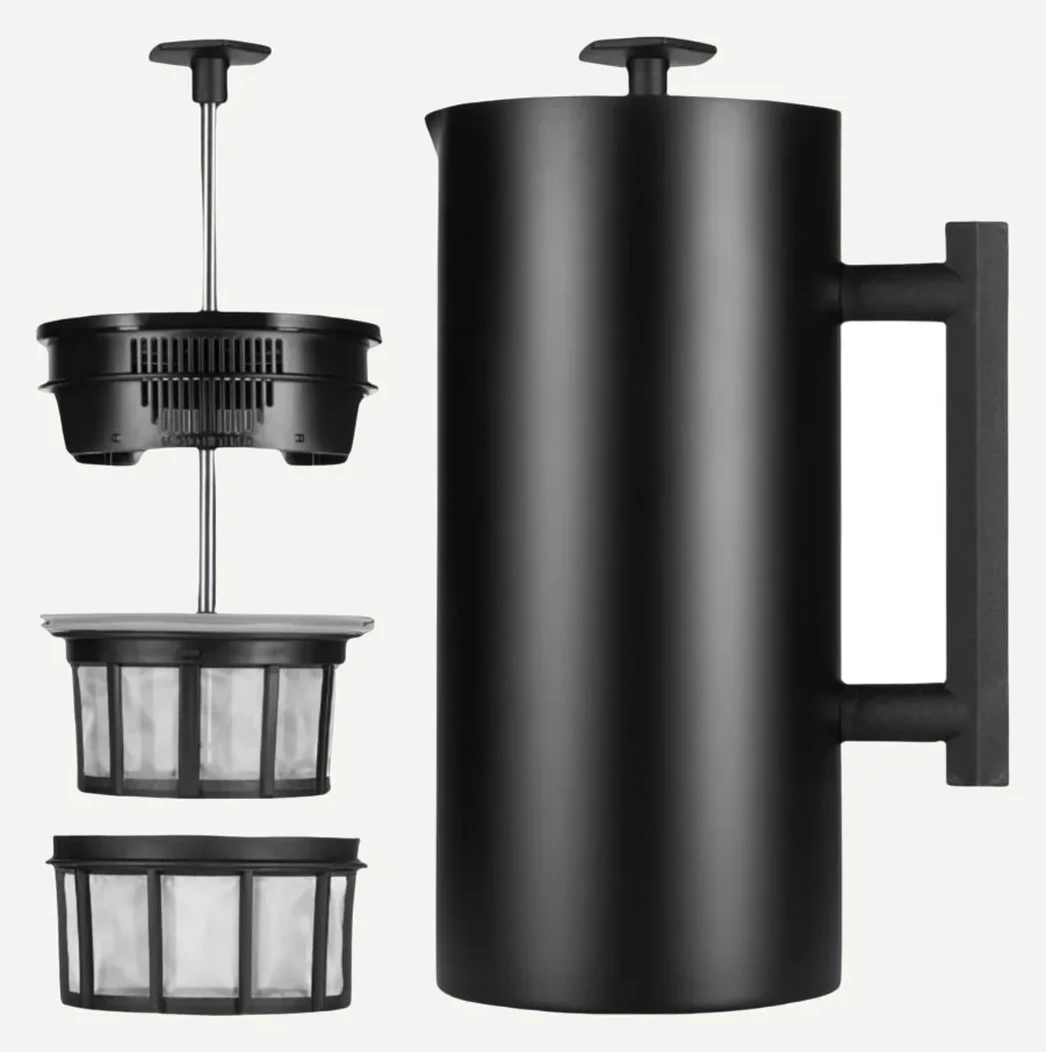
Frieling publishes a double-walled stainless steel body, a dual screen filter, insulated construction it states outperforms traditional glass presses for heat retention, and dishwasher-safe convenience. It holds 36oz, about a litre, and measures 10.1 by 6.2 by 4.5 inches.
Why the second screen changes the cup
A dual screen filters twice, and the difference lands in the last inch of the mug.
A single mesh screen passes any particle smaller than its holes, and every French press generates fines: the dust a grinder makes alongside the grounds you wanted. Those fines settle in the bottom of the cup as sludge and continue extracting while they sit there, which is why the last mouthful of press coffee is often bitter.
Two screens in series catch a meaningful proportion of them. Frieling credits the dual screen for a consistently smooth, sediment-free brew, and while sediment-free is a stronger claim than a metal filter can strictly deliver, the direction is real and the last inch is a better drink for it.
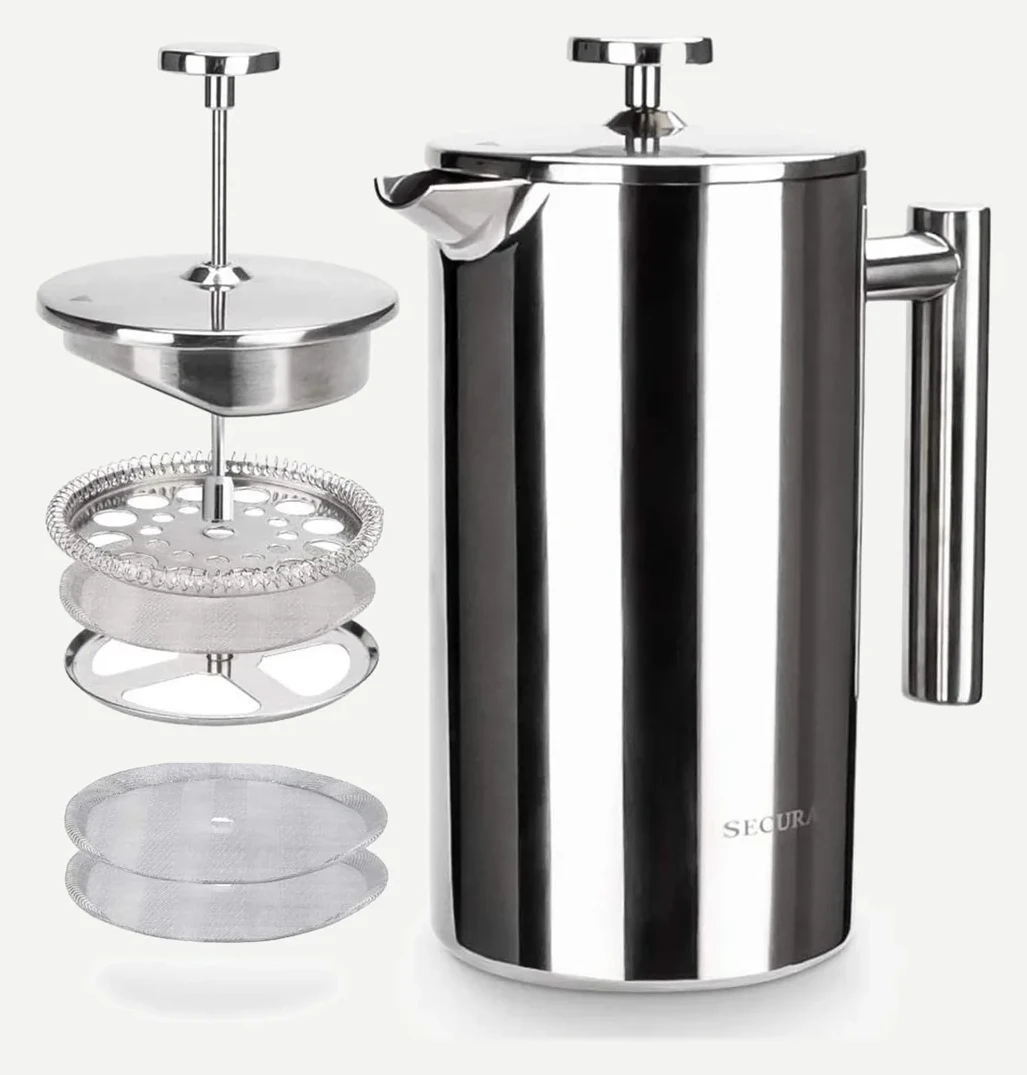
The trade is cleaning. Two screens is two things to rinse and a place for grounds to lodge between them, which is exactly what makes a single-screen Chambord easier to deal with at the sink.
Double-walled steel, and the thing it cannot do
It keeps the pot hot. It does not stop the brewing.
An insulated press holds temperature far better than glass, which is genuinely useful when you brew a litre and drink it over half an hour. Glass presses go lukewarm; this one does not.
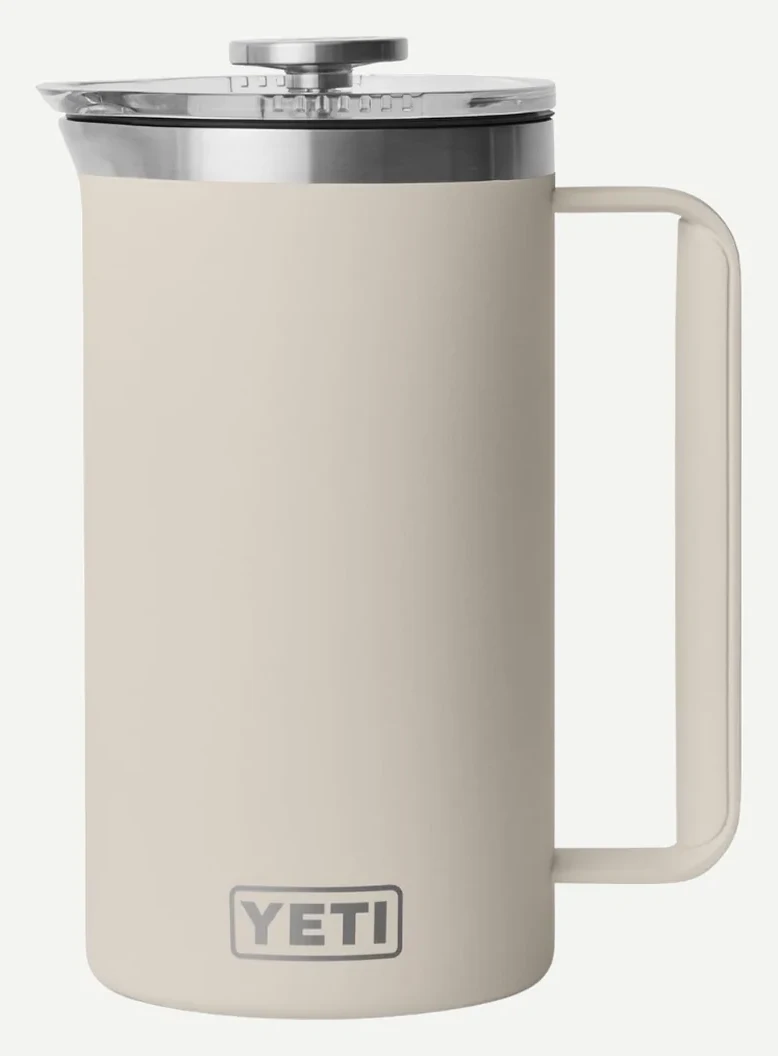
But heat is what drives extraction, so a press that stays hot keeps extracting from the grounds still sitting in it. Coffee left in any French press gets progressively more bitter, and an insulated one gets there faster, not slower. The discipline is to decant into a mug or a flask once you have plunged. The YETI Rambler is the one press here that addresses this in hardware rather than asking you to remember.
The other cost of steel is that you cannot see in. Judging the bloom, the level and how much is left is done by weight and habit rather than by eye, which is a small loss for a beginner and none at all for anybody who has made press coffee for a year.
Frieling vs Espro P7
The two serious steel presses, and they take different routes to a clean cup.
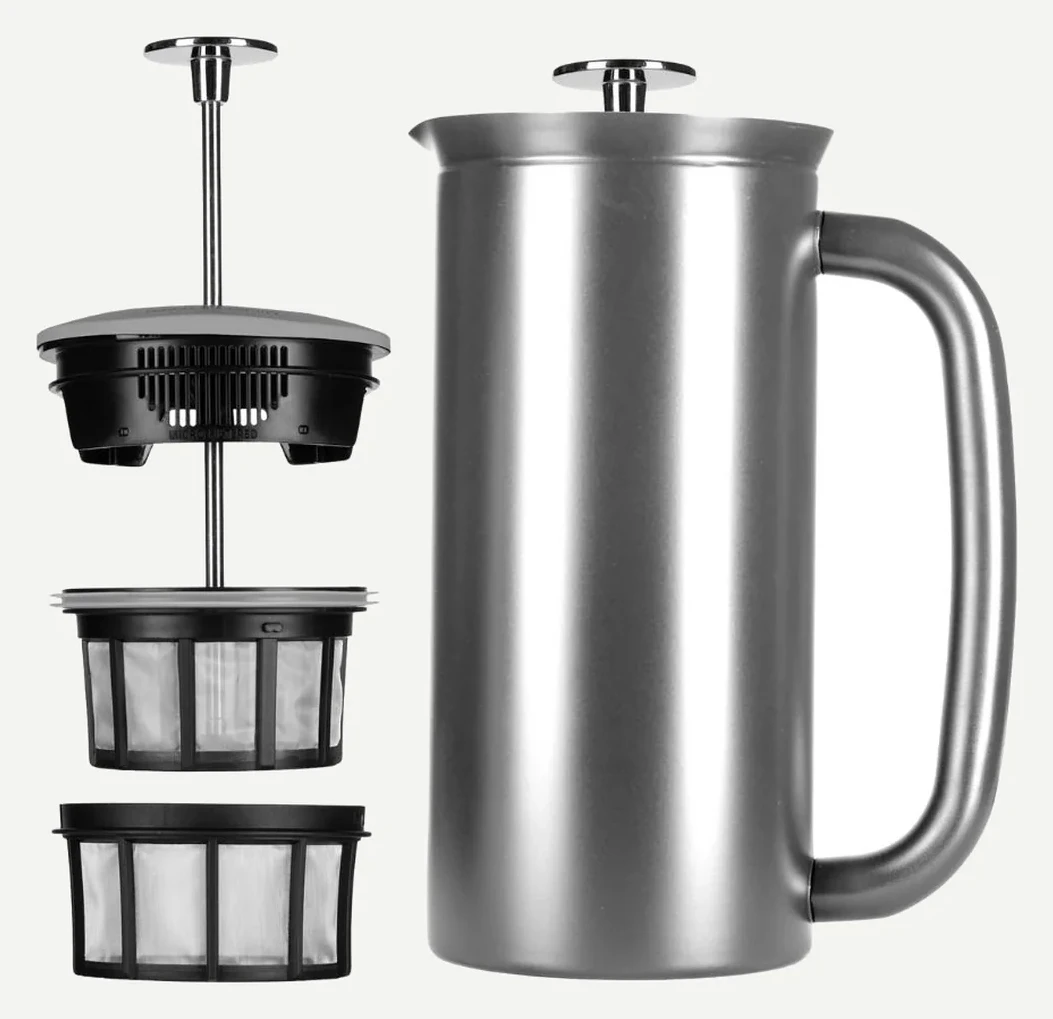
The Espro P7 uses a sealed double microfilter basket, which lifts the grounds out of contact with the coffee when you plunge and genuinely does stop extraction.
The Frieling is the simpler object: two flat screens, more capacity at 36oz, and considerably fewer parts to lose or wear out. The Espro filters harder and stops the brew; the Frieling is more robust and holds more. For a household pot, the Frieling. For the cleanest possible cup, the Espro.
Is the Frieling worth it?
Worth it as a buy-once press, and the maths is straightforward.
It costs several times a Bodum Brazil and will outlive several of them, because the thing that kills a glass press is dropping it and this one does not care. For a busy kitchen that is a real saving rather than a rationalisation.
Frieling publishes no warranty term, no filter micron rating, no weight and no heat retention figure in hours on this listing, so none of those are claimed here. The insulation is described but not quantified, which is a meaningful gap when a Stanley Stay-Hot French press publishes four hours.
Who should buy it (and who should not)
Buy it for a household that brews a full pot and wants it to last.
It suits a kitchen where things get knocked, anybody who has already broken a glass carafe, and drinkers who care about the last inch of the cup.
Do not buy it if you want to watch the brew, and do not buy it expecting to leave coffee sitting in it, which insulation makes worse rather than better. For one person and one mug, it is more press than the job needs.
Frequently Asked Questions
Does the Frieling keep coffee hot?
Yes, it is double-walled and insulated. Frieling does not publish a figure in hours, unlike Stanley.
What does the dual screen filter do?
Filters twice in series, catching more of the fine particles that settle as sludge in the bottom of the cup.
Should you leave coffee in it?
No. Insulation keeps the water hot, which keeps the grounds extracting. Decant after plunging.
Is it dishwasher safe?
Yes, per the maker.
How much does it hold?
36oz, about a litre, which is a large press by domestic standards.