Pour Over vs Espresso: What Actually Differs
One is gravity and three minutes, the other is nine bars and thirty seconds. The numbers, and which ones are actually published.
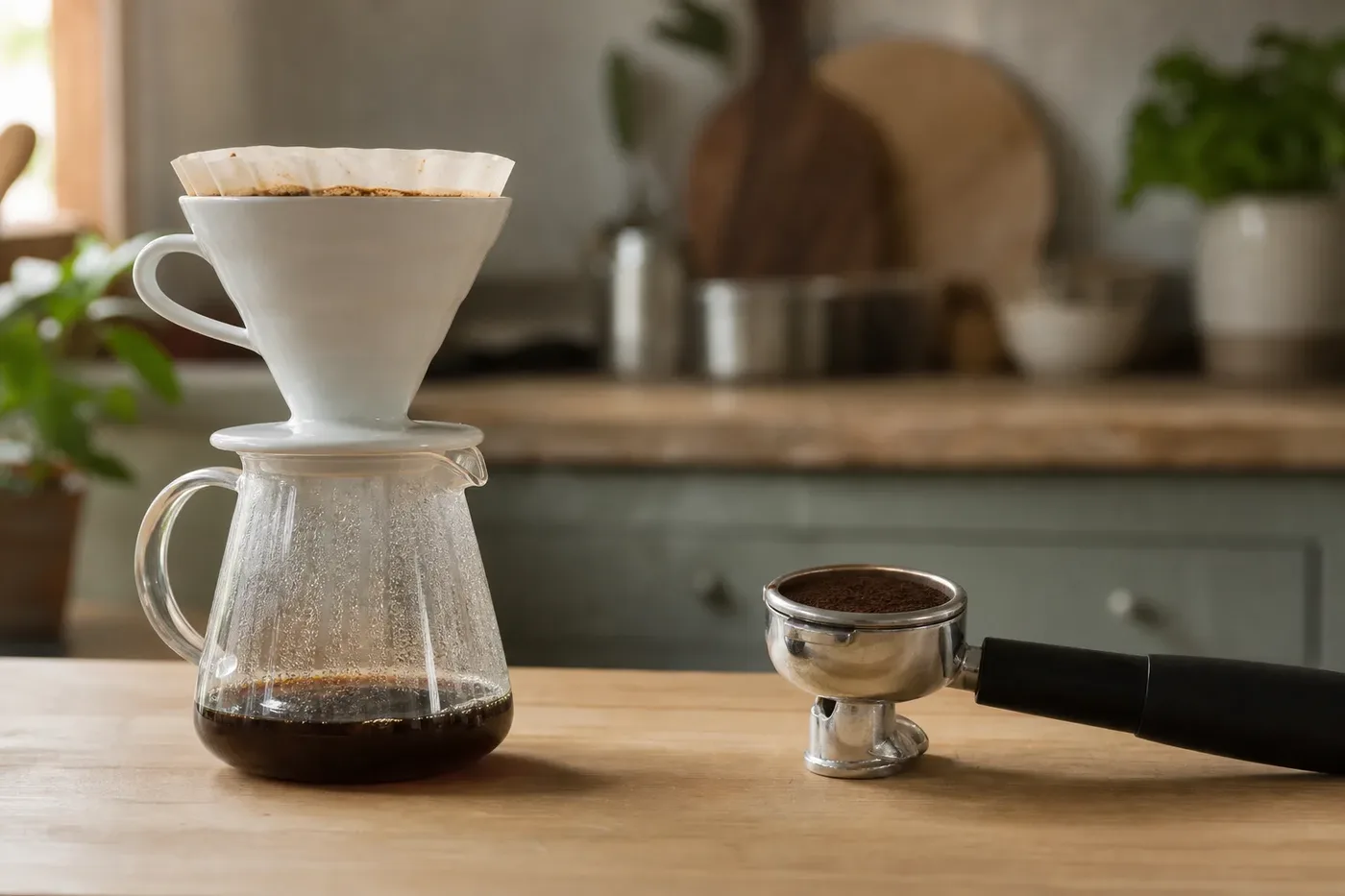
The difference is not strength, and it is not the roast. It is pressure. Espresso forces water through tightly packed coffee in about half a minute; pour over lets gravity pull it through loose grounds over several minutes. Everything else follows from that.
Pressure is the whole of it
A pour over has no pressure beyond the weight of the water sitting above the grounds. An espresso machine's pump pushes at roughly nine bar, which is nine times atmospheric pressure, and that is the number machines are built and judged against.
Pressure changes what can dissolve and how fast. It is why an espresso runs in 25 to 30 seconds against several minutes, why the grind has to be far finer, and why espresso carries crema and filter coffee does not.
The filter numbers, which are published
The SCA's home brewer standard sets out the reference figures the whole filter world uses:
- Ratio. 55 g of coffee per litre of water, about 1 to 18.
- Temperature. 90 to 96 C at the slurry, held through the cycle.
- Strength. A target of 1.15 to 1.55 percent dissolved solids at that ratio.
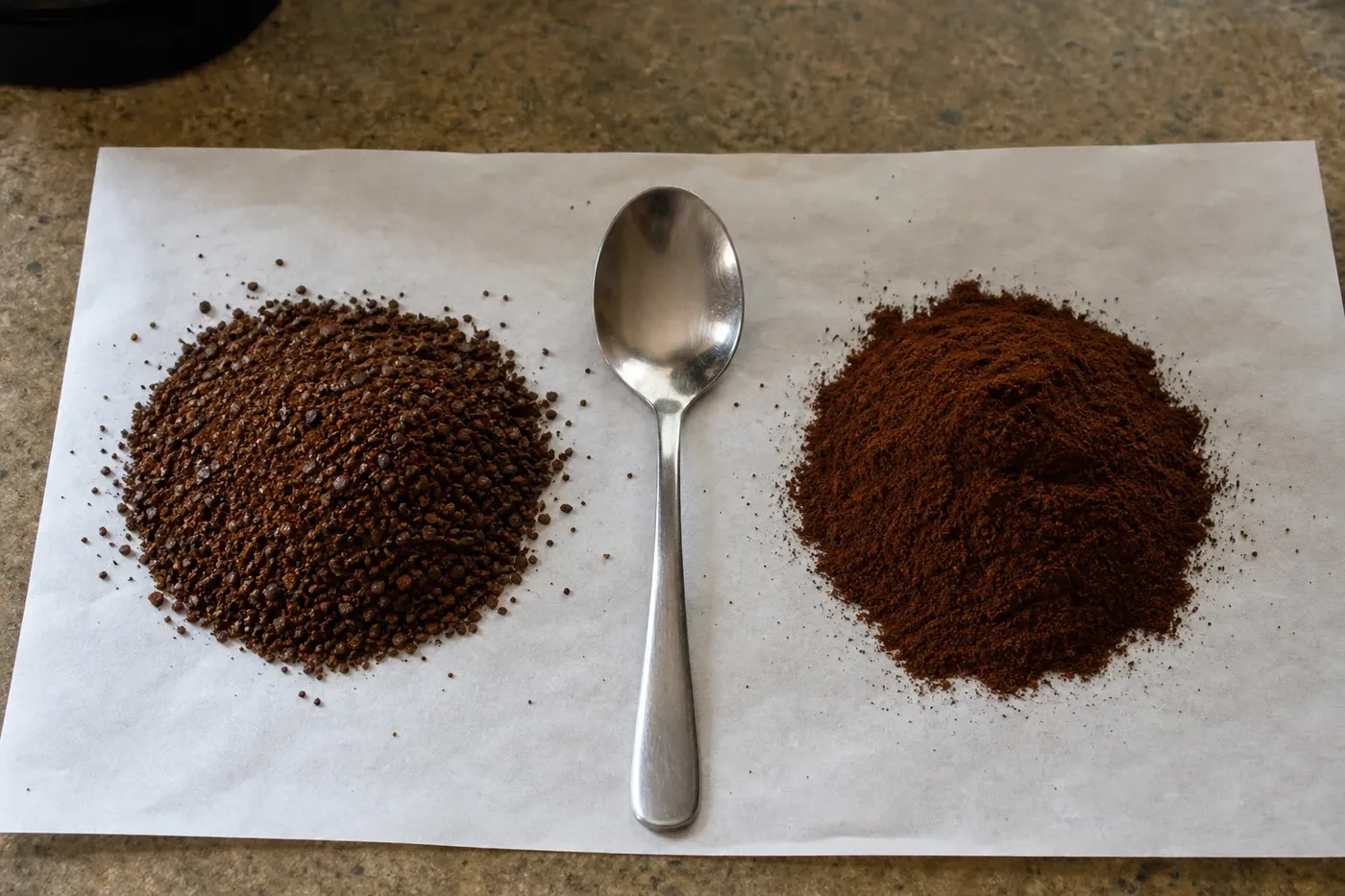
- Grind. For a conical basket, under 12 percent of grounds above 850 microns, at least 68 percent between 425 and 850, and 20 percent or less below 425.
- Water. Odour free, chlorine free, 50 to 175 ppm calcium hardness, pH 6 to 8.
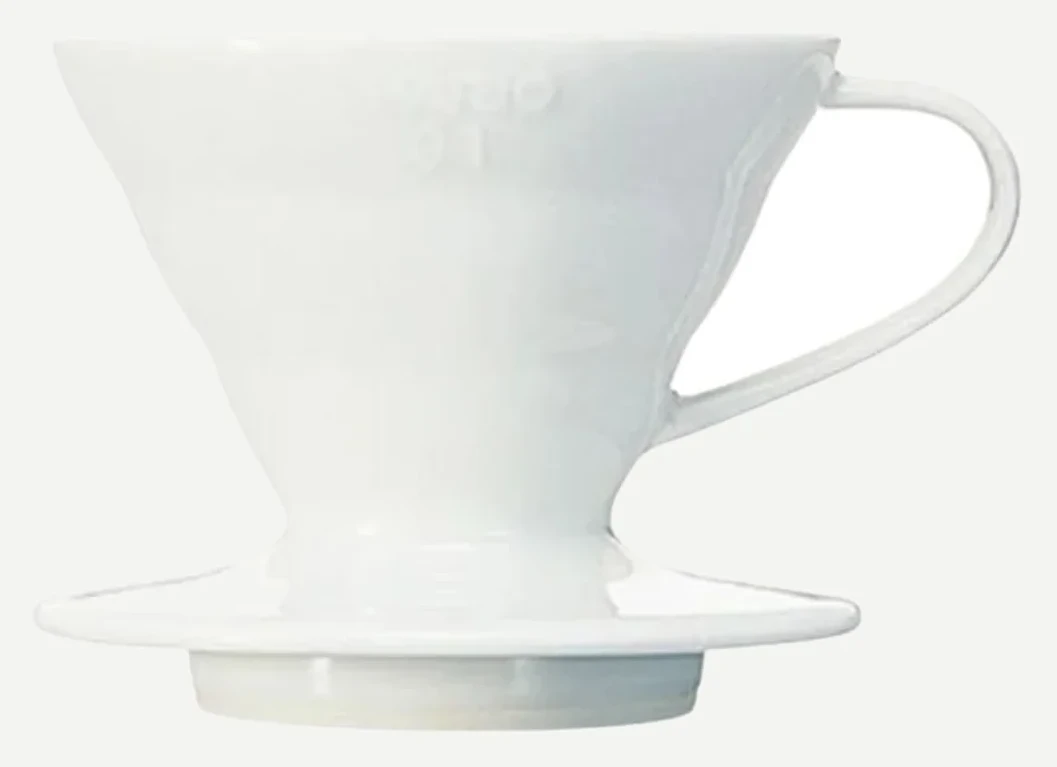
One honest caveat. That standard is written for electric drip brewers and explicitly excludes manual pour over devices, French presses, espresso machines and pod brewers from its scope. The industry treats its numbers as the filter reference anyway, and they are the right target for a hand pour, but they were not written for your V60.
The espresso numbers, which are not
The equivalent espresso specification, SCA-350, is a members-only document, so the familiar figures come from trade sources rather than something you can open and read: around 9 bar, 18 to 20 g in and roughly double that out, 90 to 96 C, and 20 to 30 seconds. Treat them as the industry's working consensus rather than as a published standard, because that is what they are.
The measurement both share
Extraction yield is the one number that crosses the divide. The SCA defines it as the percentage by mass of the dry grounds that ends up dissolved in the drink, which is a measurement of the coffee rather than of the machine, so it applies to a shot and a pour over alike. The same standard also scores how evenly a bed extracted, on an index where 60 counts as good, 75 as excellent and 90 as outstanding.
That is why the two methods can be compared at all. Strength differs enormously between them; the proportion of the coffee you actually dissolved does not have to.
What that means in practice
- Grinder. Espresso needs a grinder that adjusts finely and repeatably; pour over is far more forgiving. See the grind size guide.
- Weighing. Both are ratios, so both want a scale. The reasoning is in coffee to water ratio.
- Cost. A pour over brewer is a cone and a kettle; an espresso setup is a machine and a grinder that outclasses it.
- What you get. Espresso is the base for milk drinks. Pour over is a clear, tea-like cup that shows origin character, and the method is in how to make pour over coffee.
If the question is which to buy first, it is usually pour over: the gear is cheap, the variables are visible, and what you learn about grind and ratio transfers straight to an espresso machine later.
What each costs to start
The equipment gap is large. Pour-over needs a cone, paper filters, a kettle and ideally a scale, and a gooseneck kettle makes the pouring far easier. The whole setup can cost less than a single bag of good coffee a month for a year. Espresso needs a machine and, just as important, a grinder that can grind fine and adjust in small steps. Even entry-level machines start at a few hundred dollars, which is why our list of espresso machines under $500 exists, and a capable grinder adds to that; see the grinders for espresso.
Which to choose
Choose pour-over if you drink coffee black, like tasting the differences between origins and roasts, and want to spend little to start. Choose espresso if you drink milk drinks, want a café-style flat white or latte at home, and are willing to spend more and practise. Plenty of people end up with both, using pour-over for single origins at the weekend and espresso for weekday milk drinks. Time differs too: a pour-over asks for three or four minutes of attention, while a shot takes under a minute once the machine has warmed up, which can itself take several minutes.
Common questions
Is espresso stronger than pour over coffee?
Per millilitre, yes: espresso is a concentrated 25 to 35 ml drink. Per cup it depends on the ratio, and a mug of filter coffee can carry more caffeine than a single shot.
What pressure is espresso brewed at?
About nine bar, nine times atmospheric pressure. Pour over has no pressure beyond gravity, which is the fundamental difference between the two.
What ratio should I use for pour over?
The SCA's reference is 55 g of coffee per litre of water, roughly 1 to 18, brewed at 90 to 96 C.
Can I use espresso beans for pour over?
Yes. Espresso roast is a roast style, not a different bean, so it works in a filter, though a dark roast tends to taste heavier and less bright brewed that way.