Does Coffee Ice Cream Have Caffeine?
Yes, and less than you would guess. How much depends on whether it was made with brewed coffee, extract, or something that never met a bean.
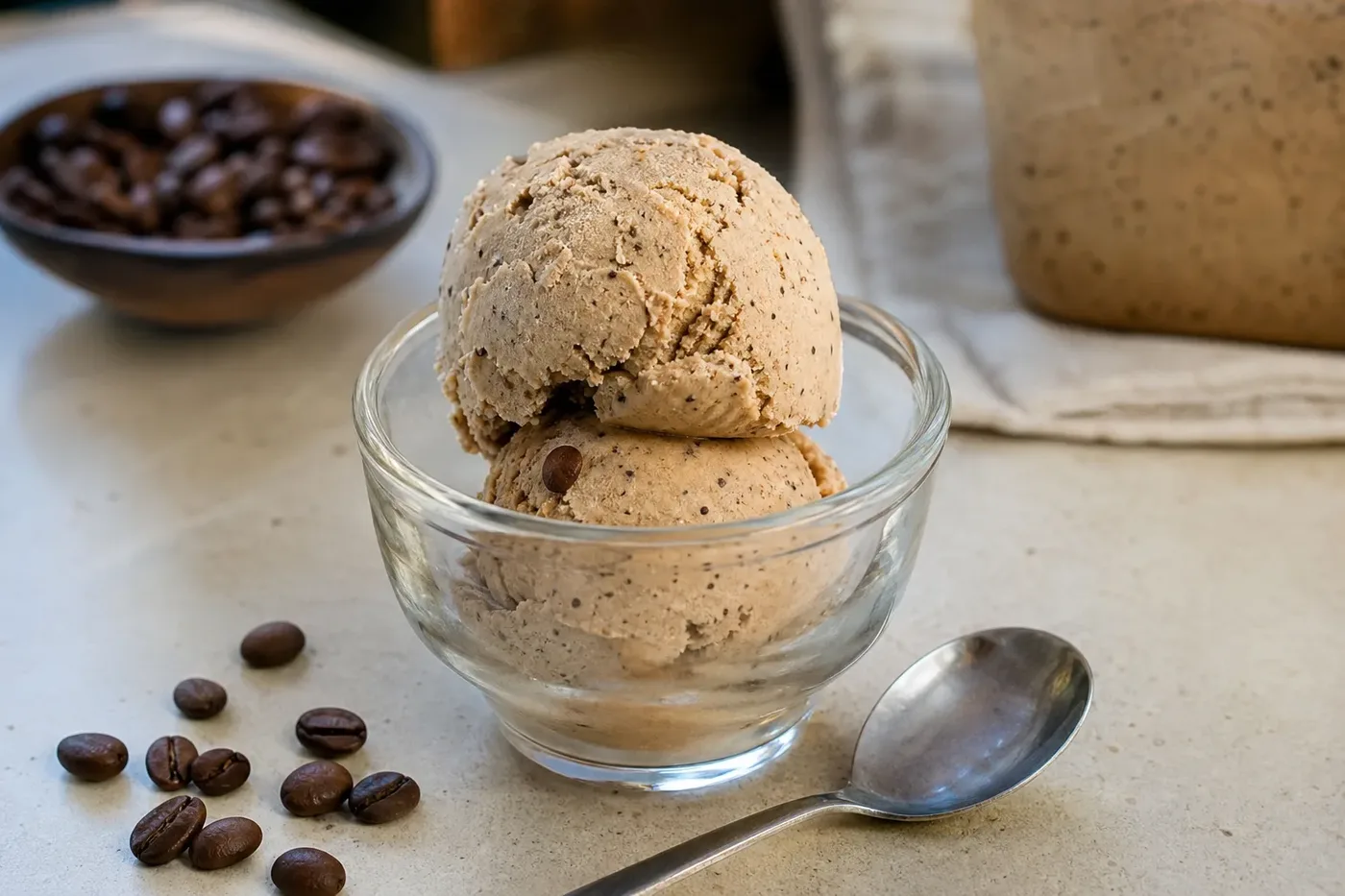
Coffee ice cream does contain caffeine, and typically a small amount: most commercial coffee ice creams land somewhere between 15 and 45mg in a half-cup serving, against roughly 95mg in a standard cup of brewed coffee.
Why caffeine in coffee ice cream varies so much
Because "coffee ice cream" describes at least three different manufacturing approaches. Some are made by steeping real ground coffee or espresso in the dairy base, which carries the caffeine across along with the flavour. Some use coffee extract, where the caffeine content depends entirely on how the extract was made. And some use coffee flavouring, which may contain no caffeine whatever.
Nothing on the tub usually distinguishes them. An ingredients list naming coffee, ground coffee or espresso means there is caffeine in it; one naming only "natural flavouring" may mean there is not.
Coffee ice cream caffeine vs tea, cola and coffee
A half-cup of coffee ice cream is usually in the same range as a cup of tea, or a can of cola, and well below a cup of coffee. Our caffeine guide has the figures for brewing methods, and the gap is larger than most people assume: you would need several servings of ice cream to match one flat white.
Coffee-flavoured chocolate and mocha varieties add a second small source, since chocolate itself contains a little caffeine and rather more theobromine.
Why cold and sugar hide the caffeine in coffee ice cream
There is a practical reason people misjudge this. Caffeine is bitter, and both cold temperature and high sugar suppress bitterness, so ice cream with a meaningful amount of caffeine in it does not taste strong. A drink that tasted that mild would contain far less.
When caffeine in coffee ice cream matters
For most adults it does not. It is worth attention in three situations: giving it to children, for whom the recommended daily limits are considerably lower; eating it late if you are sensitive to caffeine and would not drink coffee at that hour; and in pregnancy, where the usual advice is a daily cap that several servings could measurably contribute to.
This is general information rather than advice for any individual, and anybody with a specific reason to limit caffeine should be working from what their own clinician has told them rather than from a coffee website.
Is there decaf coffee ice cream?
It exists but is rare, and the reason is flavour: decaffeination removes some aromatic compounds along with the caffeine, and in a frozen, heavily sweetened product where the coffee note is already fighting to be noticed, that loss is harder to disguise than it is in a cup.
If you want the taste without the stimulant, coffee-flavoured products built on the bitter, tannic side of the profile tend to hold up better than ones relying on aroma.
Affogato caffeine: how it differs from coffee ice cream
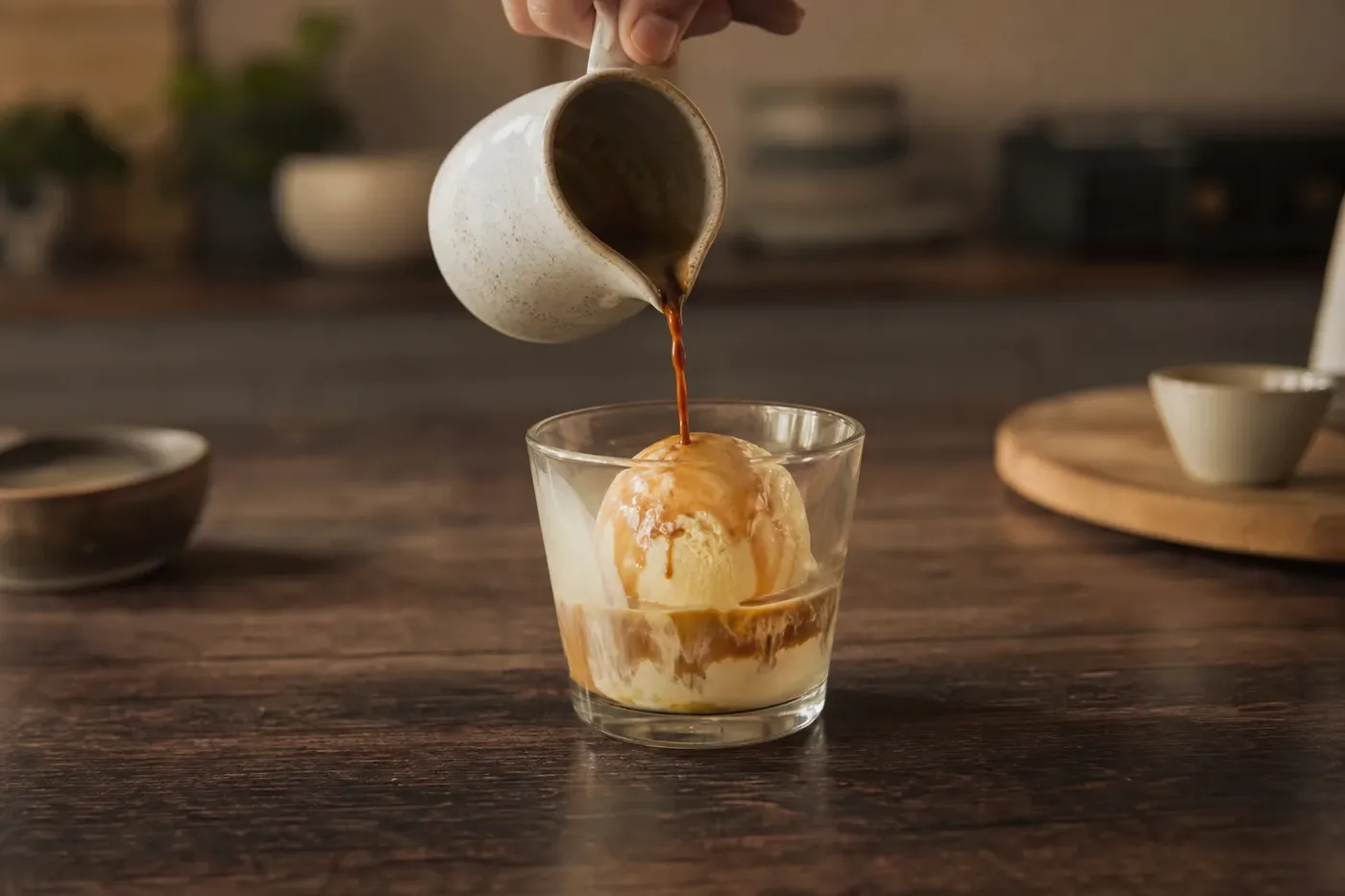
Pour a shot of espresso over ice cream and you have added the full caffeine of that shot, around 60 to 80mg, to whatever the ice cream already contained. That is a real coffee in dessert form rather than a dessert with a trace of coffee in it.
The same goes for tiramisu made properly with strong coffee, and for coffee-soaked desserts generally. The rule of thumb is simple: if brewed coffee went in after brewing, the caffeine came with it, and the amount is the amount that was brewed.
How to make coffee ice cream at home
Steeping coarsely ground coffee in the warm dairy base and straining it out gives far better flavour than instant or extract, and it lets you control the strength directly. Use a coffee with body rather than delicacy, because freezing mutes aromatics severely: the same reason medium-dark roasts work better in milk also applies at freezer temperature, only more so.
Reading the ingredients on coffee ice cream
The ingredient list gives a rough idea of how much coffee is in the tub. Ice cream made with brewed coffee, coffee extract or ground coffee carries real caffeine, and the higher it appears in the list, the more there is. A label that only says natural flavour or coffee flavour may contain much less coffee, or a flavouring with little caffeine at all. Very few brands print a caffeine figure, so if it matters, the ingredient order and the colour of the ice cream, darker usually meaning more coffee, are the best guide you have.
Coffee ice cream caffeine for children and evenings
A typical scoop holds far less caffeine than a cup of coffee, but children are smaller and more sensitive to it, so a coffee ice cream after dinner can still keep some of them awake. The same goes for adults who avoid coffee after midday. If that is a concern, choose a flavour without coffee in the evening, or look for the rare decaf version. Caffeine takes several hours to clear, so an evening scoop counts.
Caffeine in coffee ice cream FAQ
How much caffeine is in coffee ice cream?
Typically 15 to 45mg in a half-cup serving, against around 95mg in a cup of brewed coffee. The range is wide because some are made with real coffee, some with extract, and some with flavouring that contains none.
How can I tell if coffee ice cream has caffeine?
Read the ingredients. Coffee, ground coffee or espresso means there is caffeine in it. If the only relevant entry is natural flavouring, there may be none at all. The front of the tub will not tell you.
Is coffee ice cream safe for children?
It contains caffeine, and recommended daily limits for children are much lower than for adults, so it is worth counting rather than ignoring. This is general information and not advice for any individual.