





Tannins in Coffee: The Dryness You Can Feel
Less than tea, more than you would guess, and responsible for the puckering sensation that gets blamed on bitterness.
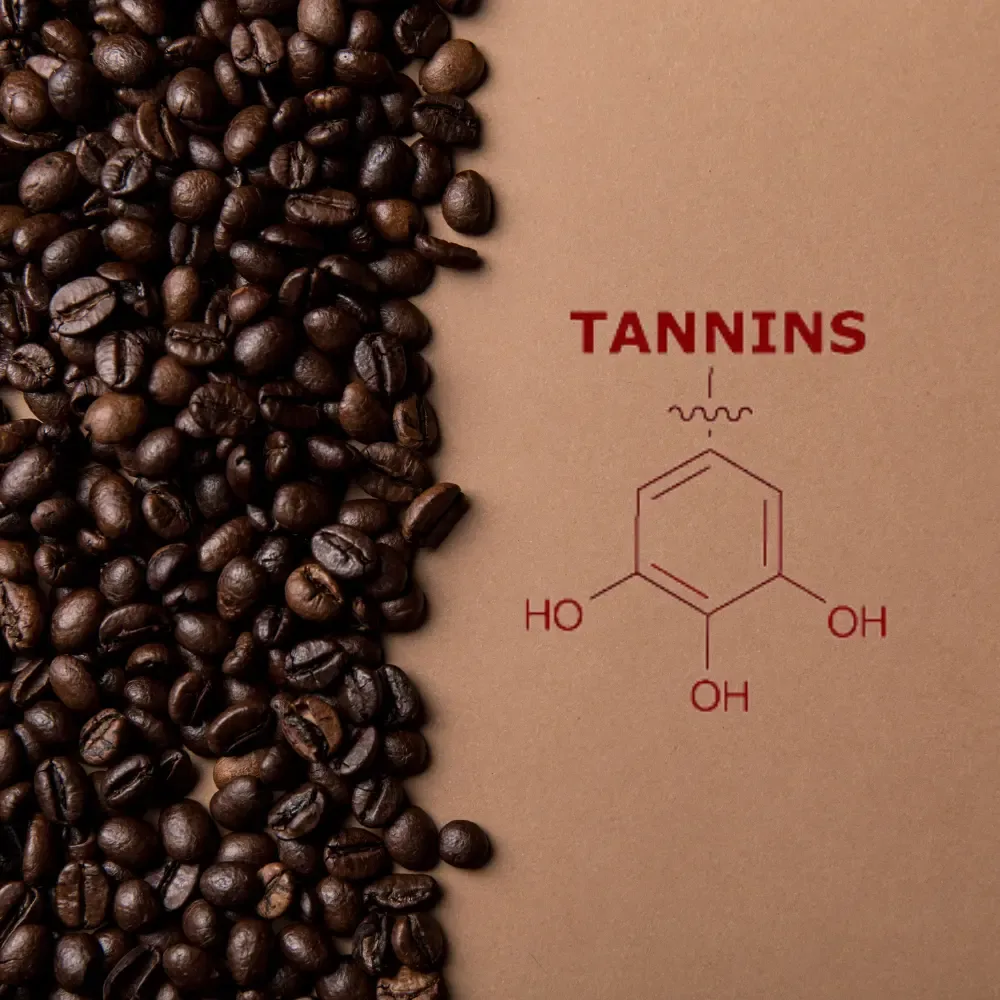
Tannins are the reason a cup of coffee can leave your mouth feeling dry and slightly rough rather than merely bitter. They are a real and separate thing from bitterness, and once you can tell the two apart you can diagnose a bad brew much faster.
What are tannins in coffee?
Tannins are large polyphenol molecules, part of the same broad family as coffee's other antioxidant compounds. Plants make them, and they turn up in tea, wine, unripe fruit and coffee.
Coffee contains fewer than black tea and rather more than most people assume. The amount in the cup depends heavily on how it was brewed.
Tannins and astringency: why dry is not the same as bitter
This distinction is worth holding on to.
Bitterness is a taste, detected by receptors on the tongue. It comes largely from compounds produced during roasting and from over-extraction.
Astringency is a tactile sensation. Tannins bind to the proteins in saliva and precipitate them, which removes the slipperiness saliva normally provides. What you feel is your mouth losing its lubrication, not tasting anything.
A cup can be astringent without being especially bitter, and vice versa. Very over-extracted coffee is usually both.
What increases tannins in coffee
- Over-extraction. Tannins come out late in the extraction sequence, so a brew that runs too long or too fine pulls more of them.
- Water that is too hot. Boiling water extracts them more aggressively.
- Very dark roasts, which have more of the compounds that read as harsh generally.
- Long steeping. A French press coffee maker left sitting on the grounds keeps extracting.
If your coffee dries your mouth out, the first fix is a coarser grind or a shorter brew, not a different bean.
Do tannins in coffee stain your teeth?
Tannins are the main reason coffee stains teeth. They bind to the protein pellicle on enamel and bring pigment along.
Rinsing with water after coffee genuinely reduces it. Brushing immediately does not: enamel is temporarily softened by the acidity, and brushing straight away does more harm than the stain. Wait half an hour.

Tannins in coffee and iron absorption
Polyphenols in coffee and tea can reduce the absorption of non-heme iron, which is the form found in plant foods, when consumed with the same meal. The effect is well documented and the usual advice is timing rather than abstinence: keep coffee an hour or so away from meals if you are managing low iron.
Anyone actually being treated for iron deficiency should take that instruction from a clinician, not from a coffee site.
Why milk reduces the dryness of tannins
Adding milk reduces astringency noticeably, and it is not simply dilution.
Milk proteins, casein in particular, bind polyphenols. Tannins that are bound to casein are not available to bind the proteins in your saliva, so the drying sensation drops away even though the tannins are still in the cup.
This is why a harsh filter coffee becomes drinkable with a splash of milk while sugar only masks the bitterness and leaves the roughness intact. It is also why the same effect appears in tea, more strongly, and has been argued about there for considerably longer.
Water hardness and coffee extraction
Water is most of the cup and it changes extraction more than most people allow.
Very soft or distilled water extracts unevenly and tends to give thin, sharp coffee. Very hard water extracts sluggishly, buffers the acidity and can push a cup toward flat and chalky. Somewhere in between, with a moderate mineral content, is where brewing standards land, and filtered tap water usually falls there.
Temperature sits alongside it. Water off a rolling boil pulls the late, astringent compounds hardest, so the easiest single change for a cup that dries your mouth is to let the kettle stand for half a minute. The detail is in water temperature for coffee.
Coffee vs tea and wine: where the tannins come from
People often say coffee is full of tannins because it can leave the mouth dry, the way strong tea or red wine does. Black tea is the drink most associated with tannins, and most of the drying feeling in a strong mug of tea comes from them. Red wine gets its grip from tannins in grape skins and seeds, and from oak. Coffee does contain polyphenols that behave in a similar way, but a good deal of the dryness people notice in coffee comes from over-extraction and very dark roasts rather than from the bean itself.
What to do if coffee leaves your mouth dry
Start with the brew. Grinding a little coarser, shortening the brew or using water just off the boil instead of boiling will usually take the edge off. A lighter roast, or a coffee from a roaster who prints the roast date, often tastes rounder than an old, very dark one. A splash of milk binds some of the polyphenols and softens the feeling, as the article explains above. And if the cup still tastes harsh, the problem may be the water: very hard or chlorinated water makes coffee taste flat and rough. Our guide to under-extracted espresso explains how grind and time change the taste, which applies to filter coffee too.
Tannins in coffee FAQ
Does coffee contain tannins?
Yes. They are part of the polyphenol family, and coffee contains a meaningful amount, though noticeably less than black tea.
Are tannins the same as bitterness?
No, and the confusion is common. Bitterness is a taste. Astringency from tannins is a physical sensation of dryness and puckering, caused by tannins binding to proteins in saliva.
Do tannins stain your teeth?
They are the main reason coffee stains. Tannins bind to the protein film on enamel and carry pigment with them, which is why rinsing with water after coffee genuinely helps.
Do coffee tannins block iron absorption?
Polyphenols in coffee and tea can reduce absorption of non-heme iron from the same meal. Anyone managing low iron is usually advised to keep coffee an hour clear of meals rather than to give it up.