How Decaf Coffee Is Made
Caffeine comes out of the bean before it is roasted, using water, carbon dioxide or a solvent. The method changes the flavour, the label and the question people ask most about decaf.
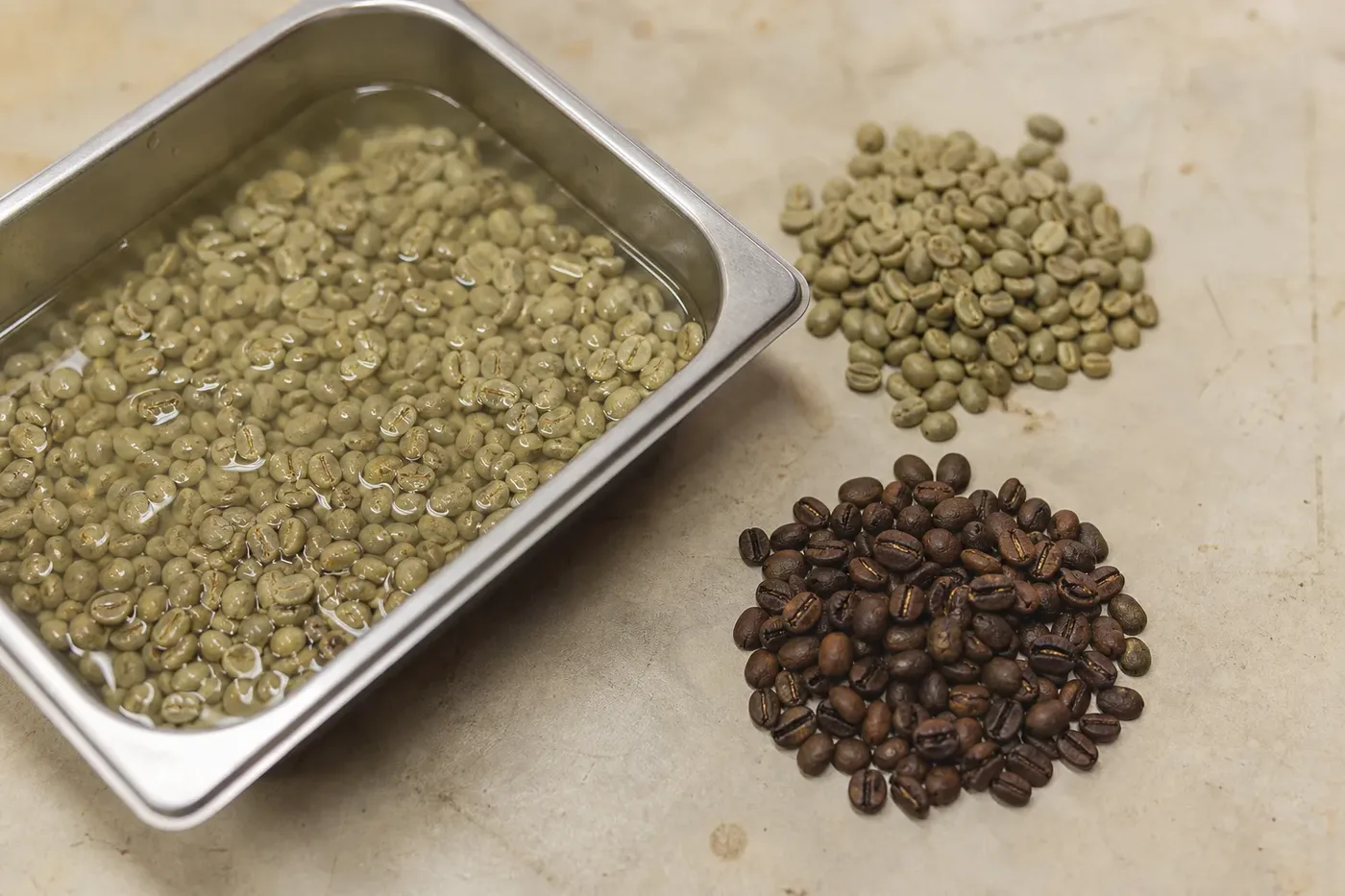
Decaf coffee is made by taking caffeine out of green, unroasted beans. The beans are soaked or steamed so the caffeine can move, a solvent carries it away, and the beans are dried and sent to be roasted like any other coffee. The solvent is what separates the methods: plain water, carbon dioxide, ethyl acetate or methylene chloride.
Why it happens before roasting
Almost all decaffeination is done on green coffee. Most of what we taste as coffee flavour is created during roasting, so taking caffeine out first leaves the roaster to develop the flavour afterwards. It also means a decaf can be roasted light or dark like anything else.
No method removes every trace. Green coffee importer Sweet Maria's notes that all the methods in use today remove at least 97 percent of the caffeine. That figure is industry practice rather than a US federal rule.
The water methods
Swiss Water Process. The best known of the chemical-free methods. It uses water rather than a solvent to pull caffeine out of the beans, and the company says it never adds chemicals, which is the reason it gives for decaf that tastes close to the original coffee. The name appears on the bag, so it is easy to look for.
Mountain Water Process. Run by Descamex in Mexico. Steamed green beans are treated under controlled flow, temperature, pressure and vacuum with a water-based solution already saturated with the soluble solids of coffee, so the water takes caffeine without stripping as much flavour. The beans are then dried and polished.
Carbon dioxide
Carbon dioxide becomes supercritical, behaving partly like a gas and partly like a liquid, above 30.1 degrees Celsius and 73.8 bar of pressure. In that state it dissolves caffeine well while leaving most flavour compounds behind. The method needs heavy, expensive equipment, so it is mostly used for large volumes of commercial decaf.
Sugarcane, or ethyl acetate
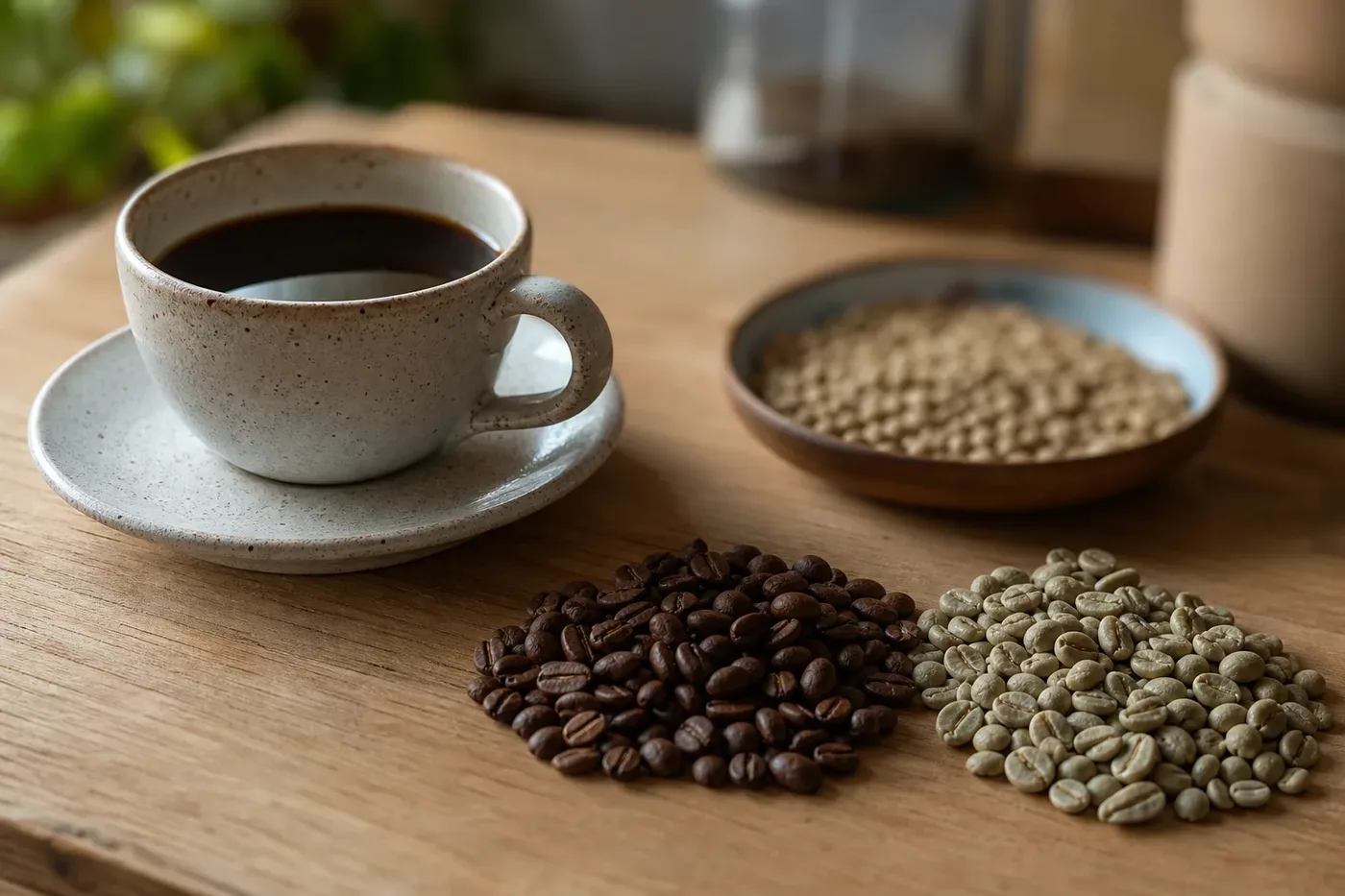
Often labelled sugarcane decaf and common with Colombian coffee. Ethyl acetate made by fermenting sugarcane is used as the solvent: steamed, swollen beans are washed in it so it binds to the caffeine, and the remaining solvent is steamed off. Ethyl acetate also occurs naturally in fruit, which is why this process is often marketed as natural.
Methylene chloride
The oldest widely used solvent, and the one behind most questions about whether decaf is safe. In the direct method the steamed beans are rinsed with the solvent itself. In the indirect method the solvent never touches the beans: they are soaked in water, the water is treated to remove the caffeine, and the beans reabsorb the flavour-carrying water.
In the United States it is regulated. Under 21 CFR 173.255, residue of methylene chloride may not exceed 10 parts per million in decaffeinated roasted coffee and in decaffeinated instant coffee. Roasting and brewing both happen at temperatures far above the solvent's boiling point.
There is also a less common oil method, in which caffeine drawn out into water is bound to the triglycerides in coffee oils and separated, before the beans take back the water. No solvent is involved.
How much caffeine decaf still has
Decaf is not caffeine free. According to the FDA, a typical 8 fluid ounce cup has about 2 to 15 milligrams, against roughly 80 to 100 in regular brewed coffee. For most people that is small, but several cups add up. How brewing changes the figure is covered in how much caffeine is in coffee.
What to look for on the bag
- A named method. Swiss Water, Mountain Water, CO2 or sugarcane are all stated when a roaster uses them. A bag that just says decaf may well be a solvent method.
- A roast date. Decaf beans are more porous after processing and go stale faster, so freshness matters even more.
- Origin and notes. Good decaf is increasingly sold as single origin, with the same detail as regular coffee.
For bags that state the process and score well, see our best decaf coffee list. Instant decaf has its own long history, told in the story of Sanka.
Common questions
How is decaf coffee made?
Caffeine is removed from green, unroasted beans using water, supercritical carbon dioxide, ethyl acetate from sugarcane, or methylene chloride. The beans are then dried and roasted as usual.
Is decaf coffee made with chemicals?
Some is. Swiss Water and Mountain Water decaf use water, and the CO2 method uses carbon dioxide. Sugarcane decaf uses ethyl acetate, and some decaf uses methylene chloride, which the FDA limits to 10 parts per million in the finished coffee.
Does decaf coffee have caffeine?
A little. The FDA says a typical 8 ounce cup of decaf has about 2 to 15 milligrams of caffeine.
What is the Swiss Water Process?
A decaffeination method that uses water instead of a chemical solvent. The company that runs it says it never adds chemicals, and roasters name it on the bag.