Sanka: The Decaf That Named a Colour
A German coffee merchant's decaf became an American household word, gave restaurants the orange pot that still means decaf, and is still sold in jars today.
Sanka is a decaffeinated coffee brand that began in Germany in the early 1900s and became so common in America that ordering decaf and ordering Sanka meant the same thing. Its orange label is the reason decaf pots in diners are orange. It is still on sale in the United States, now as an instant decaf made by Kraft.
A decaf from Bremen
Decaffeinated coffee was developed in 1903 by a team led by Ludwig Roselius, a coffee merchant in Bremen, Germany. The coffee went on sale in Germany and much of Europe in 1905 and 1906 as Kaffee HAG, short for Kaffee Handels-Aktien-Gesellschaft, or Coffee Trading Company.
In France it needed a different name. The brand there became Sanka, taken from the French words sans caféine, without caffeine.
Arriving in America
The coffee first reached the United States in 1909 and 1910, sold by an American agent under the name Dekafa or Dekofa. The Sanka name followed in 1923, when it was first marketed in the US, initially only at two Sanka Coffee Houses in New York before it moved into shops.
General Foods, which sold the caffeine-free drink Postum, saw Sanka as direct competition. It took over Sanka's distribution in 1928, according to the brand's widely cited history, and brand historians date its outright purchase of the Sanka Coffee Corporation to 1932.
A household name
General Foods advertised Sanka heavily, including sponsoring The Goldbergs on CBS, one of the most popular shows of its day. It worked well enough that, in restaurants across the country, people asked for a Sanka rather than for decaf. The brand became the generic word for the whole category, the way a brand name sometimes does.
Why decaf pots are orange
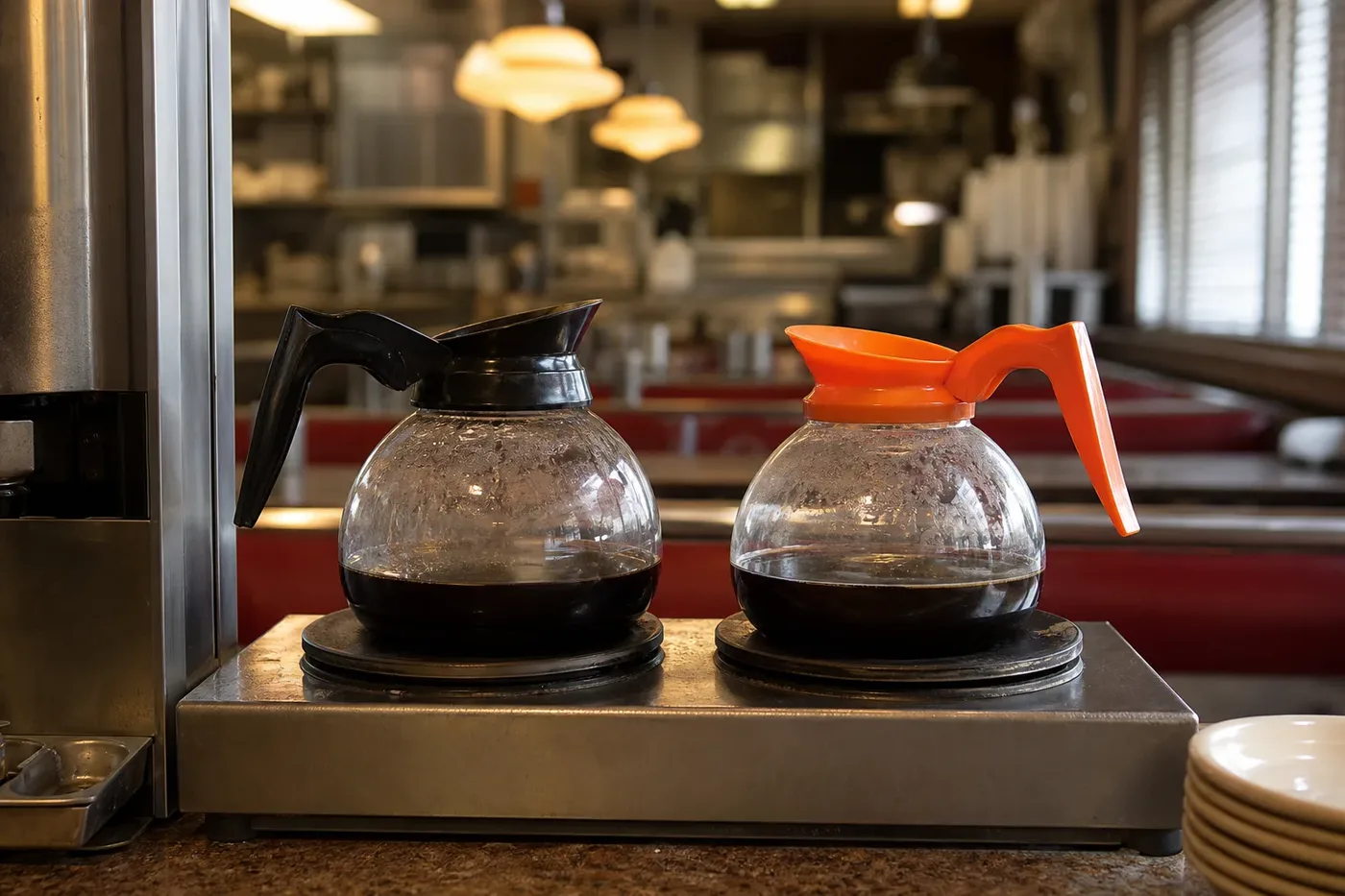
The most lasting thing Sanka left behind is a colour. To make its coffee easy to spot, General Foods sent coffee shops and restaurants coffee pots in the same bright orange as Sanka's packaging. At first the orange pot simply meant the place served Sanka. Over time it came to mean decaf of any brand, and the orange handle or rim on a decaf pot is still the standard signal in American diners.
Is Sanka still sold?
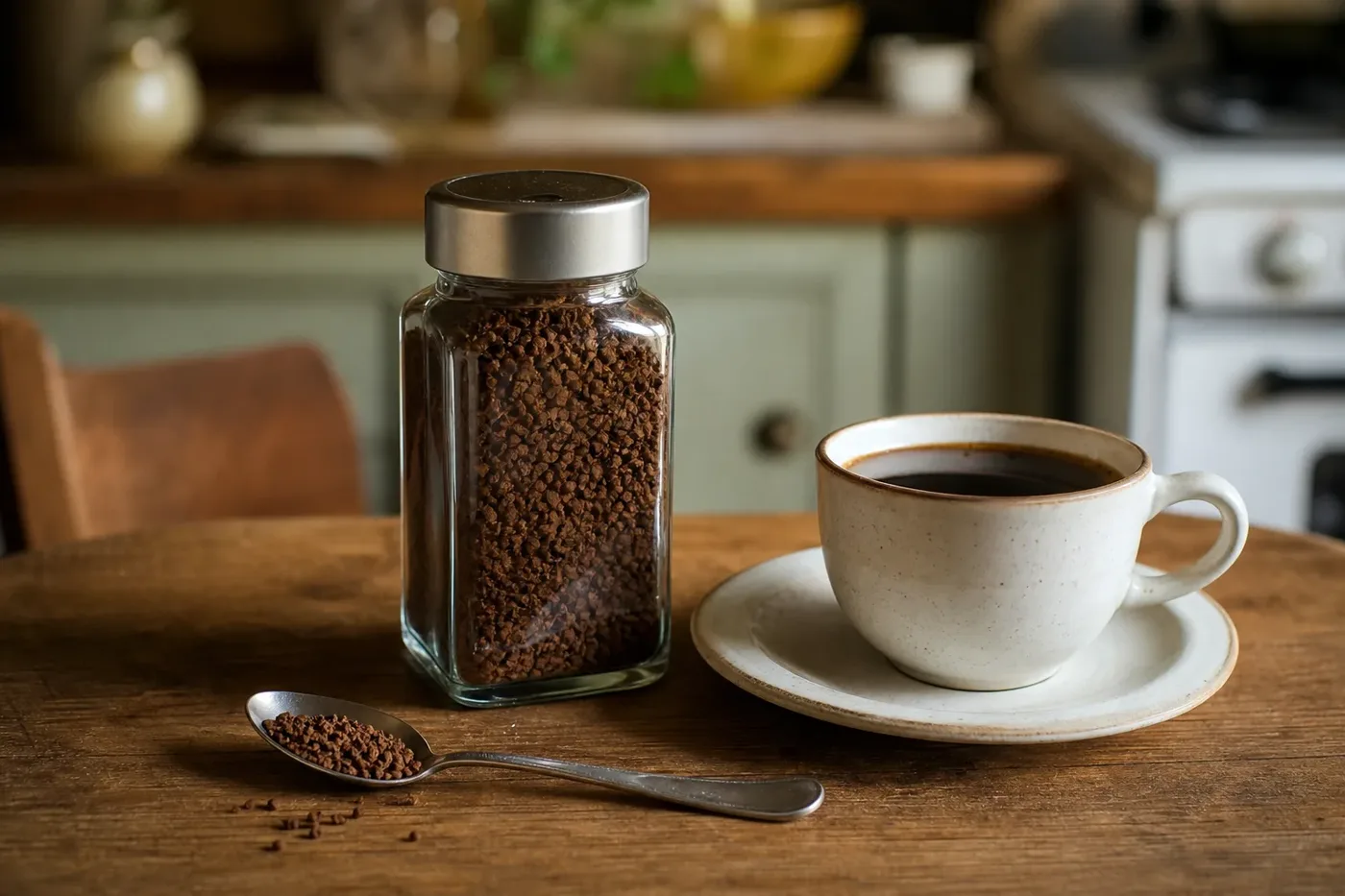
Yes. Kraft's own product listing, dated August 2025, shows Sanka Instant Coffee, Decaffeinated, in 2 oz, 4 oz and 8 oz jars, with the Sanka trademarks owned by Kraft Foods. It is now an instant coffee rather than the ground coffee of its early decades. How instant is made and whether it counts as the real thing are covered in is instant coffee real coffee, and the instant coffee reviews on this site score the jars and sticks on sale today.
How decaf has changed since
Roselius's method was the start of an industry. Decaf today is made with water, carbon dioxide, ethyl acetate or methylene chloride, all applied to green beans before roasting, and specialty roasters now sell single-origin decaf with the process named on the bag. Each method is explained in how decaf coffee is made, and the bags that do it best are on our best decaf coffee list.
Decaf is not caffeine free
The name promised coffee without caffeine, but no decaf removes all of it. The FDA says a typical 8 fluid ounce cup of decaf has about 2 to 15 milligrams of caffeine, against roughly 80 to 100 in a regular cup. That is small enough for most people who are cutting back, but worth knowing for anyone told to avoid caffeine completely, and several cups in a day add up.
What Sanka is like
As an instant decaf, Sanka makes a mild, straightforward cup: dissolve a spoonful in hot water, adjust to taste, add milk if you like. It is built for convenience and for people who want the ritual of a coffee without the caffeine, rather than for flavour notes. Anyone after more character in a decaf will find it in whole bean decaf from a roaster that names its process.
Common questions
What does Sanka stand for?
It comes from the French sans caféine, meaning without caffeine. The name was first used for the brand in France.
Who invented Sanka?
Decaffeinated coffee was developed in 1903 by a team led by Ludwig Roselius in Bremen, Germany, and sold as Kaffee HAG. Sanka was the name used in France and later in the United States.
Is Sanka still made?
Yes. Kraft lists Sanka Instant Coffee, Decaffeinated, in 2 oz, 4 oz and 8 oz jars.
Why are decaf coffee pots orange?
General Foods sent restaurants coffee pots in the orange of Sanka's packaging so customers could spot its decaf. The colour stuck and now means decaf of any brand.