





Black Ivory Coffee: Elephant Coffee, Price and Ethics
Black Ivory is a Thai coffee made from cherries that elephants eat, sold for hundreds of dollars a pound amid unresolved questions about the animals.
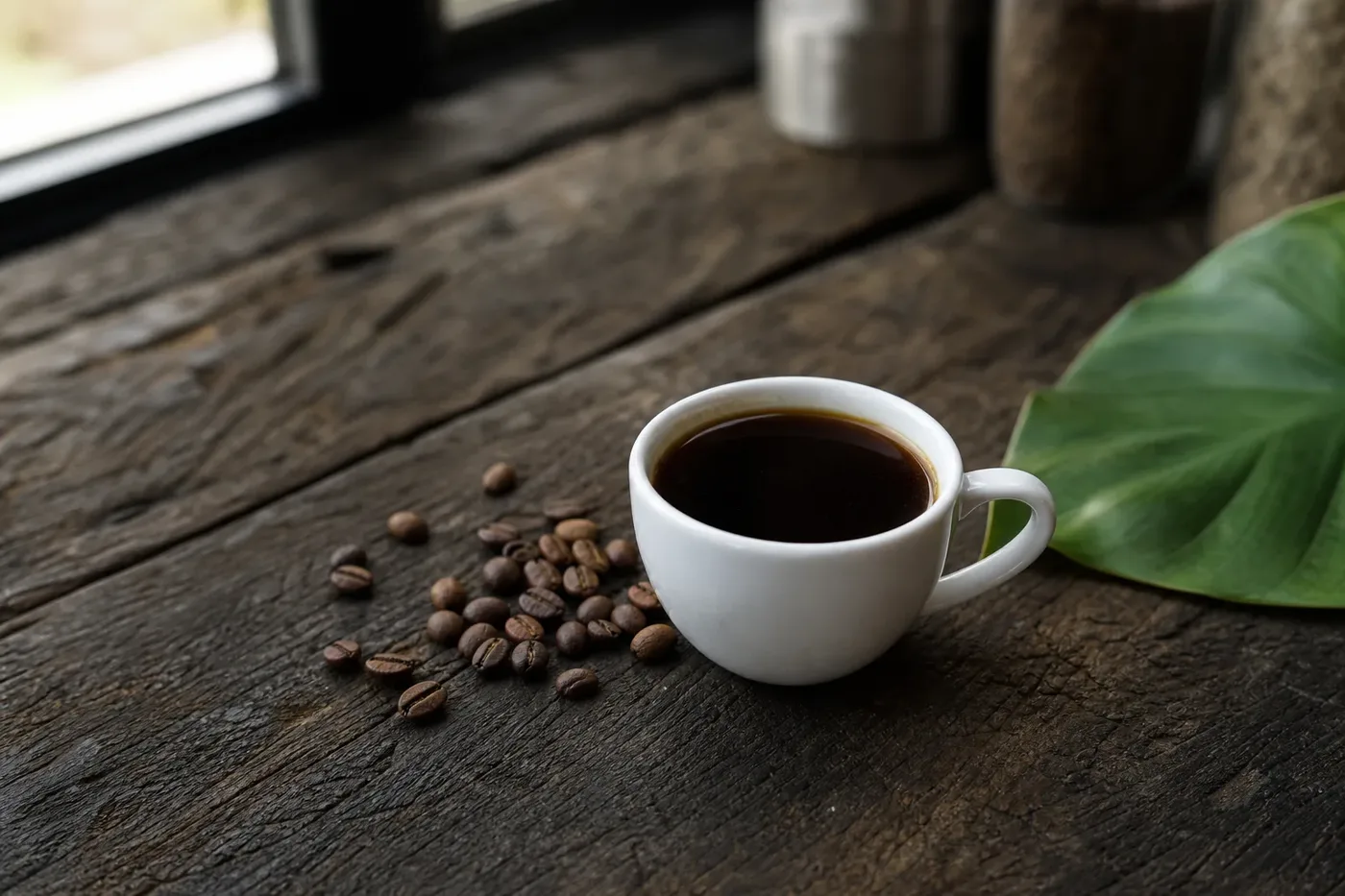
Black Ivory coffee is a very expensive Thai coffee made from Arabica cherries that elephants eat and pass. The beans are picked out of the dung, cleaned, dried and roasted. It was introduced in 2012 by Canadian founder Blake Dinkin, and it sells for hundreds of dollars a pound. It is a novelty product with a small output, and it comes with real questions about the elephants.
What is Black Ivory coffee?
Black Ivory is elephant dung coffee from Thailand. Elephants eat ripe Arabica cherries, the beans pass through the gut, and workers collect, wash, dry and roast them. The maker says gut fermentation gives a smooth, less bitter cup.
Wikipedia credits Dinkin with nine years of testing before the brand reached what he thought was satisfactory quality in 2012, with a first production of about 150 kilograms. The Arabica is grown in Chiang Rai province in northern Thailand, according to the company, while the elephants feed in Surin province in the northeast. It is sold in tiny packets and in hotel restaurants, and only a few hundred kilograms are made a year.
How is Black Ivory coffee made?
The elephants eat the cherries
Captive Asian elephants are fed ripe coffee cherries mixed with their usual food. The maker lists grasses, bananas, rice bran and tamarind in their diet.
The gut ferments them
The beans spend anywhere from about 10 to 72 hours in the digestive system, depending on the source. The company calls this a natural fermentation.
Workers collect the beans
Beans are picked out of the dung by hand, rinsed and sun-dried.
The beans are roasted
The cleaned beans are roasted like any other specialty coffee and packed.
The hard part is the loss. Wikipedia puts the yield at roughly 33 kilograms of raw cherries for 1 kilogram of finished coffee, because many beans are chewed or broken, or lost in the grass. National Geographic reported that the company works with the owners of seven elephants in Surin and produced about 500 pounds in 2023. Wikipedia mentions 20 contributing elephants, so the sources differ and the number should be treated as approximate.
How much does Black Ivory coffee cost?
A lot. National Geographic put a pound at $1,500 and a two-serving packet at about $150, up from $60 in 2012. The company's own online shop lists 40 grams of its main blend at $170 and a half pound at $900, with a cheaper line called the Mahout's Treasure at $90 for 40 grams and $440 for a half pound. Wikipedia quotes about $50 per cup. Prices move, so check the shop before you count on any of these.
The cost comes from three things: tiny output, heavy losses at collection, and the fact that it is sold as a luxury story. For the same money you could buy a year of top specialty beans, so look at it as an experience rather than a better cup. If it is better coffee you want, a good bag from our coffee beans shelf will beat it on value.
Is Black Ivory coffee cruel to elephants?
This is the part nobody can answer fully. The company says it has the strongest commitment to animal welfare. Mahouts, the elephant keepers, care for, feed and bathe the animals, and Dinkin has said that elephants cannot be forced to eat what they refuse and that every feeding is filmed. Wikipedia says the company has given part of its revenue to elephant health care, and the page carries notices that its welfare claims are less independently checked.
Outside voices are more cautious. Neil D'Cruze of World Animal Protection told National Geographic that little is publicly known about the elephants' living conditions, that they are still captive, penned animals, and that the welfare of animals in all poop coffee products is little studied. Caffeine is another open question, and we could not verify either side on whether the cherries affect the elephants. If you care about the elephants, the careful position is that the harm, or lack of it, has not been independently shown.
Black Ivory coffee vs kopi luwak
Black Ivory
Elephants, in Thailand, with a small, controlled production. The maker says the animals eat cherries as part of a mixed diet and are filmed at feedings.
Kopi luwak
Civets, made mostly in Southeast Asia. National Geographic quotes researcher Vincent Nijman that captive civets fed only cherries can fall ill and live two or three years.
Both rely on an animal eating cherries and a person collecting the beans, and both have the same problem: the story sells the coffee more than the cup does. National Geographic prices farmed civet coffee at around $45 a pound and wild-collected up to $600, so elephant coffee is far dearer. The civet side has more documented trouble. You can read the full story in our guide to kopi luwak. The same National Geographic piece cites a study suggesting some civet coffee may be fake, which is a different problem from anything reported about Black Ivory.
What does Black Ivory coffee taste like?
Reports describe a smooth, chocolaty cup that is less bitter than regular coffee. The company attributes this to the gut breaking down some bitter compounds. Wikipedia says gut microbial fermentation may influence the flavor and chemistry, which is more cautious than the maker's wording. We found no blind cupping comparing it with an ordinary lot of the same Arabica, so it is unclear how much of the taste comes from the elephant and how much from the bean and roast.
Is Black Ivory coffee worth trying?
Only as a rare, costly curiosity. It is not a better value than good specialty coffee, and the elephant welfare question is unresolved by independent sources.
If you are curious, a hotel tasting by the cup costs far less than a packet. If you want unusual coffee from a known origin, the coffee belt has plenty of beans with real farm stories that do not involve captive animals.
Black Ivory coffee FAQ
What is Black Ivory coffee?
Black Ivory is a Thai coffee made from Arabica cherries that elephants eat and pass. Workers collect the beans from the dung, then wash, dry and roast them. The Canadian founder Blake Dinkin launched it in 2012, and it is made in very small amounts each year.
How much does Black Ivory coffee cost?
National Geographic put it at about $1,500 a pound and about $150 for a two-serving packet. The maker's shop lists 40 grams at $170 and a half pound at $900. Wikipedia quotes about $50 a cup. Prices change, so check the current listing.
How is Black Ivory coffee made?
Captive Asian elephants eat ripe Arabica cherries mixed into their usual food. Beans spend roughly 10 to 72 hours in the gut, are picked from the dung by hand, rinsed and sun-dried, then roasted. About 33 kilograms of cherries make 1 kilogram of coffee.
Is Black Ivory coffee cruel to elephants?
The company says its elephants are well cared for and that every feeding is filmed. World Animal Protection says little is known about their living conditions and that they are still captive animals. No independent study settles it, so the question is open.
How is Black Ivory different from kopi luwak?
Black Ivory uses elephants in Thailand, while kopi luwak uses civets, mostly in Southeast Asia. Both are collected from dung. Researchers quoted by National Geographic report health problems in caged civets, and a study suggests some civet coffee is fake. Elephant coffee is much costlier.
Does Black Ivory coffee taste good?
Reports describe a smooth, chocolaty, less bitter cup. The maker credits gut fermentation, while Wikipedia says the microbes may influence flavor. No blind comparison with ordinary coffee from the same beans turned up, so how much the elephant adds is unproven.