






The Ethiopian Coffee Ceremony: Buna, and Why It Takes an Hour
Green beans roasted in front of you, ground by hand, brewed in a clay jebena and served three times. The length is the point, not a side effect.
Ethiopia is where arabica comes from, and the ceremony built around it, buna, is the oldest continuously practised coffee ritual anywhere. It takes somewhere between one and two hours, it is performed several times a week in many households, and almost nothing about it is decorative.
Ethiopian coffee ceremony steps, in order
- The space is prepared. Fresh grass is scattered on the floor and incense is lit. Both are still burning when the coffee is served, and the smell of the room is treated as part of the drink.
- Green beans are washed and roasted. In a flat pan over coals, in front of everyone, until they darken and crack. The pan is then carried around so each guest can draw the smoke toward them.
- The beans are ground by hand, traditionally with a mortar and a heavy pestle, coarse by any modern standard.
- The grounds are boiled in a jebena, a round clay pot with a long neck. It comes to the boil more than once.
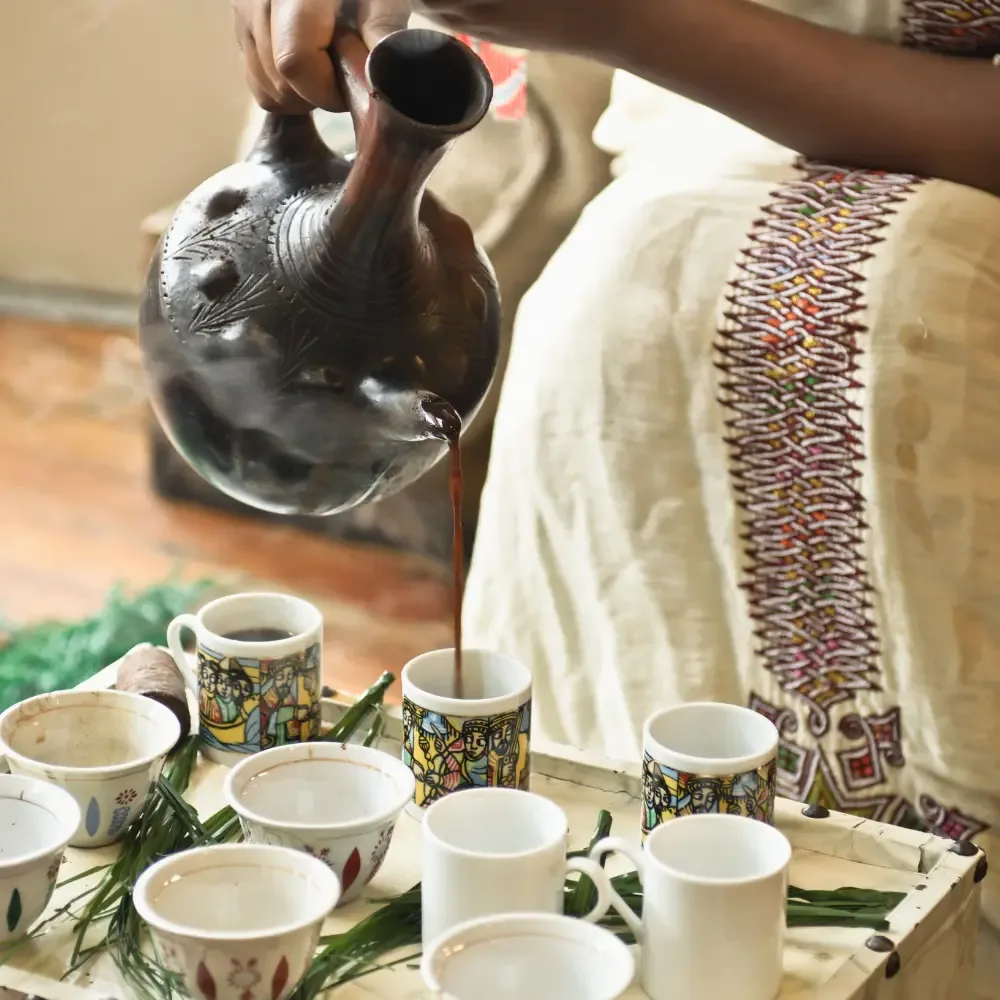
- It is poured from a height into small handleless cups, in one continuous motion across all of them, so that everyone gets the same strength.
The three rounds of the Ethiopian coffee ceremony
The same grounds are brewed three times and each round has a name: abol, tona and baraka. Each is weaker than the one before.
Baraka means blessing, and it is the round the whole thing is aimed at. Leaving after the first cup is not a neutral act. The ceremony is a structure for keeping people in a room together for an hour, and the three rounds are the mechanism that does it.

Why the jebena pot is shaped like that
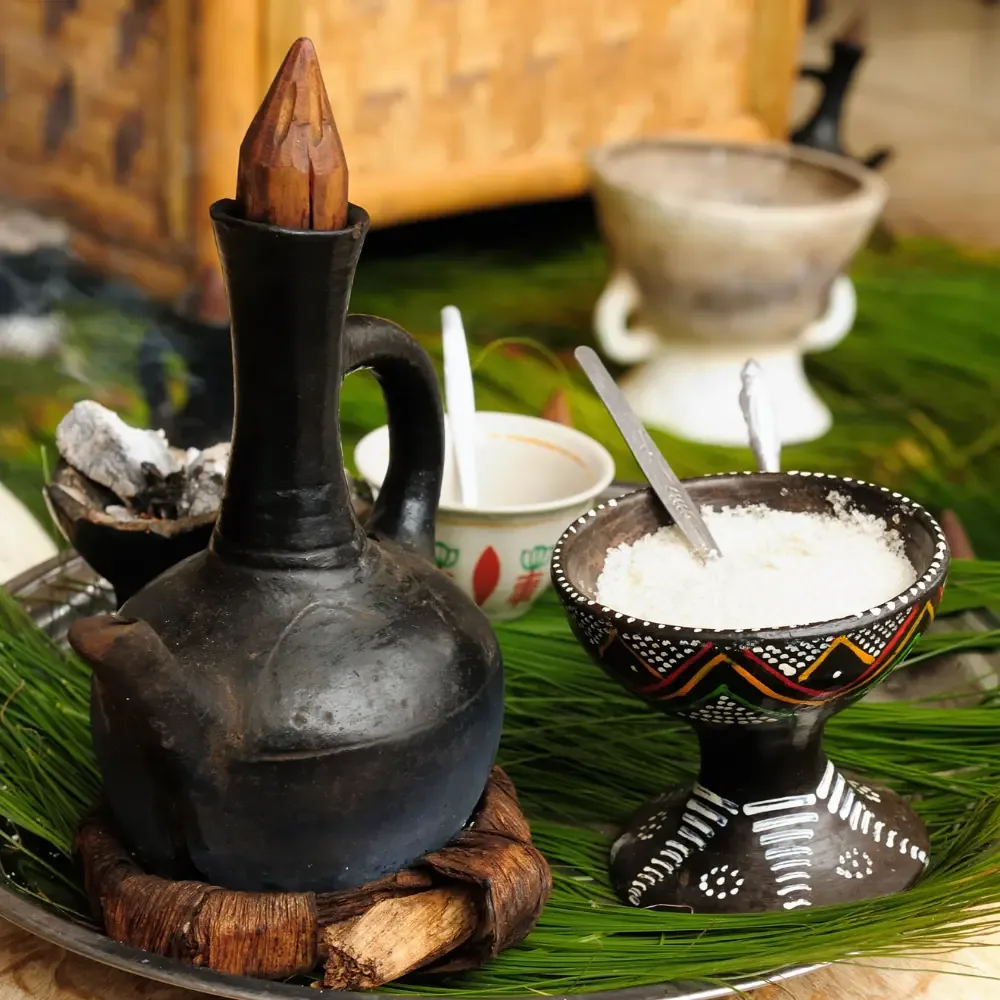
The jebena is a filter with no filter in it. The wide belly gives the grounds somewhere to settle, the long neck keeps them there when the pot is tipped, and the spout draws from the clear liquid above. Unglazed clay also holds heat and softens the boil rather than driving it.
It solves the problem every unfiltered method has, and it solves it with geometry, which is why the design has not needed to change.
What the coffee ceremony tells you about Ethiopian coffee
Ethiopian coffees are known for floral and citrus notes and a light body, and the ceremony roasts them well past the point a modern speciality roaster would stop. Those two facts sit oddly together until you notice that the ceremony is not trying to isolate the flavour of a particular lot. It is making coffee for a room, from whatever is in the house, several times a week.
The pursuit of a single origin's distinct character is a recent idea and a commercial one. Buna is older than the market that produced it.
If you are offered a coffee ceremony
Accept, and plan to stay. Say yes to all three rounds. Do not check the time. The hospitality being offered is the hour, and the coffee is how it is measured out.
Coffee ceremony etiquette for guests
The etiquette is simple and mostly consists of not being in a hurry.
- Accept all three rounds. Leaving before baraka is the one genuine misstep.
- Take the pan when it comes round. Waft the smoke toward yourself. It is an invitation and refusing it is odd.
- Expect sugar, often a lot of it, and in some regions salt or butter instead. Asking for it plain is fine; being surprised at the table is less so.
- Do not rush the host. The roasting is not a delay before the coffee. It is the occasion.
Popcorn or roasted barley is commonly served alongside, and it is not a snack added for children. It is part of the format.
The jebena against other unfiltered brewers
It is worth seeing where this method sits among the unfiltered brewers, because it solves the same problem three different cultures solved three different ways.
- Jebena. Settles the grounds using the shape of the vessel and pours clear from a high spout. Coarse grind, long boil.
- Cezve. Serves the grounds along with the coffee and lets them settle in the cup instead. The finest grind in coffee. See Turkish sand coffee.
- French press. Uses a mesh, which is the modern answer. See how to use a French press.
All three are immersion methods and none of them uses paper, which is why all three produce a heavier cup than pour over coffee. The oils that paper removes stay in.
Buying coffee for an Ethiopian coffee ceremony
Ethiopian beans are widely available and the ceremony is not fussy about which, since it roasts them itself. If you are brewing in a jebena at home rather than performing the whole thing, a washed Ethiopian coffee at a medium roast is the easiest starting point, and our coffee reviews cover what is worth buying.
What you should not do is buy an expensive light-roast micro-lot for it. The method boils the coffee for several minutes and then does it twice more. The delicacy you paid for will not survive the first round.
Ethiopian coffee ceremony FAQ
What is a jebena?
The clay pot the coffee is brewed in: a round base, a long neck and a spout, designed so the grounds settle in the belly while the liquid pours clear from the top. It is a filter made of shape rather than paper.
Why is the coffee served three times?
The three rounds are called abol, tona and baraka, each brewed from the same grounds and each weaker than the last. Leaving before the third is a genuine discourtesy, because baraka means blessing and it is the round the ceremony builds toward.
Is the coffee roasted fresh every time?
Yes, and in front of the guests. Green beans are washed and roasted in a flat pan over coals during the ceremony, and the pan is carried round so everyone can take in the smoke. That is not showmanship; it is part of the hospitality.
Can I do this at home?
Parts of it, and the parts that matter least. You can buy a jebena and Ethiopian beans and brew something close. What you cannot reproduce alone is the reason it takes an hour, which is that it is a social occasion built for other people to sit through with you.