
Café de Olla: Mexico's Clay Pot Coffee
Coffee simmered with unrefined cane sugar and cinnamon in an earthenware pot. The clay is not decoration, and the sugar goes in before brewing.
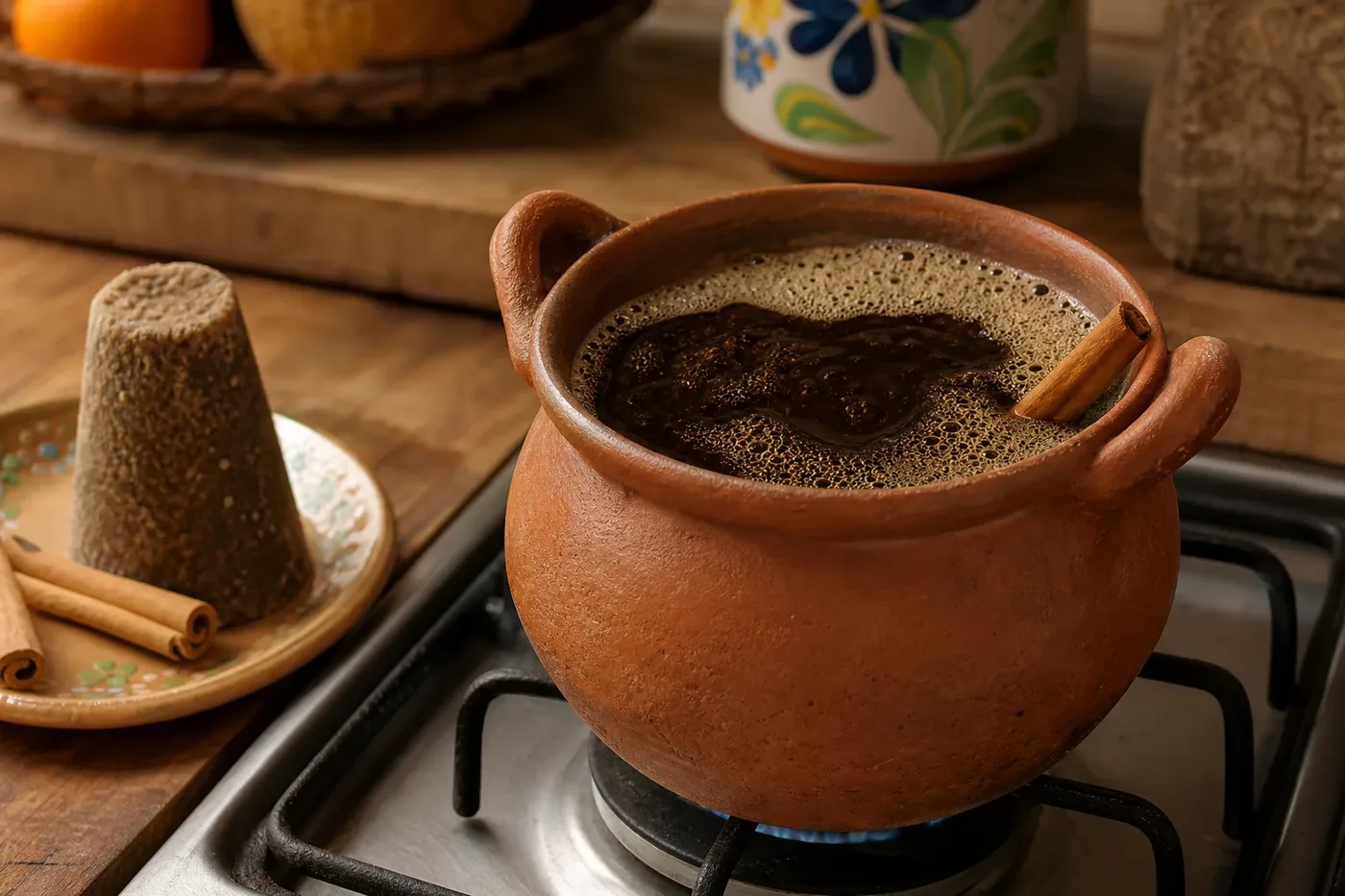
Café de olla is coffee simmered in a clay pot with piloncillo, unrefined Mexican cane sugar, and a stick of canela. It is sweet, spiced and unmistakable, and unlike almost every other brewing method the sweetener is part of the brew rather than something stirred in afterwards.
Why café de olla is made in a clay pot
An olla de barro is unglazed earthenware. It is porous, it heats slowly and evenly, and it holds the temperature steadily once it gets there, which is what a long simmer wants. Over time it absorbs coffee and seasons, the way a moka pot does, and Mexican households will tell you an old olla makes better coffee than a new one.
A new pot should be soaked in water for several hours before its first use, or it will crack over heat and taste of dust. You can make the drink in a steel pan and it is still good; it is simply not the same drink.
Piloncillo in café de olla vs plain sugar
Piloncillo is whole cane juice boiled down and set in a cone, with nothing refined out of it. It keeps the molasses, so it carries a smoky, faintly mineral depth that white sugar does not. Substituting demerara gets you closer than caster sugar; substituting white sugar gets you sweet coffee rather than café de olla.
The canela matters too. Mexican cinnamon is true cinnamon, softer and more floral than the cassia sold as cinnamon in most of Europe and North America, which is harsher and more medicinal. If yours tastes aggressive, that is probably the reason.
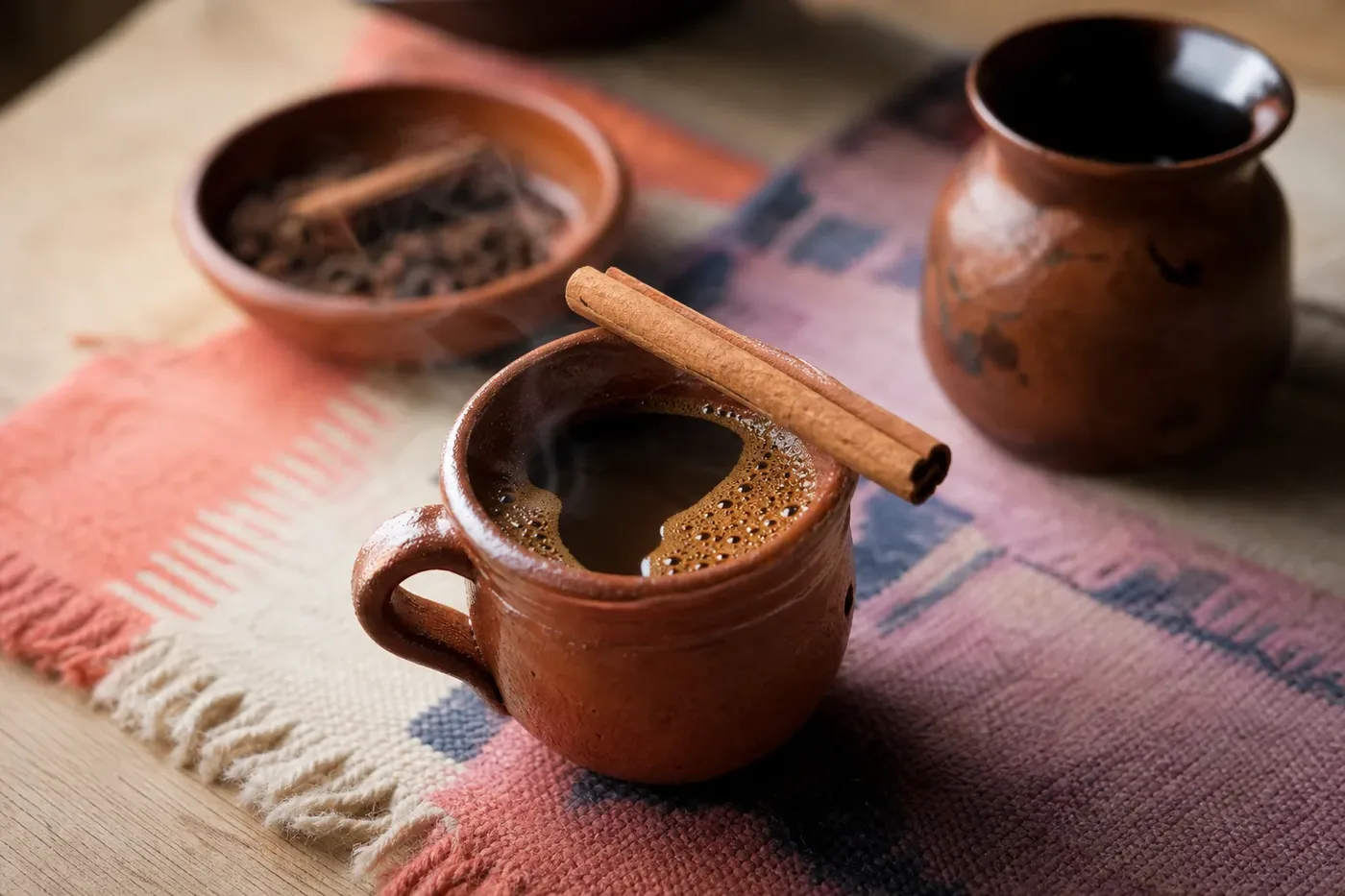
How to make café de olla
Water, piloncillo and a cinnamon stick go into the olla and are heated until the sugar dissolves. Coarsely ground coffee goes in, the pot comes just to the edge of a boil and is pulled off, and it steeps for about five minutes before being strained into cups.
The grind should be coarse, as for a French press, because the contact time is long and the coffee sits in the water. What coarse ground coffee is for covers why the grind has to match the contact time. Boiling it hard is the common mistake and produces something harsh.
Best coffee for café de olla
A medium-dark or dark roast, and not an expensive one. The sugar and the spice will cover any delicacy you pay for, so a subtle washed Ethiopian is wasted here in exactly the way it is wasted in a latte. Mexican beans are the traditional and appropriate choice, and the coffees we have reviewed can be filtered by roast level.
Some households add orange peel, star anise or clove. All are traditional somewhere, and the spice register is the through-line.
Café de olla vs other spiced coffees
Several traditions put spice in the pot rather than in the cup and they are not the same thing. Arabic qahwa uses cardamom, is barely sweetened and is pale and tea-like. Turkish coffee is sweetened at brewing but not usually spiced, and it is unfiltered so the grounds settle in the cup. Vietnamese ca phe sua da uses condensed milk rather than a spiced syrup.
Cafe de olla is distinct in combining all three moves: sweetener, spice and brewing vessel are one decision made before the water is hot, and it is strained rather than left to settle.
Where café de olla comes from
The usual account places it in the Mexican Revolution, made by the soldaderas who travelled with and supplied the armies: cheap coffee, sweetened hard with piloncillo and spiced, brewed in a pot over a fire for a lot of people at once. Whether or not that origin is exact, the shape of the drink fits it, and it is still a drink made in quantity rather than by the cup.
It survives as a home and market drink rather than a café one, which is part of why it stayed itself while so much else was standardised.
Café de olla FAQ
Can I make café de olla without a clay pot?
Yes, in any pan, and it will be good. The unglazed clay heats evenly, holds temperature through a long simmer and seasons over time, so the traditional version tastes rounder. Soak a new clay pot in water for several hours before its first use or it will crack.
What can I use instead of piloncillo?
Demerara or another unrefined dark sugar gets closest, because the molasses content is the point. White sugar gives you sweet coffee rather than cafe de olla, since the smoky mineral depth is missing.
What grind should I use for café de olla?
Coarse, as for a French press. The coffee sits in the water for several minutes, so a fine grind over-extracts and turns harsh. Bring it just to the edge of a boil and pull it off rather than boiling it hard.